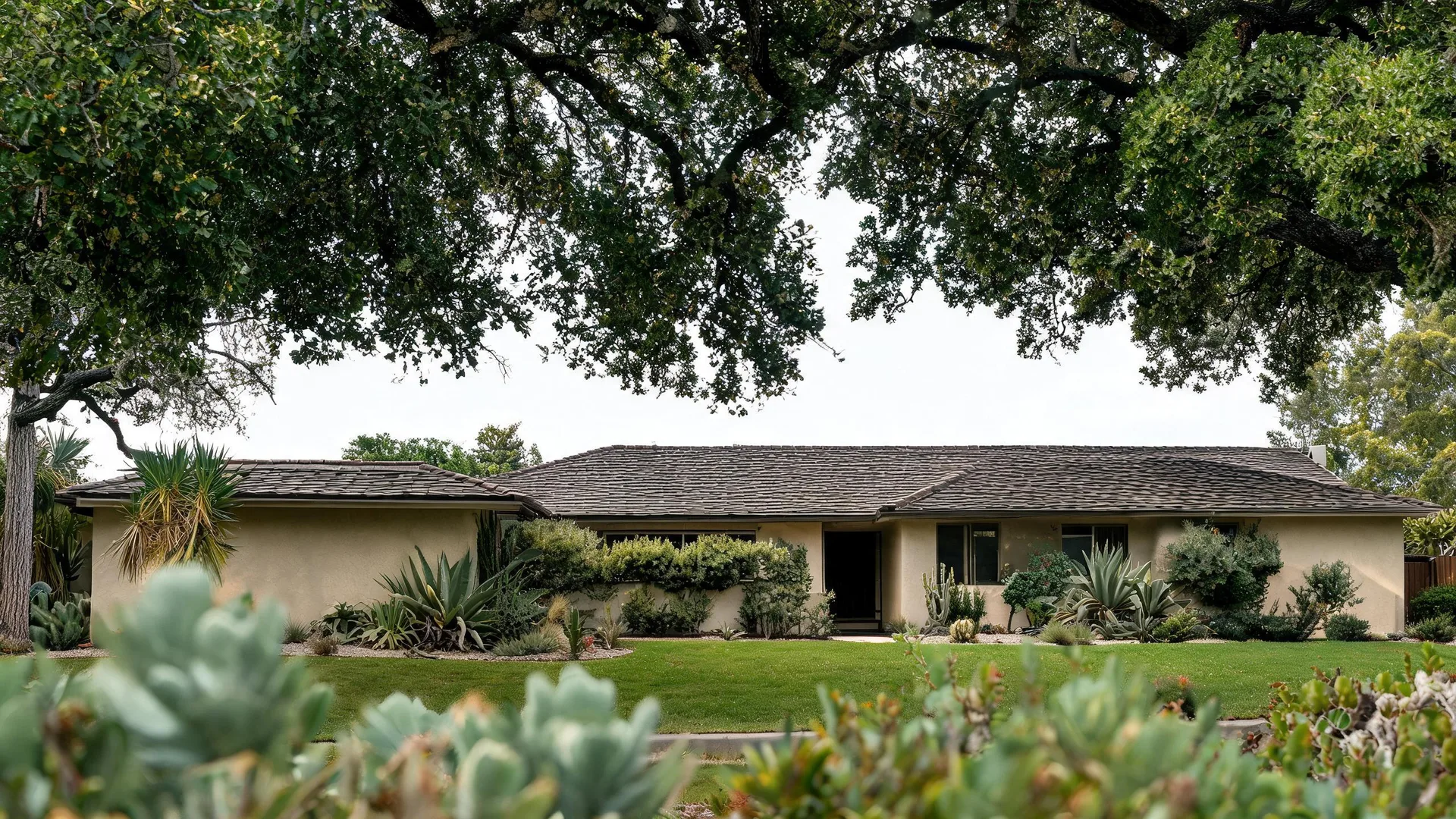
A single-story stucco house with a shingled hip roof, fronted by a lawn and drought-tolerant plantings including agaves and a palm, framed by large overhanging oak branches.

Heat Pump Repair in Truckee, CA

Tell us about the job

Takes about a minute. No obligation.

RepairHeat PumpNevada County, CA
Step 1 of 2

What ZIP code is the job in?

Winters here are the real test

Truckee sees heavy snow, ice and blizzard conditions regularly, and overnight lows across Nevada County average 30°F in December, January and February. A heat pump here works hardest on the cold nights, pulling heat from outside air when there's little of it to pull.


So a breakdown is usually fixable

The cold is what strains a heat pump, not wind or hail, and this area sees very little of either. A unit that's been running fine until a cold snap pushed it past some worn part is a good candidate for repair rather than replacement.

8 months
October through May, your system heats
2 months
July through August, it cools
30°F
the average winter night it heats against
82°F
the average summer afternoon it cools against
Isometric illustration of a cutaway single-story house showing interior ductwork and vents connected to an outdoor condenser unit beside the building, on a white background.
Your system heats October through May and cools July through August.

NOAA nClimDiv, 1991–2020 normals

Half the homes in Nevada County were built in 1983 or later.

A heat pump installed with a newer house still has years of work left in it, which makes repair worth it.

October is when a weak heat pump gets found out

Cooling runs July through August
Heat runs October through May
190 damaging wind events from 2015 to 2024

California electricity ran 31.97 cents per kilowatthour in 2024, among the highest rates in the country. A heat pump that's low on refrigerant or running on a failing capacitor pulls more power to do the same job, and you pay that difference every month it goes unfixed. The cost of ignoring a strange noise or a weak cycle adds up faster here than it would somewhere with cheaper power. That's reason enough to get a diagnosis now rather than waiting to see if it gets worse.

It's usually worth repairing

It has an easier job here than in most places, so your heat pump is often in decent shape. Repair is usually worth it.

Find a contractor
A man in a dark cap, dark shirt and brown pants, seen from behind, walks up porch steps toward an orange front door while carrying a brown canvas tool bag.
A white mini-split heat pump outdoor unit mounted on a concrete pad beside a gray-sided house, surrounded by gravel and green shrubs.

Check how old yours actually is

If your heat pump came with the house and the house is newer, that's worth finding out before you decide anything. Check the install date on the unit itself or ask the contractor doing the repair to pull it. A system with years of life left on it is almost always worth fixing rather than replacing, especially when the problem traces back to one worn part rather than the whole unit struggling.

A refrigerant leak doesn't stay small

A heat pump low on refrigerant makes the compressor work harder to move the same amount of heat. Run it like that for weeks and the compressor is what fails, and that's a much bigger repair than fixing the leak would have been.

A weak part drags down the ones around it

A failing capacitor makes the motor it starts work harder every cycle. A dirty coil makes the compressor run longer to hit the same temperature. One worn part rarely stays an isolated problem if the system keeps cycling around it.

Before you call anyone, there are a few things worth looking at yourself. Check the outdoor unit first. If snow or ice has piled up against it, clear it away so air can move through the coil. Look at the air filter. A filter clogged with dust makes the whole system work harder, and it's the easiest thing in the house to fix yourself. Check your thermostat batteries and settings, especially if the system seems dead rather than just weak. Walk around inside and see if some rooms are warm and others aren't, since that tells a tech something different than if the whole house is cold. If the outdoor unit is caked in ice beyond a thin frost layer, or you hear grinding or squealing, stop and leave that one for a professional.

A diagnostic visit starts outside, at the unit itself. The tech checks refrigerant pressure, since that one reading points to a leak, a bad valve, or a compressor working harder than it should. They'll pull the electrical cover and test the capacitor and contactor, because a weak capacitor often causes the exact symptom you called about, a system that hums but won't start or short cycles. Inside, they check the air handler, the filter, and the coil for ice or dirt buildup. They'll run the system through a full cycle if they can, in both directions, since a heat pump that heats fine but struggles to cool, or the other way around, points to the reversing valve rather than the compressor. By the end they can usually tell you which part failed and why, not just that something did.