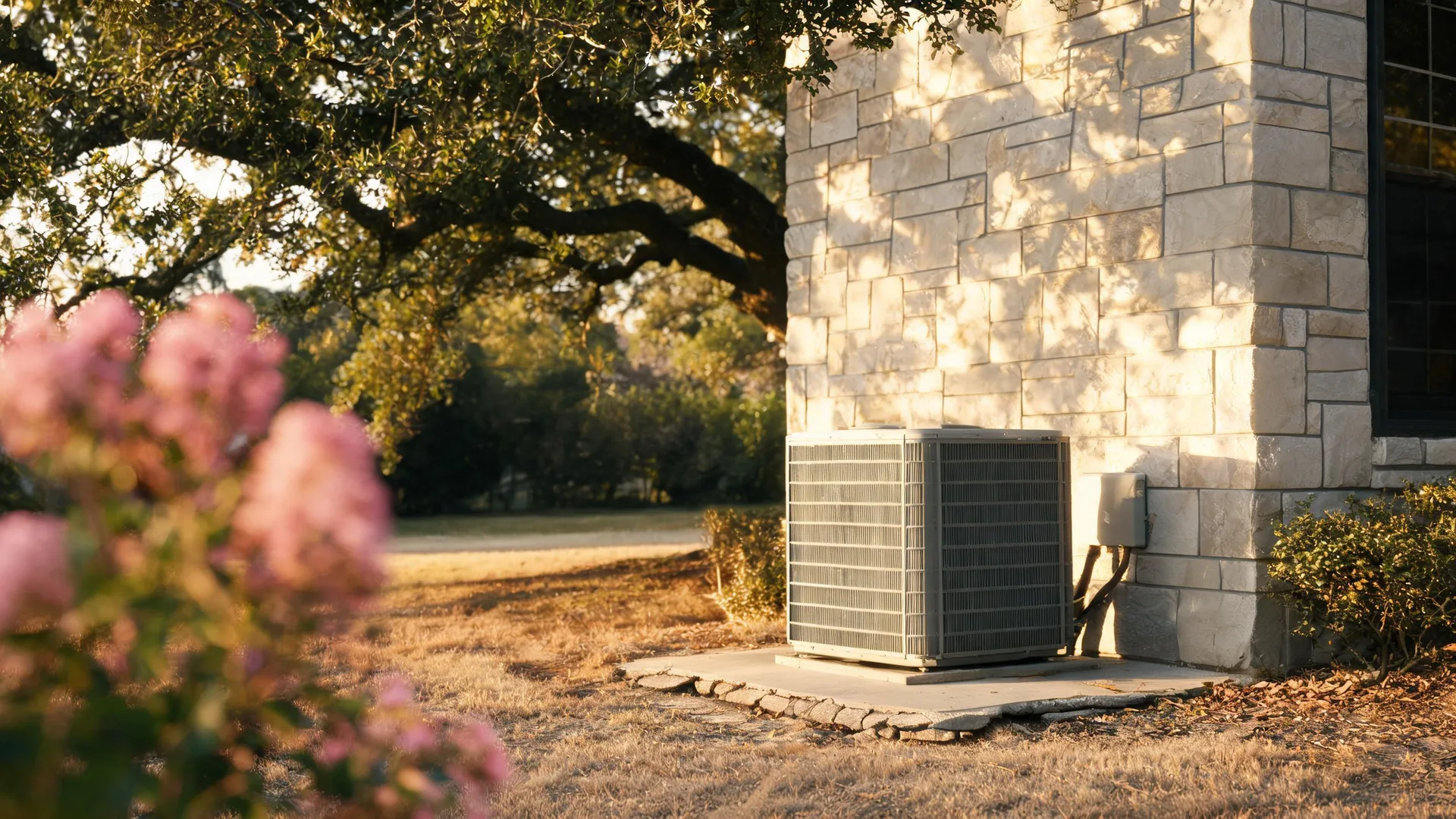
A grey heat pump outdoor unit mounted on a concrete pad against the exterior wall of a house with grey siding and stone veneer.

Heat Pump Repair in Ukiah, CA

Tell us about the job

Takes about a minute. No obligation.

RepairHeat PumpMendocino County, CA
Step 1 of 2

What ZIP code is the job in?

September is when a weak heat pump gets found out

Heat in Mendocino County runs October through May. When the first cold mornings hit in September and October, the heat pump is asked to run longer and harder than it has in months. A part that was already marginal, a contactor, a capacitor, a low charge, tends to fail right at that jump in demand.

Getting it looked at before October pays off

A heat pump that struggled last season usually hasn't fixed itself over the summer. Having it checked before the system has to carry the full eight months of heating gives a contractor time to find the real cause, instead of diagnosing it on the coldest night of the year.

8 months
October through May, your system heats
2 months
July through August, it cools
37°F
the average winter night it heats against
81°F
the average summer afternoon it cools against
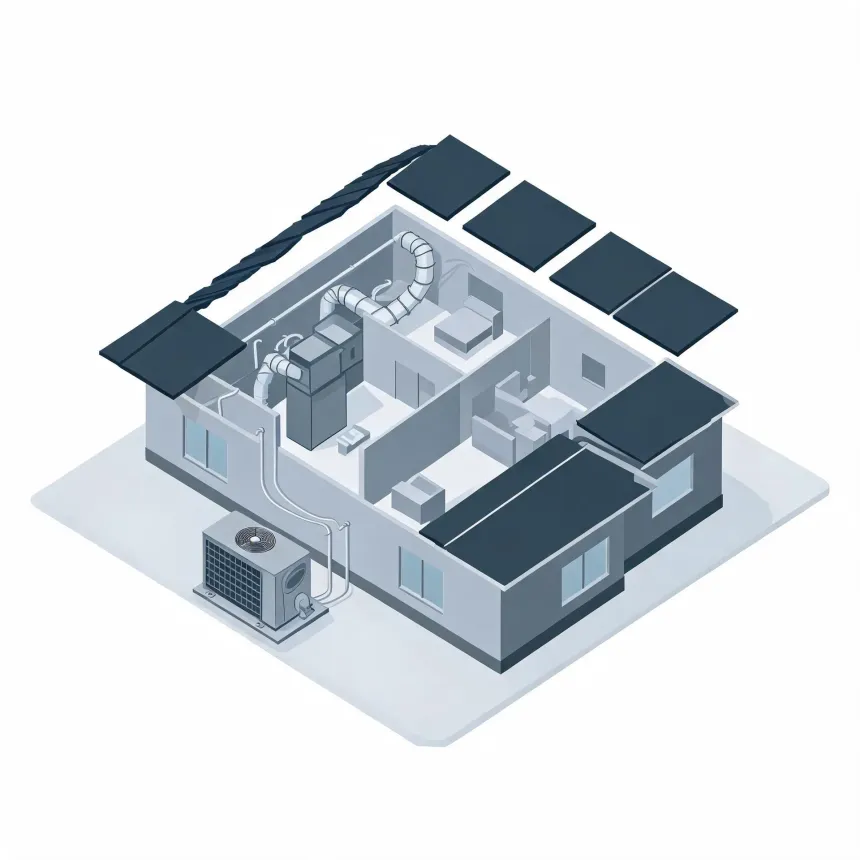
Isometric grayscale illustration of a cutaway single-story house showing interior rooms, ductwork and an air handler, an exterior condenser unit connected by lines, and dark solar panels on the roof.
Your system heats October through May and cools July through August.

NOAA nClimDiv, 1991–2020 normals

Mendocino County winters average a 37°F overnight low, mild enough that a heat pump here isn't fighting deep cold most nights.

A heat pump that's given out after a mild winter is usually suffering from a bad part, not a worn-out system, so repairing it is often the right call.

Older homes, ordinary wear. The wind and storms here aren't why your heat pump failed.

Half the homes here were built by 1977
59 damaging wind events from 2015 to 2024
29 winter storms from 2015 to 2024

Nothing about Ukiah's climate runs up a heat pump's electric bill faster than anywhere else in the state, but California's rate does the work there. At 31.97 cents per kilowatthour, a heat pump that's losing efficiency costs more to ignore here than it would in a cheaper state. A dirty coil, a low charge, a failing capacitor all make the system run longer to do the same job, and every extra hour shows up on the bill at that rate. That's a reason to get a repair done, not a reason to think the climate is to blame.

A mild winter didn't wear out your heat pump. A bad part probably did.

If your heat pump has been struggling, a mild winter isn't the cause. That points to a bad part, not a system that's worn out, which is the kind of problem a repair fixes for good.

Find a contractor
A residential heat pump outdoor unit mounted on a concrete pad next to a house with gray vinyl siding.

A heat pump doesn't get a season off

A heat pump runs nearly every day of the year, cooling in the warm months and heating in the cold ones, with only a short break in spring and fall. That kind of duty cycle wears on specific parts. The reversing valve that switches between heating and cooling can start sticking, so the system blows cold air when it should heat, or runs a cycle that never quite finishes. The contactor that energizes the outdoor unit pits and burns with use, until one day it doesn't close and the outdoor fan and compressor just sit there. A capacitor weakens slowly, so the fan spins up late or the compressor hums and trips off instead of starting. None of these announce themselves ahead of time. The system runs fine, then one morning it's blowing air that isn't warm, or the outdoor unit is silent while the indoor fan runs, or it short cycles, on for a minute and off again. Ice on the outdoor coil that doesn't melt off during the defrost cycle is also worth a call, since that usually means the defrost control or a sensor has failed, not that the weather is to blame.

Low refrigerant is almost never a leak you can see

A heat pump that's low on charge usually lost it slowly, through a pinhole in the coil or a fitting that was never quite tight. The system keeps running, just worse, so the first sign is often warm air that isn't warm enough or a compressor that runs long and still doesn't catch up.

The outdoor unit takes the abuse the indoor one doesn't

The outdoor coil, fan motor and compressor sit outside through everything, which is why most heat pump failures start there rather than at the indoor air handler. A compressor that's started drawing high amps or cycling off on its own protection switch is usually near the end, and that's a different conversation than a swapped part.

A struggling heat pump rarely fails outright. It limps along, and the limping is what does the real damage. A compressor that's low on charge works harder to move the same heat, and that extra strain is what turns a weak compressor into a burned out one. A contactor with pitted contacts arcs a little more each cycle until it welds shut or stops closing at all. Ice that forms on the outdoor coil and doesn't clear can block airflow entirely, and the system keeps trying to run through it instead of shutting itself down. None of these get better on their own. The part that's already failing just ends up carrying more load than it was ever built for.

A repair makes sense when the compressor is sound and the rest of the system was running fine before the part failed. A contactor, a capacitor, a sensor, a control board, these are inexpensive to replace relative to the system around them, and swapping one puts a healthy machine back to work. Replacement starts to make sense when the compressor itself is the problem, since it's the most expensive part in the unit and the hardest to justify repairing on its own. Age matters too, not because a system wears out on a schedule, but because an old system is usually built around an older refrigerant, and parts for it get harder to find as time goes on. The other thing worth weighing is whether this is the first real failure or another one in a pattern. A system that keeps coming back with a different part failing each time is telling you something a single repair won't fix.