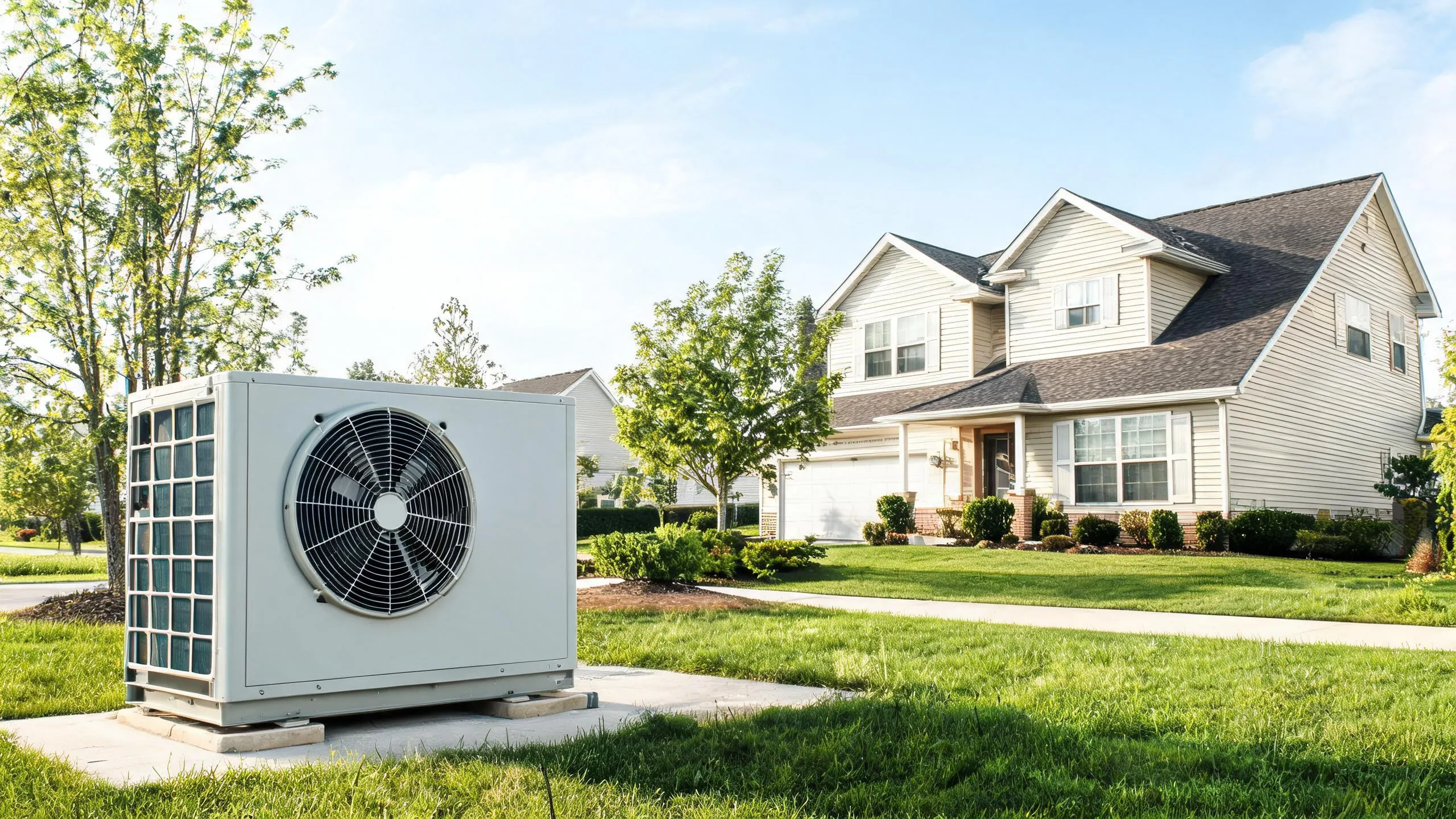







An outdoor heat pump unit mounted on a concrete pad in front of a two-story suburban house with a landscaped lawn.

Heat Pump Repair in Vallejo, CA

Tell us about the job

Takes about a minute. No obligation.

RepairHeat PumpSolano County, CA
Step 1 of 2

What ZIP code is the job in?

Half the homes in Solano County were built in 1982 or later. If yours is one of them, your heat pump probably isn't as old as the equipment in some of the older homes nearby. A newer system that's acting up is more likely to be a single part failing than the whole unit wearing out. A bad compressor or reversing valve on a system that still has years ahead of it is usually worth fixing rather than replacing. That's worth knowing before anyone tells you it's time for a new unit.

6 months
November through April, your system heats
4 months
June through September, it cools
40°F
the average winter night it heats against
88°F
the average summer afternoon it cools against
Isometric line illustration of a cutaway house showing interior rooms with furniture, ceiling ductwork, and an outdoor condenser unit connected by lines along the exterior wall.
Your system heats November through April and cools June through September.

NOAA nClimDiv, 1991–2020 normals

Summer dew points in Solano County average 50°F, lower than most of the country.

A heat pump here isn't fighting heavy air all summer, so repair is usually the right call instead of replacement.

Every kilowatt-hour here costs more, so a struggling unit hits harder

Power here costs 38.50 cents per kilowatt-hour
52 damaging wind events from 2015 to 2024
Winter nights average 40°F
Switch Over, Then Watch for TroubleHeat comes on in November, cooling in June. The first cold snap or first hot stretch is when a weak part gives out.

A heat pump that's short cycling, or running constantly without hitting the set temperature, is burning power the whole time it struggles. With electric rates here among the highest in the country, that shows up fast. Don't wait through a few more weeks of it running rough to see if it sorts itself out. Get a contractor to look at it once you notice it's off, whether that's strange noises, weak airflow, or the system running longer than it used to.

An easier climate means repair is usually worth it

The low humidity here means repair is usually the right call, not a sign to wait and see. A heat pump that's acting up now is more likely one worn part than a system worn out from years of hard running. Get a contractor to look at it and find out which part it is.

Find a contractor
A man in a brown jacket, dark pants, boots and a cap walks up porch steps toward an open orange door, carrying a canvas tool bag beside a potted shrub.
A gray heat pump condenser unit mounted on a concrete pad against the gray lap-siding exterior wall of a house.

How Many Years This One Has Behind It

A heat pump still within its working life is worth getting looked at rather than guessed at. The model and serial plate on the unit will tell a contractor more than the house's build year alone, especially if the system wasn't the first one installed. Either way, a repair call now is how you find out whether this is one worn part or a unit on its way out, instead of waiting until it quits on you during a cold snap or a hot stretch.

What Actually Wears Out

The compressor is the heart of the system, and it's usually the expensive part to replace, but it's rarely the first thing to fail. More often it's the capacitor that helps start the compressor and fan motors, or the contactor that switches power to them. Both take a beating every time the system cycles on, and they wear out from that alone. The reversing valve, which switches the system between heating and cooling, can also stick or fail, especially if it sits unused in one position for a long stretch. Refrigerant lines can develop slow leaks at a joint or fitting, and a low charge makes the compressor work harder until it fails too.
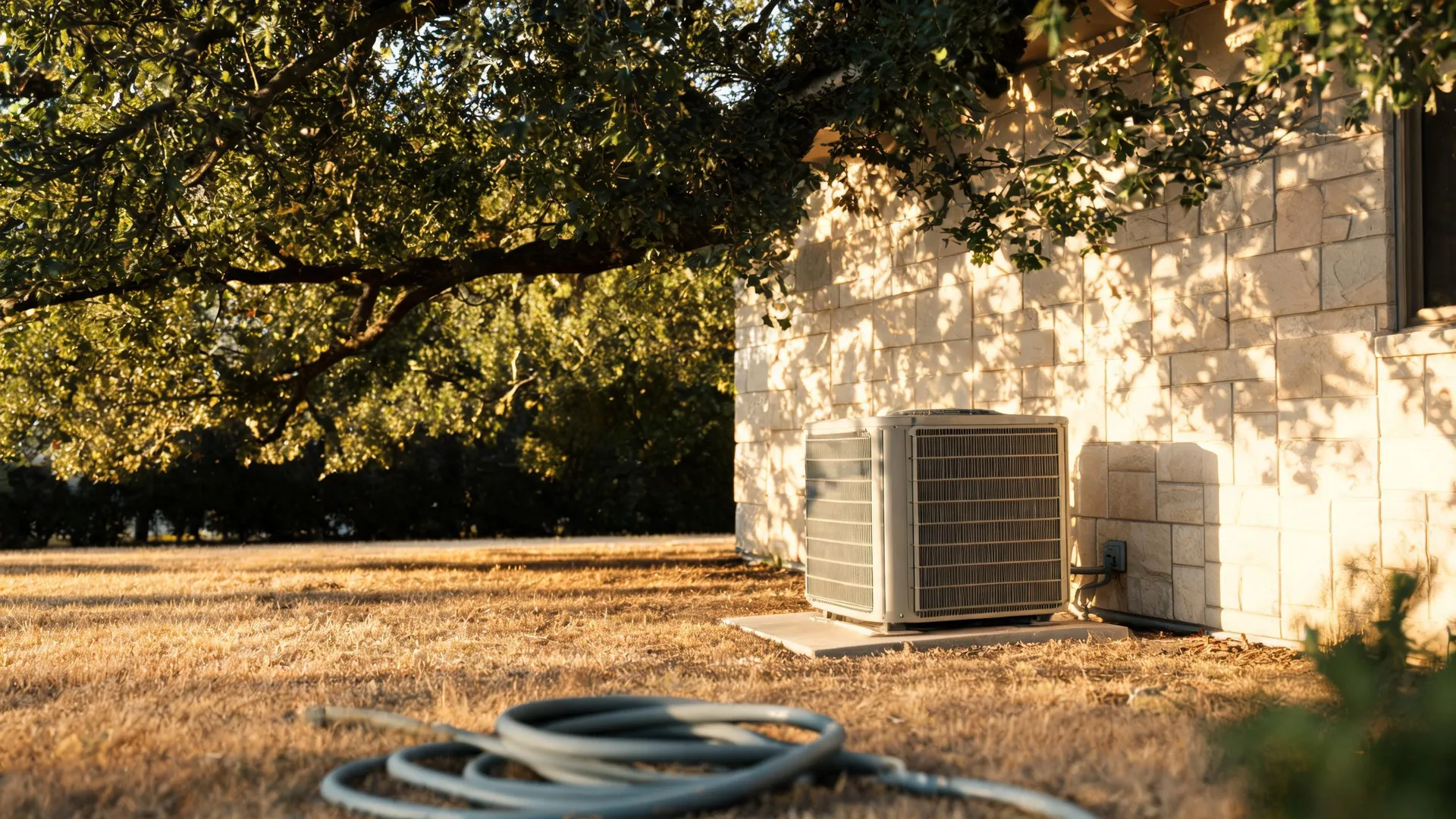
What That Means for a Repair Call

Most heat pump breakdowns trace back to one of these parts, not the compressor itself. A contractor checking a system that's short cycling, blowing warm air, or tripping its breaker will usually test the capacitor, contactor, and refrigerant charge before suspecting the compressor. Catching a weak capacitor or a slow leak early means a straightforward repair. Letting the system keep running with a failing part puts more strain on the compressor, which is the one failure that usually means replacing the whole unit instead of fixing it.

A capacitor that's starting to go doesn't fail all at once. It makes the compressor pull harder each time it starts, and heat builds up in the motor windings with every cycle. Keep running it that way and the windings can short out, which turns a capacitor swap into a compressor replacement. A refrigerant leak follows the same pattern. Low charge makes the compressor run hotter and longer to hit the set temperature, and it keeps losing what refrigerant is left while it does. A system making a new noise or tripping its breaker is already telling you something is wrong. Shutting it off and getting it looked at protects the one part that's expensive to replace.

A diagnostic call starts outside at the unit itself. A contractor will check that the fan spins freely and that the coil isn't caked with debris, since either one changes how the system reads to everyone inside. Gauges go on next to check refrigerant pressure, because that number says more about what's going on than how warm or cool the air coming out feels. The electrical side gets tested too: capacitor, contactor, and the wiring between them, since those carry the load every time the system cycles. Inside, a contractor checks the thermostat's calls against what the unit is actually doing, since a system that isn't getting the right signal can look broken when it isn't. Expect the reversing valve to get tested directly, by switching the system between heating and cooling and watching whether it responds. None of this takes guesswork. Each check rules something out until what's left is the actual problem.