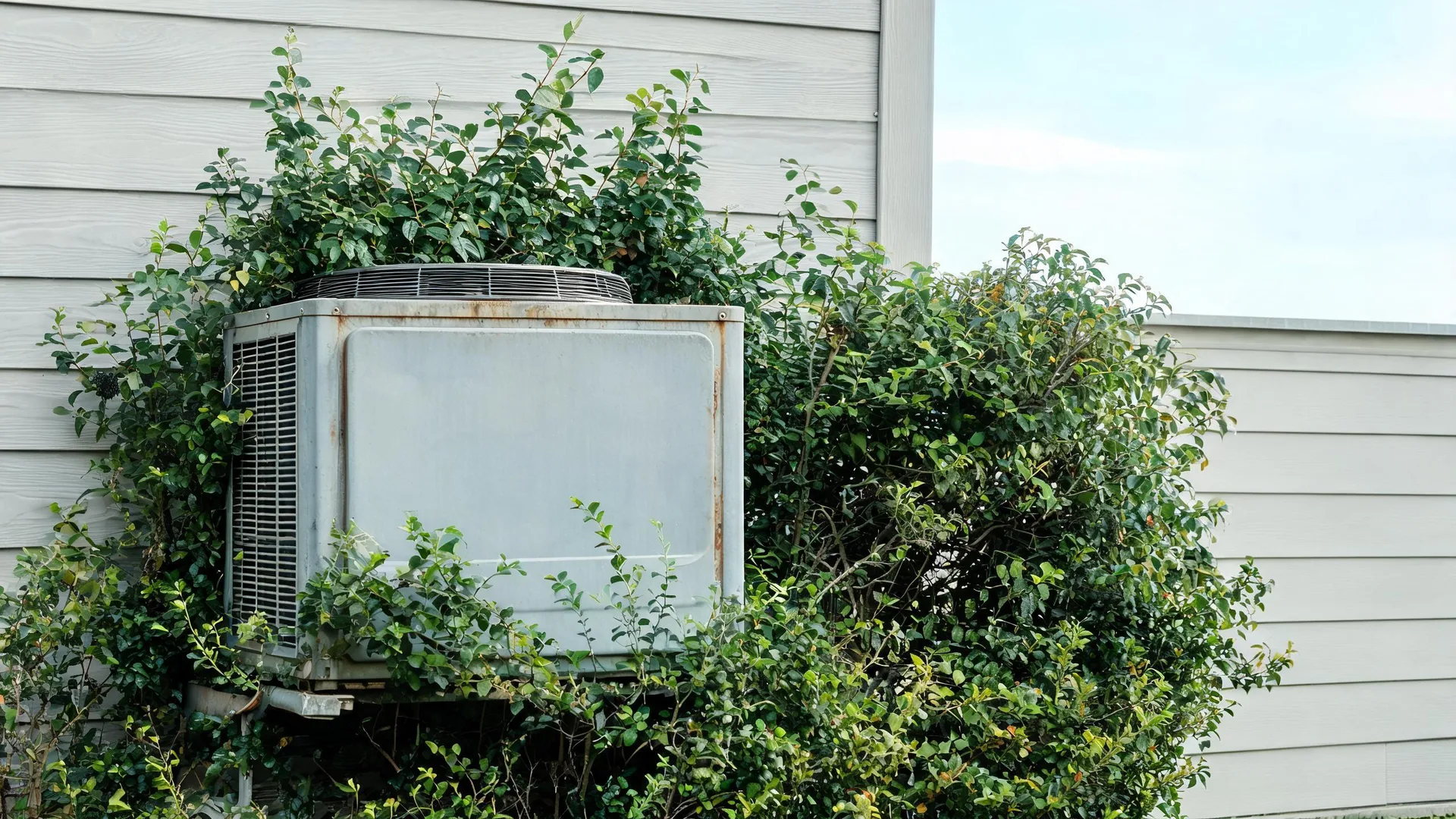
Winters here stay mild
Overnight lows in Visalia average 31°F through December, January and February. A heat pump never has to fight single-digit cold to keep a house warm, and that's the hardest work this kind of system ever does.

Takes about a minute. No obligation.
Overnight lows in Visalia average 31°F through December, January and February. A heat pump never has to fight single-digit cold to keep a house warm, and that's the hardest work this kind of system ever does.
A repair technician is usually dealing with a unit that hasn't been pushed hard for years at a stretch. When something goes wrong, it's more often one worn part than a system run down by strain, and that's a better problem to have.

NOAA nClimDiv, 1991–2020 normals
Half the homes in Tulare County were built in 1983 or later.
A heat pump in a newer Visalia home has likely had an easier life, and repair is usually the right call.




California electricity ran 31.97 cents per kilowatthour in 2024, well above the national average. A heat pump that's cycling too much, short cycling, or running with a dirty coil pulls more power to do the same job, and at that rate it shows up fast on the bill. Visalia's mild winters mean the unit isn't straining against hard cold, so a system costing you more to run is usually a sign of one bad part, not old age catching up with it. Worth having someone find that part before another month passes through the meter.
If your heat pump came with the house, there's a good chance it's not old enough to be the problem. Get the part that's failing looked at before you think about replacing the whole unit.
Find a contractorA heat pump here spends most of the year on easy duty, and the day-into-night clip shows that steady, unforced pace. Years on the nameplate tell you less than what gets found once the panel is off. A system that has run for years under mild winters can still be a sound repair candidate, where the same years of hard cold elsewhere might not leave much worth saving. Worth asking what part actually failed before deciding the whole unit is done.
A heat pump that runs but puts out air that feels barely warm or barely cool isn't doing its job even though it sounds fine. That points to the reversing valve stuck in one position, a refrigerant charge that's low, or a compressor losing strength. None of those get better by waiting.
A clicking at startup or shutdown is normal. Grinding, squealing, or a hard bang when the system switches between heating and cooling is not. That's usually a motor bearing wearing out or the reversing valve struggling to shift, and both get worse the longer they run.
Before anyone comes out, there are a few things worth checking yourself. Look at the thermostat first. Make sure it's set to the mode you want and the temperature is actually past where the room sits, since a setting bumped by accident gets mistaken for a broken system more than people think. Check the outdoor unit for anything blocking it, leaves, branches, a cover left on, anything stopping air from moving through the coil. Go to the breaker panel and look for a tripped switch. A heat pump that won't start at all is sometimes just that, not a failed part. Change the air filter if it's been a while. A clogged filter starves airflow and can make a healthy system act like a failing one. If the outdoor unit is caked in ice and it isn't actively defrosting itself, that's worth noting but not worth chipping at. None of this fixes a stuck reversing valve or a weak compressor, but it rules out the easy stuff first.
A diagnostic visit starts outside at the unit itself, checking refrigerant pressures and looking at how the compressor and fan are actually running, not just whether they turn on. From there it moves to the reversing valve, since that's what tells the system to switch between heating and cooling, and a valve that's sticking shows up fast under a gauge set. Electrical connections and the capacitor get checked too, since a weak capacitor can make a compressor strain without quite failing. Indoors, airflow across the coil gets checked along with the thermostat signal reaching the unit, because a part can be fine and the system still act broken if the signal calling for heat or cooling never gets there clean. The point of all this is narrowing a vague complaint, it's not heating right, down to the one part actually causing it, rather than guessing and replacing things that were never the problem.