A grey air-source heat pump outdoor unit mounted on a concrete pad next to a modern white-rendered residential house.

Heat Pump Repair in Yuba City, CA

Tell us about the job

Takes about a minute. No obligation.

RepairHeat PumpSutter County, CA
Step 1 of 2

What ZIP code is the job in?

The compressor decides the question

A heat pump lives or dies by its compressor. If that's still sound and the problem is a capacitor, a contactor, a fan motor or a low charge from a slow leak, repair makes sense and the system goes back to doing its job. A failed or failing compressor is a different conversation, since that part drives the whole system and replacing it alone often costs most of what a new unit would.


Age on the nameplate versus age in use

Two systems built the same year can be in very different shape depending on how hard they've worked and how they've been maintained. A unit that's had its coils cleaned and its refrigerant charge checked regularly holds up better than one that's been run without much attention. Worth asking a contractor to look at the specific unit rather than going by the year alone.

6 months
November through April, your system heats
5 months
May through September, it cools
40°F
the average winter night it heats against
94°F
the average summer afternoon it cools against
Isometric cutaway illustration of a house showing interior ductwork, an indoor air handler unit, and an outdoor condenser unit beside the building.
Your system heats November through April and cools May through September.

NOAA nClimDiv, 1991–2020 normals

Summer air in Sutter County holds less moisture than it does almost anywhere else in the country.

A heat pump does not have to work as hard pulling that moisture out, so one problem usually points to one worn part, not a system that has been struggling for years.

Five months of cooling, six of heat, and the first cold snap or heat wave finds the weak part

Cooling runs May through September
Heat runs November through April
Climate zone 3B

Electricity in Sutter County averaged 38.27 cents per kilowatt-hour in 2025, among the highest rates in the country. A heat pump that's running on a weak capacitor or a low charge still pulls power the whole time it's on, and here that power costs more per hour than almost anywhere else. The system runs fewer months than it would in a hotter or colder state, so the hit lands on fewer bills, but each one of those bills carries the full weight of the rate. A unit limping along doesn't wait for a convenient month to get worse.

A newer system is worth fixing

Half the homes in Sutter County were built in 1982 or later. If yours is one of them, your heat pump likely has years left in it, and the kind of problem that shows up now is usually a part, not the whole unit. Get it looked at and keep it running.

Find a contractor
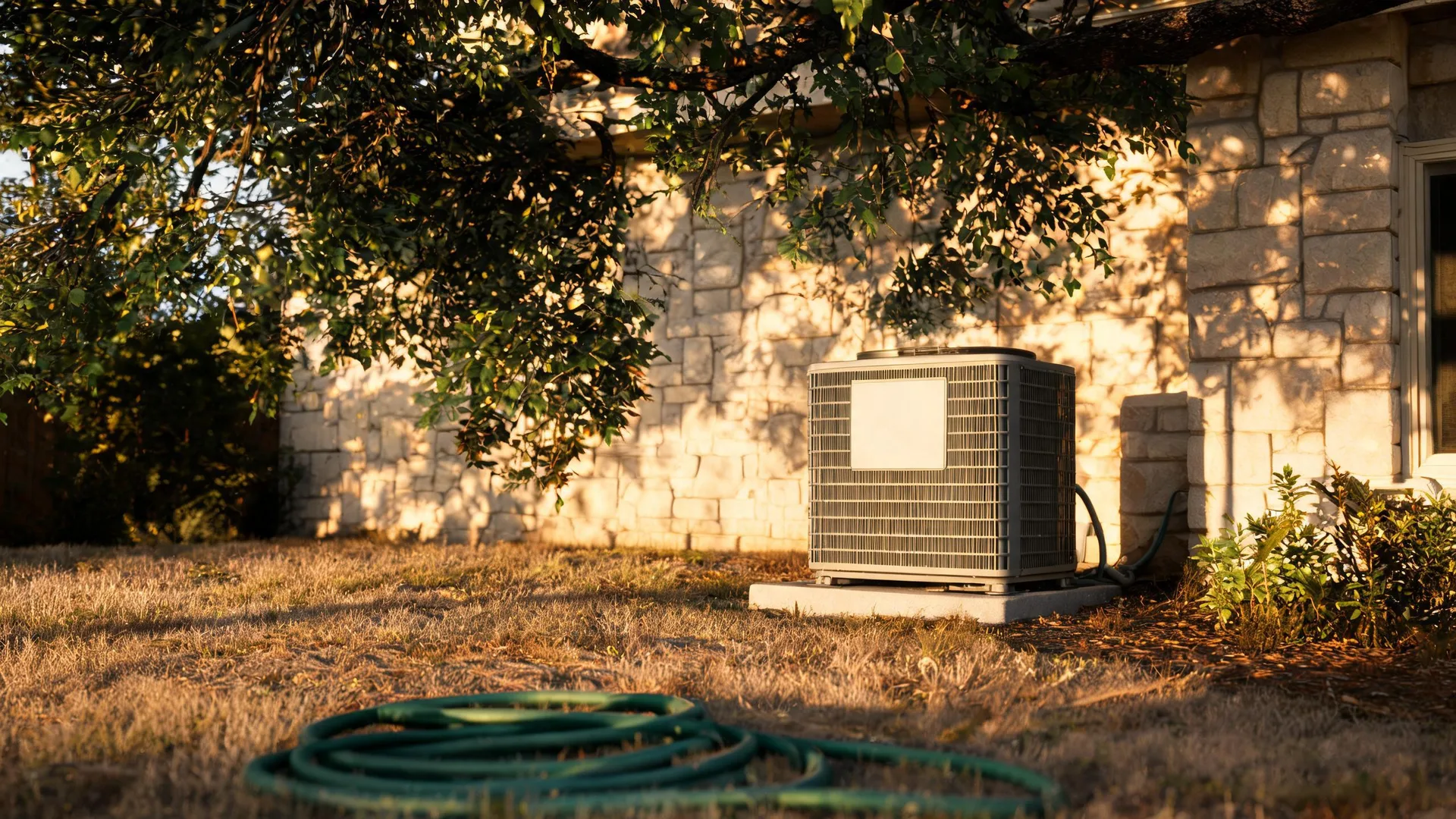
A gray outdoor HVAC unit mounted on a concrete pad beside a house with gray lap siding and a stone foundation.

Running less than most, parked outside through all of it

That lighter workload is why a single bad part usually explains the problem instead of a system worn down all over. It also means a repair now holds up the same way the rest of the unit has. Worth asking the contractor to check the cabinet and the panels while they're out, since wind is the one thing here that wears on a unit regardless of how easy its job is. Sutter County has had damaging wind 56 times between 2015 and 2024, and that's weather working on the outside of the unit, not the compressor working hard. A few loose screws or a bent fin is a quick fix next to a worn capacitor or a slow leak, and not the reason to think twice about repairing it.

The reversing valve is the odd part out

A heat pump has one part a straight air conditioner doesn't: the reversing valve that switches it between heating and cooling. When it sticks, the system gets stuck in one mode, or it runs but blows the wrong temperature air. That valve takes a beating because it shifts position every time the system changes jobs, year round, not just part of the year.

Most calls are the same handful of parts

Capacitors wear out and stop giving the compressor and fan motor the jolt they need to start. Contactors pit and stick from switching on and off thousands of times. Outdoor fan motors seize up or start running slow. A low refrigerant charge almost always means a slow leak somewhere in the line set or coil, not a system that just needs a recharge. None of these mean the unit is done. They mean a specific part failed, and a contractor can usually tell which one in a short visit.

A system that's losing its charge or struggling to start doesn't fail all at once. It fails a little more each time it runs. A compressor that starts on a weak capacitor pulls more current than it should every single time, and that extra strain adds up in a part that's expensive to replace on its own. A slow refrigerant leak behaves the same way. Keep running the system low on charge and the compressor runs hotter than it's built for, which shortens its life instead of just costing more to operate. A fan motor running slow because the bearings are going will eventually seize, and when that happens the compressor can overheat with nowhere for the heat to go. The fix early on is usually small. Left alone, the small part takes the big one down with it.

A bad part doesn't just cost more to run, it costs more every hour it sits unfixed at these rates. Waiting a month to call doesn't save money here the way it might somewhere with cheap power. If the compressor itself is still sound, a stuck contactor or a weak capacitor is a quick visit and a small bill compared to what it's pulling in power while it struggles. Get it checked before the next hot stretch or cold snap asks more of it.