

What size heat pump a California home needs
Skip the round of in-home estimates for a new heat pump.
Start one formWhat size heat pump do I need for my house in California?
Replacing a furnace or AC with a heat pump, or putting one in new, means someone has to figure out the right size. A lot of homeowners have heard the warning that bigger isn't better, but that doesn't tell you what number to look for on your own house. You want to know what actually determines it before you talk to anyone about installing one.
The right size comes from a load calculation, not your square footage
A contractor sizes a heat pump using a Manual J load calculation, which looks at your home's square footage along with its insulation, windows, ceiling height and how much shade it gets. Two houses the same size can need different sized systems because of those details. Since summers in most of California run warm without much humidity, the cooling load is usually not what drives the sizing the way it would in a muggier climate. The bigger question is often the heating side, especially if the heat pump is replacing or working alongside a gas furnace. A unit that's too large will cycle on and off too often instead of running steadily, and one that's too small will struggle to keep up on the coldest nights.






Getting the size right starts with a load calculation, not a chart or a guess based on the old unit's label. A contractor walks the house, notes the square footage, the insulation, the windows, and runs that against climate data for your zip code. That number tells them how much heat the house gains and loses, which is what the equipment actually has to answer for. From there, the outdoor unit and the indoor coil or air handler get matched as a pair, since one sized right and the other sized wrong still cycles badly. The ductwork gets a look too. A heat pump pushes a different volume of air than whatever it's replacing, and ducts built for the old system can choke a new one that's otherwise sized correctly. Because gas heat is common here, the heating side of the calculation often matters less than getting the cooling capacity and the balance point right. None of this shows up on the nameplate. The tonnage stamped on the unit says what it's rated for, not whether it fits your house.
How a contractor actually sizes it
- A contractor sizes your heat pump with a Manual J load calculation, which weighs your square footage, insulation, windows and the Bakersfield or Fresno or San Diego climate data for your zip code.
- Oversizing is the common mistake, since a heat pump that's too big cools the air fast but shuts off before it pulls the humidity down, leaving rooms feeling clammy.
- The outdoor unit's capacity has to match the indoor air handler or coil, because a mismatched pair cycles wrong no matter what the labels say.
- Because most California homes here heat with gas, the heat pump's heating capacity matters less than its cooling capacity and its balance point in the ductwork sizing.
- Existing ductwork gets checked too, since a heat pump moves a different volume of air than the AC or furnace it's replacing and undersized ducts choke even a correctly sized unit.
- The nameplate tonnage only tells you the unit's rated capacity, not whether it was matched to your house, which is the part a load calculation actually confirms.



Skip the search
Your request goes to one pro, not a list of companies.
Describe the project once instead of to every installer.
Sending the form costs nothing.
Oversized vs. Right-Sized Heat Pump
Oversized unit
- It satisfies the thermostat fast, so it shuts off before it pulls the moisture out of the air, and rooms end up cool but clammy.
- Short cycling puts more wear on the compressor since it starts and stops far more often than a properly sized one would.
- It costs more to buy and install than the unit your house actually calls for.
- Temperature swings between cycles feel sharper, so a room cools fast then drifts warm again before the next cycle kicks in.
- In winter it heats the air quickly without running long enough to feel even, so some rooms stay cold while others overshoot.
Right-sized unit
- It runs in longer, steadier cycles, so the compressor sees less start-stop stress over the life of the system.
- Power here is expensive, and a unit matched to your house avoids the waste that comes from oversizing.
- It holds a steadier temperature room to room instead of swinging between a hard blast and a quiet stretch.
- On the warm, dry afternoons common here, it keeps pace without straining to catch up.
- A Manual J calculation backs the sizing, so it reflects your square footage and insulation rather than a guess based on the old system.
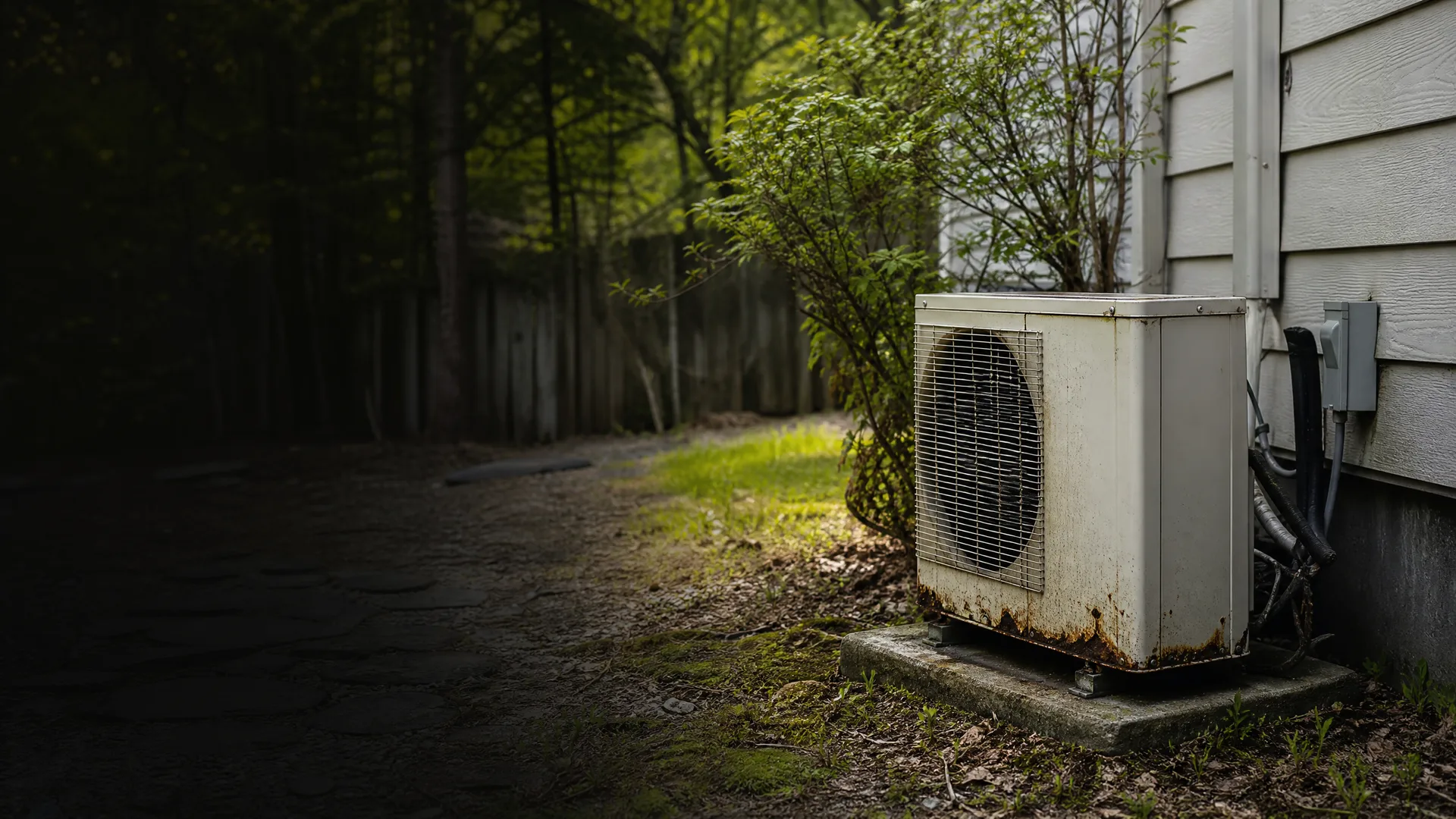
You're out in the side yard in March, coiling up the hose, and you catch the outdoor unit sitting against the fence. Rust has crept along the base panel, flaking where the metal meets the concrete pad. It still runs. It kicked on twice this week when the afternoon warmed up. But you notice it cycling more than it used to, off and on, off and on, while you're out there working. You crouch down and look at the rust line, wondering how long the base has looked like that without you really seeing it. The air is mild, nothing like August, but the unit sounds like it's working anyway.
Is your heat pump actually the right fit for your house?
You might notice the thermostat never quite settles, the fan running on and holding instead of shutting off. Or the opposite: it clicks off a few minutes after it starts, over and over through the afternoon. Some rooms stay warm while others don't, or the air near the vents feels damp instead of dry and cool. Your power bill might be higher than a neighbor's with a similar place. None of this means the unit is broken. A heat pump that's the wrong size for your house will run this way its whole life, and the extra cycling wears on the compressor faster than it should, which shortens how long the system lasts.


Power costs 31.35 cents per kilowatt-hour statewide
At 31.35 cents per kilowatt-hour, every ton of capacity you don't need keeps drawing power you're paying top rate for. Right-sizing isn't just about comfort here. It's what keeps your monthly bill from running higher than it should.
EIA-861 2025 statewide residential average
The right size for your heat pump comes from your house, not a rule of thumb, and that's what a Manual J calculation is for. Getting it installed right matters more than getting it installed fast, and that's the part worth being careful about. A local contractor who works on heat pumps all year in your part of California has seen what fails when a unit is sized wrong for homes like yours, and sizes accordingly instead of guessing. You deal with one contractor, licensed to do the work, not a handful of companies calling about the same job. That's one less thing to sort out before anyone sets foot in your yard. Once the sizing is right, the rest follows: steady runs on the warm days, a thermostat that holds, and a power bill that isn't paying for capacity your house never needed in the first place.

Heat Pump Installation
Explain it one time

- A local installer who puts in heat pumps gets your project.
- Say what's going on with your heat pump, and a pro who works on them reaches out.

- Send the form and stop researching installers for the new heat pump.
- One request ends the search for a heat pump installer.

- Skip collecting and comparing quotes for the new heat pump.
- Fill out one short form instead of calling around.

- The pro who reaches out is licensed in California.
- Only one pro gets your request, so you hear from one company.