Your mini split should be keeping up right now. California summers don't bring the heavy, wet air other parts of the country deal with, so a unit that's working right has an easier job here than almost anywhere else. If yours is running and the room still isn't cooling, something in it needs a tech, not a thermostat adjustment.
It could be a dirty coil, a refrigerant leak, a failing compressor, or a blower that isn't moving enough air. It might be something in the installation that never worked right. You don't need to figure out which one. You need someone who works on these systems to go look.
With power costing what it does here, a mini split that runs without cooling is money going out for nothing. That's worth fixing fast, not living with through another hot stretch.
Send the form and the search is done. You'll be matched with one licensed contractor near you, not a list of companies competing for your callback. Someone local who services mini splits all summer knows the handful of things that usually cause this and how to check each one quickly.
From there it's off your plate. No more trying to figure out if it's low refrigerant or a bad sensor, no more calling around for someone who actually works on ductless systems. That part is handled once you send the request.
Tell it what's going on below.
A mini split that runs but doesn't cool is usually losing refrigerant or losing airflow before the air ever reaches the room. A dirty filter or a blocked outdoor unit makes the indoor coil work harder for less cold air, and a slow refrigerant leak will do the same even when everything else looks fine. Because California air is already dry, a working system should bring a room down fast, so if yours is running a long time and barely moving the temperature, that gap is the clue something inside it isn't right. It's not a sign to run it harder or wait it out. A low charge or a dirty coil doesn't fix itself, and running the unit while it's short on refrigerant can damage the compressor, turning a repair into a replacement. Someone who works on these year-round can usually tell what's wrong by how it's failing.
Air moves freely from the vents and the room reaches the temperature you set it to.
Dust caked along the vents chokes the airflow, so the coil behind it can't give up its cold.
Two coils do the work. The indoor coil needs cold refrigerant moving through it and room air crossing it at the same time, and it only pulls out heat when both are happening together. That heat has to go somewhere, so the outdoor unit pushes it into the air outside, and anything caked across its fins makes the compressor fight to push the same amount of heat through a smaller opening. A thermistor sitting near the indoor coil is what tells the board how hard to run the compressor, so a reading that's off sends the wrong instructions down the line. If refrigerant is low, the indoor coil can drop cold enough to frost over, and ice is the opposite of what the coil needs, it blocks the air instead of cooling it. Heat pump systems add one more part worth knowing: a reversing valve that switches the system between cooling and heating. If it sticks halfway, the system can't commit to either one. And the outdoor fan has a job too, pulling enough air across the condenser coil to keep the compressor from overheating and shutting down on its own.
How a mini split actually cools
The indoor coil needs a steady flow of cold refrigerant and a steady flow of room air crossing it at the same time to pull heat out.
The outdoor unit rejects that heat into the outside air, so anything blocking its fins makes the whole system work against itself.
A thermistor near the indoor coil reads the air temperature and tells the board when to ramp the compressor up or down.
Low refrigerant lets the indoor coil drop below freezing, and ice on the coil blocks airflow instead of cooling it.
The reversing valve that lets a heat pump mini split cool and heat can stick partway, leaving the system caught between modes.
The outdoor fan has to spin fast enough to pull enough outside air across the condenser coil, or the compressor overheats and shuts itself off.
A mini split that's losing refrigerant won't fix itself, and running it longer just pushes the compressor to do a job it can't finish. Every month it limps along is a month of power drawn for a room that never gets cold, and power here costs more than almost anywhere else. California homes lean on gas for heat, which means the mini split is likely doing all the cooling in that room, and a dry day outside won't make up for a system that's low on charge or choked with dust. Someone who works on these units through every California summer has seen which failures show up again and again in this climate, and knows what to check first. Getting a licensed local contractor out to look at it now, before the compressor strains harder than it has to, is worth more than waiting to see if it sorts itself out.
Clear coil, clear path
The unit sits high on the wall, vents open, nothing in its way. Air pulled in crosses a clean coil and comes out cold. The room holds the temperature you set because nothing between the coil and the air is slowing that exchange down.
Caked vents, starved coil
Grime has built up across the casing and packed into the vents. Air can't cross the coil the way it needs to, so the refrigerant inside stays warmer than it should. The unit runs, the fan turns, and the room barely moves off where it started.
Before you get your mini split repairAfter you get your mini split repair
1
Refrigerant inside the indoor coil pulls heat out of the air crossing it.
2
A fan pushes that cooled air out through the vents into the room.
3
The outdoor unit carries the absorbed heat away and releases it outside.
4
A leak or blocked coil breaks this cycle before the air gets cold.
Power costs 31.35 cents per kilowatt-hour statewide
At 31.35 cents a kilowatt-hour, a mini split that's lost refrigerant or airflow is drawing power for cold air it never delivers. You pay full price for a unit doing half the work, every hour it runs that way.
EIA-861 2025 statewide residential average
Working the way it should
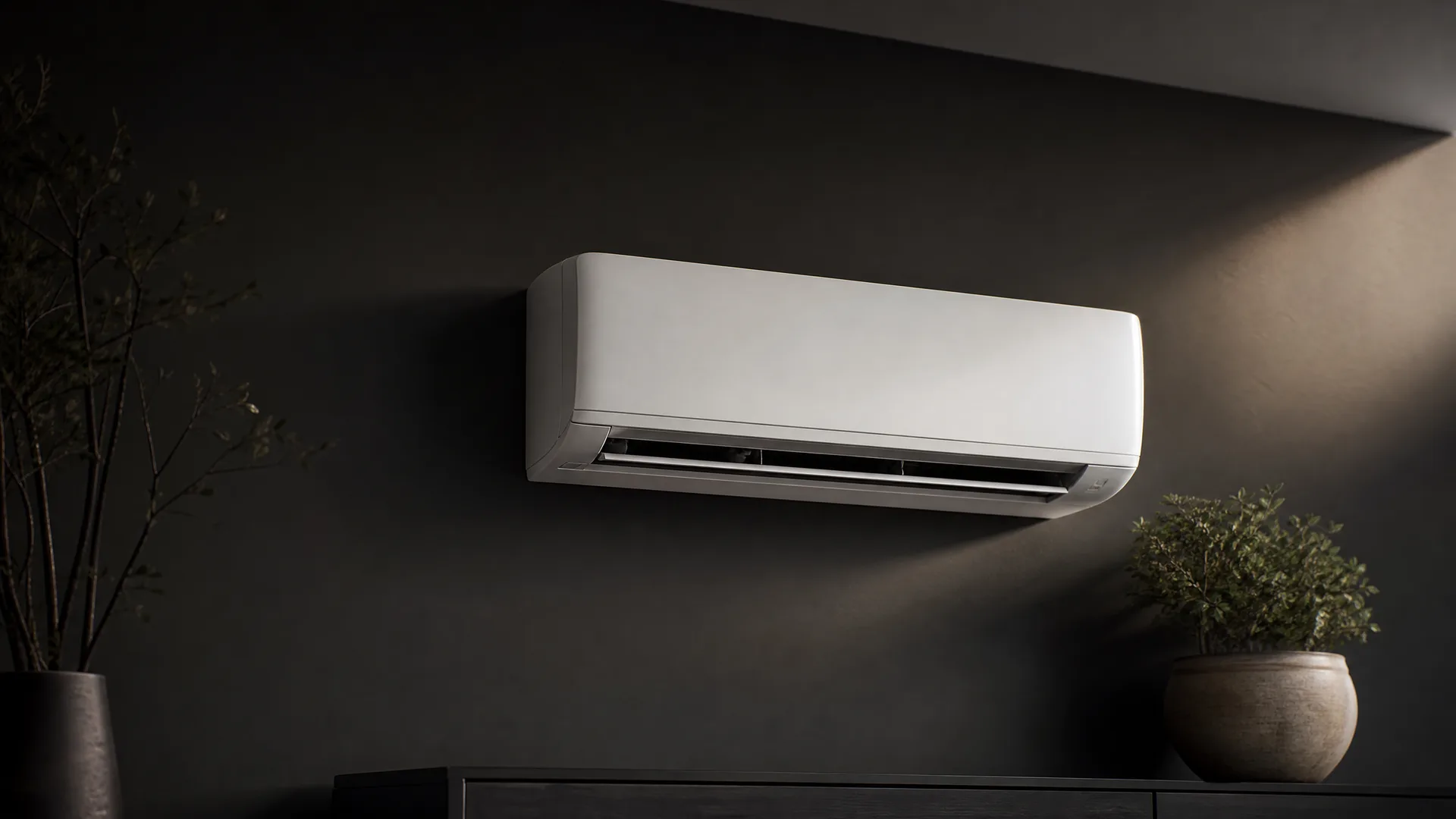
The unit sits near the ceiling, vents clear, nothing in its way. Set a temperature and the room gets there and holds it. A window open to the yard doesn't change that, because the coil behind the vents is doing its job without a fight.
Aged and struggling
Dust has built up over the casing and the louvers look worn down. A unit in this shape is usually pulling in warm air and sending out barely cooled air behind it. The room never quite catches up, no matter how long it runs.
Why does my mini split blow warm air sometimes and cold other times?
It's a strange thing to see. The same mini split, the same setting, and the air coming out of the vent is cold one hour and lukewarm the next. Nothing about the room or the weather outside changed enough to explain it, so it feels less like an obvious breakdown and more like the unit can't make up its mind. That inconsistency is usually the clue worth paying attention to.
It's cycling through defrost, or it's losing refrigerant partway through the run
A mini split that runs cold then warm is usually doing one of two things. If it happens in short bursts, the outdoor unit may be running a defrost cycle, briefly reversing to melt frost off its coil before switching back, which can push a few minutes of warm air through the vents. If the warm stretches last longer and come back on and off through the day, that points to low refrigerant. A low charge lets the system cool when conditions are easy and fall behind when the outdoor unit has to work harder, so performance swings instead of holding steady. A refrigerant leak doesn't fix itself and tends to get less consistent over time, not more.
California air doesn't carry much moisture, and the summer dew point here averages 50°F, low enough that a mini split working right barely has to fight the air itself. That's part of why a unit that's losing refrigerant or airflow stands out so clearly. There's no humidity to blame for the room staying warm. When your mini split runs and the air still doesn't cool, the problem is the equipment, not the weather asking too much of it. A tech who knows what dew point around 50°F means here won't waste time checking for a moisture load that was never the issue.
NASA POWER T2MDEW county cells weighted by homes
What This Comes Down To
A mini split that runs without cooling is almost always short on refrigerant or starved for airflow, not broken outright.
California's dry summer air means a working unit should pull the room down to temperature without a fight.
A clogged filter or a blocked outdoor coil makes the system work harder while delivering less cold air.
A refrigerant leak gets worse with time, so the fix doesn't come from running the unit longer.
A local contractor who services mini splits all summer knows the handful of things that usually cause this in homes here.
Sending one request means one licensed contractor looking at your unit, not a string of callbacks from companies competing for the job.
A mini split that runs but doesn't cool almost never means a dead unit. It means the coil isn't getting what it needs, either cold refrigerant or air moving across it, and in dry California heat that shortfall shows up fast because the air itself isn't the problem. A unit working right here should get the room to temperature without straining. One that doesn't is telling you something specific: a clogged filter, a blocked outdoor coil, or refrigerant that's been slipping out slowly for longer than you'd guess. None of that gets better with time. A slow leak stays a leak, and a buried outdoor unit stays buried, until someone opens the system up and finds the actual point of failure.
That's a diagnosis, not a guess, and it takes someone who sees this pattern on a regular basis to get it right the first time. A contractor who works on mini splits all summer in your area has already seen the handful of things that usually cause this in homes like yours, and knows where to look before anything gets taken apart. Send one request and you get one licensed, local contractor looking at your specific unit, not a handful of companies calling to bid on the job. You've read what's likely going on. The next step is getting someone who works on this equipment every day to confirm it and fix it.