Running clean
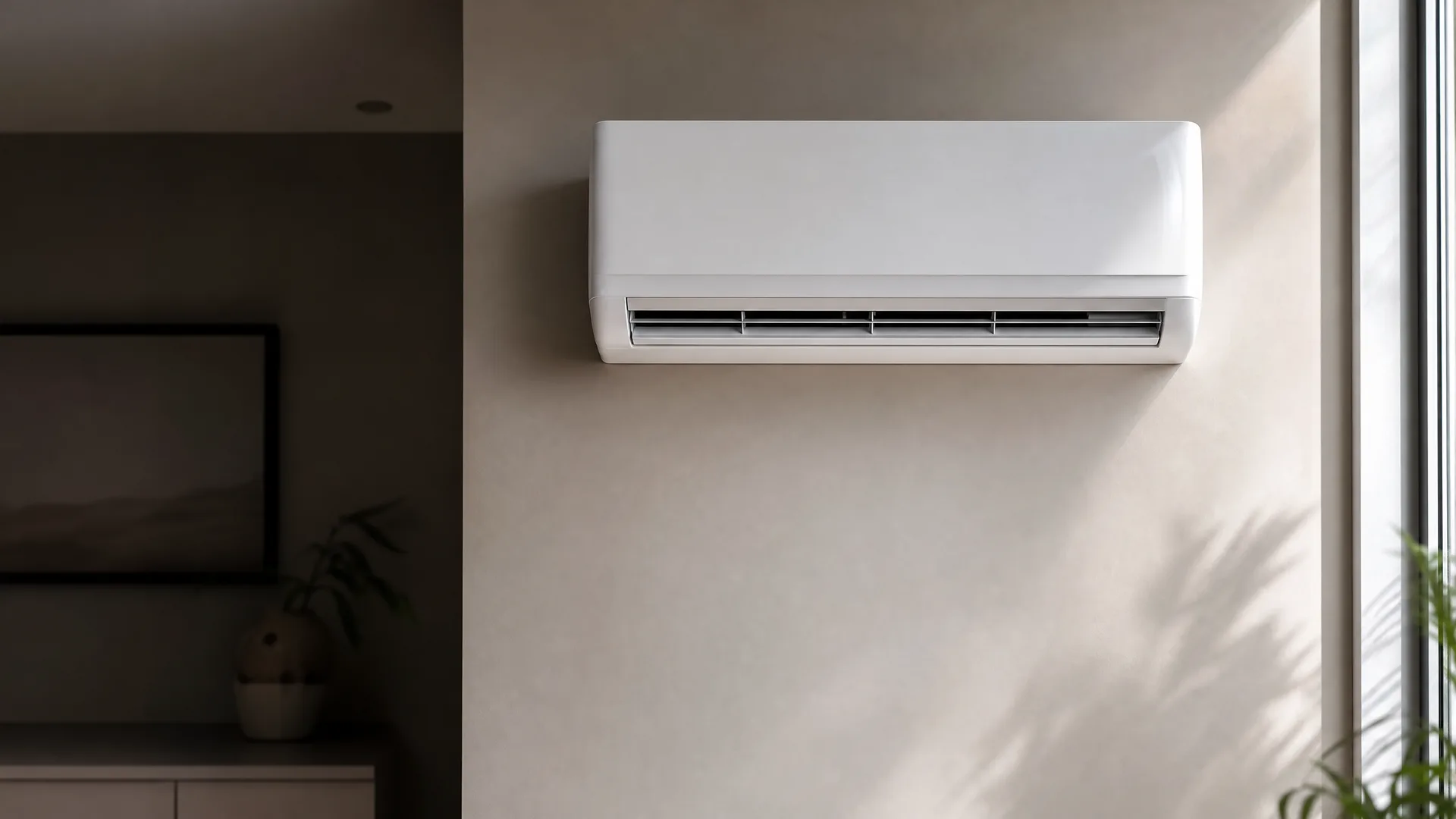
This is what airflow across the coil looks like when nothing's blocking it. The vane opens fully, air moves through at the rate the system was built for, and the coil stays above freezing even on a hot afternoon.
 Send it today
Send the request today and let a mini split pro reach out to you.
A mini split that's icing over its coil in a California summer isn't doing it because the house is humid. It isn't. That ice is telling you something is wrong with airflow or refrigerant, and running it longer to push through won't clear it. It'll just make the coil worse and put strain on the compressor.
Mild air outside doesn't mean the system has it easy. A dirty filter, a blower losing speed, or a refrigerant charge that's drifted low will all starve the coil of the airflow or pressure it needs, and the moisture in the air freezes right onto it instead of draining off. Once that ice builds, the unit is cooling less and running longer to do it, which matters here more than almost anywhere, since the power to run it costs more than it does in most of the country.
You don't have to figure out which of those it is. That's the part a licensed contractor sorts out once they're in front of the unit, and it's also the part you don't have to spend your afternoon on. No calling three companies to ask if they even work on mini splits, no describing the same frozen coil over and over to whoever picks up, no sitting with a stack of quotes trying to guess which one is honest. Send the form once and that search is off your plate.
A mini split that's already iced over needs to come off and thaw before anyone can see what's actually wrong with it, which is its own reason not to wait this one out. The sooner it's looked at, the sooner it's just running again instead of costing you in power while it struggles.
A mini split that's icing over its coil in a California summer isn't doing it because the house is humid. It isn't. That ice is telling you something is wrong with airflow or refrigerant, and running it longer to push through won't clear it.
Either the coil isn't getting enough air across it, or it doesn't have enough refrigerant moving through it. A dirty filter or a blower that's slowed down cuts the airflow the coil needs to stay above freezing, and the coil ices instead of cooling. A low charge does the same thing from the other side, dropping the pressure in the coil low enough to freeze the moisture in the air passing over it. California's dry summer air doesn't cause either problem, but it also won't melt the ice for you once it's formed. Left alone, the ice builds with each run cycle and can push liquid refrigerant back into the compressor, which is a repair that costs more than the one that started it.

This is what airflow across the coil looks like when nothing's blocking it. The vane opens fully, air moves through at the rate the system was built for, and the coil stays above freezing even on a hot afternoon.

Dust and grime like this choke the airflow before it reaches the coil. Less air across the coil means the refrigerant inside runs colder than it should, and that's what starts the ice. Left alone, it keeps building.
Look at the indoor unit while it runs. A layer of ice along the coil, sometimes thick enough to drip once the system shuts off. The air coming out of the vents feels weak or barely cool, even with the thermostat set low. Some owners hear a hiss near the line set outside, or notice the outdoor unit running nonstop without the house ever catching up. Water pooling under the indoor unit is the ice melting between cycles. None of this clears on its own, and a system that keeps icing and running anyway is working harder than it should, which shows up on a power bill that's already high for the summer months here.

You're at the desk around two in the afternoon, the sun hard on the west side of the house, and you notice the wall under the mini split looks dark. You get up and find a wet streak running down the drywall, and under the indoor unit there's already a towel someone put down last time this happened. The air coming off the unit barely reaches the chair. You press a hand to the wall and it's cool and damp, not just the paint. You've caught small things before they turned into drywall jobs, so you know what this is: ice built up on the coil has melted while you sat there working, and it's going to keep happening until something inside that unit gets looked at.
A frozen coil doesn't clear itself, and running the unit while you wait only keeps the ice building. Meanwhile power here costs more than almost anywhere else, and a mini split working against a block of ice on its own coil is pulling current without delivering any of the cooling you're paying for. With gas heat in most homes here, this mini split is likely carrying the whole job of cooling the house through the warm months, so a day or two without it matters. The usual path from here is slow: searching for someone who works on these systems, calling a few, describing the ice and the weak airflow to each one, waiting on quotes, trying to judge who actually knows mini splits versus who's guessing. None of that gets the ice off the coil any faster. Send the request and that search stops being yours to run. You get back to the part that matters, which is having someone look at the unit and tell you what's actually blocking the airflow or short on charge.
A mini split is built to hold a specific charge of refrigerant. When some of it leaks out, usually from a fitting or a pinhole in the line, the remaining refrigerant expands more than it should as it moves through the coil. That drops the coil's surface temperature below freezing instead of the usual range it runs at. Moisture in the air passing over the coil freezes on contact instead of condensing and draining off. The system can't add refrigerant back on its own, and the leak doesn't seal itself. Once the charge is low, every hour of runtime adds more ice, and a licensed contractor has to find the leak, repair it, and recharge the line set to the amount the manufacturer specifies.
Refrigerant isn't the only way a mini split freezes. The indoor coil needs a steady volume of air moving across it to stay above freezing, and that air has to pass through the filter first. A filter clogged with dust cuts that volume down, so less heat gets pulled into the coil from the room. The coil's surface temperature falls the same way it does with a low charge, and ice forms the same way. This is why two mini splits with identical ice on the coil can have two different causes. One needs a filter cleaned. The other needs a leak found and sealed. A contractor checks airflow first because it's the faster thing to rule out.


The indoor coil only stays above freezing because warm air keeps moving across it and refrigerant keeps moving through it at the right pressure. Take either one away and the coil drops below 32 degrees, and whatever moisture is in that air freezes onto it instead of draining out as condensate. A leak that lets refrigerant out does this. So does a filter so clogged, or a return so blocked, that not enough air reaches the coil to keep it warm. Once a little ice forms, it works like insulation, keeping the coil even colder and catching more moisture, so the problem gets worse on its own with no help from the weather. The outdoor unit doesn't know any of this is happening. Its compressor keeps pushing refrigerant through a coil that's lost the ability to do anything with it, which is why you get a system drawing full power and producing nothing. A slow fan, whether the motor's going or a vane is stuck, starves the coil the same way a dirty filter does.


At 31.35 cents a kilowatt-hour, a mini split frozen solid and still running is an expensive way to blow cold air at nothing. It's pulling full power the whole time and cooling less of your house than it would with the coil clear.
EIA-861 2025 statewide residential average
You run it for an hour at a lower setting, hoping the ice clears on its own, and check back to find the same frost along the coil and the same weak air at the vents.
You shut it off instead and let the coil sit for a few hours, and by the time a contractor looks at it the ice is gone and the real problem, the one that caused it, is still there to find.





California summer air doesn't carry much moisture. Averaged across June, July and August, the dew point here sits around 50°F, measured by NOAA at weather stations across the state. That's dry air by any standard. So when your mini split ices up in July, the moisture didn't come from outside. It came from indoor air hitting a coil that's running too cold, which happens when refrigerant is low or airflow across the coil is blocked. In a humid state that ice might be explained by the air alone. Here, it can't be. The coil shouldn't be cold enough to freeze anything in air this dry.
NASA POWER T2MDEW county cells weighted by homes
A frozen coil on a mini split in California almost always comes down to one of two things: airflow blocked by a dirty filter or coil, or refrigerant that's lower than it should be from a leak somewhere in the line. The dry air here rules out humidity as the cause, which only leaves what's happening inside the unit itself. Shutting it off and letting the ice melt is the right first step, but it doesn't fix whatever caused the ice to form, and it'll come back once the unit runs again. Finding that cause means someone checking airflow across the coil and testing the refrigerant charge directly, not guessing from the thermostat. Instead of searching through contractors, calling a few, explaining the dripping wall or the weak air at the vents over and over, and sitting with quotes trying to compare one against another, you can send this once. From there, finding someone to look at the unit stops being something you have to manage yourself.
Hand off the mini split problem