
Mini split frozen up in Anaheim, CA

RepairMini-splitOrange County, CA
Step 1 of 2

What ZIP code is the job in?

A frozen mini split usually means warm air isn't moving across the coil the way it should. The most common reason is low airflow: a dirty filter or a blocked indoor coil forces the system to pull in less air than it needs, and the coil gets cold enough to freeze the moisture right out of that air. A low refrigerant charge does the same thing from the other direction, dropping coil temperature below freezing even with good airflow. Once ice forms, it builds on itself, blocking more airflow and making the freeze worse, so the unit can keep running while it does less and less cooling. Running it in this state can push liquid refrigerant back to the compressor, which is the part that gets expensive to replace. Switching it off and letting the ice melt fully, which can take several hours, is the first step before anyone can find out which of these it actually is.

A white wall-mounted mini-split air conditioner unit high on a light gray interior wall, with a beige curtain and window at the left and wood-look flooring below.

Running normally

Air moves out of the vents steady and cool, strong enough to feel across the room. The wall plate and coil underneath stay clean, no ice, no dripping. At this point the filter is doing its job and the coil can pull heat out of the air the way it's built to.


A dusty white wall-mounted mini-split air conditioner indoor unit with open louvers, installed near the ceiling on a plain light-colored wall.

Iced up and dirty

Grime along the outlet vents means airflow has been restricted for a while, and that's often what leads to a frozen coil. Once ice builds up, the unit can't cool the room, and running it longer only adds to the ice instead of clearing it.

How much does running a mini split cost you in Anaheim?

  • Cooling runs June through October

    You'll lean on that mini split for cooling from June through October, and a frozen coil during those months means five months of the year with no relief.

  • Heat runs December through March

    Heat runs December through March here, so if the same unit handles both jobs, a freeze-up now still leaves you short when it turns cold.

  • Power here costs 32.40 cents per kilowatt-hour

    At 32.40 cents per kilowatt-hour, a mini split icing up and running longer to compensate shows up fast on the bill, this is among the highest rates in the country.

NOAA nClimDiv 1991-2020 · EIA-861 2025

A white wall-mounted mini-split air conditioner installed near the ceiling on a plain beige interior wall.

Working as it should

Air comes out of the vent steady and cold. The casing stays clean and dry, no frost on the grille, no water on the wall underneath. A mini split in this shape is moving warm air across the coil the way it's built to.

A dusty, discolored wall-mounted mini-split air conditioner unit near the ceiling of a plain beige interior wall.

Iced over

The casing here is dusty and discolored, a sign it has gone a long time without a filter cleaning or a service visit. Once the coil underneath ices up, the unit can't pull heat out of the air anymore, and the ice has to thaw out before a contractor can even see what caused it.

Why does my mini split keep freezing up even after I turn it off?

You shut the unit off hoping the ice would melt and the problem would go away on its own, but hours later the coil is still coated, or it iced right back up the next time you ran it. That's confusing when the system isn't even running. It makes you wonder if the problem is bigger than a dirty filter, and whether the unit is safe to keep using in an Anaheim summer when you need it working every day.

Turning it off only stops new ice from forming, it doesn't fix why ice formed

Shutting the unit off takes away the cold refrigerant that was freezing the coil, so the ice you already have will slowly melt, sometimes taking several hours. But that's not a fix. Whatever cut off airflow to the coil in the first place, a clogged filter, a blocked return, a fan that isn't spinning fast enough, is still there when you turn the system back on. The coil drops below freezing again, and ice builds right back up, sometimes within the same afternoon. If you keep cycling it off and on and the ice keeps coming back, the cause is mechanical, not something that resolves by giving the unit a rest. A contractor needs to find what's actually restricting that airflow.

A smiling woman with long dark hair in a gray sweater sits at a white stone counter with a glass of white wine, with a kitchen, fireplace and sofa visible behind her.
A smiling woman with dark hair in a cream sweater sits at a marble table with a glass of red wine, with a lit lamp, sofa, fireplace and kitchen counter behind her.
A woman in a cream sweater laughs while seated at a marble countertop with a glass of red wine, with a dimly lit living room and sofa behind her.
A woman in a beige turtleneck sweater with her hair up sits laughing and looking to the side at a white marble table with a glass of red wine, in a dimly lit interior with a lamp and seating area behind her.

Once the coil ices over, the house stops cooling, not just cools less. Anaheim afternoons stay warm well into the evening, and a mini split stuck under ice can't do anything about that until the ice is gone and the airflow problem behind it is fixed. Leaving it running doesn't help. The compressor keeps trying to push refrigerant through a coil that's blocked with ice, and that strain is what turns a simple airflow fix into a compressor replacement. Meanwhile the ice itself is melting somewhere, and if that water finds its way behind the unit instead of out through the drain line, it can reach the wall or the floor underneath before you catch it. For a lot of homes here, one mini split is covering the whole main living space, so when it ices up, there's no backup room to retreat to. And a system that freezes and thaws over and over through a long cooling season wears faster than one that never ices up at all.

What a frozen unit puts at risk

  • A mini split iced over in July can leave your house sitting at 80 degrees or higher while Anaheim's heat holds through the afternoon and evening.
  • Running a frozen unit longer doesn't push more cold air out, it just makes the compressor work against a blocked coil until something inside gives out.
  • Water from the melting coil can run down the wall behind the indoor unit and into the drywall or flooring before you notice it.
  • A compressor replacement costs far more than the airflow fix that would have prevented the freeze in the first place.
  • If the system only has one mini split covering the main living space, losing it means no cooling anywhere in the house until it's fixed.
  • Letting it freeze and thaw repeatedly through the summer shortens the life of a system you're depending on for five months straight.
A white wall-mounted mini-split air conditioner installed high on a beige interior wall near the ceiling molding, with a light curtain and curtain rod at the left edge.
The wall plate sits clean against the crown molding, no streaks, no moisture, cold air reaching the far side of the room.
A wall-mounted mini-split air conditioner indoor unit with a discolored cream plastic casing and dusty outlet vanes, installed high on a plain light-colored interior wall near the ceiling.
The casing has gone yellow and dusty with age, and that same corner is where the frost builds up first.
A smiling middle-aged man in a dark green sweater sits at a candlelit table with wine glasses and a plate of greens in a dimly lit interior.
A woman in a dark knit turtleneck sweater reclines on a couch under a cream knit blanket, looking down at an open book, with a lit table lamp and framed pictures behind her.
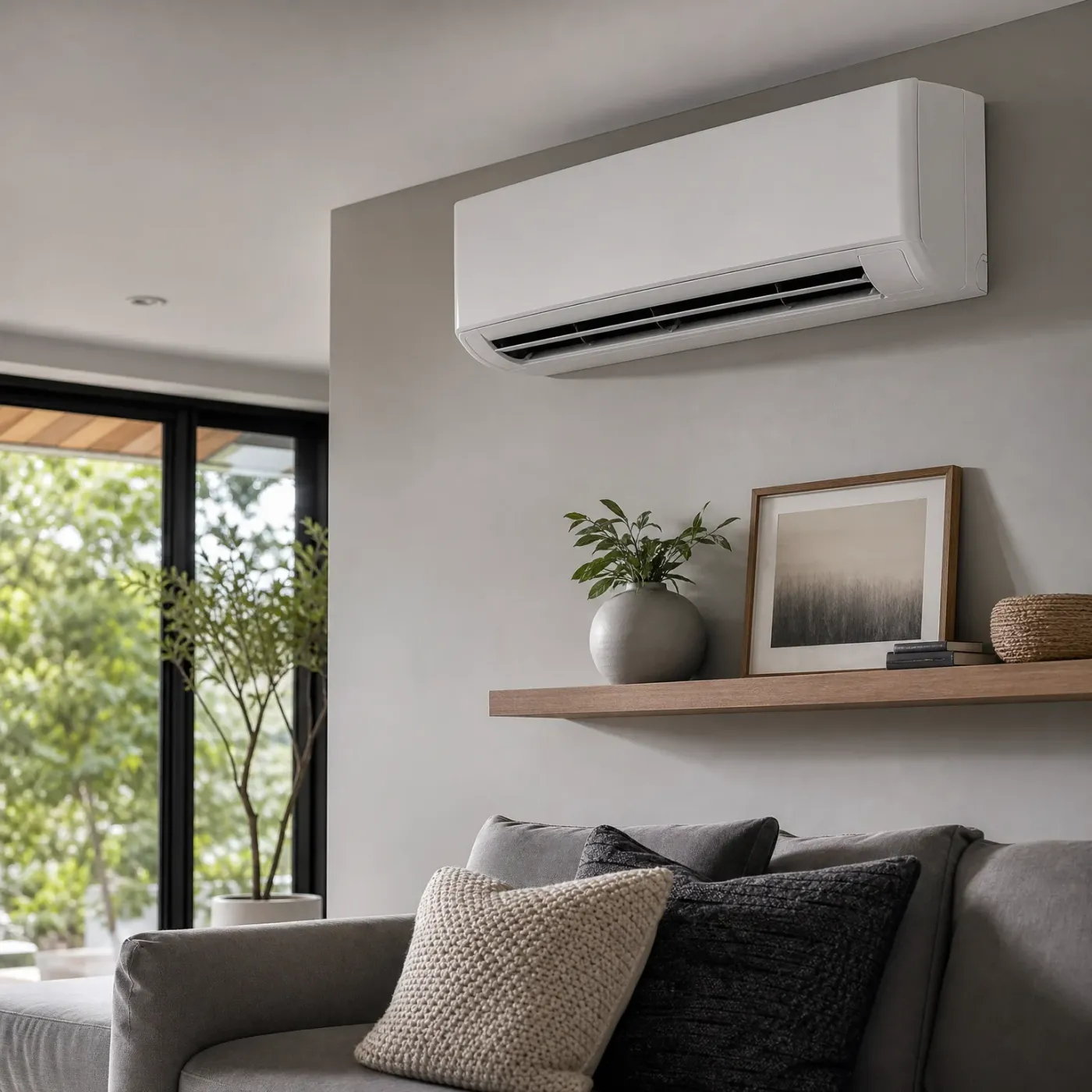
A white wall-mounted mini-split air conditioner near the ceiling of a living room with a gray sofa, knit cushions, a wooden floating shelf holding a plant in a round vase, a framed print and a woven basket, and a large window showing green trees.

Get matched with a mini split pro in Orange County

Explain the mini split problem once instead of to every shop in Orange County.

An Orange County pro who repairs mini splits gets your request.

Skip the calls

There's no charge for the request.

Call It In or Wait It Out

Call it in now

  • Shutting the unit off as soon as you see frost keeps the coil from icing over any thicker before someone can look at it.
  • A contractor can tell you whether the freeze is a dirty filter, a low charge, or a blocked coil before more running time adds to the damage.
  • Letting the ice melt on its own first saves a technician a wasted trip and gets the real cause found faster.
  • You get one phone call instead of pulling up reviews, dialing around, and explaining the same frozen coil story to each one.
  • A refrigerant leak behind that ice gets worse the longer the system runs on low charge, so the delay has a cost even if the house feels fine for now.

Wait it out

  • The house holds its temperature for a while even with the unit off, so there's no immediate sign anything is wrong.
  • Letting the coil thaw fully before anyone touches it means a tech sees the actual problem instead of just a block of ice.
  • If this is the first time it's iced up, it might clear on its own and not come back, especially if a filter change was overdue anyway.
  • Waiting costs you comfort each day it drags on, and Anaheim afternoons don't let up just because the system is down.
  • If the freeze comes back once you turn the unit on again, you're back to square one, only now you've lost the days you waited.
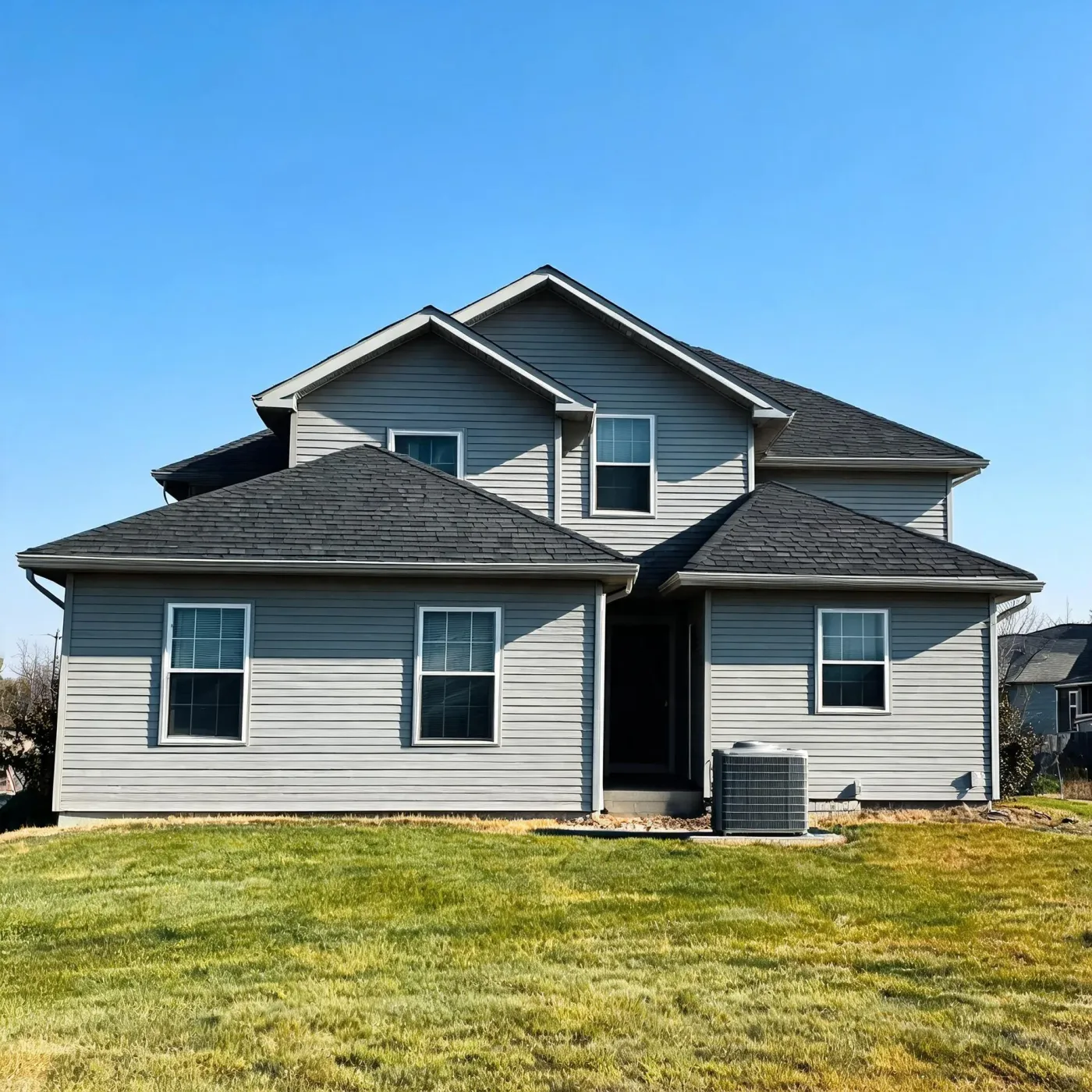
Rear view of a two-story gray vinyl-sided house with dark shingled gables, white-trimmed windows, an open doorway, an outdoor air conditioning unit, and a grassy lawn under a clear blue sky.

Orange County air in summer isn't heavy, the dew point averages 59°F across June, July and August. That's dry enough that a mini split working right shouldn't struggle to move heat out of the air. So when yours ices up anyway, dry outside air usually isn't why. It points back to something inside: low airflow across the coil, or refrigerant that's sitting low. You'll see it before you feel it, frost creeping across the coil or the wall plate while the room next to it stays warm instead of cooling down.

NASA POWER T2MDEW

What are you noticing around the unit right now

Look at the indoor unit and you'll likely see frost on the coil or the wall plate, maybe water pooling on the floor or running down the wall underneath as that ice melts. The air coming out of the vents has gone weak or stopped being cold at all, even though the unit is still running. You might hear it cycling on and off more than usual, working harder for less result. Left alone, the ice keeps building each time you run it, and the compressor is straining against a blocked coil the whole time. That strain is what turns a frozen coil into a bigger repair, and in the meantime your house just doesn't cool down.

A dusty white wall-mounted mini-split air conditioner installed high on a beige interior wall below a molded ceiling trim.
Before you get your mini split repair
A white wall-mounted mini-split air conditioner unit installed high on a light gray interior wall near the ceiling, with a white-framed window and green foliage visible at the left edge.
After you get your mini split repair

Letting it run while frozen puts more strain on the compressor, since it's working against a coil that can't move heat the way it's supposed to. Shutting it off and calling someone before you run it again is the safer bet for the system.

A contractor still needs to see the unit running or recently frozen to tell what caused it. Turning it off for good before anyone looks just means a longer wait to find out if it's the filter, the charge, or something else.

Cooling runs June through October

Five months of the year, your mini split is the only thing standing between you and an Anaheim afternoon. A freeze that hits in July or August isn't a small inconvenience you can wait out, it's your cooling gone for stretches of the stretch of the year you need it most.

NOAA nClimDiv 1991-2020

Where things stand with your mini split

  • A frozen mini split almost always comes down to low airflow across the coil, often a dirty filter or blocked coil.
  • Running the unit while it's iced over stresses the compressor and doesn't cool your house any faster.
  • Shutting it off and letting the ice melt before calling someone protects the system from further strain.
  • Cooling here runs June through October, so a frozen unit during those months means real days without relief.
  • A contractor can tell you whether the cause is a dirty filter, a low charge, or a blocked coil before you run it again.
  • Skip calling around to different companies and re-explaining the same frost and water you're seeing right now.

A frozen coil is the system telling you it isn't getting enough air across it, usually from a dirty filter or something blocking the coil itself. That's the whole answer. It's not low refrigerant in most cases, and it's not a sign the unit is worn out. What matters now is what you do next. Running it while it's iced over doesn't bring the cold air back faster, it just makes the compressor push against a coil that can't move heat the way it should. Switch it off, let the ice melt, and leave it off until someone's looked at it. That's the safer path for the unit, even if it means a stretch of warm rooms while you wait. June through October is when you need this thing working, and a freeze that hits in the middle of that stretch is days without relief, not a minor annoyance. The part you don't have to deal with is figuring out who to call. You don't have to search through companies, get someone on the phone, describe the frost and the water on the wall, then do it again with the next company while you compare what each one quotes. That part of this goes away once you're matched with a contractor who handles mini splits in your area. They'll ask about what you're seeing and go from there. The freeze has a cause. Finding out what it is doesn't have to be the hard part.

A covered porch with a wood front door with six upper glass panes, a lantern wall sconce, tapered column on a stone base, potted ferns and flowers, a woven doormat, and wide steps leading to a paver walkway bordered by shrubs and white hydrangeas.
A beige upholstered sofa with a cream cushion and chunky knit throw sits beside a white-framed window, with a leafy potted plant in a stone vase against a tan wall.
Sunlit corner of a room with a linen curtain beside a window, built-in shelves holding ceramic vases, wooden bowls, a potted green plant, stacked books and a woven basket, above a textured rug.
A dark wood three-drawer dresser against a pale wall holds a tall ceramic vase with leafy branches, stacked books and a shallow bowl, with a framed print above, a woven basket on the wood floor at left, and an upholstered sofa with a green pillow in the foreground.
A cream upholstered sofa with a textured ivory cushion and a rust-colored cushion sits beside a window with sheer linen curtains, with a potted leafy plant behind it and a wooden bowl on a wood table in the foreground.

Find a mini split repair pro in Orange County

Skip calling shops to ask who repairs mini splits in Orange County.

Answer a few questions

You only hire the pro if you want to.