






Can a mini split cool a whole house in Oakland, CA

A white wall-mounted mini-split air conditioner indoor unit on a plain light gray wall.
Hand off my installation

A single mini split can cool a whole house in Oakland, but only if it's sized and placed for that job, and most are not. A one-head system mounted in the living room will cool that room well and leave bedrooms down the hall warm, because it has no way to push air into closed-off spaces. What covers a whole house is a multi-zone system, with a head in each main room, or a ducted mini split tied into a small duct run that reaches every room. Oakland's summers help your case either way. The air here stays dry and the hottest afternoons rarely demand much of a system, so a correctly sized multi-zone setup doesn't have to work as hard as it would somewhere with heavier heat. If you're deciding between adding heads or living with the one you have, the answer comes down to how your home is laid out and how many rooms need their own head.

So what does cooling your whole house here actually take?

  • Cooling runs July through September

    Cooling only has to carry the house three months a year, July through September. A system sized for whole-house coverage isn't working hard the rest of the year.

  • Heat runs November through April

    Heat runs the other six months, November through April. If the same system is set up to handle both jobs, placement matters for winter too, not just summer.

  • Power here costs 37.80 cents per kilowatt-hour

    Power here runs 37.80 cents per kilowatt-hour. A single overworked head cooling the whole house through the ductwork of open doors costs more to run than heads placed to do the job right.

NOAA nClimDiv 1991-2020 · EIA-861 2025

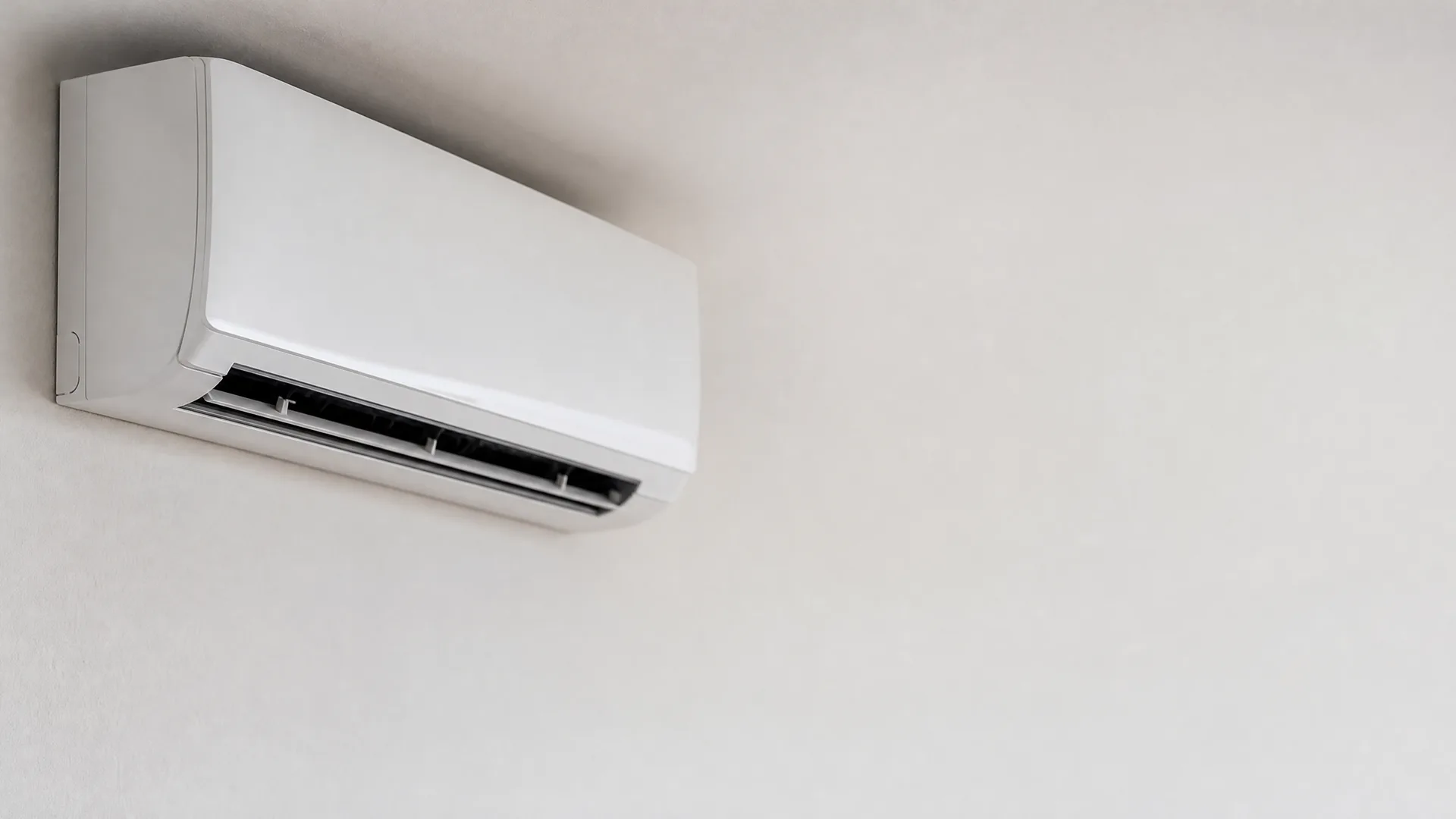
A white wall-mounted mini-split air conditioner indoor unit on a plain light-colored wall, with empty space to the right.

One head covers one room

A single indoor unit pulls air from the room it's in, cools that air, and sends it back out. It doesn't pull air from the hallway or the bedrooms down the hall. Close the door and the room it's in gets cold while the rest of the house holds whatever temperature it started at. This is why one head in the living room cools the living room and nothing past it, no matter how large that unit is.

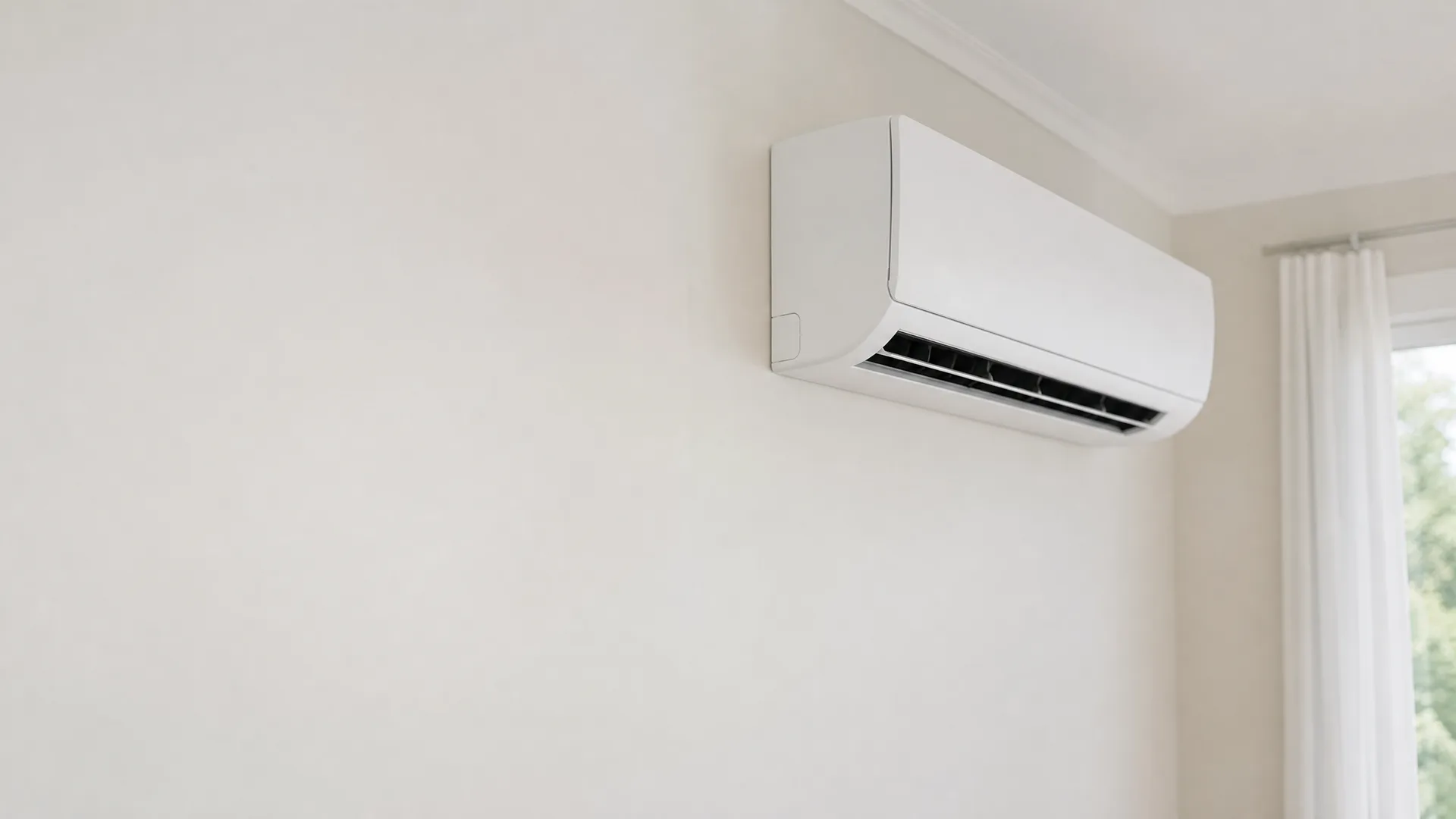
A white wall-mounted mini-split air conditioner on a plain light-colored interior wall, with a sheer white curtain and window with green foliage at the right edge.

Multiple heads reach every room

A multi-zone system puts a head in each room that needs one, run off a single outdoor condenser. Each head cools the air right where it sits, so the bedroom gets its own cold air instead of whatever drifts in from down the hall. This is what it takes to cool a whole house in Oakland with a mini split: coverage in each room, not one strong unit trying to push air where it can't reach.

One Zone or Multi-Zone

One zone

  • Covers the main living space well if that's where it's mounted, since one head moves air through one room only.
  • Costs less to install than a multi-zone system because there's one indoor unit and one line set to run.
  • Leaves bedrooms and other closed-off rooms to whatever heat or cooling drifts through the hallway, which isn't much.
  • Works fine as a supplement if your house already heats with gas and you just want cooling where you spend most of your time.
  • Makes sense for a single floor or an open layout where one unit can actually reach every room without a door in the way.

Multi-zone

  • Puts one indoor head in each room or zone, so bedrooms get the same coverage as the living room.
  • Costs more upfront than a single head, since each zone needs its own indoor unit tied back to the outdoor condenser.
  • Lets you cool only the rooms in use, which matters more in July through September than the rest of the year.
  • Needs an outdoor unit sized for the combined load of every zone, not just the biggest room.
  • Fits a house where the floor plan has separate rooms behind doors rather than one open space.
A man in a gray quarter-zip sweater sits with closed eyes and a slight smile in a dark leather armchair in a wood-paneled room, with a window, framed picture, bookshelf and a table holding a mug and papers nearby.
A man with greying hair and a beard, wearing a dark blue sweater, reclines with closed eyes and a slight smile in a brown leather armchair in a room with a bookshelf, houseplant, window, and a folded newspaper on a wooden table.
A man in a dark green sweater reclines with eyes closed in a brown leather armchair beside a wooden table holding a dark mug and a folded newspaper, with houseplants, a framed picture and a bookshelf in the background.
A man in a dark blue sweater reclines with closed eyes in a brown leather chair, beside a side table with a mug and folded newspaper, a potted plant and shelving in the background.

It's off your list after this

Skip collecting and comparing quotes for the new mini split.

It costs nothing to send, and you don't have to hire anyone.

Why one head falls short

A mini split head moves a fixed amount of air, built for the room it sits in. A head sized to cool a 300 square foot living room is not built to also reach two bedrooms and a hallway past a closed door. The refrigerant line feeding it carries capacity for that one space, not the square footage of the house. Add zones and each indoor unit gets its own line run back to the outdoor condenser, sized for the room it serves. That's the difference between a system that cools where you mounted it and one built to cool the house.

What a load calculation settles

A contractor sizing a whole-house system runs a load calculation on the house itself: square footage, window placement, which rooms face west and catch the afternoon sun, where heat gathers upstairs. That number decides how many zones the house needs and how much capacity each one carries. Skip it and you get the common result, an outdoor unit sized for the house total but indoor heads placed and sized without matching the rooms they serve. Oakland's summers only ask three months of this work, July through September, but the sizing has to be right for the hottest of those before the equipment goes on the wall.

An older man with gray hair and a beard, wearing a dark blue fleece zip jacket, leans back in an upholstered chair with his eyes closed in sunlight near large windows, with a potted green plant and bare trees behind him.
A woman in a cream knit sweater sits with closed eyes in an armchair beside a window showing orange autumn foliage, with a mug and plate of cookies on a small side table.

What you'd notice day to day

If one head is doing the whole house, you already know the pattern: the room it's in gets cold fast, and the rooms past a closed door stay warm into the evening. On the hot days in July and August that gap shows up most, because the house is working against outside heat on top of its own layout. You end up running a fan to push air down the hall, or leaving doors open and losing the cold in the room where the head actually sits.


What it costs you in comfort

A single zone sized for the living room was never built to carry bedrooms down a hallway too. That's not a sign anything is broken. It means the system was matched to one room, not the house. Getting the rest of the house covered means adding heads sized for those rooms, run off the same outdoor unit or a second one, so each room has its own airflow instead of borrowing what's left over from the living room.

Cooling runs July through September

Three months of work a year is a short season, but it still has to reach every room on the hottest days, not just the one with the head mounted in it. A system planned for whole-house coverage earns its keep in July and August even if it sits idle come November.

NOAA nClimDiv 1991-2020

Where this leaves you

  • A mini split can cool a whole house in Oakland or anywhere in Alameda County, but only when it has enough zones placed to reach every room.
  • One head cools the room it sits in well and leaves the rest of the house to fend for itself once the door closes.
  • Multi-zone systems cost more to install because they carry more indoor units and more line set, but they're built to cover the house, not just one room.
  • Whichever way you go, getting it right means matching the system to the square footage and layout before anything gets mounted.
  • Instead of calling around to separate contractors and explaining your house and your current setup each time, one form here gets that matching done for you.
  • Once you send it, comparing bids and sorting through who's qualified stops being something you have to do yourself.

A mini split can cool your whole house. Whether yours does comes down to how many heads it has and where they sit, not the brand or the size of any one unit. One head mounted in the living room was built to cool the living room. It will do that job well and have nothing left over for the bedrooms past a closed door. Covering the house takes a zone for the rooms that need to hold a temperature on their own, sized against your square footage and your layout, before anyone mounts anything on a wall.

That's a sizing and placement question, and it's one a contractor has to walk your house to answer. Left on your own, that means finding a few contractors, calling each one, walking them through what you have now and what it's not doing, then waiting on quotes you have to compare line by line without really knowing what separates them. None of that is the hard part of the job itself, but it's work all the same, and it's work you're doing before the actual job even starts.

Send the form here once and that search is done. You're not calling around Alameda County trying to find someone who answers, not repeating your situation to a third contractor because the first two never called back, not guessing which bid actually reflects what your house needs. Whichever way your house ends up going, one head or several, the system gets planned around your rooms, not fitted to whatever's easiest to install.

A dark-shingled two-story house photographed at dusk, with a lit gabled front porch, wooden front door, two potted plants flanking white steps, illuminated windows, and a concrete walkway leading to the entry.

Mini Split Installation

Stop chasing a mini split pro

New system or replacementMini-splitAlameda County, CA
Step 1 of 2

What ZIP code is the job in?

  • Interior corner with a beige upholstered armchair holding a textured cushion and knit throw, beside a window showing snow-covered branches, a wooden side table with a book and speckled mug, and a lit ceramic lamp on a wooden cabinet.
    • Your new mini split project goes to an installer who works in Alameda County.
    • Get matched with a pro who works on mini splits in Alameda County.
  • Sunlit living room corner with a linen sofa draped in a chunky knit throw beside a multi-pane window showing yellow foliage, and a wooden console table holding a round stone vase of dried autumn branches below a framed picture.
    • After you send the request, you're done searching.
    • Send the form and the search for an installer is over.
  • A beige upholstered armchair with a dark green pillow and knitted throw sits in a corner beneath a framed forest and river print, next to a round wooden side table holding a plant in a dark ceramic vase and books on its lower shelf, with a window at left.
    • Describe the project once instead of to every installer.
    • Answer a few questions instead of calling shop after shop.
  • Corner of a stone-clad house with a dark-framed three-panel window above a stone sill, bordered by hydrangea and boxwood shrubs and a flagstone path, with autumn-colored trees behind.
    • A licensed installer who works in Alameda County gets your project.
    • One installer gets your project, so there's no bidding war over it.