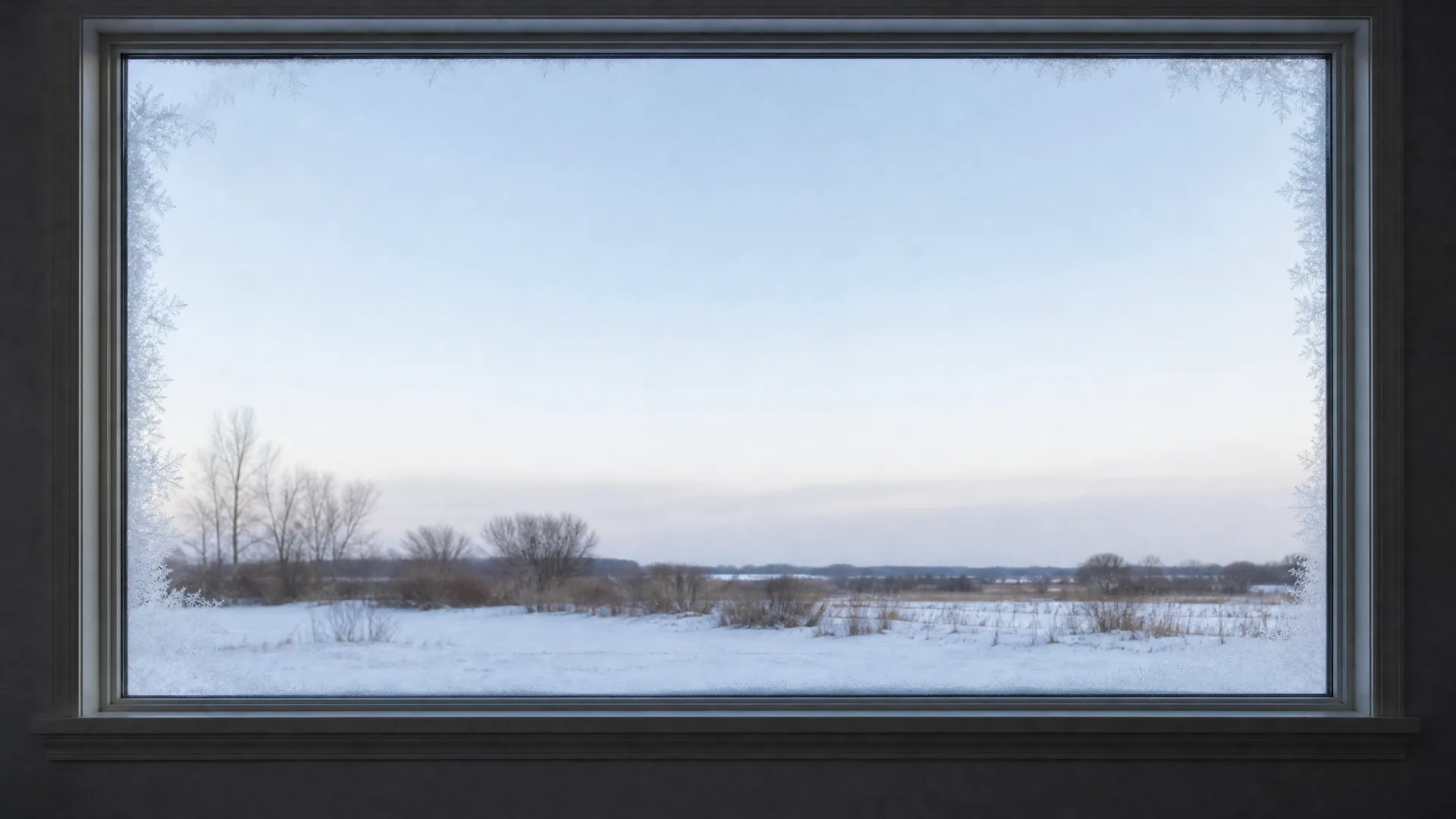
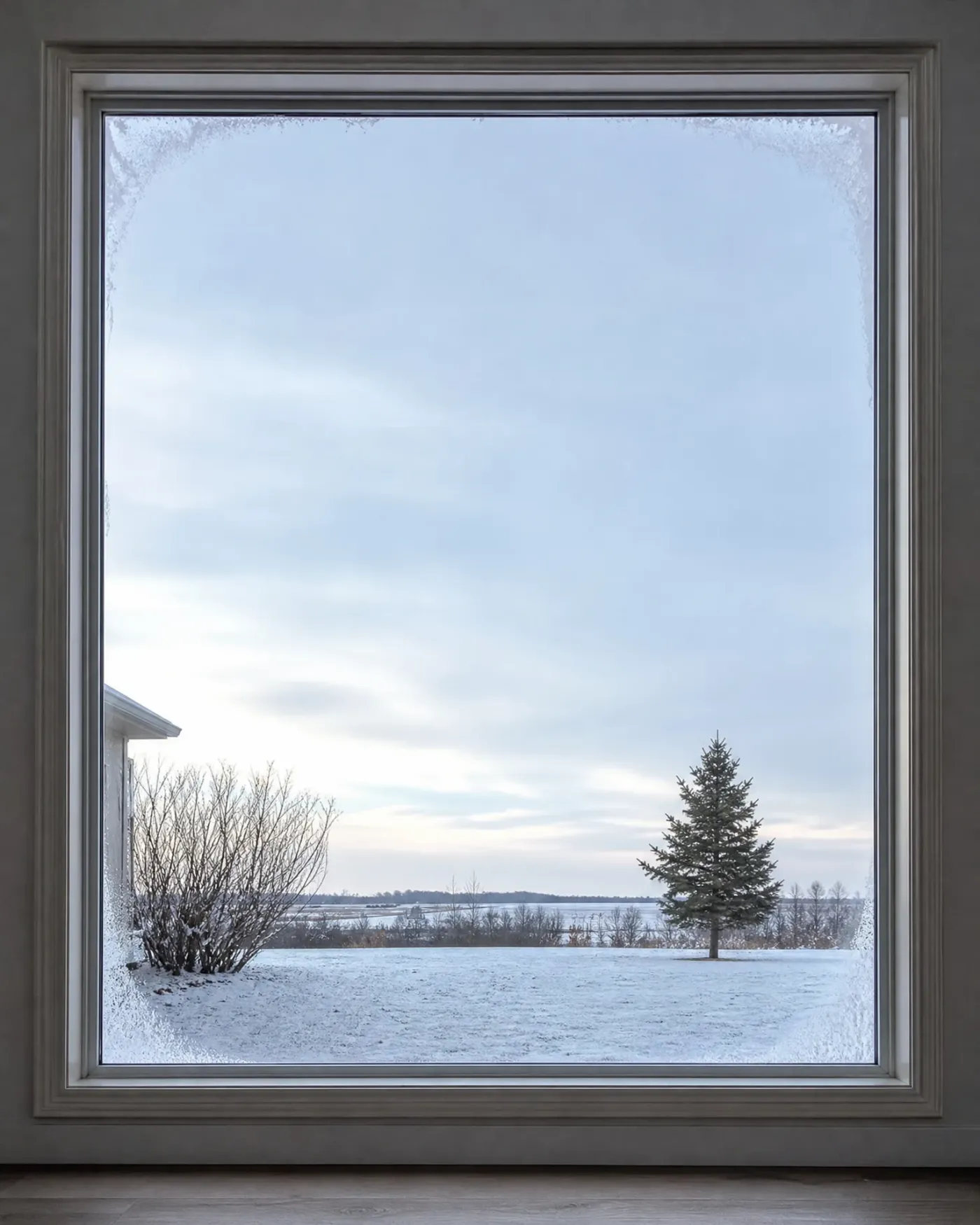
Running clear
No frost on the coil, no ice on the lines. Air moves freely through the grille and the fan turns without strain. This is what your unit should look like on any cold morning this winter.
A frozen heat pump means ice has built up on the outdoor unit's coil, usually because it's stuck in defrost cycle trouble or something is blocking airflow across it. During Fresno's cold winter nights, the system should flip into defrost mode on its own every so often, melting off any frost before it goes back to heating. When that cycle fails, or when the filter is dirty, a fan motor is weak, or the refrigerant charge is low, ice keeps building instead of melting, and the coil can end up solid white or clear-coated within a day. A frozen coil can't pull heat from the outside air, so the system either runs without heating the house or shuts itself down to protect the compressor. Turning off the heat pump and letting the ice melt will not fix what caused it. The unit will freeze again under the same conditions until whatever stopped the defrost cycle or blocked the airflow gets found and repaired.

No frost on the coil, no ice on the lines. Air moves freely through the grille and the fan turns without strain. This is what your unit should look like on any cold morning this winter.

A gray or white coating of ice covers the coil and grille, sometimes reaching the refrigerant lines where they enter the wall. Airflow is blocked, and the unit can't pull enough heat to keep running right.
Winter nights average 32°F
Winter nights here average 32°F, right at the edge where frost forms fast and the unit has to defrost itself often to keep up.
Heat runs October through May
Heat runs October through May here, so the outdoor unit is cycling on cold nights for eight months, not just a few weeks.
Cooling runs June through September
Four months of summer cooling means the coil and defrost controls get a short break each year before winter puts them back to work.
NOAA nClimDiv 1991-2020
A heat pump cycles into defrost for a few minutes at a time, warming the coil just enough to shed frost before it switches back to heating. If that cycle stops working, ice has nowhere to go but up.
On a 32°F Fresno night that means a thin skim can turn into a solid block across the whole coil by morning, and once it's that thick, running the system longer only makes it colder.




Get the heat pump repair search off your mind today.
Get matched with a pro who works on heat pumps in Fresno County.
Sending the form costs nothing.



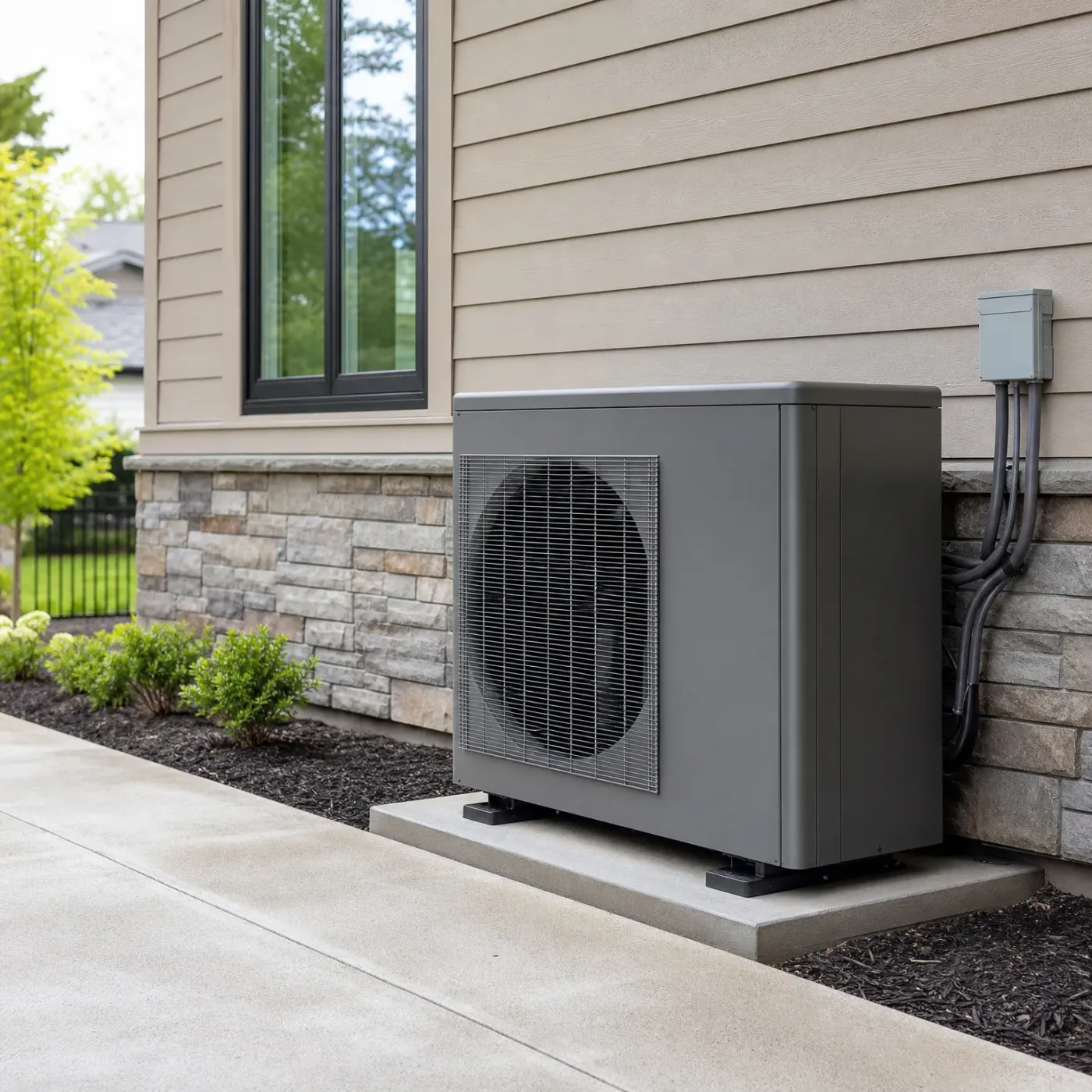
No ice anywhere on the cabinet, no grime caked on the grille. Refrigerant lines run straight to the disconnect box without a trace of frost. Air pulls through the coil the way it's built to, even on a cold Fresno night.

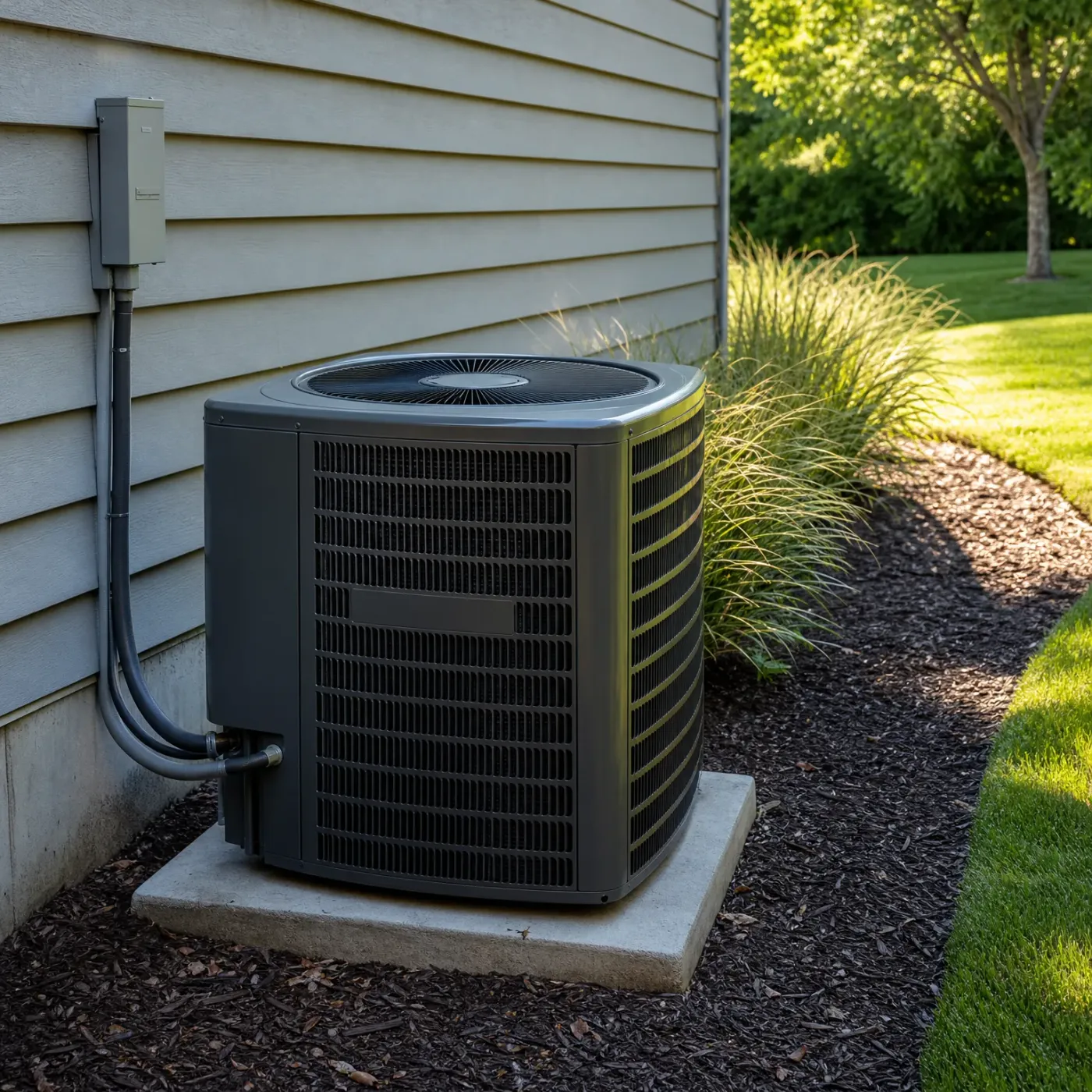
Dust and dead leaves have piled up around the base, and the grille is thick with grime. That buildup blocks airflow across the coil, and once frost starts forming on a cold night, a unit already fighting for airflow can't shed it.



A heat pump with frost or ice on its outdoor coil is telling you the defrost cycle failed somewhere, whether that's the board, the sensor or the reversing valve. On a 32°F Fresno night that part has to work correctly every time the system calls for it, and once it stops, the ice keeps building until someone finds the part that quit.
A contractor who works on heat pumps can check the defrost board, sensor and reversing valve and tell you which one is causing it. From there, getting it fixed is a matter of being connected with someone who takes on jobs like this and having them reach out to go over what they found and what it takes to get your system running clear again this winter.

Once you send the form, finding a pro is off your list.
You're not committing to anything by asking.