



A tabby cat sleeps on a dark quilted bed in a moody, minimalist bedroom with a black wall-mounted air conditioning unit.

Mini Split Installation in Concord, CA

Tell us about the job

Takes about a minute. No obligation.

New system or replacementMini-splitContra Costa County, CA
Step 1 of 2

What ZIP code is the job in?

Electricity in Contra Costa County averaged 38.55 cents per kilowatt-hour in 2025, among the highest rates in the country. A mini-split that's sized and installed right earns that rate back by using fewer of them. One that's oversized, or set up with the wrong line set length, or short cycling because nobody checked the charge, burns through kilowatt-hours at the same high rate for less comfort. The air here doesn't carry much moisture, with a summer dew point around 50 degrees, so the system isn't fighting humidity the way it would elsewhere. That makes the installation itself, not the climate, the thing that decides what each hour of runtime costs you.

6 months
November through April, your system heats
4 months
June through September, it cools
41°F
the average winter night it heats against
85°F
the average summer afternoon it cools against
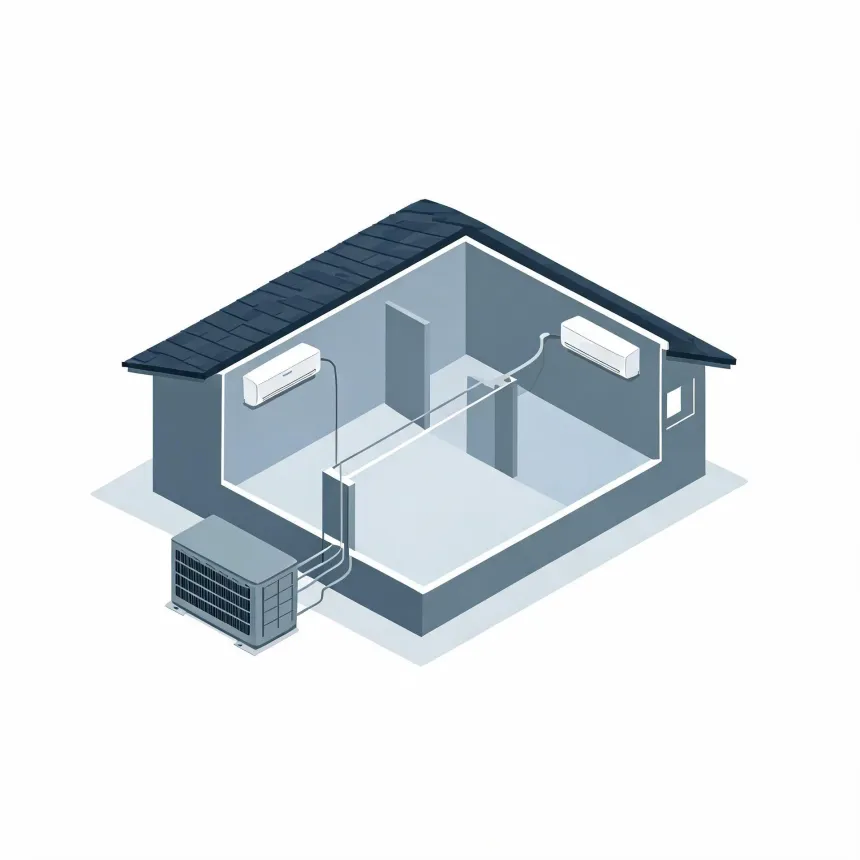
Isometric illustration of a cutaway house showing two wall-mounted mini-split indoor units connected by line sets to a single outdoor condenser beside the exterior wall.
Your system heats November through April and cools June through September.

NOAA nClimDiv, 1991–2020 normals

Gas heats 66.1% of homes in Contra Costa County.

A mini-split here usually joins a gas furnace instead of replacing it, so the install has to work alongside what's already there.

Four months of cooling a year means one slow install beats one rushed one

Cooling runs June through September
Summer afternoons average 85°F
166 damaging wind events from 2015 to 2024

Contra Costa County falls under zone 3B, and any mini-split going in has to meet the federal minimum for that split-system class: at least 14.3 Btu of cooling for every watt-hour it draws, and at least 7.5 Btu of heating, if it was built on or after January 1, 2023. That floor narrows what a contractor can offer you. It doesn't guarantee low running costs on its own, since sizing and setup still decide how close a system gets to its rated efficiency in your house. A unit sized to the room, with a line set run that matches the install, has a real shot at hitting that number. One that's oversized for the space won't, no matter what the spec sheet says. There's also a federal tax credit available for qualifying equipment, worth checking against whatever system you're considering before you decide.

At rates this high, the install is what decides what you pay

Power here costs more than almost anywhere else, and that rate applies to every kilowatt-hour this system uses. The sizing and the charge are what decide that number, not the weather. Get it installed right the first time, on a system sized to the room with a line set that matches the job, and you're not paying that rate twice to find out it was wrong.

Find a contractor
A white outdoor air conditioner condenser unit mounted on metal wall brackets against gray horizontal siding, with a blue sky and white clouds behind it.

The unit is rated in a lab. How it runs depends on what goes into the wall

Sizing is the first thing that decides what an install costs. A contractor has to work out how much heat moves through the walls, the windows and the roof of that one room before picking a unit, and that means a load calculation, not a guess based on square footage. Skip that step and you end up with a unit too big for the room, which cools the air fast and shuts off before it pulls the moisture out, then kicks back on a few minutes later. That cycling wears on the compressor more than a steady run would. The line set is the other half of it. The distance between the outdoor unit and the indoor head, the number of bends in that line, and how much refrigerant it holds all have to match what the manufacturer specifies. A line set that's too long or poorly insulated makes the compressor work harder to move refrigerant the same distance, and a charge that's off by even a little, too much or too little, keeps the system from hitting the output it was built for. None of this shows up on the spec sheet you looked at before buying. It shows up later, in how hard the unit runs to hold a temperature and how often it short cycles doing it. A careful install checks the load, matches the line set to the job and verifies the charge before calling it done. That's the work that decides whether the unit performs the way it was designed to, for as long as it's in that wall.

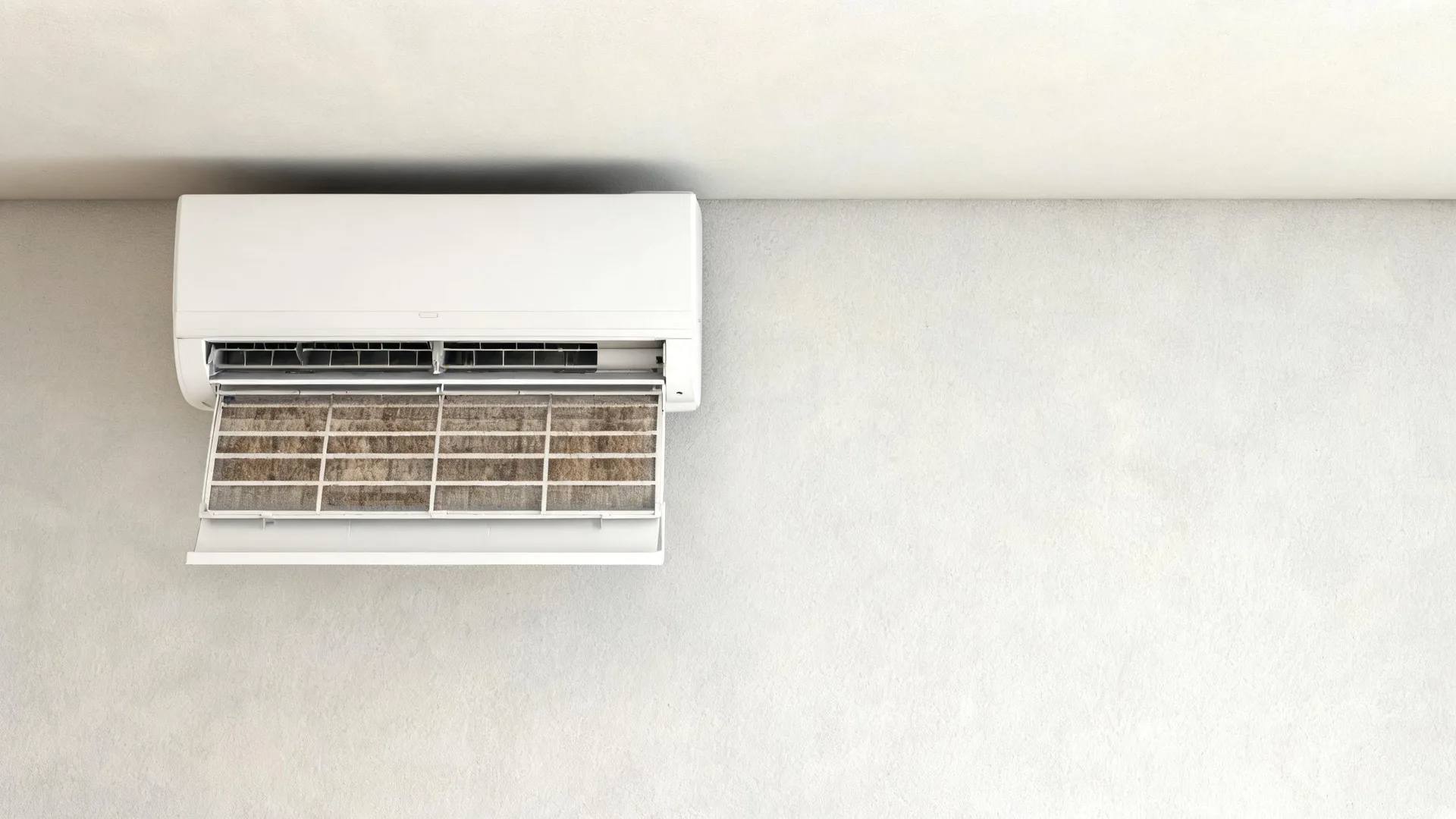
The rating is measured with a clean coil and a perfect charge

The efficiency number on the label comes from a lab test, run under set conditions with the refrigerant charge exact and the coils clean. It's a ceiling, not a promise. Nothing about a dirty filter, a weak charge or a line set that's longer than the test unit used gets factored into that number. The label tells you what the equipment is capable of, not what it will do in that room.
A mismatched install never reaches the number on the sticker

A higher-rated unit only pays off if the rest of the install lets it run the way it was tested to run. If the room was sized wrong, or the line set runs longer than the system was designed for, the compressor works harder to move the same heat, and it never gets near its rated output. Comparing two units by their rating alone skips the part that actually decides how either one performs.

Every quote should answer the same questions, because the number on the page means nothing without them. Ask what the load calculation found for that room, not just the square footage someone measured with a tape. Ask how long the line set run will be and where it routes, since that length has to stay within what the manufacturer allows for the unit to hit its rated output. Ask who checks the charge after the lines are connected, and how, because a system can be installed and still be wrong by a few ounces of refrigerant. Ask whether the quote is for the room alone or whether it accounts for what's already heating or cooling the rest of the house. A contractor who answers these without hesitation has done the work before. One who answers with a price and a brand name hasn't told you anything about the install itself.

The indoor head and outdoor unit don't go in blind. A tech runs the line set first, through the wall and over to where the outdoor unit sits, then pulls a vacuum on it to clear out air and moisture before any refrigerant moves through. Skip that step and whatever moisture is left in the lines mixes with the refrigerant, and that shows up later as a system that won't hold its charge. Once the vacuum holds steady, the lines get connected, the charge gets checked against what the manufacturer specifies, and the unit gets run through its paces: cooling, heating, checking that the head responds to the thermostat and that condensate actually drains where it's supposed to. A mini-split that looks mounted and finished can still fail every one of those checks. The work that makes it reliable happens after it's on the wall, not before.