
Running the way it should
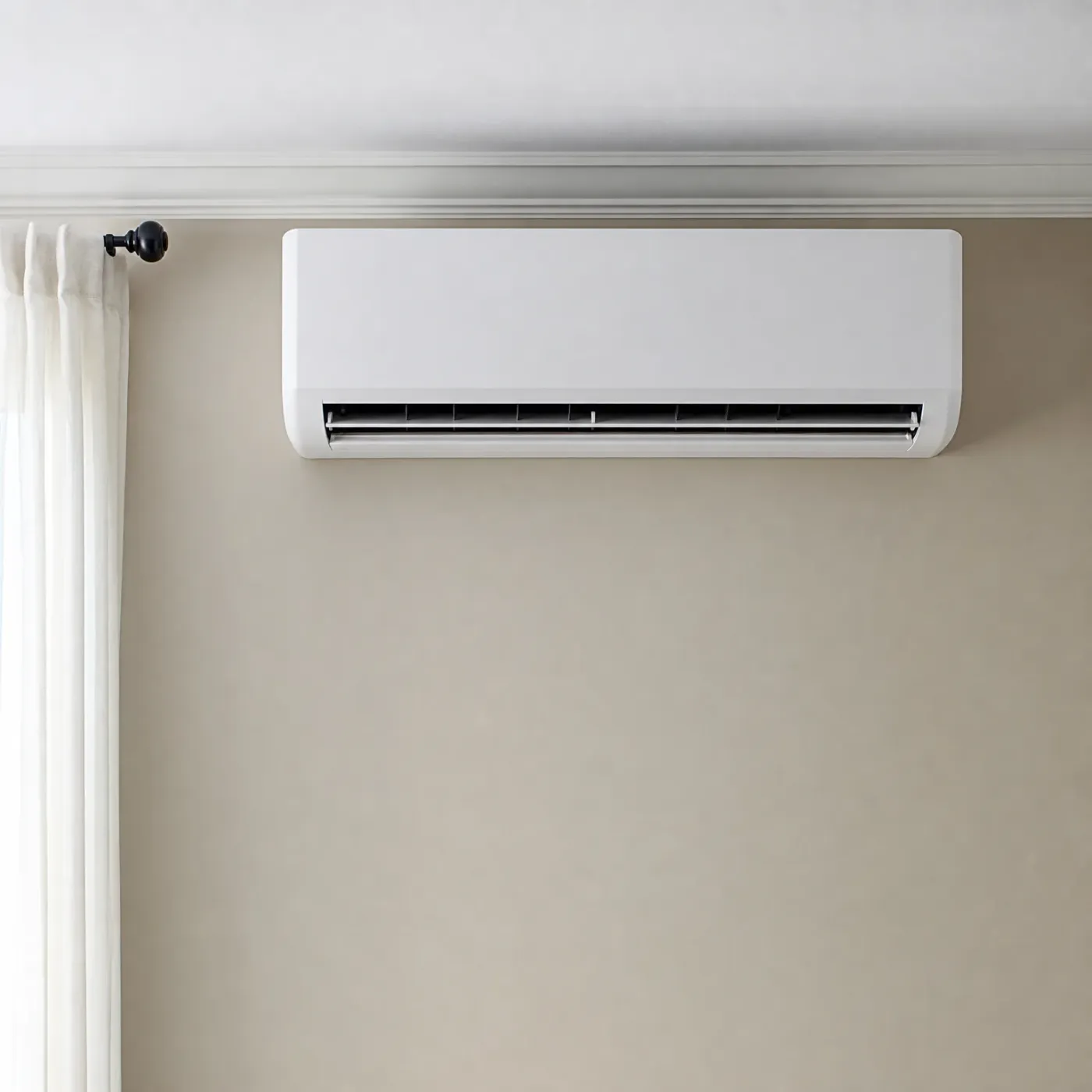
No stains below it, no drip on the sill, no smell in the room. Air comes out even and the wall under the unit stays dry. That's what a mini split looks like when the drain line is doing its job.
Water dripping from your mini split means the condensate drain is clogged or the line isn't draining right. The indoor unit pulls moisture out of the air and that water is supposed to run out through a small drain line, usually to the outside or into a drain pan. Algae, dust and debris build up in that line over time and block it, so the water backs up and drips out of the unit instead, often from the front panel or along the wall underneath it. It can also happen if the unit was mounted slightly off level, or if the drain pan has cracked. Running the unit while it leaks can soak drywall and flooring and stain the wall behind it, so it's worth having someone check the line and the pan before you run it again. A clogged line is common and usually straightforward to clear.




Cooling runs June through September
Your mini split cools from June through September here, and that drain line only gets tested when it's actually pulling moisture out of the air.
Heat runs October through May
Heat runs October through May in Fresno County, so for most of the year that same drain line sits unused and dry, which is when algae and dust settle into it.
Power here costs 38.45 cents per kilowatt-hour
At 38.45 cents per kilowatt-hour, a unit that's low on refrigerant or iced up from a clogged drain costs you more to run every month it's ignored.
NOAA nClimDiv 1991-2020 · EIA-861 2025
A clogged drain line left alone usually gets worse. Algae and dust keep building in the line, the clog gets tighter, and water starts backing up into the pan and over the edge instead of a slow drip.
Caught early, it's a quick fix. A contractor can clear the line and check the pan before it ever reaches your ceiling or the wall below the indoor unit.


Your mini split's indoor unit has a coil that runs cold enough to pull moisture straight out of the air, the same way a cold drink sweats on a hot day. That water collects in a pan under the coil, and from there it's gravity doing the work, not a pump, in most wall-mounted units. The drain line carrying it out usually runs uphill for part of its path before it exits the wall, so anything that slows the flow gives algae and dust a place to settle. Once that film builds up, the line narrows and water moves slower still. A line that's pitched wrong or kinked behind the wall makes this worse, since water sitting in a low spot breeds the same algae that's already causing the problem. Some systems add a small condensate pump to push water out when gravity alone won't do it, and if that pump quits, the water has nowhere to go but back up over the edge of the pan.
A licensed pro who repairs mini splits in Fresno County gets your request.
A Fresno County pro who repairs mini splits gets your request.
You're not committing to anything by asking.
You'll usually see it first on the wall or ceiling under the indoor unit, a dark stain or a wet patch that keeps coming back. Sometimes it's a drip onto the floor or windowsill below, or a musty smell in the room when the unit's been running. The pan inside can overflow quietly for a while before you notice anything, and by the time water is visible, it's often already reached the drywall or the floor underneath. Left alone through a Fresno summer, with the unit running daily from June through September, that moisture sitting in the wall can lead to warped wood, stained ceilings, or mold, on top of a mini split that isn't cooling the room the way it should.
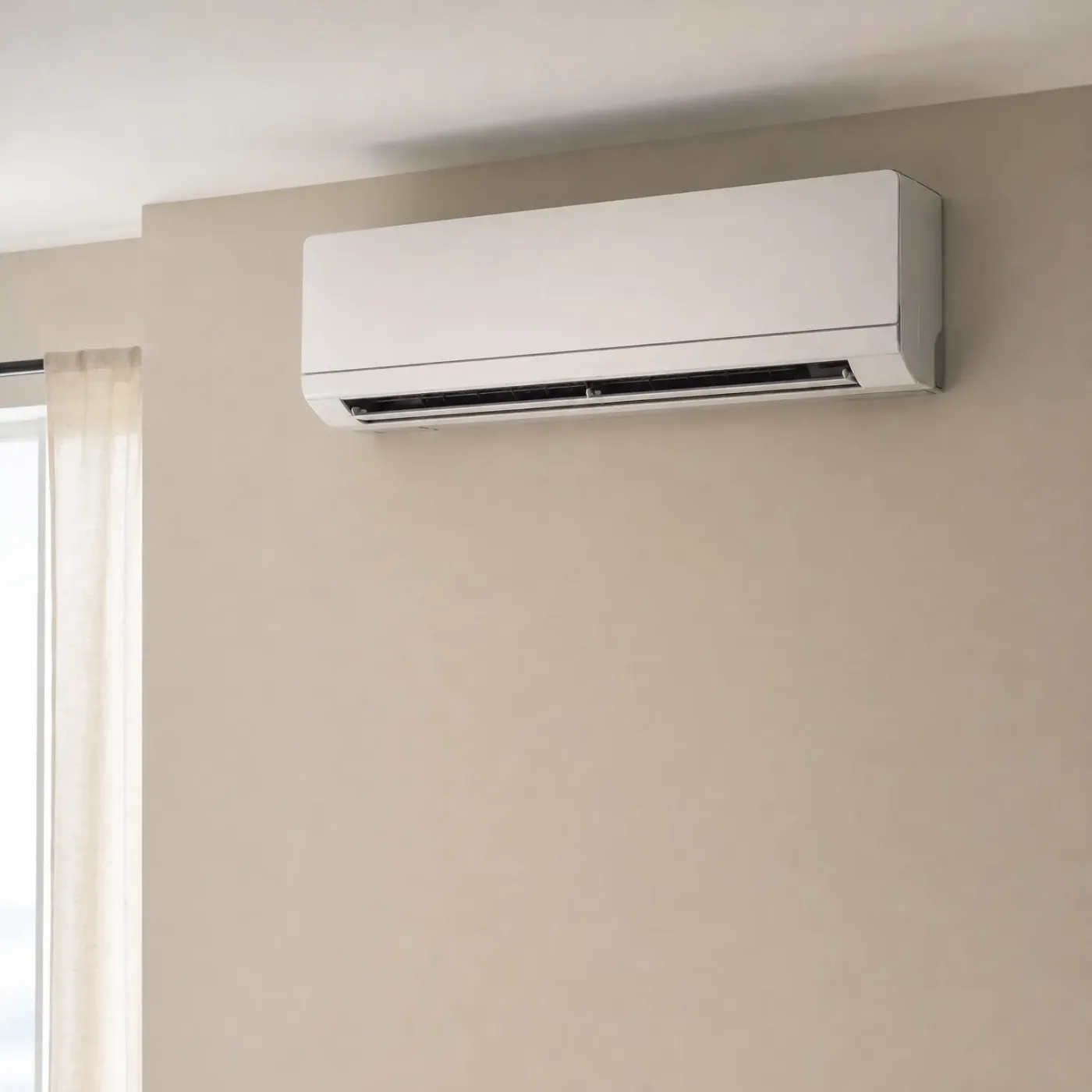
No stains below it, no drip on the sill, no smell in the room. Air comes out even and the wall under the unit stays dry. That's what a mini split looks like when the drain line is doing its job.
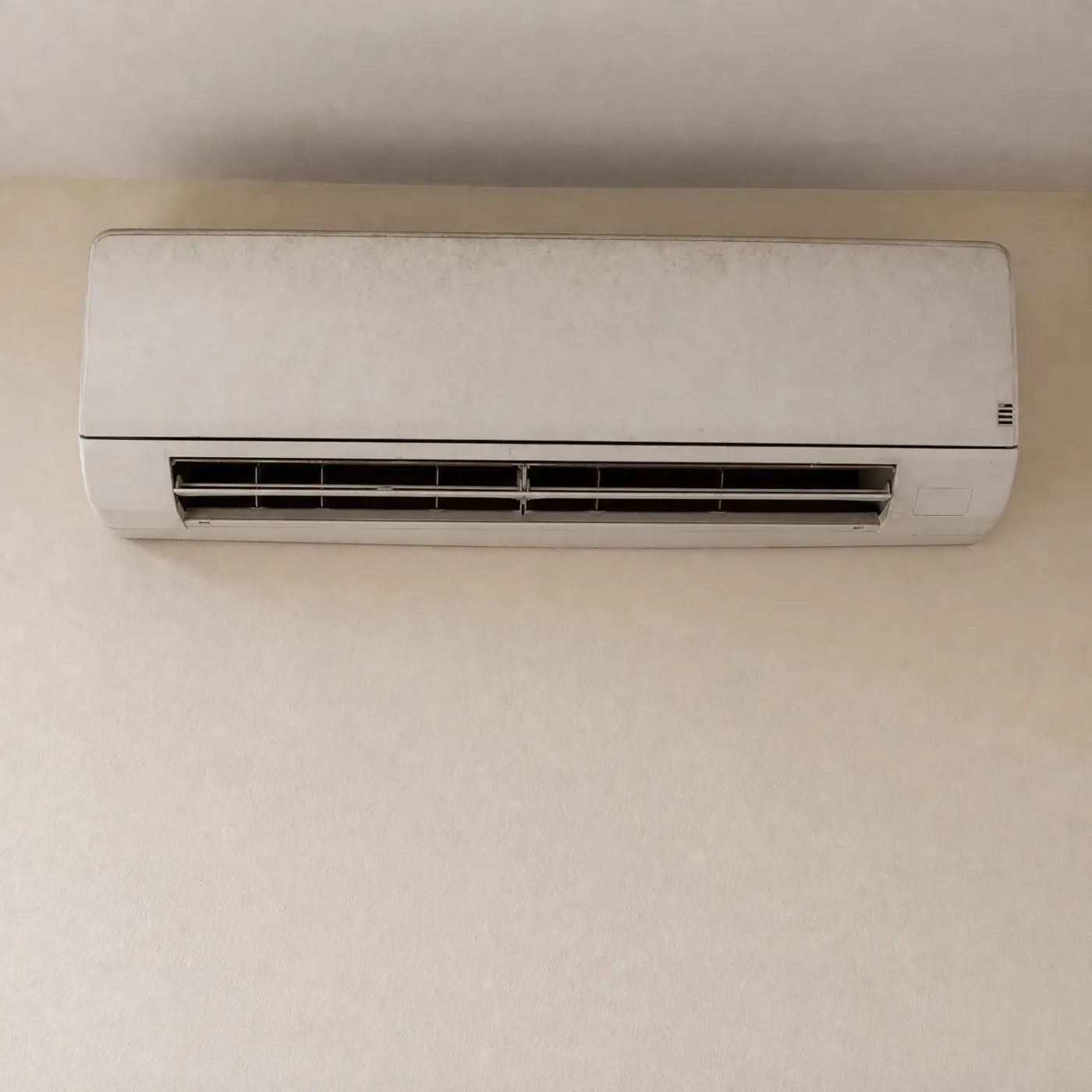
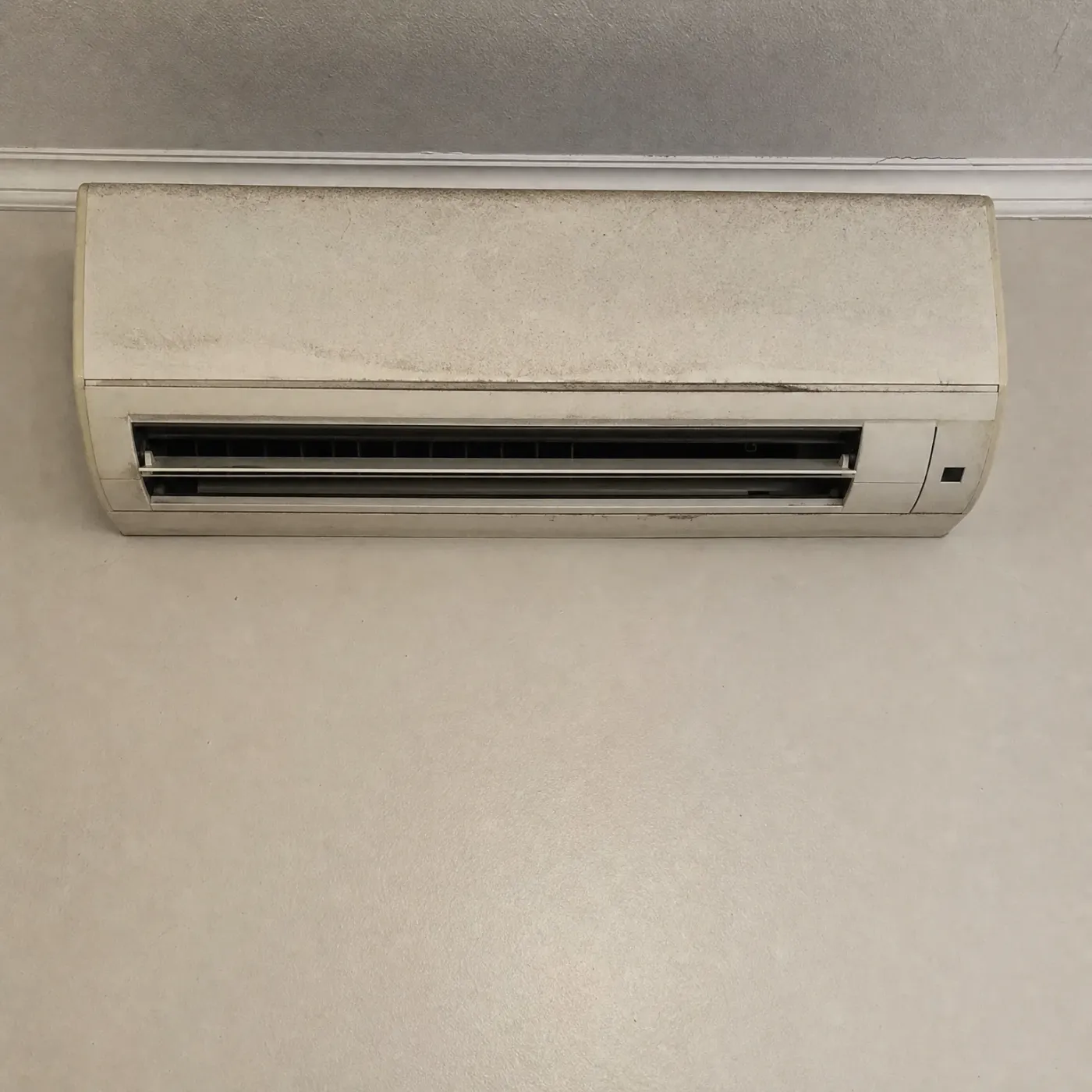
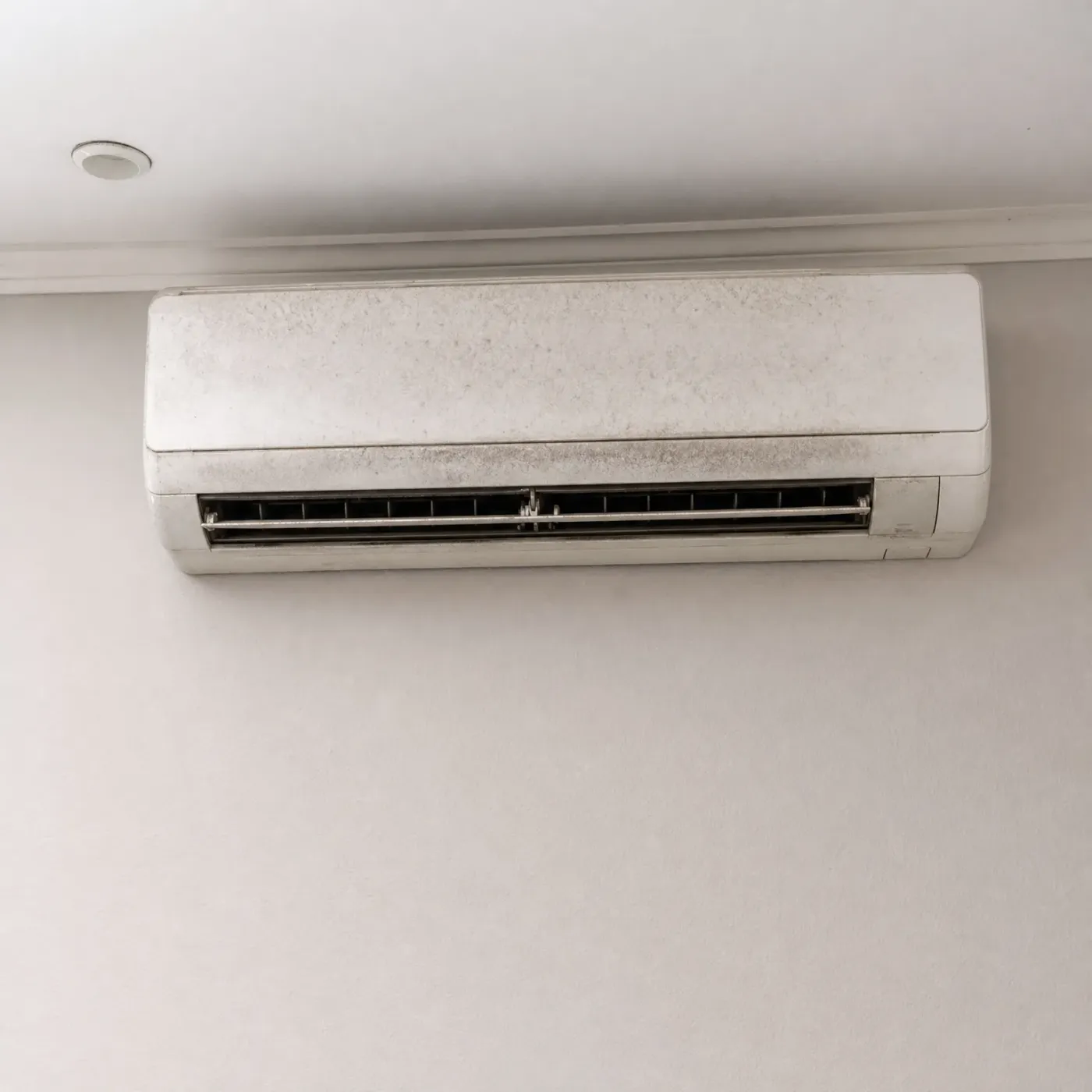
Dust and a dull film on the housing like this usually mean the filter hasn't been cleaned in a while, and a dirty filter adds to what the drain line has to carry off. Left like this, the water has somewhere to go, and it isn't always outside.
Water coming from the front of the unit, below the vents or along the bottom edge, looks different from a drip somewhere down the wall, and it throws people off because the drain line is supposed to be out of sight. You've seen the water trail along the wall already, but this is the unit itself, right where the air comes out.
Inside the indoor unit, the pan sits under the coil to catch the water as it drips off. That pan has one way out, the drain line, and if the line is clogged the water has nowhere to go but up and over the front edge of the pan, right where the air blows out. It looks like the unit itself is leaking, but the coil and the pan are doing their job. It's the exit that's blocked. A contractor can confirm this by checking the pan level and clearing the line, rather than opening up the unit looking for a part that's failed.
A contractor checks the condensate pan and drain line for standing water
A shop vac pulls the clog out through the drain line's outside end
Algae and sludge inside the line get flushed with water or a cleaning tablet
The drain pan gets cleared and wiped so water can flow freely again
Four months of real cooling load is still four months where that drain line has to carry water out of the house every day. June through September is when a slow clog turns into water on your wall or floor, so that stretch is when it's worth getting the line checked.
NOAA nClimDiv 1991-2020
Water on the wall under your mini split traces back to one thing: the condensate line isn't carrying water out the way it should. That's a clog, not a failing unit, and clearing it is straightforward work for someone who does it often. In Fresno County that means June through September, when the unit runs long enough every day to actually test whether the line is clear. A contractor who works on mini splits through those months has already seen what a slow drip turns into if it sits. The clog doesn't stay the same size. Algae and dust keep collecting, the water backs up further into the pan, and what started as a damp patch on the wall becomes a wetter one, sometimes a stain that won't come out of the drywall. Finding a contractor who knows this pattern matters more than finding one fast. Someone local who checks drain lines all summer knows to look there first, before guessing at the coil or the refrigerant charge, because that's where the problem usually sits. When you request service through this page, you're matched with one contractor who covers Fresno County, not a handful of companies calling to bid on the job. That contractor can check the pan, clear the line, and tell you what they find in your unit specifically. Once the line runs clear, the water goes where it's supposed to, out through the drain, and the wall underneath stays dry.





A licensed pro who works in Fresno County gets your request.
It costs nothing to send, and you don't have to hire anyone.