6 months of coil condensation
May through October, the indoor coil runs wet nearly every day. That stretch of damp metal is what lets mold take hold inside the unit.

Send one request and you're done looking
That musty smell is usually the coil or the drain line growing mold inside the indoor unit, especially after a long summer of running the AC hard. Below: why it happens and what it means for the unit. Send the form and you're done hunting for someone to look at it, searching reviews, calling around for quotes.
Hand it offThat musty smell is mold or mildew growing on the evaporator coil or in the drain pan and line inside the indoor unit. A mini split pulls moisture out of the air every time it runs, and that water has to drain away. If the drain line is slow or partly clogged, or if the coil stays damp between cycles, mold takes hold on that wet surface and the smell comes right out through the vents into the room. San Bernardino summers run hot and dry, but a mini split that's been working long hours to keep up still produces plenty of condensation, and that's usually when this smell shows up. It's not just unpleasant. A dirty coil and a clogged drain line make the unit work harder and can lead to water leaking from the indoor unit onto your wall or floor if the line backs up further. The smell is the unit telling you it needs its coil and drain checked.




Cooling runs May through October
Cooling runs May through October here, so the indoor coil stays wet and humid for half the year, giving mold months to take hold.
Heat runs November through March
Heat runs November through March, which means the unit dries out for a stretch, but mold already growing on the coil doesn't go away on its own.
Power here costs 31.80 cents per kilowatt-hour
Power here costs 31.80 cents per kilowatt-hour, so a unit working harder because of a dirty coil or clogged drain costs you more every month it runs.
NOAA nClimDiv 1991-2020 · EIA-861 2025
Ignore the smell and it keeps cleaning the air it blows into your rooms. The coil and drain line stay wet, mold keeps feeding on that moisture, and every time the unit cycles it pushes that smell through the house.
A contractor can clean the coil and clear the drain line so the unit dries out the way it's supposed to between cycles. That stops the smell at the source instead of covering it up with a filter or a spray.


May through October, the indoor coil runs wet nearly every day. That stretch of damp metal is what lets mold take hold inside the unit.
Algae and dust narrow the drain line over time. Once it backs up, water sits in the pan instead of draining, and the smell follows.


Skip calling around to set up a mini split tune-up.
Sending the form costs nothing.
The smell is usually worse right when the unit kicks on, strongest in the first few minutes of a cooling cycle. It can settle into whatever room that indoor head serves, sometimes spreading to nearby rooms if the air handler is central to the house. Some households notice it fades as the unit runs longer and the air moves, only to come back strong the next time it cycles on after sitting idle.
A mini split with a slow or clogged drain line doesn't just smell. Water that can't drain where it's supposed to can back up and overflow the drain pan, which means staining or damage to the wall or ceiling around the indoor unit. The coil itself keeps doing its job of pulling moisture from the air whether or not mold is growing on it, so the smell can continue for the rest of the summer if nothing clears it out.
Six months of that is a long stretch for the coil to stay wet, and a long stretch for mold to settle in. By the time October ends, the smell has usually had all summer to build.
NOAA nClimDiv 1991-2020
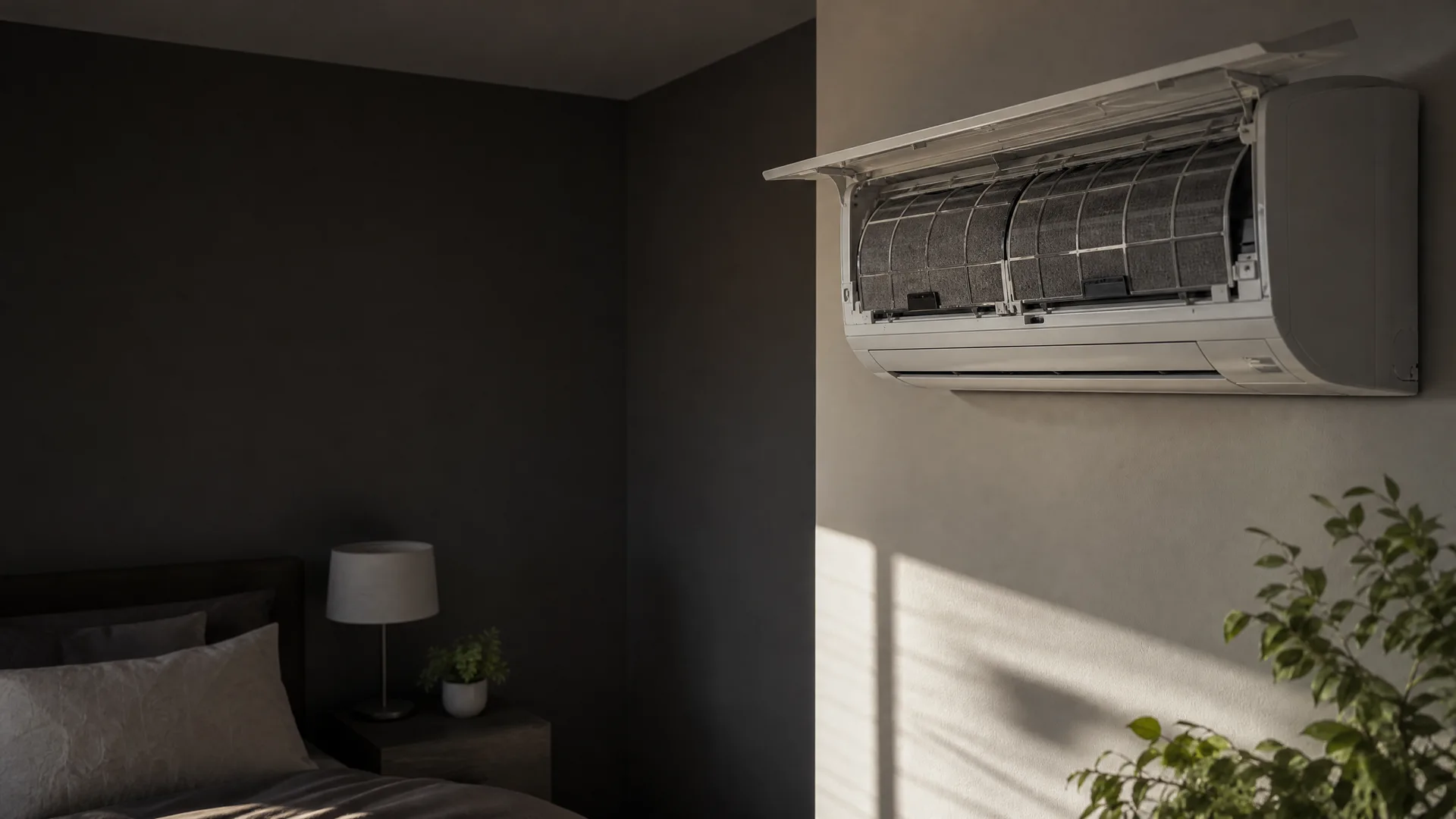
It's a Saturday afternoon in April, before the heat really sets in. You've gone to pull the filter on the bedroom mini split before summer starts in on it, and the front cover is already lifted, hanging open on its hinge. The filter screen underneath is grey with dust, more than you expected for a unit that's been shut off most of the spring. You slide it out to rinse it in the sink, and that's when you catch it, a damp, closed-in smell coming off the unit itself, not the filter. It's faint with the system off, nothing like what it'll be once you switch it back on for the first warm week.

The smell is mold, growing on the coil or in the drain line inside the indoor unit. Cooling season here runs May through October, long enough for that moisture to sit and for mold to take hold. A contractor who cleans the coil and clears the line settles it at the source, not just the room it's drifting into.
You could spend an afternoon calling around San Bernardino County, explaining the same smell to three different shops, then sitting with quotes trying to tell them apart. Send the form instead and that part is handled. You still need the work done, but you stop being the one who has to track down who does it.


One form instead of hunting for a pro who does mini split tune-ups.