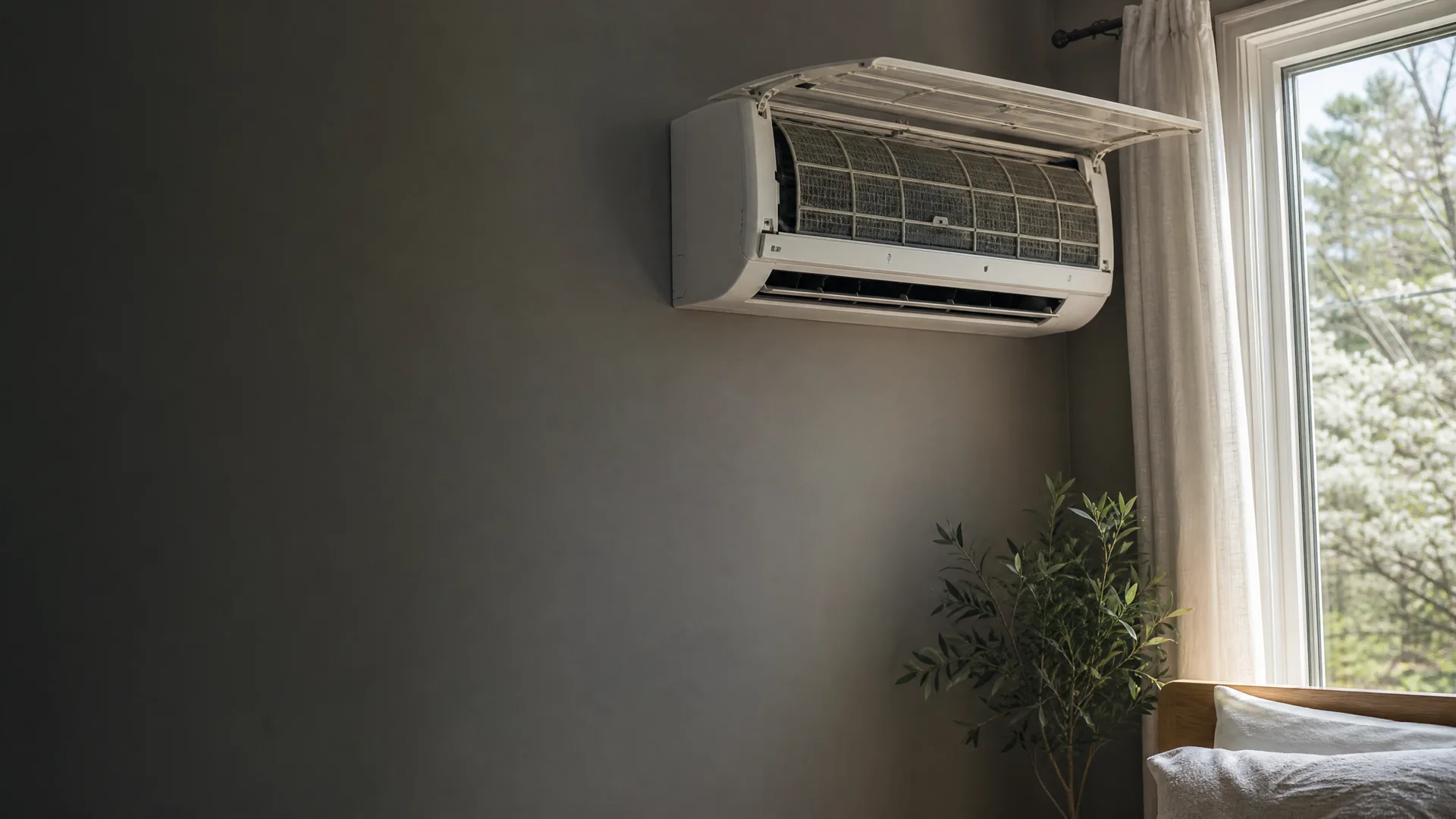
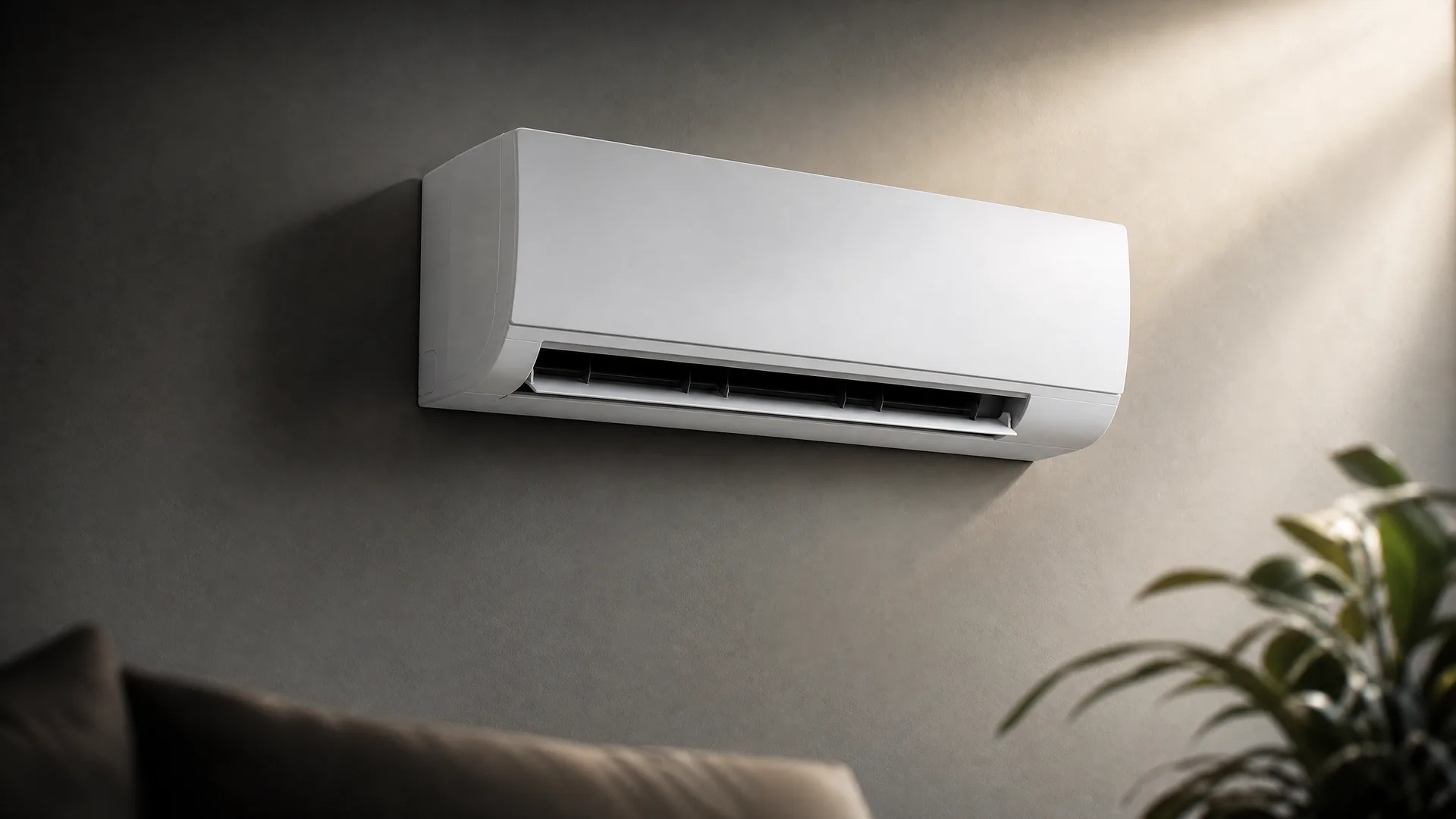
A white wall-mounted mini-split indoor unit near the ceiling of a dimly lit room, with a curtained window at right, a leafy potted plant at lower left, and a cushioned sofa at the bottom.

Describe it once

How often to clean a mini split in Oakland, CA

Your mini split handles mild winters and warm summers here without much strain, but the filters and coil still need attention on a schedule. This page covers how often that cleaning should happen and what gets skipped when it isn't. Skip the search for someone qualified to do it, the calls, and repeating the same explanation to company after company.

Skip the calls

Plan on cleaning the filters every two to four weeks and having the coils and blower wheel done once a year. Around Oakland, mini splits run close to year round, cooling through warm stretches and carrying some of the heating load even in homes with gas furnaces, so the filters catch dust and pollen on a steady basis rather than just a few months a season. A dirty filter blocks airflow across the indoor coil, and the unit has to run longer to move the same amount of heat, which costs you more on a power bill that's already among the highest in the country. Skip the yearly cleaning and dust builds on the coil itself, where a filter can't reach it. That cuts efficiency further and can leave the blower wheel caked enough to throw the unit out of balance. None of this is dramatic on its own, but a mini split that's never cleaned past the filter is working harder than it needs to, every day it runs.

Why does a mini split in Oakland need cleaning this often?

  • Cooling runs July through September

    Cooling runs July through September. That's three months of the filter pulling dust and pollen every time the unit cycles, which is why it loads up fast.

  • Heat runs November through April

    Heat runs November through April. Six months of carrying part of the heating load means the coil and blower wheel are working most of the year, not just in summer.

  • Power here costs 37.80 cents per kilowatt-hour

    Power here costs 37.80 cents per kilowatt-hour. A dirty filter or coil makes the unit run longer to do the same job, and at that rate it shows up on the bill.

NOAA nClimDiv 1991-2020 · EIA-861 2025

Clean filters yourself

The filters slide out without tools. Rinse them in the sink, let them dry, and slide them back in. Most people can do this every two to four weeks once they get the rhythm of it. It costs nothing but a few minutes, and a clean filter is the single biggest thing keeping your mini split from working harder than it needs to, especially with power priced the way it is here. The tradeoff is remembering to do it. A filter left in for months stops airflow at the coil, and no amount of yearly maintenance undoes what a dirty filter does in the meantime.

Have the coil serviced

The coil and blower wheel are a different job. Getting to them means opening the unit, and doing it wrong can bend the fins or leave the blower unbalanced. This is the part worth having a local contractor handle once a year, someone who works on these units through a full Oakland summer and knows what a coil looks like after one season of cooling versus three. You lose the option of doing it yourself, but you gain someone who can catch a refrigerant issue or a failing part before it becomes a breakdown in the middle of a warm stretch.

A smiling woman in a cream knit sweater sits at a marble counter with a glass of red wine, with a dining table, pendant lights, and French doors in the dim background.
A smiling woman with long dark hair in a cream sweater sits in a dimly lit open-plan home interior, with a glass of red wine in the foreground and a dining table, fireplace and shelving behind her.
A woman with long dark hair in a black turtleneck laughs while seated at a light stone counter with a glass of red wine, in a dimly lit interior with a potted plant, framed pictures and a hanging lamp behind her.
A woman in a dark sweater laughs while seated at a white marble counter with a glass of red wine, in a dimly lit open-plan interior with a pendant lamp and dining table behind her.

A mini split moves air over the coil every time it runs, and in Alameda County that's most months of the year. Dust and pollen that pass the filter settle on the coil fins and the blower wheel, where rinsing a filter can't reach them.

A coil caked with dust can't shed heat the way a clean one does, so the compressor runs longer to hit the same temperature. That's the difference an annual cleaning makes, and it's also what shows up on the power bill if the coil goes a few years untouched.

A white wall-mounted mini-split air conditioner indoor unit with dark louvered vents, installed near the ceiling on a beige wall below white crown molding.
Before you get your mini split maintenance
A white wall-mounted mini-split air conditioner on a beige interior wall, with a window at left showing trees and a wooden fence, and dark wood flooring below.
After you get your mini split maintenance
A white wall-mounted mini-split indoor unit installed high on a gray interior wall, with a window at left and part of a light gray sofa with a dark cushion at lower right.

Running clean

This is what a mini split looks like when filters get rinsed on schedule and the coil gets attention once a year. Air moves through it freely, the vents stay clear, and the unit can actually hit the temperature you set without working harder than it should.

A white wall-mounted mini-split air conditioner indoor unit with visible dust and staining along its lower vent, installed on a plain pale wall.

Running dirty

Skip the cleaning and this is what builds up. Dirt and mold collect along the vents and lower casing, places a filter rinse never touches. Air has to push through that buildup, and the coil behind it loses the ability to do its job.

A closed dark gray laptop and a ceramic mug on a wooden table in a kitchen, with a window, potted plant, bowl on a counter, and cutting boards near white cabinets in the background.

What a skipped cleaning costs you

A dirty filter makes the unit pull harder to move the same air. You'll notice it as a system that runs longer to hit the temperature on the thermostat, and with power priced the way it is around Oakland, that difference shows up on the bill before you ever see dust on the vent. Let the coil go a year or two without attention and the unit can start short cycling or blowing air that never quite gets cold, which is usually when people start looking for someone to come look at it.

That search is its own chore. You'd be calling around for a contractor who actually works on mini splits rather than central systems, explaining the same symptoms to two or three companies, then sitting with quotes that don't line up. A contractor who services this equipment in Alameda County every season already knows what a neglected coil looks like on this kind of unit and what it takes to bring it back, so there's one call instead of several, and one quote instead of a pile to sort through.

A living room with a cream sofa and knit throw beside a window, with a wooden coffee table in the foreground holding a round woven tray, a small bowl, and a speckled vase of green leafy branches.
A wall-mounted mini-split air conditioner with its front cover open exposing the filters, on a gray interior wall beside a curtained window with green trees outside and a potted plant below.

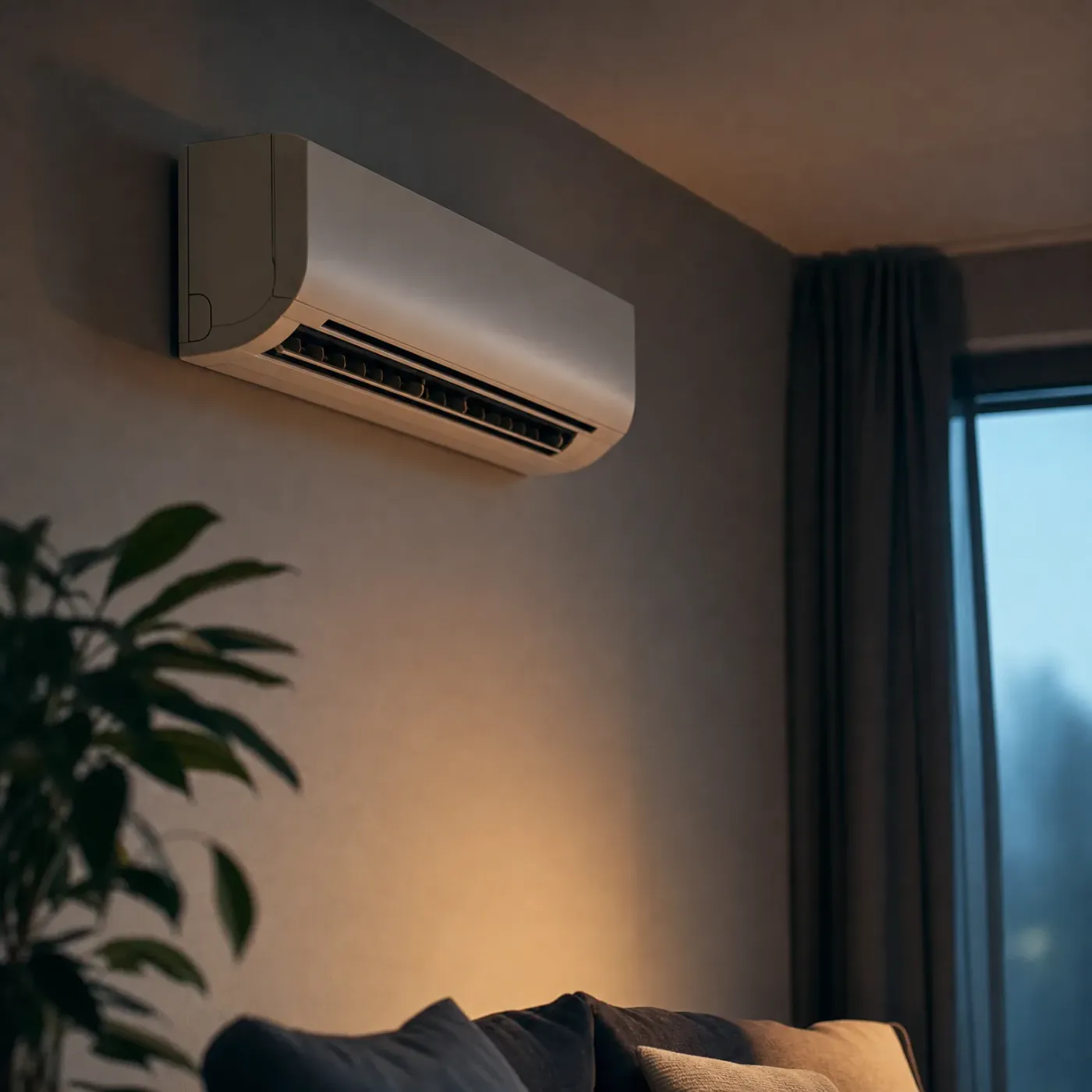
It's a Saturday afternoon in April, warm enough that you finally switched the mini split over to cooling. The air coming out of the bedroom unit felt weaker than it should, so you pulled over a chair and popped the front cover open. The filter screen behind it was gray with a season's worth of dust, matted enough that you could see it was blocking airflow instead of catching it. You're standing there with it in your hands, deciding whether to rinse it in the bathroom sink now or wait until you've looked up how often this is actually supposed to happen, and whether the coil behind it needs the same kind of attention.

No calling every shop in Alameda County

A licensed local pro takes the request for your mini split tune-up.

No charge to send it. You decide if you hire them.

A white wall-mounted mini-split air conditioner installed high on a light gray interior wall below a white crown molding and ceiling with a recessed light.

Kept up with

Filters rinsed every few weeks, coil cleaned once a year, and the unit pulls air through easily. The casing stays white, the vents stay open and clear, and the room gets cold without the unit straining to do it.

A dusty, discolored white wall-mounted mini-split air conditioner unit installed on a plain beige interior wall below a molding strip.

Left alone

Months of skipped filters leave the casing dusty and the plastic yellowed. The vents are still open, but air is working harder to get through, and the unit is running longer to reach the same temperature it used to hit fast.

Cooling runs July through September

Three months of cooling is short compared to a lot of places, but your mini split still cycles daily through July, August and September, pulling dust across the filter each time. The rest of the year it's mostly idle or on low heat, so summer is when buildup happens fastest.

NOAA nClimDiv 1991-2020

  1. Room air gets pulled in across the filter screen first.

  2. The filter traps dust and pollen before air reaches the coil.

  3. Air passes over the indoor coil and gets heated or cooled.

  4. The blower wheel pushes that conditioned air back into the room.

Filter cleaning vs. annual service

DIY filter cleaning

  • You can pull the filters out and rinse them in the sink without calling anyone, usually every two to four weeks through the summer.
  • It costs nothing but a few minutes, and it's the piece of maintenance most homeowners in Oakland keep up with on their own.
  • It handles the dust and pollen sitting on the filter screen, but it does nothing for the coil or the blower wheel behind it.
  • You still have to remember to do it on a schedule, which is easy to let slide once the weather cools off and the unit runs less.

Hiring the annual service

  • A local contractor who works on mini splits all season knows which models in this climate tend to build up on the coil fastest.
  • One visit covers the coil and blower wheel, the parts a rinsed filter can't reach and that keep the unit from pulling air freely.
  • You get one contractor scheduled instead of calling around, explaining the unit's age and symptoms more than once, and sorting through separate quotes.
  • Someone who services this equipment regularly can spot a problem starting on the coil before it turns into weaker airflow or a higher bill.
A single-story house with light beige vinyl siding, dark gray gabled shingle roof, a small covered front entry, and two windows, fronted by a patchy green and brown lawn with a concrete driveway at right under a clear blue sky.

The dew point around Oakland averages 50°F across June, July and August, according to NOAA climate data for Alameda County. That's dry air as summers go, nothing like the Gulf Coast or the Midwest. It matters for your mini split because dry air carries dust and pollen loose rather than letting it clump and stick. That loose dust passes the filter screen more easily and settles on the coil fins, where it doesn't wash off on its own. You'll notice it less as humidity and more as the unit running longer than it used to, pulling air through a coil that's slowly losing its ability to shed heat.

NASA POWER T2MDEW

A smiling middle-aged man in a dark knit sweater sits at a dimly lit dinner table with a glass of red wine, a bowl of food, and a lit candle in the foreground.
A woman with long wavy brown hair in a knit sweater reclines on a couch with eyes closed under a textured blanket, an open book on her lap, beside a lit table lamp and potted plant.

What to do from here

  • Filters every two to four weeks and a coil and blower wheel cleaning once a year covers what your mini split needs here.
  • Oakland's three-month summer load and the lighter heating months behind it both get accounted for on that schedule.
  • A contractor who services mini splits across Alameda County all year knows which brands in this climate clog fastest and why.
  • Working with one licensed local contractor means a single visit handles it instead of fielding calls from several companies.
  • Staying on schedule keeps the unit pulling air the way it did when it was new, which matters given what power costs here.
  • Skipping it shows up first as weaker airflow, then as a system working harder to hit the same temperature.

Filters every two to four weeks, coil and blower wheel once a year. That's the answer, and it holds for mini splits across Oakland and the rest of Alameda County because the schedule matches how these units actually run here, three months of steady summer cycling plus lighter use the rest of the year carrying some of the heating load. You can handle the filters yourself with a sink and a few minutes. The coil and blower wheel take someone who does this work regularly, because caked fins and a dirty wheel don't rinse clean the way a filter screen does.

That's also where a local contractor matters more than it might seem. Someone who services mini splits across this county all year has seen how different brands hold up against the pollen and dust that build up through a typical summer here, and knows what usually needs attention first when a unit's been skipped. You're matched with one licensed contractor for this, not a handful, so there's one call to schedule and one visit to plan around instead of sorting through competing quotes.

The unit itself will tell you if the schedule slips. Airflow goes soft before anything else does, and from there the system starts working longer to hit the same temperature on the thermostat, which costs more given what power runs here. Staying ahead of that is the whole point of the schedule above.

A white wall-mounted mini-split air conditioner on a gray interior wall lit by angled sunlight, with a sofa cushion at lower left and a leafy houseplant at lower right.

No phone calls to make

Tune-up, service, or cleaningMini-splitAlameda County, CA
Step 1 of 2

What ZIP code is the job in?