
Steady light, no blinking
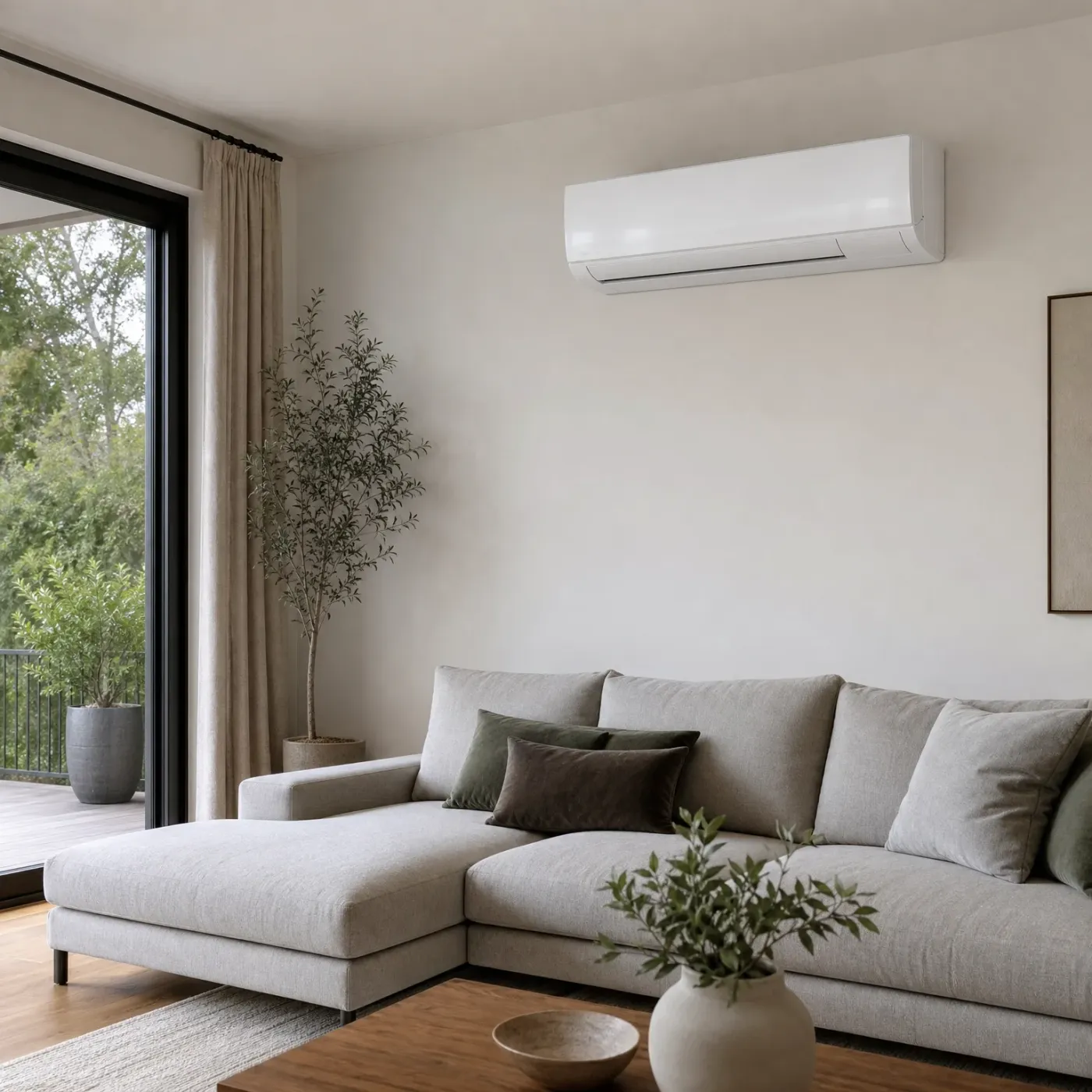
When the mini split is running right, the light on the indoor unit stays solid. No blinking, no pattern to decode. Air comes out at the temperature you set, and the wall around the unit stays clean and dry.
A blinking light on your mini split usually means the unit has caught a problem and is trying to tell you which one. The pattern matters, and so does the model, and guessing wrong wastes time you don't have when it's cutting your AC in July or your heat in January. Fresno summers push these units hard, and the cold spells here are rough on them too, so when something trips, you want it looked at by someone who works on this equipment all year and knows what tends to fail in it. Send the form and a licensed local contractor picks it up, not a batch of companies competing for your call. One person, matched to your situation, handles it from there. You stop sorting through blink codes and manuals and let someone who already knows them take it from here.
A blinking light on your mini split is a fault code. The number of blinks, or the color pattern on some models, points to a specific problem: a sensor out of range, a frozen coil, a drainage backup, a communication error between the indoor and outdoor unit. The exact meaning depends on the brand, since Mitsubishi, Daikin, Fujitsu and others each use their own codes, which is why the same blink count can mean different things on different systems. Most of the time the unit has shut itself down or is running in a protective mode rather than cooling or heating normally. In Fresno, that usually shows up as a unit that won't keep up once the afternoon heat sets in, or one that stops altogether and leaves a room to bake. The blinking itself isn't the damage. It's the unit flagging something that needs a look before it turns into a bigger repair, especially with summer temperatures here pushing equipment hard for months at a stretch.

When the mini split is running right, the light on the indoor unit stays solid. No blinking, no pattern to decode. Air comes out at the temperature you set, and the wall around the unit stays clean and dry.

Dust and grime on the coil cover block airflow, and the staining above the unit points to a drain line that's not clearing water the way it should. A blinking light showing up alongside either one is worth a second look, not a shrug.
Cooling runs June through September
Cooling runs June through September. A blinking light that stalls the unit in July leaves you without AC during the hottest stretch of the year, with no good week to put it off.
Heat runs October through May
Heat runs October through May. Eight months is most of the year, so a mini split that won't clear its fault code is a problem in nearly every season, not just one.
Power here costs 38.45 cents per kilowatt-hour
Power here costs 38.45 cents per kilowatt-hour. A unit cycling on a fault, or running with a frozen coil, burns through that rate faster than a mini split working the way it should.
NOAA nClimDiv 1991-2020 · EIA-861 2025
Every mini split brand assigns its own meaning to a given number of blinks, so the same pattern means something different on a Mitsubishi than it does on a Daikin or a Fujitsu. The control board is reading voltage from a sensor or a switch somewhere in the system, and when that reading falls outside the range it expects, it flashes a count tied to that specific input. That's why the model number on the indoor unit matters before anyone can say what the light is reporting. A tech who knows the brand can often tell you what's wrong from the pattern alone, before ever opening the unit.
A mini split has two boards that have to agree, one in the indoor head and one in the outdoor condenser, and they talk to each other over a signal wire between them. If that line is loose, corroded, or picking up interference, the two boards stop agreeing on what the system is doing, and the indoor unit blinks a communication fault even though nothing is actually broken inside either box. It's one of the more common reasons a blinking light shows up with no other symptom, no bad smell, no ice, no water on the floor, just the light.




A licensed pro who works in Fresno County gets your request.
Send the request today and stop worrying about who to call.
You only hire the pro if you want to.
Look at the indoor unit before you call anyone. Water dripping from the bottom or a dark stain spreading on the wall below it means the drain line is backed up or the pan is overflowing. Warm air blowing when you've set it to cool, or the unit running nonstop without ever reaching your temperature, points to a different problem than the blinking alone tells you. A musty smell near the unit usually means standing water somewhere inside it. An outdoor unit that's gone quiet while the indoor light keeps blinking means the two halves have stopped talking to each other. Left alone, a drainage backup can soak the wall and the floor beneath it, and a unit that keeps restarting on its own can wear down parts that were never the original problem.
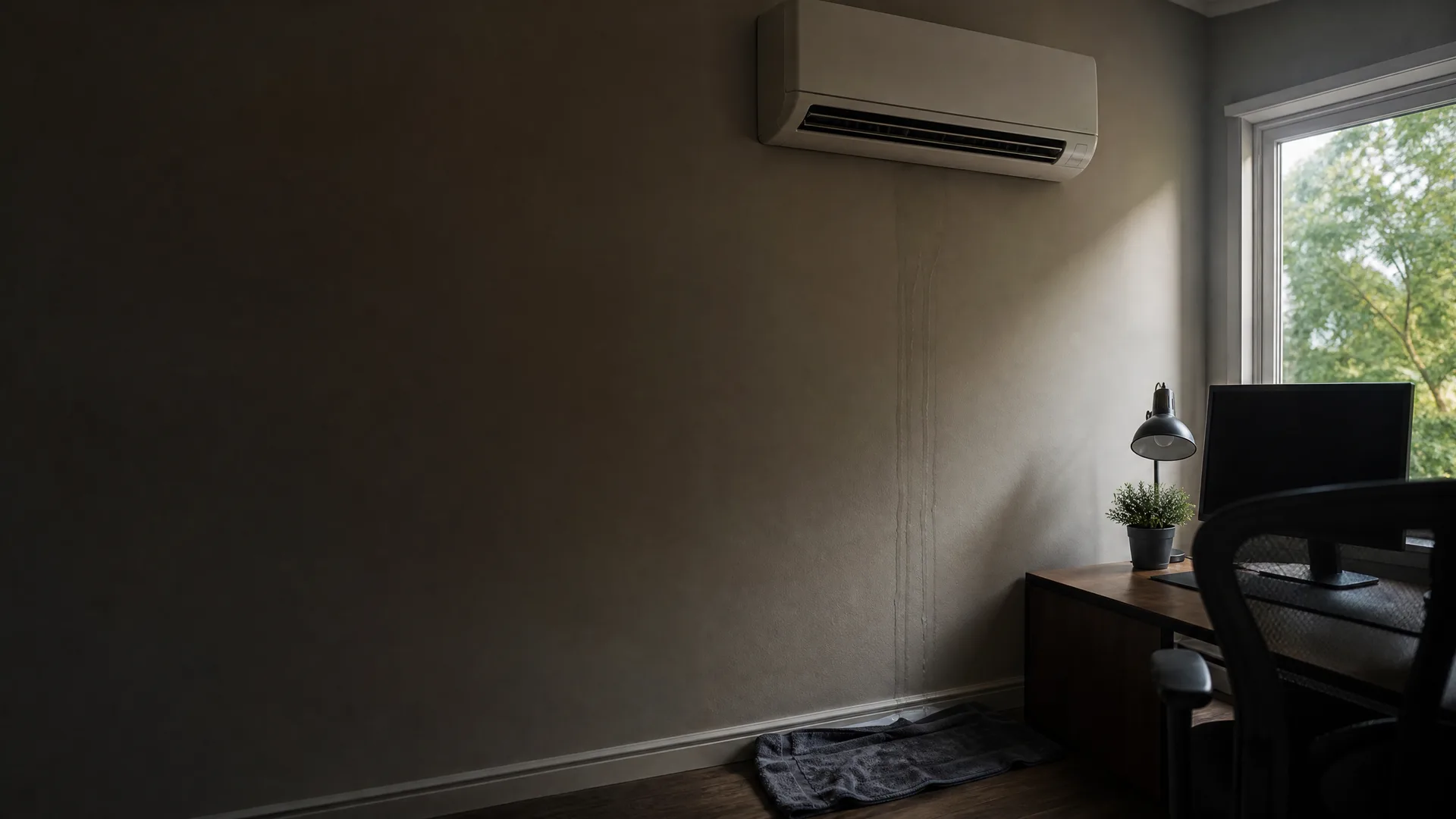
You're at your desk in the home office on a July afternoon, Fresno heat pressing against the windows even with the mini split running. You notice the carpet feels damp under your chair. Looking up, there's a wet streak running down the wall below the indoor unit, darker where it's soaked in longest. A towel is already on the floor from the last time this happened, pushed against the baseboard. The light on the unit is blinking, the same pattern it had an hour ago. The air coming out still feels cool, but the wall is wetter than it was when you sat down, and the stain has spread another inch toward the outlet.


A sensor or switch detects a reading outside its normal range
The control board checks that reading against its fault list
The board assigns the matching blink count or color pattern
The indoor unit's light repeats that pattern until the fault clears


The light is the control board talking. It saw a reading it didn't like, checked it against a list of known faults, and started pulsing out the match. That part is the same on every mini split. What the pulses mean is not. A Mitsubishi and a Daikin can show the same count and point to two different problems, so the model on your indoor unit matters as much as the number of blinks you count.
What you see around the unit narrows it further. A stain on the wall or water pooling below points to the drain line or the pan. Warm air coming out when the thermostat says cool points somewhere else entirely, toward the refrigerant side or the compressor. Either way, the light alone is a starting point, not the full answer.
None of this is work to sit on. A unit that stalls in July leaves you without AC through the stretch of Fresno summer when you need it most. One that drops out in January does the same to your heat. Fresno runs hot and dry for months and cold enough in winter that a dead mini split is more than an inconvenience either way.
A contractor who works on these units through both seasons has already seen most of what shows up on that board, model by model. Getting the pattern read against the right unit is what turns a blinking light back into a steady one.


Hand off the mini split problem
A licensed pro who repairs mini splits in Fresno County gets your request.