Why your mini split light is blinking in California

A white wall-mounted mini-split air conditioner indoor unit centered on a plain light gray background.
I'm done searching

A blinking light on your mini split is the unit telling you what's wrong, in code. Each flash pattern maps to a specific fault, like a frozen coil, a blocked drain, low refrigerant, or a sensor that's failed, and the number of blinks or the color sequence points to which one. The manual for your model has the key, and it's worth checking before you assume the worst. Some causes are simple, like a dirty filter choking airflow until the coil ices over. Others, like a refrigerant leak or a failed circuit board, need a gauge set and real diagnostic work to find. With power costs in California running high, a mini split that's cycling on a fault code is also working harder and costing more while it does it. Shutting it off at the breaker for a minute sometimes clears a one-time glitch. If the light comes back, the unit is telling you the same thing again, and that part needs a closer look.

A white wall-mounted mini-split air conditioner indoor unit with visible dust and staining along its lower vent, installed on a plain pale wall.
Before you get your mini split repair
A white wall-mounted mini-split indoor unit installed high on a gray interior wall, with a window at left and part of a light gray sofa with a dark cushion at lower right.
After you get your mini split repair

Mini splits don't have a screen to tell you what's wrong, so the indoor unit's circuit board uses the LED to spell it out. The pattern is a code. Some models pair a blink with a beep, which usually points toward the drain pump or the float switch rather than something electrical. A fast, steady blink often means the indoor and outdoor units have lost communication with each other, which isn't the same as a problem with the indoor unit itself. The outdoor unit can log its own fault even if you never see its light flash, since the one you're watching is inside the house. Manufacturers build in a short pause between repeats, so count the blinks in one group before the gap rather than guessing from the whole sequence. Cutting power will make the light stop and reset the board, but it doesn't touch whatever tripped the sensor. In California, where the power bill already runs high, a reset that hides a real fault just means the unit keeps working harder than it should until someone looks at what set it off.

What the blinking actually means

  • The indoor unit's circuit board reads the blinks back through an LED because there's no display screen to show a code.
  • A steady fast blink usually points to a communication error between the indoor and outdoor unit rather than the indoor unit itself.
  • Count the blinks between pauses, since most manufacturers reset the pattern after a short gap before repeating it.
  • A blink paired with a beep from the indoor unit often narrows the fault to the drain pump or float switch.
  • The outdoor unit can log its own fault even when the only light you see blinking is inside the house.
  • Clearing the error by cutting power resets the board but does nothing about whatever tripped the sensor in the first place.
A woman in a cream knit sweater reclines on a beige couch with eyes closed and a slight smile, a gray hardcover book resting open on a textured blanket over her lap, with a lit table lamp and a leafy plant in the dim background.
A smiling middle-aged man in a dark green sweater sits at a candlelit table with a glass of red wine and a bowl of salad in the foreground.
A white wall-mounted mini-split air conditioner installed high on a light gray interior wall below a white crown molding and ceiling with a recessed light.

Running clean

The light blinks a steady ready signal or stays solid while the unit holds whatever temperature you set. Air moves out of the vents evenly, with no hesitation in the compressor outside. This is the state a mini split should sit in for years before anything needs attention.

A dusty, discolored white wall-mounted mini-split air conditioner unit installed on a plain beige interior wall below a molding strip.

Flashing a fault

The casing has gone dusty and the vents stay open but the room isn't cooling the way it should. A repeating blink pattern is the circuit board reporting something specific, a frozen coil, a clogged drain, a charge that's dropped low. Left alone, the same fault tends to come back worse.

Why does the light on your mini split keep blinking?

You'll usually notice it at night, when the room stops cooling the way it did an hour ago, or when the air coming out feels warm instead of cold. Sometimes there's a hiss near the outdoor unit, or ice forming on the coil behind the indoor panel. If the drain line is clogged, water can back up and drip from the unit onto the wall or floor below it. A unit stuck cycling on a fault code isn't cooling the room it's assigned to, and in a house that depends on it for summer comfort, that means the one space you expected to be cool stays warm while the rest of the system runs up your power bill trying to compensate.

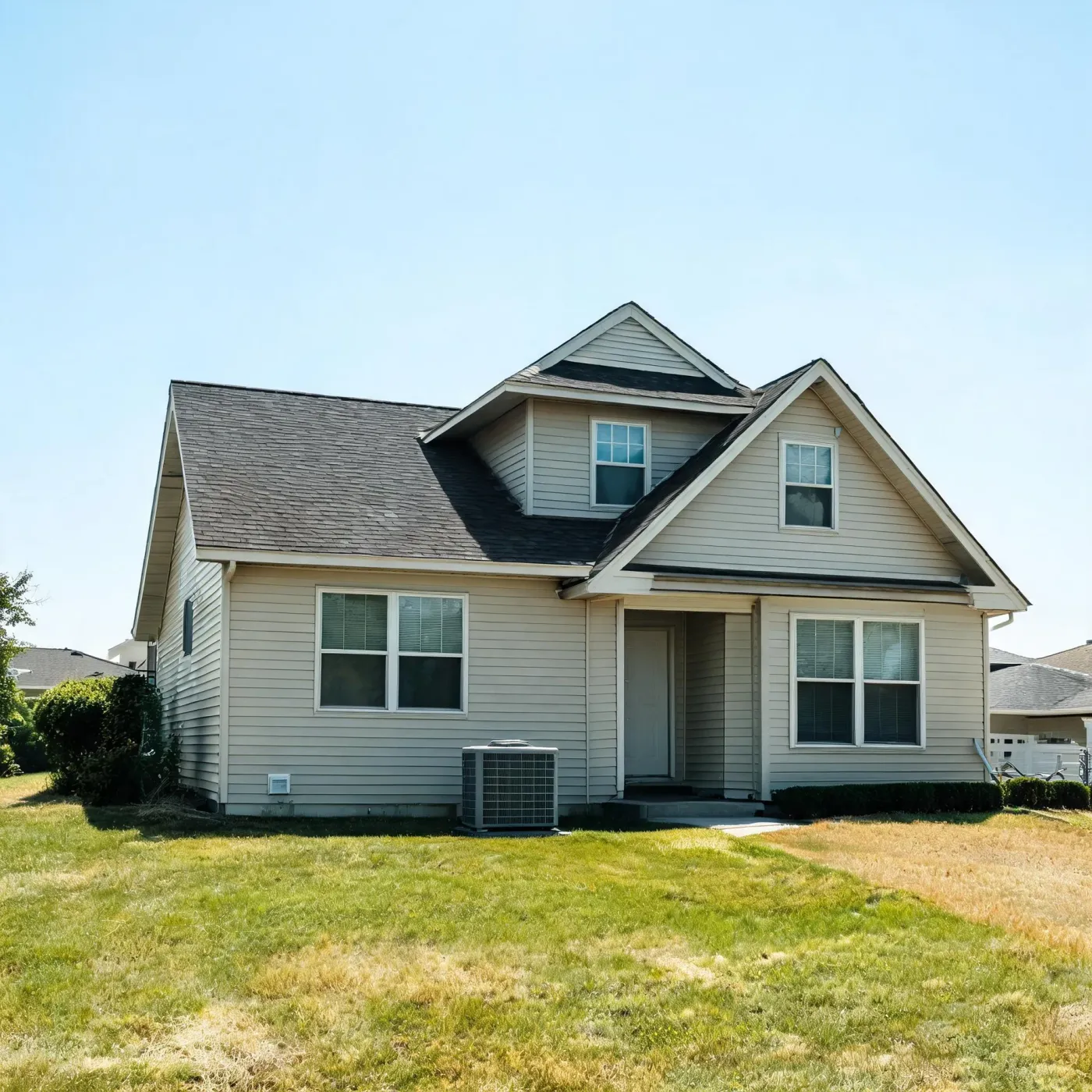
A two-story house with beige horizontal vinyl siding, gray shingled gables and dormer, white-framed windows, a central entry door, and an outdoor air conditioning unit, set on a partly dry lawn under a clear blue sky.

A dew point averaging 50°F across June, July and August, as measured across California, is why your indoor unit isn't fighting heavy, wet air the way one in the Gulf states would. That matters for a mini split because most of the strain that causes a frozen coil or a drainage backup comes from pulling moisture out of thick air, hour after hour. Here the load leans more on temperature than on humidity, so when the light starts blinking, it's less likely tied to a clogged drain line from constant condensation and more likely a refrigerant or sensor fault. Send the form and the search for someone qualified to read that code is no longer something you have to do yourself.

NASA POWER T2MDEW county cells weighted by homes

Hand off the search today

Only one pro gets your request, so you hear from one company.

You only hire the pro if you want to.

The code points to one part

The blink pattern on your mini split narrows the problem down before anyone opens the panel. A fault code tied to the drain means the technician checks the pan and the line first, not the refrigerant charge. A code tied to a sensor means a part gets tested with a meter, not replaced on a guess. That's different from a system with no display at all, where the only way to find a frozen coil or a failed sensor is to pull the unit apart and check each thing in turn. The blinking is slower than that, because it's reading a fault already logged on the board.

Gas heat changes what you'll see

Most homes in California heat with gas, so the mini split is carrying cooling load almost on its own, without the system also running heat strips or a reversing valve through the winter. That means a blinking light here is more likely to show up as a summer problem tied to the compressor or the coil than one tied to parts that cycle between heating and cooling modes. A unit that only cools also logs fewer total run hours over a year than one doing both jobs, which matters if you're trying to tell a worn part from one that just needs a reset.

Power costs 31.35 cents per kilowatt-hour statewide

At that rate, a mini split blinking a fault code and still cycling the compressor trying to fix itself runs up a bill fast. A unit stuck faulting is wasted power, not comfort, which is reason enough to get the code read before it keeps drawing current for nothing.

EIA-861 2025 statewide residential average

A white wall-mounted mini-split air conditioner installed high on a plain light-colored interior wall near a corner, with a window frame at the left edge.

Left to run as is

A mini split that keeps faulting and resetting itself still pulls power every time the compressor tries to start again. It won't cool the room right, and the blinking won't stop on its own. Left alone, a drain blockage can back up and spill water near the indoor unit, and a refrigerant leak that's gone unchecked gets harder on the compressor the longer it runs that way. The code sits there blinking until someone reads it and opens the unit.

A white wall-mounted mini-split air conditioner installed near the top of an interior corner wall, with large blank light-colored wall space to the left.

Once it's looked at

A contractor who reads the blink pattern knows roughly where to start before the panel comes off, so the visit goes toward the actual fault instead of a general once-over. Someone local who works on these units every summer has likely seen your model's code before. Once the part or the blockage is found and cleared, the unit stops cycling against itself. The light goes back to steady, the room holds its temperature, and the compressor outside runs the way it did before any of this started.

Call Now or Wait It Out

Call now

  • A licensed local contractor who works on mini splits all year reads the blink pattern before touching the panel, so the visit starts with a likely cause already narrowed down.
  • Sending one request routes you to one contractor, not a handful of companies calling and texting at once.
  • A unit stuck faulting and resetting keeps drawing power at California's rates whether or not it's cooling the room.
  • A drain blockage left alone can back up past the pan and reach the wall or ceiling below the indoor unit.
  • Once the form is sent, finding someone to look at it stops being something you have to manage yourself.

Wait it out

  • The blinking won't stop on its own, since the circuit board keeps reporting the same fault until it's fixed.
  • A low charge or a failed sensor left running can put more strain on the compressor than the original fault alone.
  • Warm air coming out of the vents in the middle of summer evenings is the kind of thing that's hard to just live with.
  • Each night it faults and resets is another night the compressor draws current without actually cooling anything.
  • The longer a frozen coil or a blocked line sits, the more there is to check once someone finally looks at it.
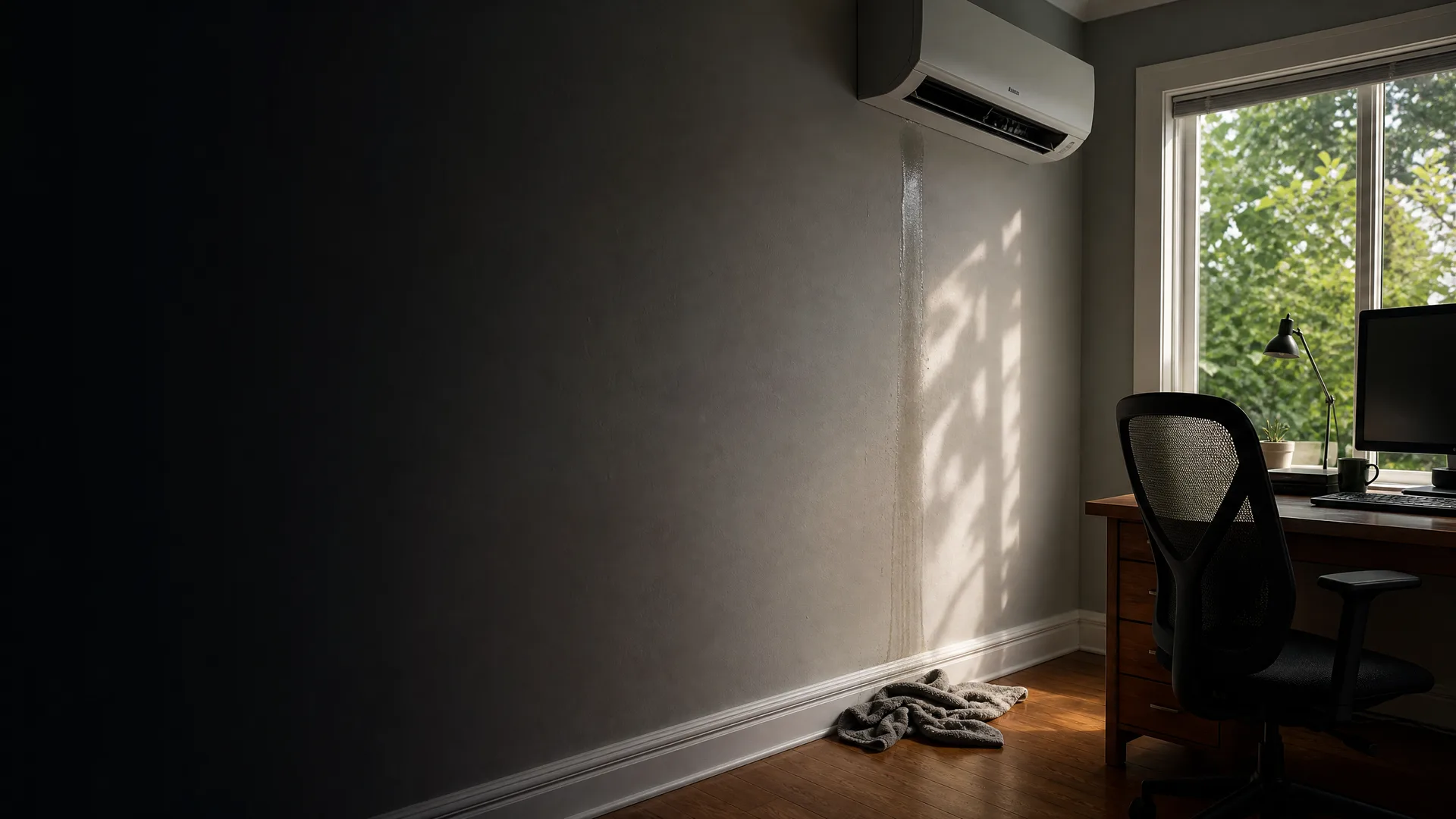
A wall-mounted mini-split air conditioner in a dim room, with a water streak running down the wall below it to a towel on the floor near the baseboard, beside a desk, office chair and monitor by a window.

You're at the desk by two in the afternoon, trying to get through a few more emails before you stop for the day. The air feels fine at first, then you notice the wall under the indoor unit has gone dark, a wet streak running down toward the baseboard. You grab a towel off the bathroom rack and get it on the floor before it reaches the carpet. The light on the unit is still blinking the same pattern it was an hour ago. Outside, the afternoon is warm and dry, nothing like the heavy air you'd get further east, but the water on your wall doesn't care about that. You stand there for a second, towel under your foot, watching the light.

A white wall-mounted mini-split air conditioner on a beige interior wall, with a cream curtain and window at left, a potted plant on a ledge at right, and a wood floor below.
A clean unit cycles quietly and holds the room at whatever you set it to, with no blinking light to think about.
A dusty, discolored white wall-mounted mini-split air conditioner unit installed high on a plain interior wall below a white ceiling molding.
Dust packed into the vents and coil blocks airflow, and that strain is often what trips the fault light in the first place.

What the blink is telling you

  • A blinking light is a fault code, not a random glitch, and it points to one part before anyone opens the panel.
  • Common causes include a frozen coil, a blocked drain, low refrigerant, or a failed sensor, each with its own pattern.
  • A mini split stuck faulting still pulls power every time the compressor tries to restart, which runs up the bill.
  • A unit holding its set temperature with a steady or solid light is running the way it should, with no code to chase.
  • A licensed local contractor who works on this equipment all year reads the code first, so the visit starts with a likely cause already narrowed down.
  • Left alone, the blinking won't stop on its own, and a drain blockage can back up and spread beyond the unit.

The light on your mini split isn't broken on its own. It's reporting back, the only way it can without a screen, and the pattern it flashes points to a real part: the coil, the drain line, the refrigerant charge, or a sensor. That's the answer this page set out to give. What you do with it is the only question left. A unit that's faulting and resetting itself doesn't stop on its own, and it doesn't stop pulling power either. Every time the compressor tries to restart, it draws current, and with what power costs here, a unit stuck in that loop adds up fast for a room it isn't even cooling. Left long enough, a blocked drain backs up past the pan and shows up as a stain on the wall below the indoor unit. None of that happens to a unit holding its set temperature with a steady or solid light. That one just runs. The difference between the two isn't luck. It's whatever the code is pointing at, read and fixed before it has time to spread into something bigger. A contractor who works on these units through every California summer has usually seen your blink pattern before and knows which part it means. You don't need to decode it yourself. You need the code read once, by someone who knows what it's telling them.

A smiling bearded man in a dark long-sleeved shirt sits on a brown leather sofa in a living room, with a large glass bowl of popcorn on a table in the foreground and a houseplant and doorway behind him.
A smiling man with gray-streaked hair and a beard in a dark blue sweater reclines on a sofa in a living room with a lit wood stove, shelves, wicker baskets and a bowl of popcorn on a table.
A smiling bearded man in a dark plaid shirt sits on a green couch beside a cushion and a wooden bowl of popcorn, with a blurred kitchen and living area behind him.
A smiling bearded man in a dark green henley shirt sits on a gray couch in a living room with a bookshelf, lit lamp, houseplant and framed picture behind him, and a bowl of popcorn in the foreground.

Mini Split Repair

Stop chasing a mini split pro

Your request stays with one local pro.

A smartphone with a blank green screen stands upright against a plain light gray background.
RepairMini-splitCalifornia
Step 1 of 2

What ZIP code is the job in?