






What temperature to set your AC in California summers

A local pro who services air conditioners gets in touch about the tune-up.

Request a pro

What temperature should I set my AC to in the summer in California?

You want a number that works for the thermostat without running up your power bill, but you also don't want to come home to a warm house. California summers don't carry the humidity some other states deal with, so the usual advice you see online doesn't always fit what you actually feel here.

Set it to 78 when you're home, higher when you're not

78 degrees is the standard setting for cooling in most of the country, and it works well in California because the air here is dry. Without heavy humidity, 78 feels comfortable in a way it wouldn't in a muggier climate. Your air conditioner also runs less to hold that temperature than it would fighting moisture along with heat. Since power here costs more than in most states, every degree below 78 adds to the bill faster than it would elsewhere. If you're out of the house for several hours, setting it to 85 or turning it off saves more without any comfort cost. The gap between inside and outside matters too. A system working to hold 70 on a 95 degree day runs far longer than one holding 78.

A woman in a cream cowl-neck sweater stands in a lamp-lit room looking out a window at a snow-covered yard with shrubs and bare trees at dusk.
A woman in a gray turtleneck sweater stands near a large window in a lamp-lit living room, looking out at falling snow and snow-covered conifers.
A woman in a chunky knit sweater stands by a large window looking out at snow-covered ground, with a dimly lit living room containing a gray sofa, framed artwork, shelves and table lamps behind her.
A woman in a gray turtleneck sweater stands in a dimly lit living room with a lamp and bookshelves, looking out a multi-pane window at falling snow.
A gray outdoor air conditioner condenser unit on a concrete pad beside a house with horizontal lap siding, with a flowering shrub at left and a disconnect box with conduit on the wall at right.
Set at a steady temperature, the condenser cycles on and off evenly and keeps up without strain even on a warm California afternoon.
An outdoor air conditioner condenser unit on a concrete pad beside a house with light horizontal vinyl siding, surrounded by bare dirt, gravel and dry leaves, with refrigerant lines and conduit running along the wall.
Dirt and leaves packed around the base block airflow, so the unit works harder to hold whatever temperature you set it to.
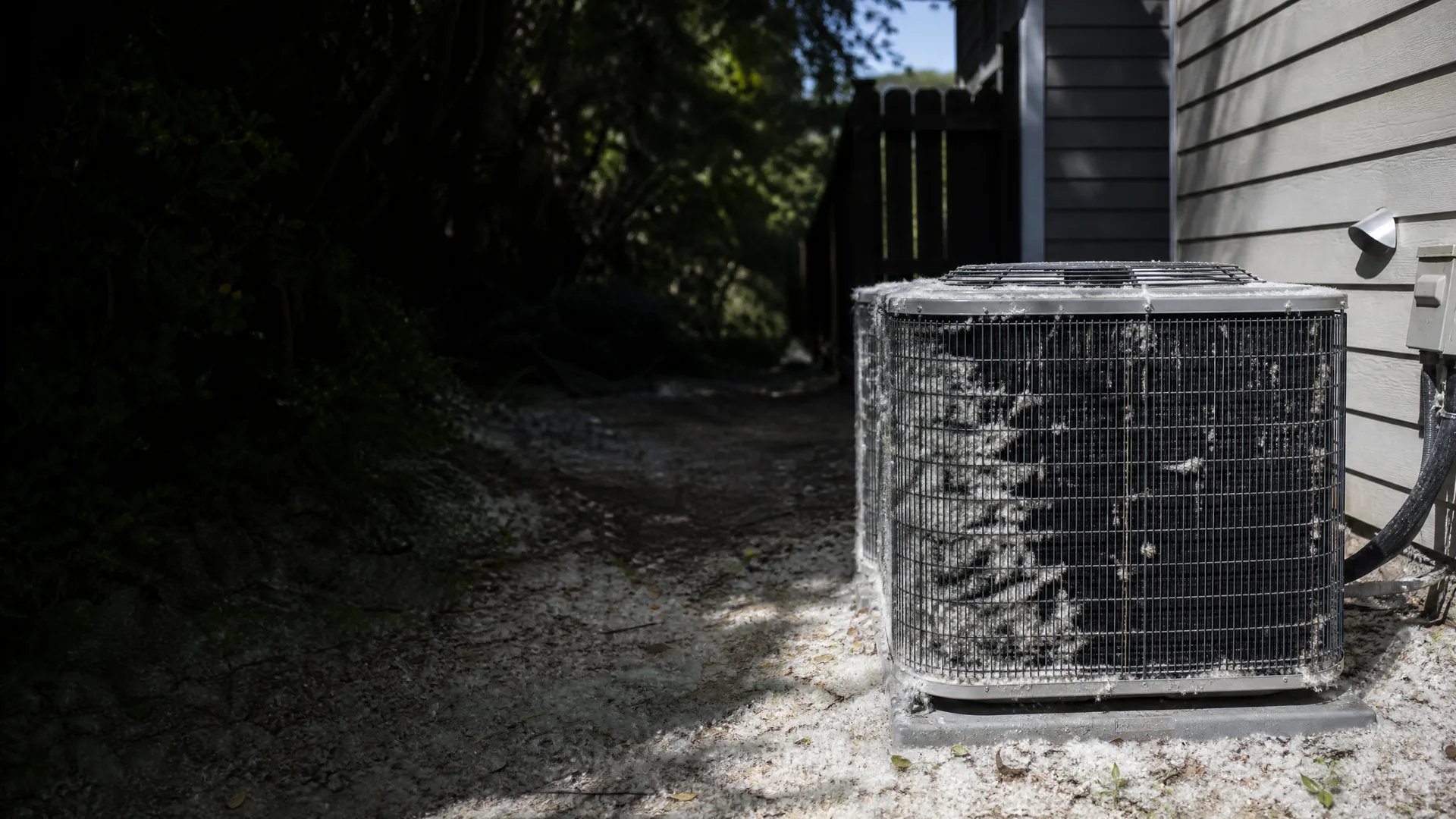
An outdoor air conditioner condenser unit covered in white foam-like debris sits on a concrete pad beside a light-colored lap-sided house, with white flecks scattered on the ground and dark trees and a wooden fence behind.

You're coiling the hose in the side yard on a Saturday afternoon when you notice the condenser fins have gone white, matted over with cottonwood fluff drifting off the tree next door. It's been building for weeks without you looking closely. You crouch down and the fan behind the grille sounds a little labored, pulling air through fins that shouldn't be clogged like this. The thermostat inside still reads 76, same as always, but the unit outside is working for it now instead of just keeping pace. You make a note to call someone about it before the real heat sets in.

Is your thermostat setting actually holding?

You set it to 78 and walk away, but check back in an hour and the house reads 81. The air coming out of the vents feels less cold than it used to, or the condenser outside is running longer stretches than it should to hold a number that used to be easy for it. Maybe you notice the unit cycling on and off more often than it did last summer, or a room at the far end of the house just won't come down to match the thermostat. None of that is about the number you picked. It means the system is working harder to deliver whatever setting you give it, and left alone that strain is what shortens the life of a condenser.

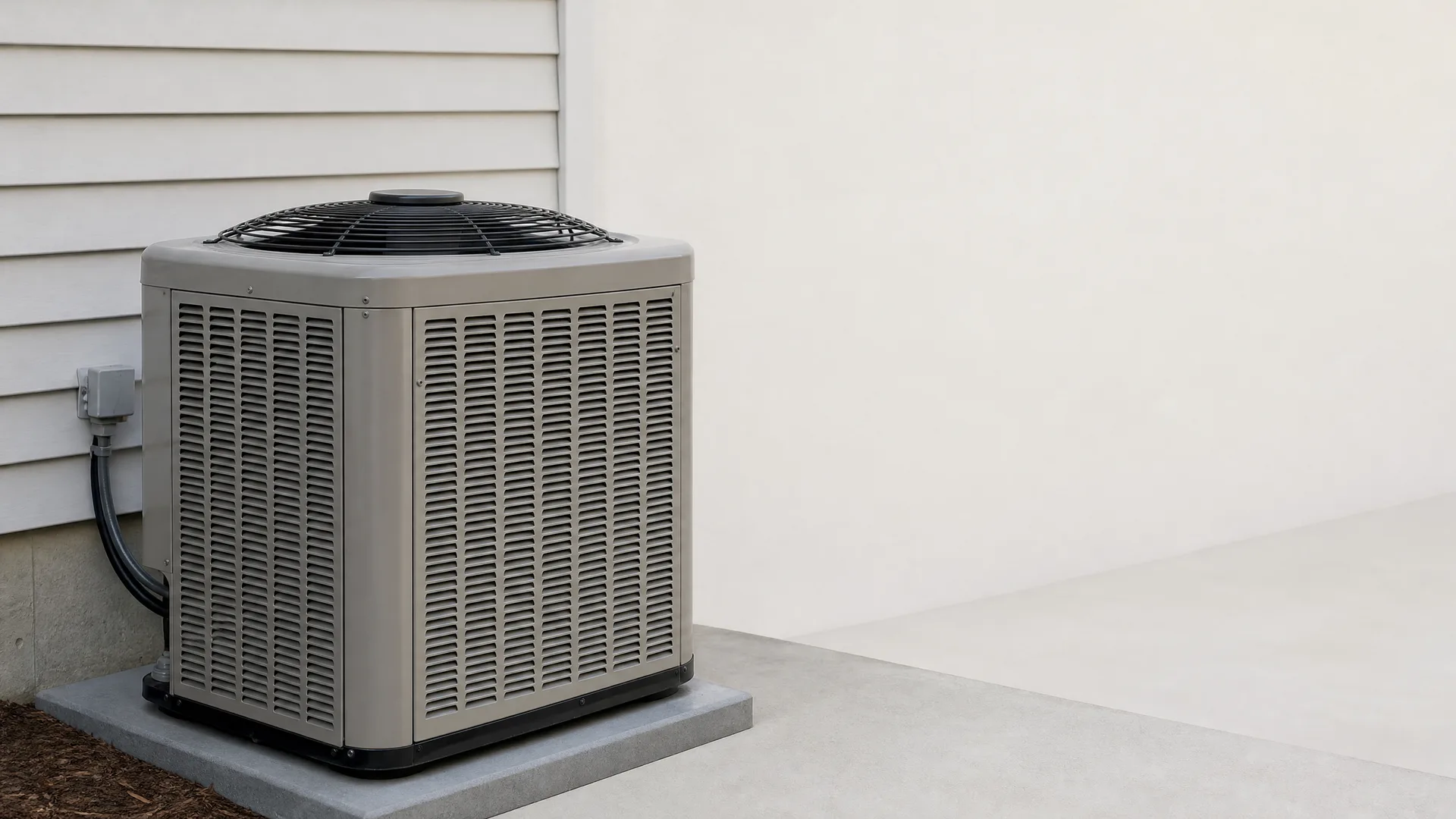
An outdoor air conditioner condenser unit on a concrete pad beside a house with horizontal lap siding, with an electrical disconnect box and conduit on the wall behind it.

Why the setting alone isn't enough

The number on the thermostat only matters if the system can actually reach it. A condenser that's low on refrigerant or caked with dust off the coil will run long stretches without closing the gap between the house and the setting you picked. Dial it anywhere you like, but if the coil's dirty or the charge is low, the air coming out stays a few degrees short, and the unit keeps running past when it should have shut off.

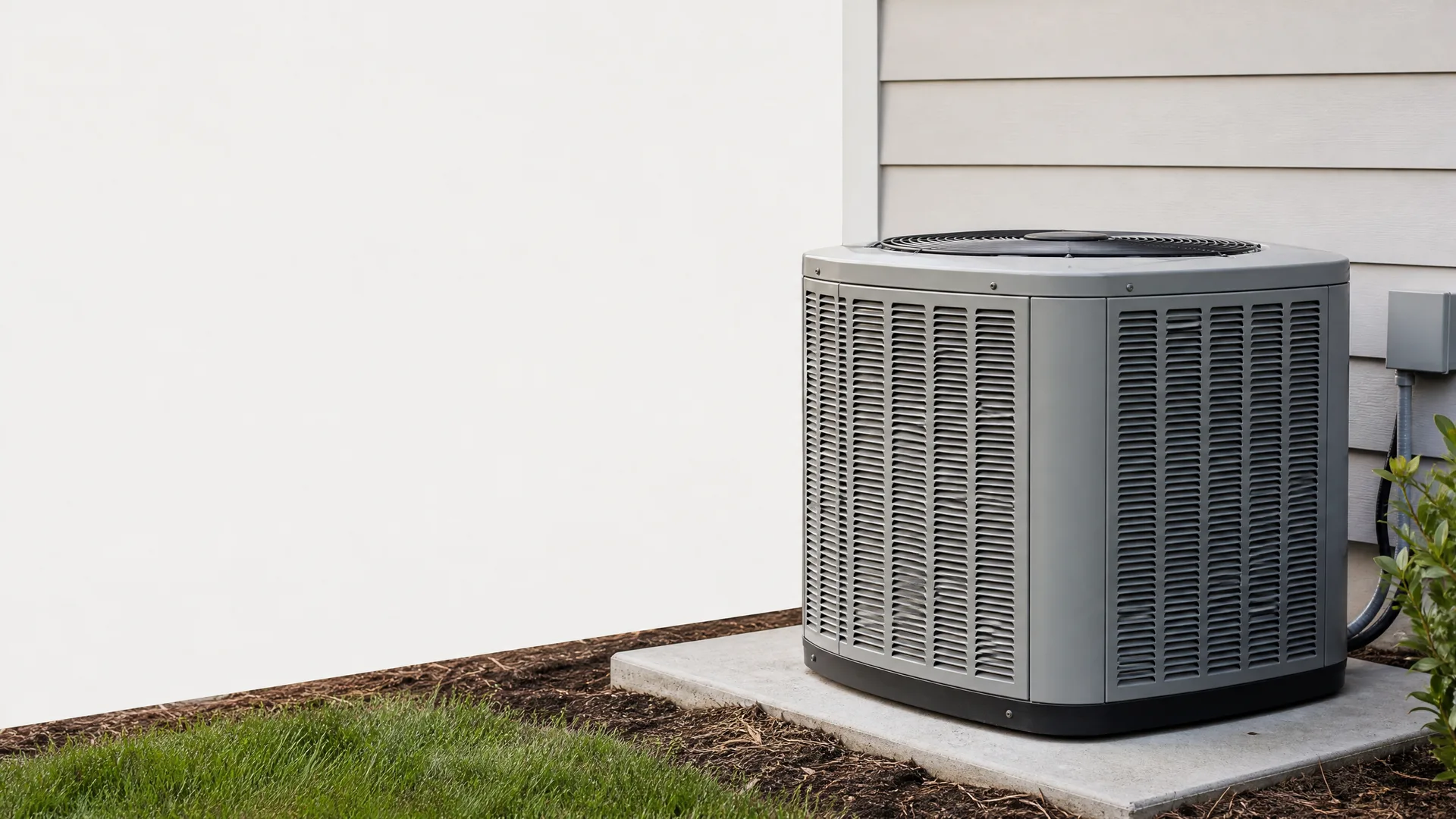
A gray outdoor air conditioner condenser unit sits on a concrete pad beside a house with light horizontal siding and a plain white wall, with mulch, grass, and a small shrub in the foreground.

What a steady setting does for the unit

Every time the compressor kicks on, it draws a hard pull of current to get started. A thermostat set and left alone lets the system cycle on its own schedule, a few times an hour, then rest. Bump the setting up and down through the day and you force extra start-ups the compressor wasn't going to need. Over a summer in California, that's a lot of added starts on the same compressor, and each one puts more load on it than the running itself does.

Power costs 31.35 cents per kilowatt-hour statewide

At 31.35 cents per kilowatt-hour, every degree you push your thermostat down shows up on the bill fast. Holding a steady setting instead of chasing a cooler number keeps the condenser from running longer than it needs to.

EIA-861 2025 statewide residential average

Holding one number all day

If you set your thermostat once in the morning and leave it, the condenser settles into a rhythm. It cycles on when the house drifts a degree above your setting, cools it back down, and shuts off. That rhythm is what the equipment is built for. It also means you're not asking the system to catch up from a warm house in the evening, which takes longer and runs the condenser harder than holding steady ever does. For a California afternoon, this is the easier path for the equipment and for the bill.


Changing it through the day

Some households set it higher while out and drop it several degrees before anyone's home. The condenser then has to pull the house down fast, often running a long stretch without stopping to get there. On a hot afternoon that catch-up cycle can take a while, and the house may not feel cool the moment you want it to. It can still make sense if nobody's home most of the day, but it asks more of the system in short bursts than a steady setting does.

An outdoor air conditioner condenser unit sits on a concrete pad beside a stucco wall, with refrigerant lines and conduit running to the wall and a shrub to the left.
Before you get your air conditioner maintenance
A gray outdoor air conditioner condenser unit on a concrete pad beside a house with dark horizontal siding and a stone base, surrounded by gravel, with a flowering shrub at left and a concrete walkway in front.
After you get your air conditioner maintenance

Get your air conditioner to the right pro

A licensed local pro takes the request for your air conditioner tune-up.

There's no charge for the request.

A programmable or smart thermostat set to one summer number and left there will hold the house close to that number all day without you touching it again.

A thermostat you adjust by hand every time the house feels off makes the condenser start and stop more than it needs to, and that shows up on a power bill already among the highest in the country.

A bearded man in a plaid flannel shirt looks out a window at snow-covered conifer trees, with a steaming ceramic mug on the sill and wooden shelves holding dishes and a plant behind him.
A bearded man in a dark blue T-shirt sits on a gray couch, smiling and looking down to his left, with a bookshelf and a bright window behind him.

78°F while you're home

This is the number most California utilities point to for daytime comfort without pushing your bill up. The condenser holds a steady rhythm at this setting.

Get one local pro

85°F or higher when you're out

Letting the house drift up while nobody's there saves on the power bill. The condenser doesn't have to hold a cool temperature against an empty house all day.

Get one local pro

Skip Maintenance or Keep Up With It

Skip maintenance

  • A condenser coil caked with dust or pollen traps heat and makes the unit run longer to hold whatever number you set on the thermostat.
  • A refrigerant leak that goes unnoticed means the system can't close the gap between the house and your setting no matter how you program it.
  • A weak capacitor or a failing contactor usually gets worse gradually, so the system starts short cycling before it quits outright on a hot day.
  • Without a yearly check, a clogged filter or a dirty blower wheel cuts airflow and the house ends up a few degrees warmer than you asked for.
  • A problem that could have been caught in spring gets found in August instead, right when the condenser is working its hardest.

Keep up with maintenance

  • A technician who services this equipment every summer in California knows which parts fail first in this climate and checks those first.
  • Cleaning the condenser coil and clearing debris from around the unit lets it hold your thermostat setting without straining to get there.
  • Checking the refrigerant charge once a year catches a slow leak before it turns into a system that can't cool the house at all.
  • A local, licensed contractor matched to your system means one set of eyes on your equipment, not several companies competing for the job.
  • Tightening electrical connections and testing the capacitor before summer heat sets in means the condenser cycles the way it's supposed to all season.
A two-story house with beige siding, a covered front porch and dark shingled roof, set behind a mown lawn with a wet concrete walkway leading from the street curb, flanked by large green trees and shrubs.

California air doesn't carry much weight to it. Summer dew points here average 50°F, measured across June, July and August, which is the kind of air most people would call dry. That matters for your air conditioner because a dry house cools faster than a damp one. The condenser isn't fighting moisture the way a system in a humid state would, so it spends less time running just to wring water out of the air. You'll notice it in how quickly the house catches up after the thermostat kicks the unit on, and in a lower bill than a muggier climate would produce at the same setting. The strain on your system comes from heat alone, not from humidity stacked on top of it.

NASA POWER T2MDEW county cells weighted by homes

A man in a dark polo shirt and cap, seen from behind, walks up a paver path toward a woman standing in the open front doorway of a single-story stucco and stone house.

78 when you're home, and a system that can hold it

78 degrees while you're home, let it drift when you're out, and a condenser that's clean and properly charged will hold whatever number you give it. That's the whole answer. The thermostat setting only does its job if the equipment behind it is sound, and the only way to know that is to have someone look at it before the heat sets in.

If your air conditioner has started running longer than it used to, or the house takes a while to catch up to the number on the wall, that's worth having checked by someone who works on these systems all season and knows what tends to go wrong first in a California summer. You'd be matched with one licensed local contractor, not a handful calling you back, and they'd reach out to go over what your specific system needs.

A dark ceramic vase holding a leafy green branch sits on a round wooden table, with a blurred cushioned wooden armchair, woven basket, window and shelving with pottery in the background.
A dark-clad house with large windows beside a gravel driveway lined with in-ground path lights, ornamental grasses and hydrangeas, with distant hills and an orange sunset sky.

Air Conditioner Maintenance

Matched to your air conditioner job

Tune-up, service, or cleaningCentral ACCalifornia
Step 1 of 2

What ZIP code is the job in?

  • A pale ceramic vase holding leafy green branches sits on a wooden side table beside a linen-covered chair with a throw blanket, below a wood-framed window.
    • A large woven basket with rope handles holding a draped cream fringed blanket stands in a room corner on a wood floor, with sunlight from a nearby curtained window and a dark wood cabinet at right.
      • Send it once and finding someone is no longer on you.
      • Send the form and the air conditioner tune-up stops being something to remember.
    • A leafy green plant in a woven basket sits in a sunlit corner beside a beige sofa with a knit throw, sheer curtains, a window, and a wooden coffee table.
      • Skip calling around to set up an air conditioner tune-up.
      • One form instead of hunting for a pro who does air conditioner tune-ups.
    • A ceramic vase holding olive branches and a wooden bowl sit on a wooden windowsill beside a white-framed window, with a framed picture leaning against the grey wall.
      • Your request goes to one pro, not a list of companies.
      • The pro who reaches out is licensed in California.