
Why your AC runs all day in California summers
Your AC runs all day because it has to remove heat for that many hours just to hold the house steady, and in California that means long runtimes even without the humidity that makes other places feel worse. Dry heat still pushes a lot of heat through your walls and roof once the sun is up, and the system has to keep moving air the whole time to keep pace. A unit that's sized and running right still cycles for long stretches on a hot day. That's normal. What isn't normal is a system that never shuts off at all, runs long on mild days too, or keeps the house a few degrees above what you set. That points to something making the system work harder than it should, like low refrigerant, a dirty coil, or a failing capacitor. Worth paying attention to, because with power here among the priciest in the country, a system straining to keep up is costing you more every hour it runs that way.




The compressor and coil do the same job every cycle: pull heat out of the air in your house and move it outside. When the gap between your thermostat and the outdoor temperature is small but steady, the system doesn't need to work hard, just for a long time. That's a normal long runtime, not a problem. What turns a normal runtime into a longer one is anything that makes each cycle move less heat than it should. A filter clogged with dust or a coil caked with grime cuts the air moving across it, so the system can't pull out as much heat per minute. A slow refrigerant leak does the same thing from a different angle, the charge runs low and each cycle falls short. A capacitor on its way out lets the compressor start and keep running, but it draws more power to do it. And outside, anything pressed against the condenser, shrubs grown in close, leaves packed against the fins, blocks the unit from dumping heat as fast as it should. Each of these turns a system that should cycle normally into one that runs long to get the same result.
What's actually driving the runtime
- Your AC cools by running the same cycle over and over: a compressor pushes refrigerant through a coil that pulls heat out of the air passing over it.
- A thermostat set a few degrees below the outside temperature asks for a small, steady drain, which is why the system runs in long stretches instead of short bursts.
- A dirty filter or a coil caked with dust makes the system move less air per cycle, so it has to run longer to pull out the same amount of heat.
- Low refrigerant from a slow leak means each cycle moves less heat than it should, so the unit keeps running to try to catch up.
- A weak capacitor can let the compressor start and run but draw more power doing it, which shows up as a longer runtime and a higher bill.
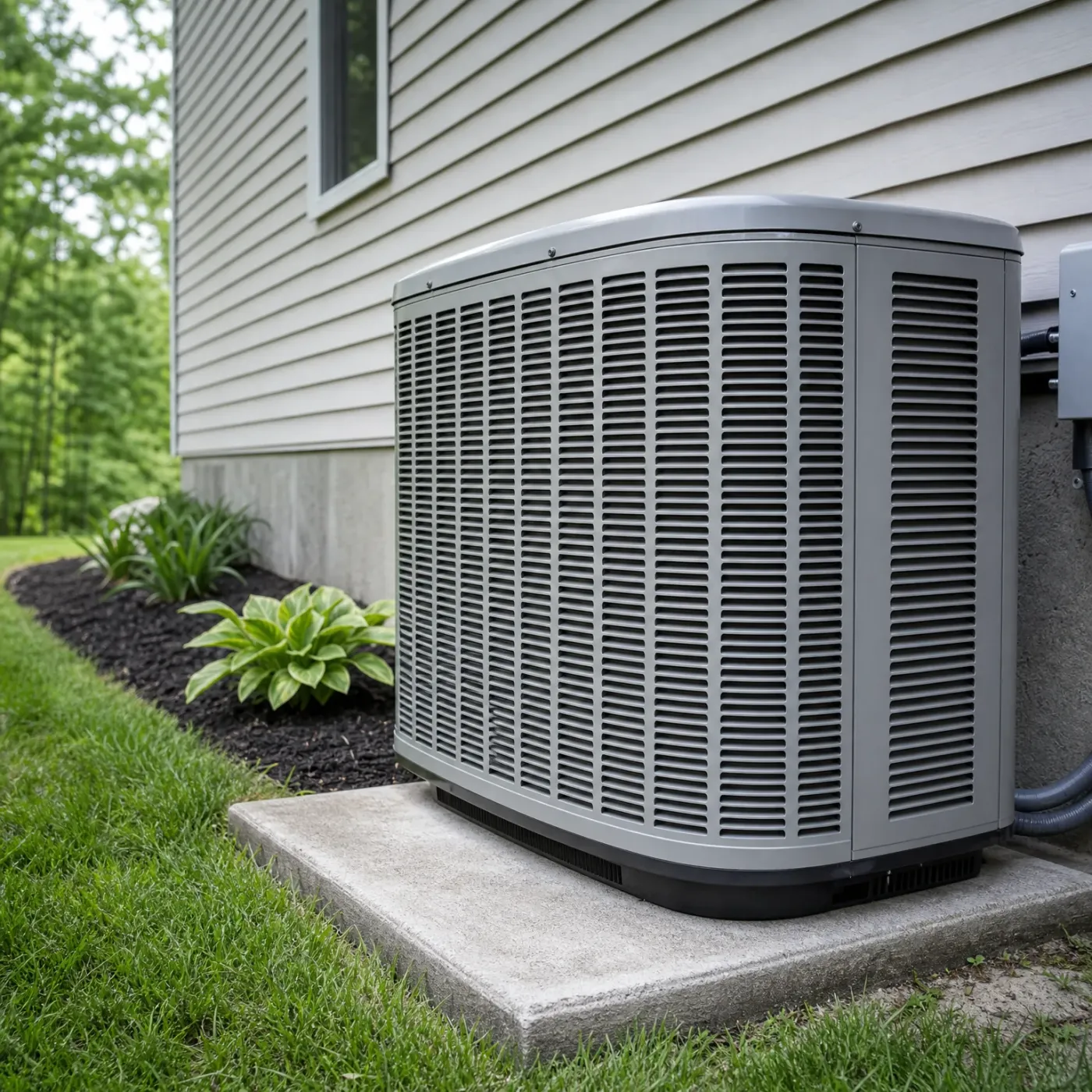
- The outdoor unit rejects the heat your house collects, so anything blocking its airflow, like shrubs or debris packed against the coil, makes it work longer to dump the same heat.


Let someone else find the pro
One form replaces the calls you'd make to find an air conditioner pro.
Get the air conditioner repair search off your mind today.
No charge to send it. You decide if you hire them.
Long Runtime: Normal or Not
Long runtime, working fine
- The compressor cycles on and off, pausing when the house reaches the set temperature, even if the pause is short.
- Vents still put out cold air and the thermostat reading matches what you set it to.
- The outdoor unit runs loud but steady, without grinding, clicking, or a new rattle that wasn't there before.
- Your power bill is higher for the months it runs long, but it tracks with how hot the days have been.
- The house holds the temperature within a degree or two instead of drifting upward during the hottest part of the day.
Long runtime, something's wrong
- The compressor runs without ever shutting off, even overnight or when the house is already at the set temperature.
- Air from the vents is weak or barely cool, so the system runs longer to make up for it.
- The thermostat says one temperature but the house feels warmer, which means the system is losing the fight.
- A refrigerant leak or a failing capacitor makes the compressor work harder for less cooling, and the runtime climbs to cover it.
- The power bill jumps well beyond what the outside temperature would explain for that stretch of days.
- Ice forms on the outdoor unit's coil or the indoor lines, which points to restricted airflow or low refrigerant rather than normal demand.

Thermostat calls for cooling once the house drifts above the set point.
Compressor starts and pushes refrigerant into the outdoor coil.
Refrigerant travels inside to the indoor coil and pulls heat from passing air.
A blower pushes that cooled air through the ducts into each room.


Power costs 31.35 cents per kilowatt-hour statewide
At 31.35 cents per kilowatt-hour, every hour your AC runs shows up on the bill fast. A unit that's struggling, low on refrigerant or fighting a dirty coil, draws power the whole time without cooling the house any faster. That gap between what you pay and what you get is usually the first sign something needs a look.
EIA-861 2025 statewide residential average
Long runtime, real problem, or both
- A long runtime on its own is normal here and doesn't mean the system needs repair.
- A short cycle that never seems to pause, warm air from the vents, or a climbing bill with no change in habits all point to a real problem.
- Refrigerant level, a dirty coil, and the compressor's condition decide whether your AC is working hard or just failing slowly.
- Catching a weak system now, before a July afternoon, is what keeps a long runtime from turning into no cooling at all.
- Sorting out which signs are normal and which aren't is the part most homeowners can't do from the thermostat alone.
A California summer asks your AC to run long hours just to hold the house steady, and that part is normal. The dry heat here doesn't need humidity to pile up a big cooling load, so a compressor that runs most of the afternoon isn't telling you anything is wrong. What matters is what's underneath that runtime. A system low on refrigerant or working against a dirty coil runs just as long, sometimes longer, but it's losing the fight the whole time. The thermostat keeps calling, the compressor keeps answering, and the house never quite catches up. That's the version worth catching, because a system already struggling in June has nowhere to go when July brings the hottest stretch of the year. The signs are there before the system quits outright: a cycle that won't pause, air from the vents that's cooler than outside but not cold, a bill that climbs while nothing in the house has changed. None of that sorts itself out from a thermostat reading. It takes someone who can check the refrigerant charge, look at the coil, and tell you whether the compressor is still doing its job or just drawing power without keeping up. Once that's done, you're not the one calling around, describing the same symptoms to different shops, or weighing quotes against each other. That part is handled, and what's left is a system that runs long because the weather asks it to, not because something in it is already failing.





One request and it's handed off
Describe what your air conditioner is doing once, in one form.
There's no charge for the request.