


Side profile of a bearded man wearing a dark faded baseball cap and a dark gray t-shirt against a plain light background.

Where to put a mini split in a California home

New system or replacementMini-splitCalifornia
Step 1 of 2

What ZIP code is the job in?

Where's the best place to put a mini split in my house?

You're probably standing in a room trying to figure out where the unit actually goes, and whether that spot will heat and cool the space the way you need it to. Mini splits work differently from the gas heat most California homes already have, so picking the wrong wall can mean a room that never quite feels right. You want the installer to get it right the first time.

High on an interior wall, away from doors and corners

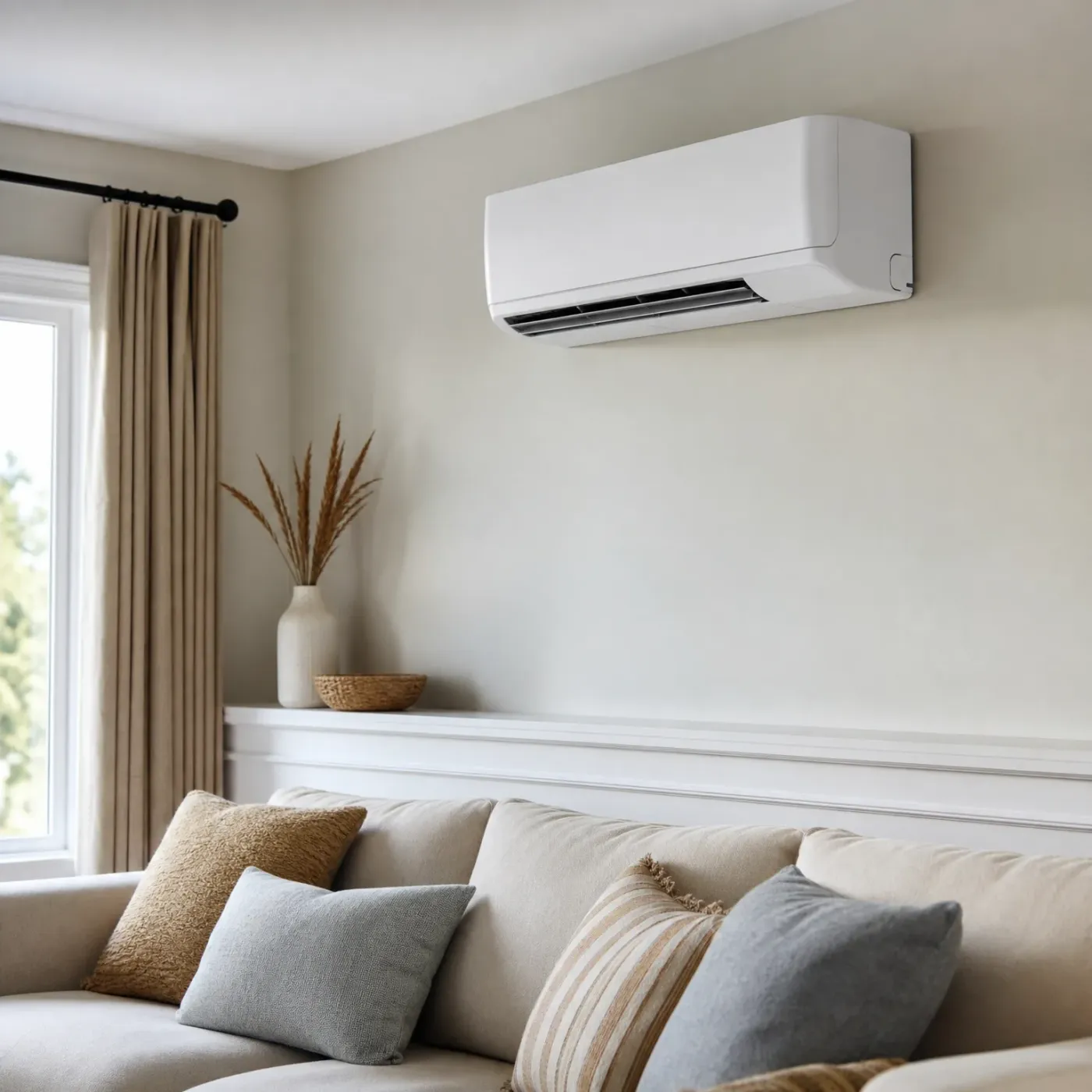
The indoor unit should go high on a wall that faces into the room, not tucked near a doorway or jammed into a corner. Mounted that way, it can spread air across the whole space instead of just blasting the nearest corner. It also needs clearance below and to the sides so the air isn't blocked, and a clear path to the outdoor unit for the line set. Since summers here don't bring the heavy humidity other states deal with, the unit isn't working to pull moisture out of the air the way it would elsewhere, so placement matters more for even heating and cooling than for drying the room out. A contractor who installs these across the area will walk the room with you before deciding.

A white wall-mounted mini-split air conditioner unit near the ceiling on a plain light-colored interior wall with open space to the right.

Mounting height and airflow

The indoor unit works best mounted high on an interior wall, usually between six and seven feet up, with nothing blocking the airflow in front of it. Furniture or curtains too close to the unit cut down how far the air actually reaches. The wall needs to back up to an exterior wall too, since the line set and drain have to run through it to the outdoor unit on the other side.

A white wall-mounted mini-split air conditioner unit installed near the ceiling on a plain beige interior wall, with a light curtain at the right edge.

Where the outdoor unit sits

The outdoor unit needs clearance on all sides for air to move through the coil, and a spot out of direct afternoon sun helps it run less. In most California yards that means a side yard or a shaded patch near the back of the house. Keep it off the ground on a pad or bracket so it stays clear of debris and water during the rainy months.

Interior Wall or Exterior Wall

Interior wall

  • An interior wall gives the line set a shorter run to the outdoor unit, which usually means a simpler install.
  • Interior walls are often more central to the room, so the unit can throw air across the whole space instead of just one corner.
  • Less exterior wall penetration means fewer spots where California's winter rain can find a way in over time.
  • An interior spot can still back up to an exterior wall for the line set without putting the unit itself on the outside face of the house.

Exterior wall

  • An exterior wall puts the indoor unit closer to where the outdoor condenser sits, which keeps the line set short and the install straightforward.
  • If the room only has one wall that backs up to the outside, this decides the location for you.
  • An exterior wall means one penetration point instead of routing the line set through interior framing to reach outside.
  • Rooms with gas heat already running ducts along exterior walls may have less open stud space there, which a contractor can check before mounting.
A white wall-mounted mini-split air conditioner installed high on a beige interior wall below crown molding, with a window and light curtain on a black rod at right.

Placed right and kept clear

This is a mini split doing its job. Mounted high, nothing in front of it, air reaching every corner of the room. With power costs what they are here, a unit that can actually move air without obstruction is the one that keeps your bill down.


A wall-mounted mini-split air conditioner indoor unit with a dusty off-white casing and dark lower vent, installed high on a plain light-colored wall below a ceiling molding.

Placed wrong and neglected

Dust and discoloration like this build up when a unit sits too close to a wall or corner that traps its own airflow. The unit works harder to do the same job, and in a California summer that means more hours of runtime for less cooling.

A man in a gray sweater reclines in a brown leather armchair with his eyes closed, beside a wooden side table holding a mug, a folded newspaper and a potted plant, with a bookshelf and sunlit window behind him.
A man with greying hair and a dark sweater leans back on an armchair with his eyes closed and a slight smile, in a living room with a bookshelf, plant, folded newspaper and mug on a wooden table.
A man in a gray fleece jacket sits reclined in a leather chair with his eyes closed, in a room with bookshelves, a table lamp, a window, and a desk holding a folded newspaper and a dark mug.
A bearded man in a gray fleece pullover sits with eyes closed in a brown leather armchair in a living room, with a floor lamp, bookshelf, potted plants, a side table holding newspapers and a dark mug, and a bright window behind him.

Blocked airflow

A unit fighting a couch or a curtain works harder to hit the thermostat setting. On a July bill, that difference shows up fast at California power rates.

I'm done searching

Wrong wall, wrong season

Pick a spot without checking the sun it gets, and the room next to it stays cold all winter while you're running the gas furnace to cover for it.

I'm done searching
A gray-haired man in a blue quarter-zip sweater sits in an armchair with his eyes closed, beside a large window with bare trees outside and a potted plant and lamp nearby.
A woman in a cream knit sweater sits with closed eyes in an armchair beside a window showing orange autumn foliage, with a framed picture, plants, and a white mug on a wooden table nearby.
A white wall-mounted mini-split air conditioner on a pale wall above a beige sofa with assorted cushions, beside a window with long curtains and a shelf holding a vase of dried grasses and a woven bowl.

Send one request and you're done looking

The pro who reaches out is licensed in California.

Once you send the form, finding a pro is off your list.

Hand it over

There's no charge for the request.

A white wall-mounted mini-split air conditioner installed high on a beige interior wall near the ceiling, with a white-framed window at the left edge.
A clean filter and clear wall space let the unit cycle on, hit the set temperature, and shut off again.
A dusty, stained wall-mounted mini-split air conditioner indoor unit near the ceiling on a plain beige wall, with visible lint buildup at its intake grille.
Dirt packed into the filter and casing forces the unit to run longer to do the same job.

How the system actually works

  • The indoor unit's thermostat sensor reads the air right in front of it, so placement affects when the compressor cycles on and off.
  • Outdoor units need clearance on all sides for the fan to pull air through the coil, usually a couple feet minimum from a wall or fence.
  • The line set connecting indoor and outdoor units carries refrigerant through a small hole in the wall, and shorter runs lose less capacity.
  • A condensate drain line runs from the indoor unit to the outside, so the wall chosen needs a path that lets it drain downhill the whole way.
  • An outdoor unit set in direct afternoon sun works harder to dump heat than one with some shade, since it's rejecting heat into the air around it.
  • Mounting brackets anchor into studs, not just drywall, so the wall's framing decides exactly where the indoor unit can go up.

The thermostat sensor sits inside the indoor unit, reading the air that passes right in front of it. Put that unit somewhere air pools or stalls, like a corner behind a door, and it reads a temperature that doesn't match the rest of the room, cycling the compressor on and off at the wrong times. Outside, the fan pulls air through the coil from the sides and pushes it out the front. Crowd that unit against a fence or a wall and it starves for air, working longer to dump the same heat. That matters more in direct afternoon sun, since the unit is rejecting heat into the air around it, and hot air already sitting on the coil gives it less room to work with. Between the two units runs the line set, carrying refrigerant through a hole drilled in the wall. A shorter run keeps more of the system's capacity intact than a line snaking across the house. Alongside it runs the condensate drain, carrying the water the indoor unit pulls out of the air. That line has to slope downhill the entire way to outside, so the wall picked has to allow for that path before anything gets mounted. And the indoor unit itself hangs on brackets that need to anchor into studs, not just drywall, which means the framing behind the wall decides where the unit can actually go, not just where it looks right.

Power costs 31.35 cents per kilowatt-hour statewide

At 31.35 cents per kilowatt-hour, every hour your mini split spends fighting a bad spot on the wall costs you more here than almost anywhere else. Get the placement right and the unit earns back that rate by using less of it.

EIA-861 2025 statewide residential average

The right spot for your mini split is high on an interior wall, clear of furniture and curtains, out of direct afternoon sun, with the outdoor unit far enough from the house to breathe. Get that right and the unit cycles the way it was built to, using less power to hold the temperature you set. Get it wrong and you're paying California rates for a unit that's working harder than it should, every day it's on. If you want a second opinion on the wall you've picked, or the install is already past the point of moving things around, a local contractor who installs these year-round can look at your room and tell you quickly whether it's the right call. You'd be working with one contractor who knows this equipment and this climate, not a handful of companies competing for the job.

A curving paver walkway runs alongside a house with beige lap siding and a white-trimmed window, bordered by low shrubs, grassy plants, and trees in sunlight.
A dark-framed casement window with divided upper panes set in a stucco wall beside a stone-clad section, with hydrangeas, hostas and trimmed shrubs in a mulched bed above a lawn.
White horizontal lap siding wall with a single six-pane double-hung window, above a mulched bed of hydrangea shrubs with browning blooms, bordered by mown grass in low sunlight.
Interior corner with tan plaster walls, a potted olive tree in a large terracotta urn beside a floor-to-ceiling window, and a wooden bench with a beige cushion on a herringbone brick floor partly covered by a woven jute rug.
A wooden bench beneath a window holds a green linen cushion and a fringed cream throw, with a woven basket stored underneath on a wood plank floor.

Finding a pro stops being your job

Only one pro gets your request, so you hear from one company.

Hand off my installation

You only hire the pro if you want to.