Why one room stays hot with the AC on in California

RepairCentral ACCalifornia
Step 1 of 2

What ZIP code is the job in?

Why is one room in my house still hot when the AC is on?

You keep the house comfortable for everyone in it, and it's frustrating when the AC is running, the rest of the house feels fine, and one room just won't cool down. That room might be the one someone naps in, works in, or sleeps in, so it matters more than just a number on a thermostat.

That room isn't getting enough airflow to keep up with the heat coming into it

Every room needs a certain amount of cool air to offset the heat it picks up, and when a room runs hotter than the rest of the house, it's usually losing that balance. A duct that's partly blocked, a closed or stuck damper, or a room farther from the air handler than the rest can all mean less air reaches it. A room with more windows or a wall that catches the afternoon sun takes on more heat than the system is sending it. Since summers here stay dry but still get plenty hot, the gap between what a room needs and what it's getting shows up fast. A technician can check airflow at that vent and find where the air is being lost.

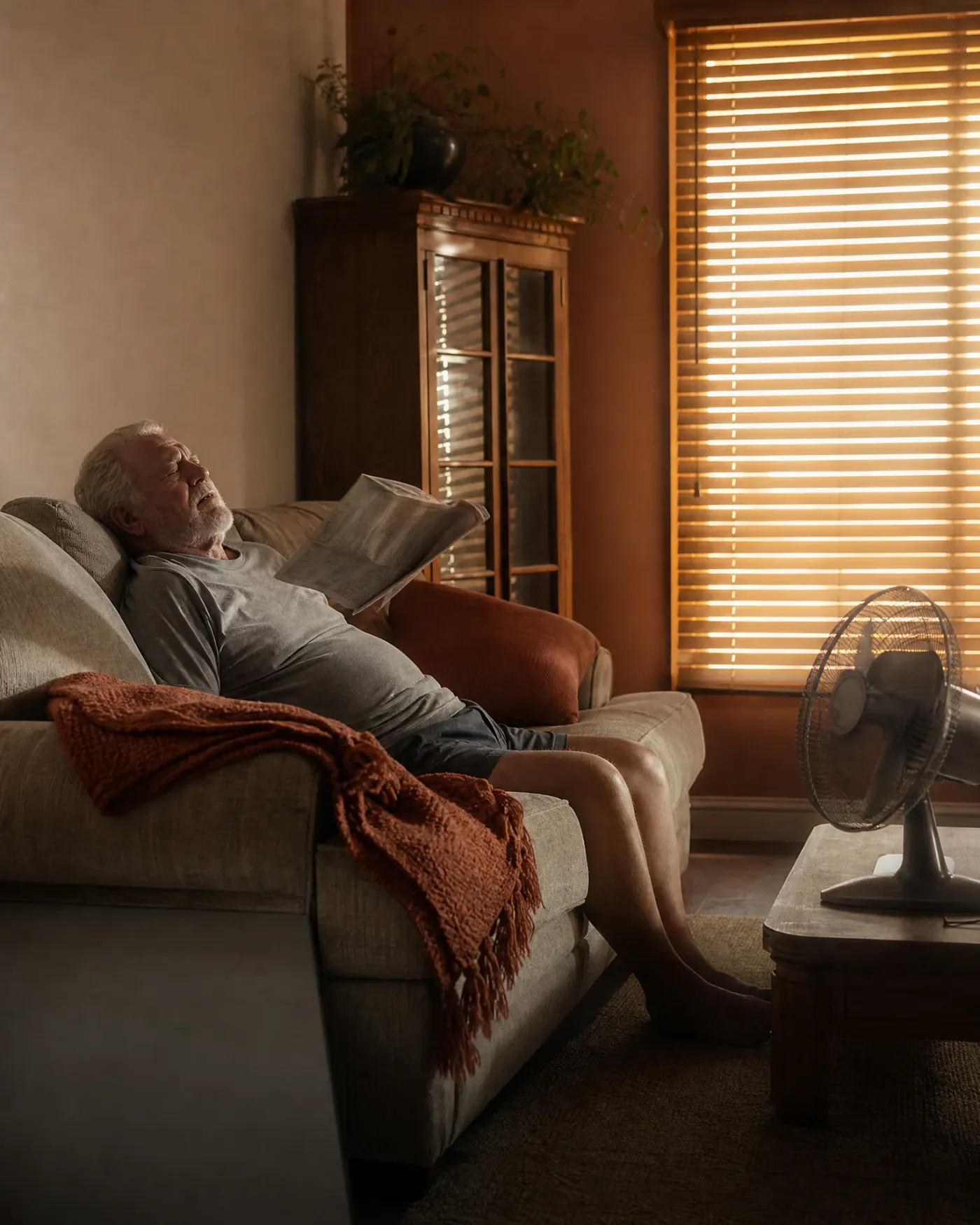
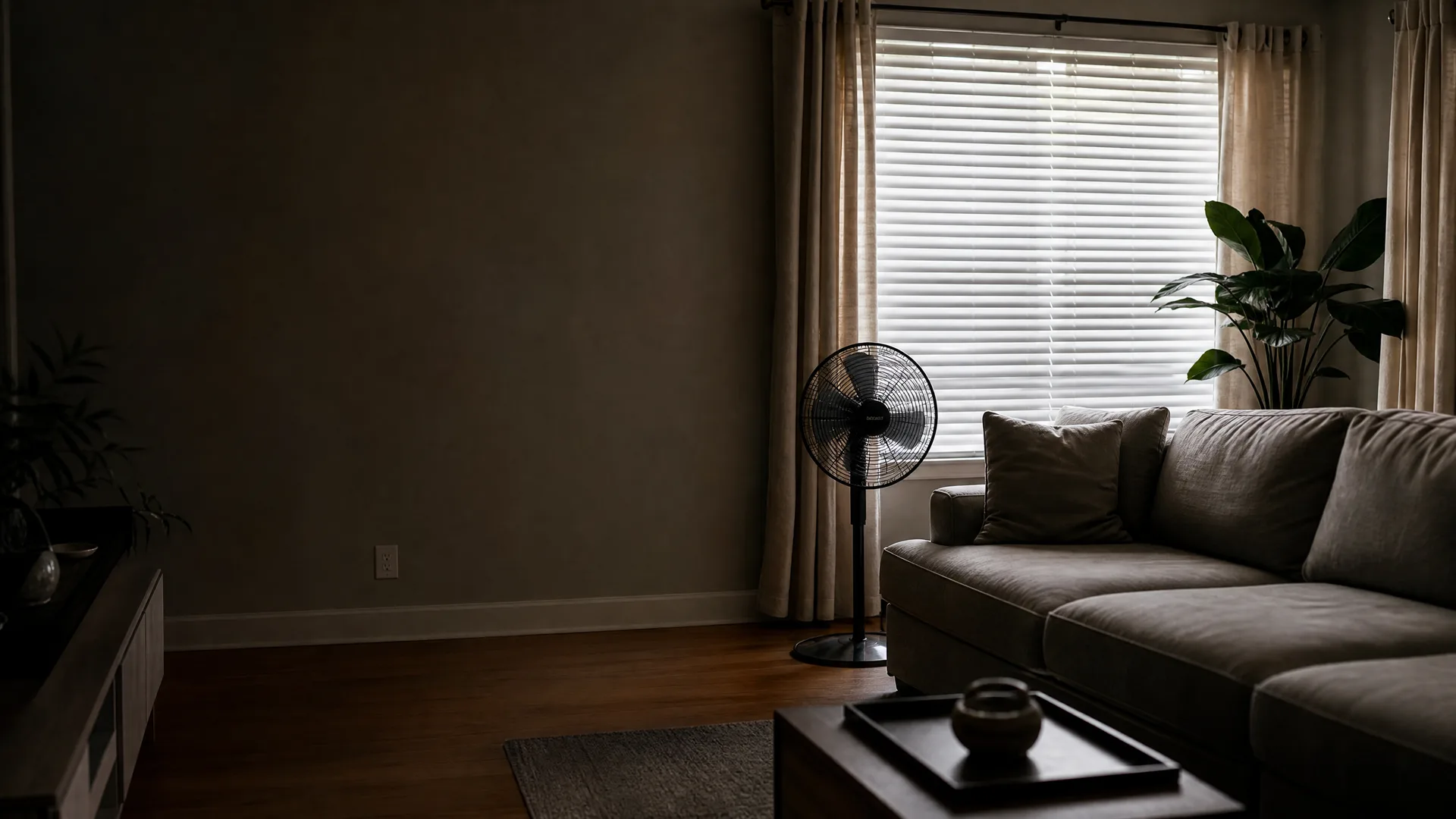
A dimly lit living room with a gray sectional sofa, a standing pedestal fan, a curtained window with blinds, a potted broad-leaved plant, a wooden coffee table with a tray and lidded jar, and a rug on dark wood flooring.

By three in the afternoon the blinds are already down against the sun, and you've pulled the floor fan over next to the couch because the vent in this room just isn't keeping up. The air conditioner is running, you can hear it, and the hallway outside is cool enough. In here the fan pushes the warm air around without doing much else. You check the vent and it's open all the way. California sun in July doesn't let up until evening, and this room faces it more than the others. Whoever usually sits here has already moved to the kitchen table instead, and you're left wondering if it's the ducts, the vent, or something with the unit itself.
Airflow Problem or Room Heat Gain

Airflow problem

  • A duct that's crushed, kinked, or disconnected behind a wall will starve one room while the rest of the house cools fine.
  • Closed or half-closed dampers in the duct run send more air to other rooms and less to this one.
  • A register that's blocked by furniture or rugs cuts off the airflow even when the system is working right.
  • If this room is the farthest from the air handler, a long duct run loses more cool air before it ever reaches the vent.
  • A dirty filter or a clogged coil can cut airflow enough that the last room in line feels it first.

Room-specific heat gain

  • A room with west-facing windows picks up direct sun through the afternoon, which adds heat no vent alone can offset.
  • A room above a garage or over an uninsulated space loses the fight against heat coming through the floor.
  • A bonus room or converted space added after the house was built may not be on the same duct sizing as the rest of the house.
  • Rooms with a lot of electronics, like a home office or media room, carry a heat load the thermostat elsewhere in the house doesn't see.
  • Attic ductwork for an upper floor run sits closer to roof heat all summer, which warms the air before it reaches the vent.
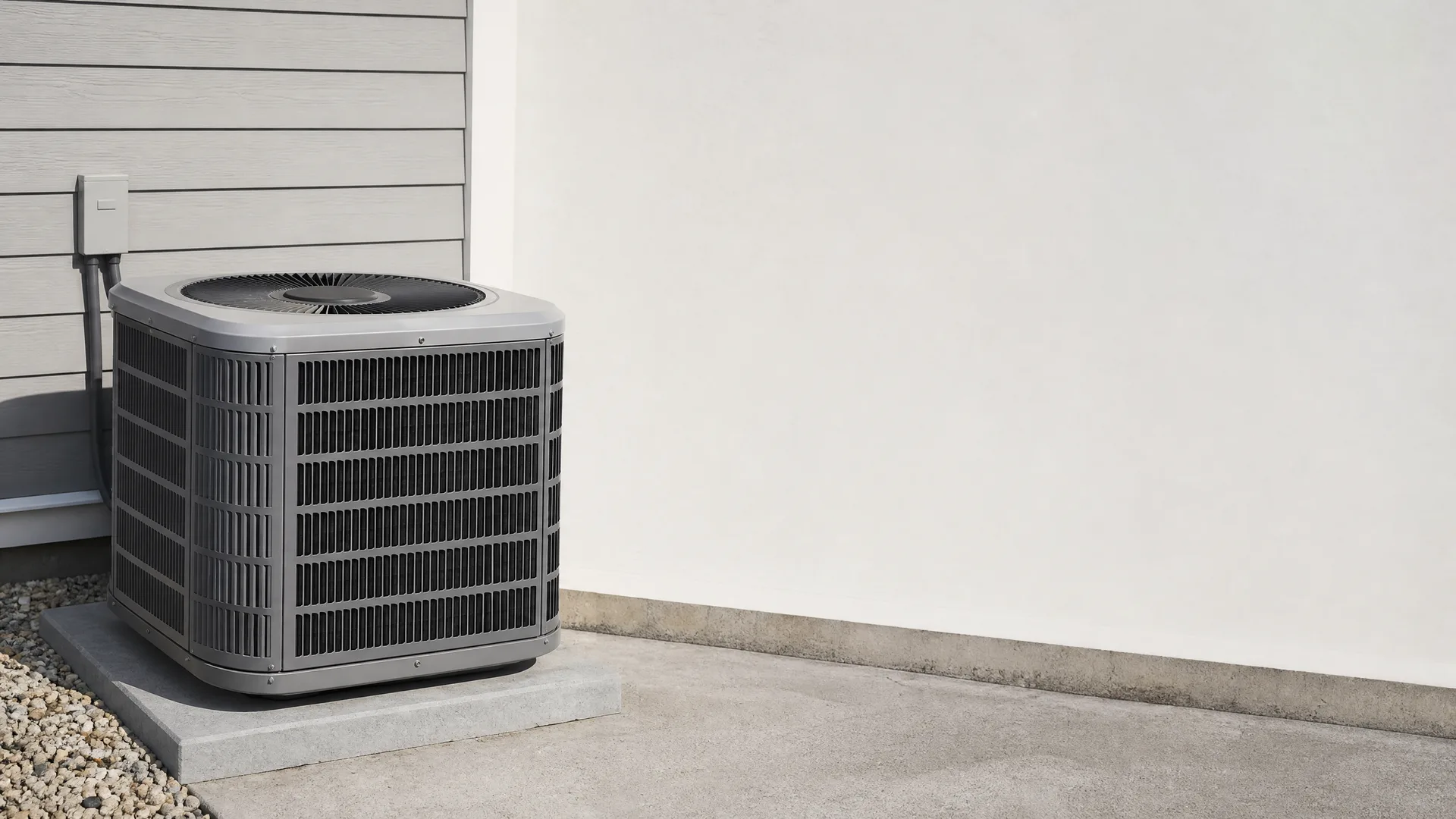
An outdoor air conditioner condenser unit on a concrete pad beside a light-colored stucco wall, with horizontal siding and a small electrical box to the left and gravel at lower left.

Why the farthest room suffers most

The room that stays hot is usually the one at the far end of the duct run, furthest from the air handler. Every foot of duct the air travels through, it loses a little pressure, and a bend or a long run near the end makes that worse. Rooms added after the original ductwork was installed often got tied into a line that was never sized to carry air that far. If this room sits at the end of the house or above the garage, that's worth checking.

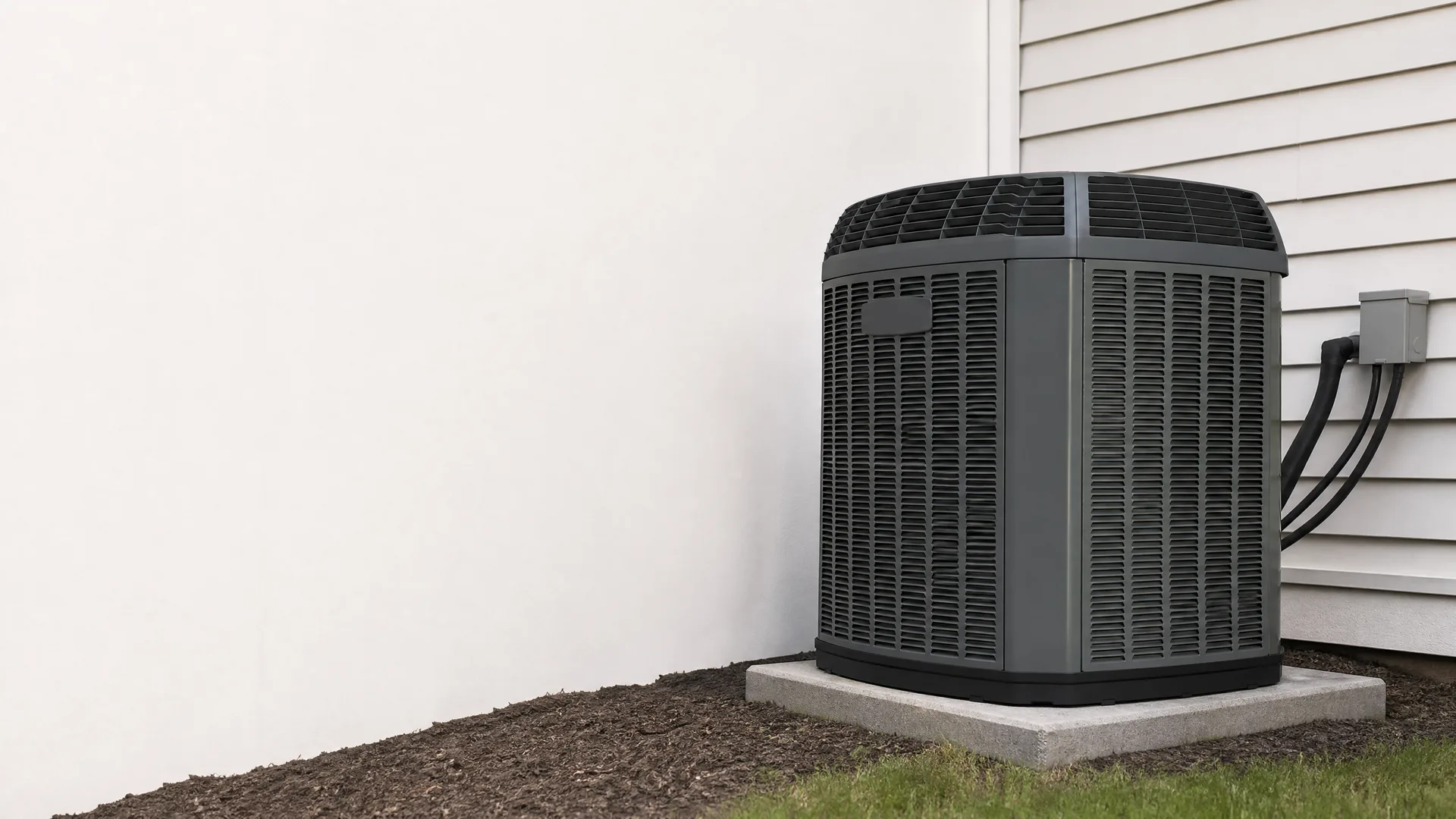
A dark gray outdoor air conditioning condenser unit on a concrete pad beside a house with light siding and a stucco wall, with mulch and grass in the foreground.

What the thermostat can't see

A single thermostat reads the temperature at one spot in the house, usually a hallway, and the system runs until that spot hits the set temperature. It has no idea the room at the other end is still ten degrees warmer. With power costs what they are in California, a lot of homeowners run the system longer trying to cool that one room, which drives up the bill without fixing anything in the room itself.

A smiling man in an olive T-shirt and jeans stands in an open front doorway holding the door, facing a person in a navy polo and cap seen from behind in the foreground, with horizontal wood-look siding and a potted white flowering plant nearby.

How the system decides where the air goes

Central air works off one thermostat, usually in the hallway or living room. That sensor reads one temperature and tells the system when to run and when to stop, and every room on that duct run gets the same blast of cold air for the same amount of time, whether it needs it or not. A room with a west window or a water heater closet behind the wall gains heat the other rooms don't, so it never catches up before the thermostat calls for the system to shut off.

A tech checks the whole run before touching anything: static pressure at the air handler, airflow at the register that's lagging, whether the duct branching to that room is sized right for its distance from the unit. That's the kind of read a homeowner can't get standing in the room with a hand over the vent. Once someone's looked at the setup and matched what they find to what your house actually needs, you'll hear from them directly about what's going on in that room and what it'll take to fix it.

Interior corner of a room with a dark upholstered sofa and textured cushion, a potted plant, sheer curtains at a multi-pane window showing blurred green and yellow trees, and a dark table holding a wooden tray with stacked coasters and a small ceramic vase.
An outdoor air conditioning condenser unit on a concrete pad beside a house with white horizontal lap siding, with an electrical disconnect box and insulated refrigerant line on the wall and a shrub over mulch to the right.

System running as it should

This is what a healthy setup looks like: a condenser on its pad, lines running clean to the disconnect box, nothing blocking airflow around it. When a unit like this is sized and charged right, every room on the duct run gets its share of cold air, including the one at the far end.

An outdoor air conditioner condenser unit on a concrete pad beside a house with light horizontal lap siding, with an electrical disconnect box and conduit on the wall behind it.

Signs of a unit in trouble

Weathering like this often comes with what's going on inside too. A condenser that's lost refrigerant or is working harder than it should puts out less cold air overall, and the room furthest from the air handler is the first to feel it. A technician can check the charge and the coil before it gets worse.

A woman with wavy blonde hair wearing a grey knit cardigan over a green top sits on a sofa in a living room, looking off to the side.
A woman with long brown hair in a cream knit sweater sits on a light sofa in a living room, looking toward a window with sunlight on her face.
A woman in a gray sweater sits in a chair in a living room with a dark sofa, wooden coffee table with a potted plant, and a staircase behind her, looking toward a window.
A smiling woman with dark hair in an updo, wearing a gray ribbed turtleneck sweater, sits on a light sofa in a living room and looks off to the side.

Get the right pro for your air conditioner

After this form, you can stop searching for an air conditioner pro.

It costs nothing to send, and you don't have to hire anyone.

A duct and airflow fix

If the problem is a crushed duct, a closed damper, or a register blocked by furniture, a contractor can find it by checking the run room by room and feeling what's actually coming out of each vent. Sealing a disconnected joint or opening a damper is usually a straightforward repair. It won't change how the thermostat reads the rest of the house, but it gets this room its fair share of the air the system is already pushing. If the duct run itself is too long or too narrow for the room it feeds, that's worth knowing too, even if the fix is bigger.

A system that's undersized

If the air conditioner was sized for the house as it was built, and a room was added or the attic above it never got insulated, no amount of duct sealing fixes that. The unit just doesn't have enough capacity to cover the extra load, and that room will lag on the hottest afternoons no matter what. A contractor can measure the room against what the system puts out and tell you if this is the case. Sometimes the answer is a second thermostat zone, sometimes it's a ductless unit just for that room.

A smiling older woman with gray hair in a loose bun wearing a ribbed beige sweater stands in a dimly lit kitchen beside a window showing darkness outside, with a loaf of crusty bread on a wooden board in the foreground.
A woman and a child wrapped together in a thick knitted beige blanket on a sofa, both with eyes closed, beside a lit table lamp in a dim room.
Single-story house with beige horizontal lap siding and a dark gray shingled gable roof, with a single window and a recessed front door, fronted by a patchy green and brown lawn under a clear blue sky.

California summers don't carry the heavy, sticky air you get elsewhere. The National Weather Service puts the average summer dew point here at 50°F, which is dry by national standards. That dryness is part of why one room running hot feels so strange. Dry air cools fast once it actually reaches a room, so when a vent is getting weak airflow, that room doesn't just feel warm, it feels stale and still next to the rest of the house. The air conditioner isn't fighting moisture in the air to bring the temperature down, it just needs the air to get there. When it doesn't, the shortfall shows up as poor airflow, not humidity, which points straight at the duct run or the register rather than the system struggling against the outside air.

NASA POWER T2MDEW county cells weighted by homes

What you're probably noticing in that one room

The vent barely puffs air when you hold your hand near it, even with the system running full blast. The door stays shut most of the day because that's the only way to keep whatever cool air gets in from leaking back out. A floor fan has probably found a permanent spot in there. If someone naps or does homework in that room, you've noticed they come out flushed or cranky before anyone else in the house complains about the heat. The thermostat down the hall might read 74 while this room sits closer to 80. None of that means the air conditioner is failing. It means this one room isn't getting its share of the air the system is already producing.

An outdoor air conditioning condenser unit on a concrete pad beside a house with white horizontal vinyl siding, with a gray electrical disconnect box and refrigerant lines on the wall behind it.
Before you get your air conditioner repair
A gray outdoor air conditioner condenser unit on a concrete pad beside a house with white horizontal siding and a brick foundation, with a wall-mounted disconnect box and conduit, and a green shrub with mulch at left.
After you get your air conditioner repair
A gray outdoor air conditioner condenser unit on a concrete pad beside a house with horizontal siding and a stucco foundation, with a disconnect box and conduit on the wall, decorative gravel, mulch, and a shrub nearby.

Condenser with clear airflow

This unit sits clean on its pad, gravel and mulch around it, nothing pressed against the grilles. Air moves through the coil the way it's built to. A condenser that can breathe like this can still leave one room hot if the problem is in the ductwork, not out here.

An outdoor air conditioning condenser unit on a concrete pad beside a house with horizontal lap siding, with an electrical disconnect box and conduit on the wall, mulch and a green shrub to the right, and a concrete walkway in the foreground.

Condenser fighting dirt and debris

The coil on this one is caked with dirt and debris, and that cuts down how much heat the unit can shed. A condenser working this hard can cool the house overall and still lose the room at the end of the duct run first.

Power costs 31.35 cents per kilowatt-hour statewide

At 31.35 cents a kilowatt-hour, running a window unit or a space heater's fan in that one hot room to make up for weak airflow adds up fast. Fixing the duct or damper that's actually starving the room costs less than cooling it twice.

EIA-861 2025 statewide residential average

One Room, One Fix

  • A hot room with the rest of the house cool almost always traces to a duct, a damper, or a register, not the condenser.
  • A contractor checks airflow room by room and finds the one restriction that's starving that space.
  • Sealing a disconnected joint or opening a closed damper is a smaller job than most homeowners expect.
  • The thermostat in the hallway can't see what's happening in that room, so the fix has to happen at the duct or the vent.
  • Once you send the form, finding the right contractor is off your plate.
  • The fix usually costs less than months of running a window unit or a fan to make up for it.

The condenser outside is doing its job. The air it makes cold has to travel through ducts, past dampers, and out a register before it reaches that one room, and somewhere along that path, something is holding it back. Maybe it's a crushed duct behind the wall. Maybe it's a damper that got closed years ago and nobody remembered. Maybe it's a register half blocked by a dresser nobody thought to move. The thermostat in the hallway reads its own room and runs the system based on that, so it has no way of knowing this one room isn't keeping up. That's why the fix isn't a bigger air conditioner or a colder setting. It's finding the one spot where airflow is getting choked off and clearing it. A contractor who checks the duct run room by room, feeling what's actually coming out of each vent, can usually find that spot without tearing into walls. Once it's found, the work is often smaller than it sounds. A disconnected joint gets sealed. A damper gets opened. A register gets cleared. Send the form and the search for the right contractor stops being something you have to manage. Until it's fixed, running a fan or a window unit in that room to make up the difference costs more over a summer than the repair itself would. The room doesn't need more cooling. It needs the cooling it's already paying for to actually get there.

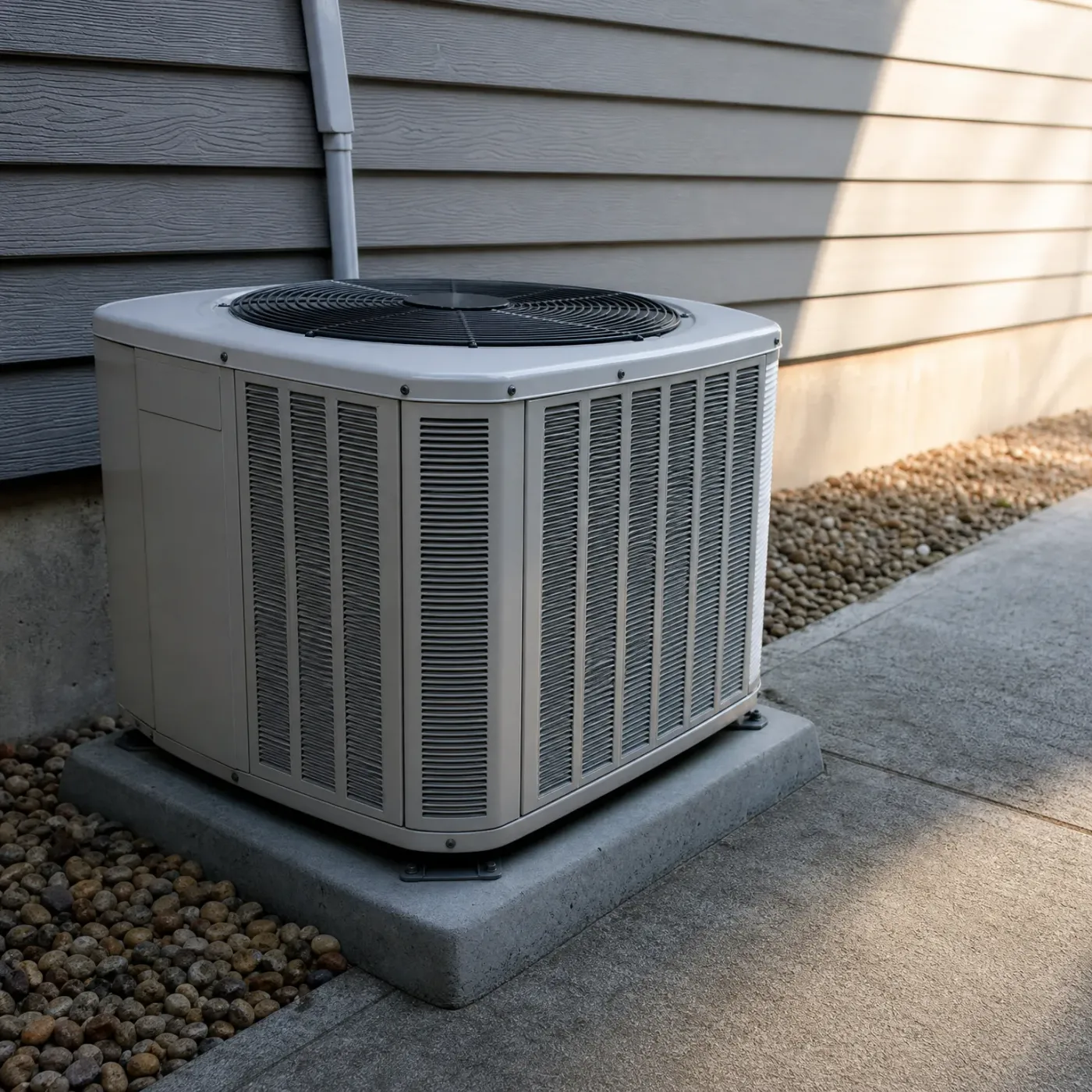
A beige outdoor air conditioner condenser unit with a top fan grille sits on a concrete pad beside a house with horizontal lap siding, bordered by gravel and a concrete walkway.

A pro who works on air conditioners

Get my match

One request and the search for a pro is handled.

No charge to send it. You decide if you hire them.