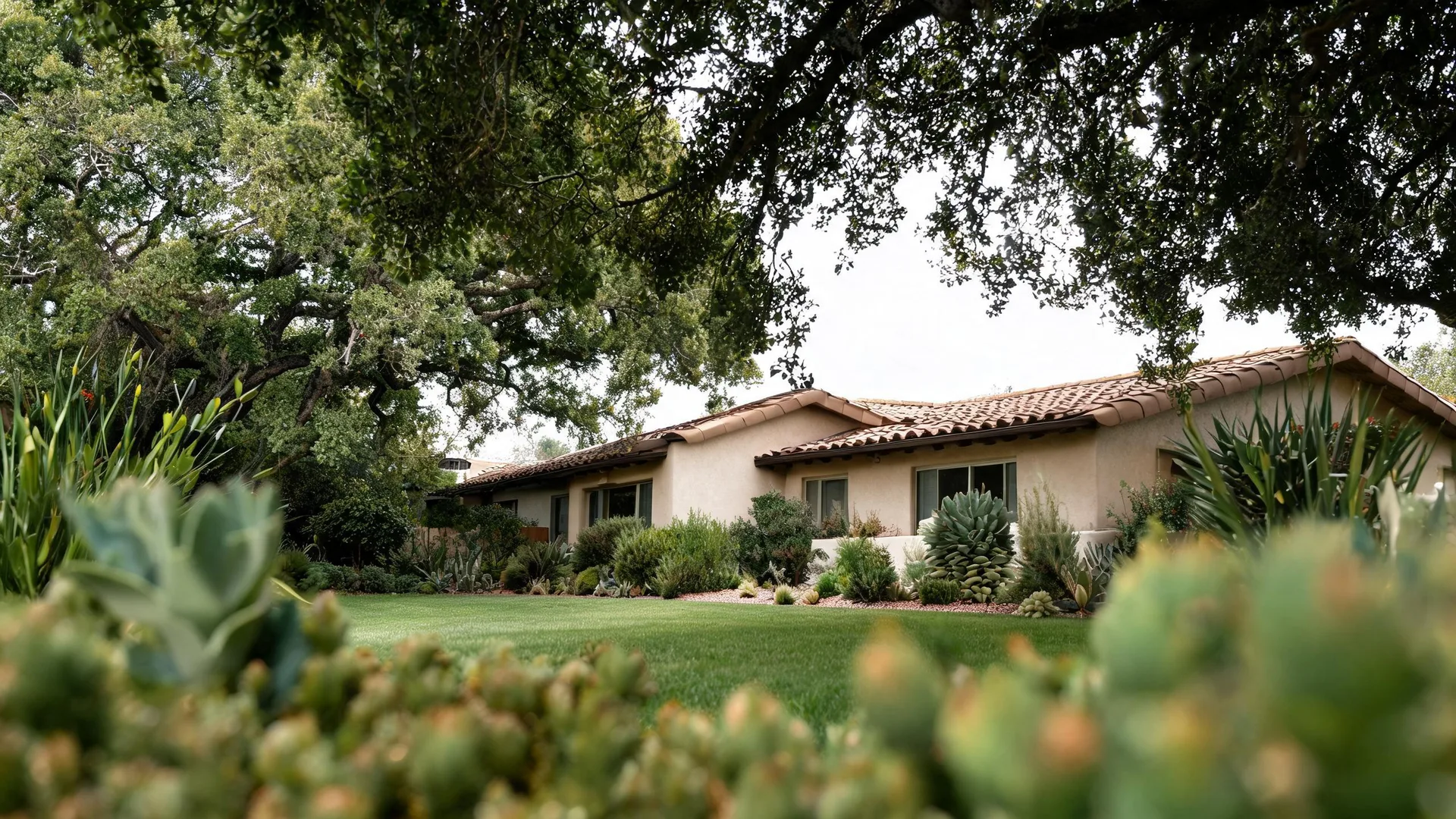





A single-story stucco house with a red tile roof behind a mown lawn, framed by large oak branches overhead and blurred succulent and agave plantings in the foreground.

AC Installation in Anaheim, CA

Tell us about the job

Takes about a minute. No obligation.

New system or replacementCentral ACOrange County, CA
Step 1 of 2

What ZIP code is the job in?

Electricity in Orange County runs 32.40 cents per kilowatt-hour on average, higher than in most US counties. That rate applies to every kilowatt a new system draws, from the first summer on. The air here isn't what drives the bill up. Dew points average 59°F in June, July and August, well below what a system in the Gulf states has to work against, so this isn't a climate fighting humidity. It's a climate fighting the price of power. A system that's a poor fit for the house, too big, too small, or just inefficient by design, ends up drawing more of that expensive power to hit the same temperature. The system installed here matters less for surviving the heat and more for what it costs to run against a rate this high.

5 months
June through October, your air conditioner is on duty
82°F
the average summer afternoon it cools against
3 hail events
in ten years, and hail bends the fins on outdoor coils
13.4 SEER2
the federal minimum any new unit must meet
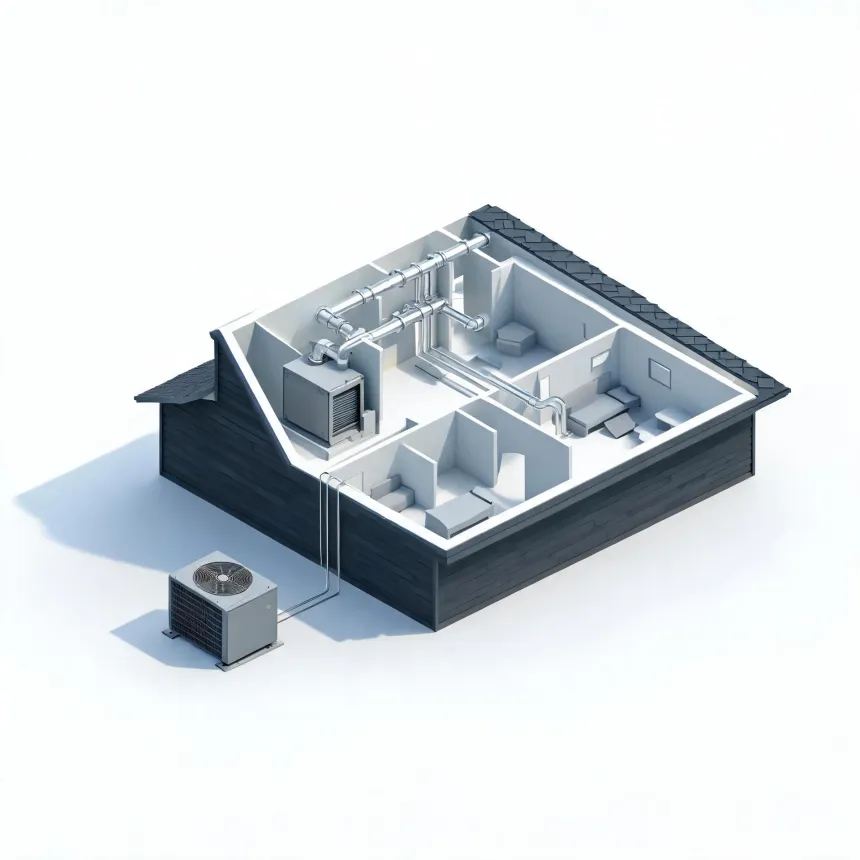
Isometric 3D cutaway render of a house with dark siding showing interior rooms, ductwork and an air handler, connected by lines to an outdoor condenser unit on a white background.
Your air conditioner works hardest from July through September.

NOAA nClimDiv, 1991–2020 normals

Cooling runs June through October here, five months of pulling power at the highest rates in the country.

Get the new system in during May and it's already proven before that first real bill shows up.

Most homes here already heat with gas, which is what makes an AC install simple

67.2% of homes heat with gas
Climate zone 3B
Power here costs 32.40 cents per kilowatt-hour

Orange County falls under climate zone 3B, warm and dry, in the 2021 energy code, and any split system going in has to meet the federal minimum set for that zone. New units rated below 45,000 Btu an hour have to hit at least 14.3 SEER2. They also have to clear a separate number, EER2, either 11.7 or 9.8 depending on where the unit's SEER2 rating falls. SEER2 is measured across the whole season. EER2 reflects how the system holds up on the hottest afternoons, which is when the power draw and the rate both run highest. A unit that clears the SEER2 floor but not the EER2 mark isn't built for those afternoons. Anything installed here now has to clear both to be sold at all.

What it costs to run gets decided at installation

The rate is set before the system ever runs. What decides how many kilowatts it draws against that rate is the system going in now. Match the unit to this house and get both ratings right, and the install is what makes the high rate work for you instead of against you.

Find a contractor
A man in a cap, dark long-sleeve shirt and tan work pants walks up wooden porch steps toward an orange front door, carrying a canvas tool tote; an orange planter with ornamental grass stands to the right.
A gray residential air conditioning condenser unit mounted on a concrete pad outdoors, surrounded by green grass under a partly cloudy blue sky.

What to ask before you sign

A longer warranty on paper doesn't tell you what fails first. Ask what's covered on the compressor versus the coil versus the board, because those are three different parts with three different failure rates, and a quote that bundles them into one number is hiding something. Ask what happens to the warranty if the system isn't maintained on schedule. Most manufacturers will void coverage over a skipped filter change or a missing service record, and that's written into the fine print, not the brochure. Ask how the contractor sizes the unit. A proper sizing calculation looks at square footage, insulation, window area and duct layout, not just a quick look at the old unit's tonnage and a matching replacement. Oversized systems cool the air fast and shut off before they pull the humidity down, which means the house feels clammy even at the right temperature. Undersized systems run constantly and never quite catch up. Ask what happens to the existing ductwork. A new system pushes air at different pressures and volumes than the old one, and ducts sized for a different unit can choke airflow or leak more than they should. Ask what refrigerant the system uses, because older refrigerants are being phased out, and parts availability years from now depends on that answer. None of this shows up on a spec sheet side by side. It shows up in how the house actually feels once the system is running.

The old unit gets hauled away, refrigerant and all

Before the old system comes out, the refrigerant gets recovered into a tank rather than vented, which is standard practice and the law. After that the unit is just metal and copper, and most of it gets scrapped for the materials. The coil, the compressor, the copper lines all have value as scrap, which is part of why removal is a normal part of the job rather than an extra hassle.

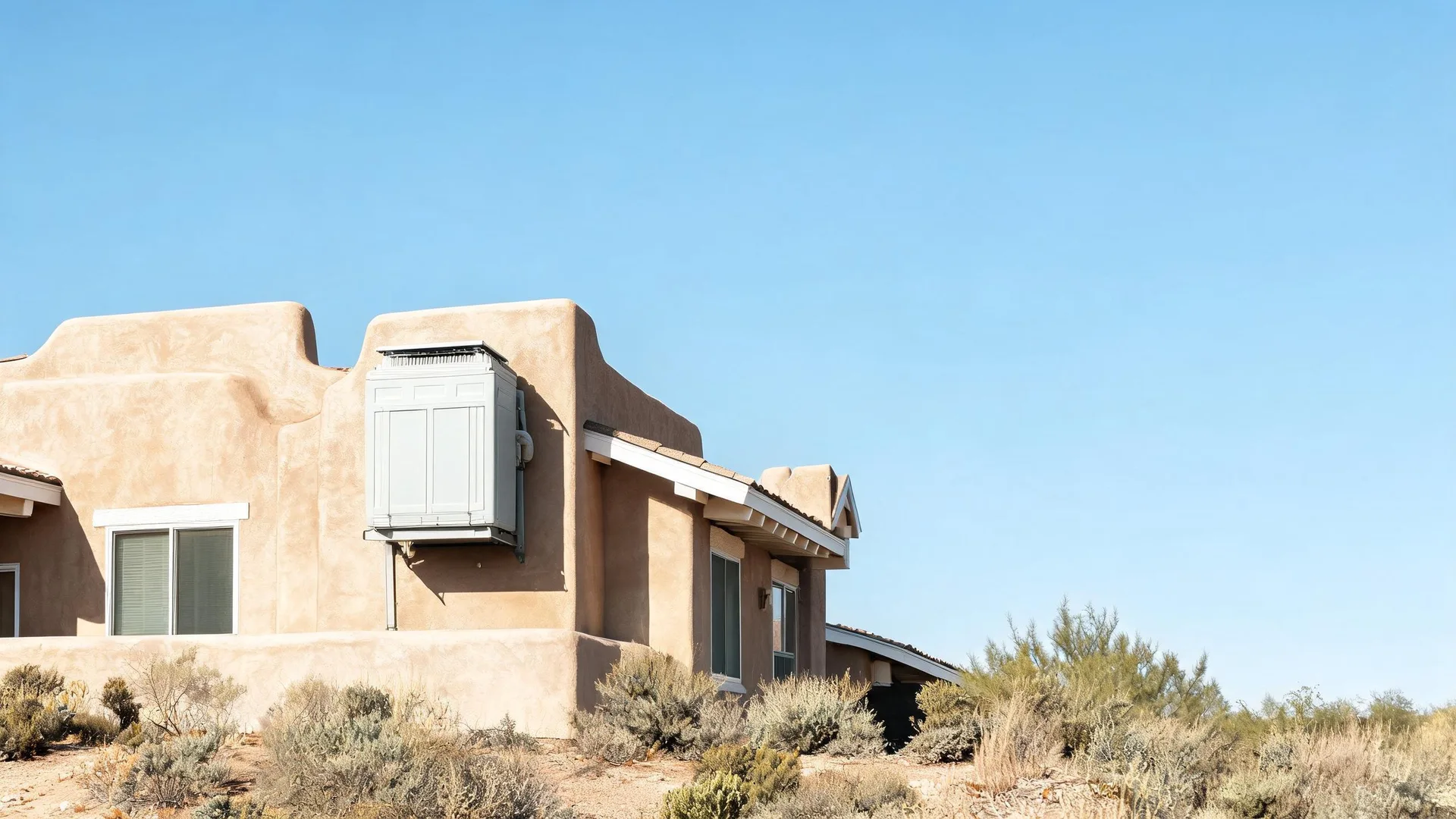
The new unit doesn't have to match the old one's spot

A condenser pad that held the old unit can usually hold the new one, but the new system doesn't have to go in the same place if that spot was a bad choice to begin with. A unit crammed against a wall or under a low overhang struggles to pull air through the coil, and a contractor resetting the pad or moving the line set a few feet can fix airflow problems the old system just lived with for years.

An outdoor air conditioning condenser unit positioned on a concrete pad next to a blue-sided house, surrounded by green shrubs and flowering hydrangeas at sunset.

Going above the federal minimum saves little here, about $20 a year.

  • A higher-efficiency unit$420 a year
  • A new unit at the federal minimum, 14.3 SEER2$440 a year

Estimates for a typical Orange County home, from EIA household energy data, California fuel prices and NOAA climate normals. Your home will differ.

Installation starts with the load calculation, not the equipment. A tech measures the space, checks insulation and window area, and figures out what size system the house actually needs before anything gets ordered. On the day itself, the old equipment comes out first, including the line set if it's being replaced rather than reused. The new condenser goes on the pad outside, the coil goes in above or beside the furnace, and the line set connecting them gets run, flared, and connected. Once everything's in place, the system gets evacuated with a vacuum pump to pull out air and moisture before any refrigerant goes in, because trapped moisture in the lines causes corrosion and compressor damage down the road. Refrigerant gets weighed in to the manufacturer's spec, not just added until the pressure looks right. Then comes startup: checking the temperature split across the coil, checking static pressure in the ducts, and confirming the thermostat is talking to the system the way it should. A system that's never had its airflow checked against the duct layout can run for years with a problem nobody sees until the compressor wears out early.