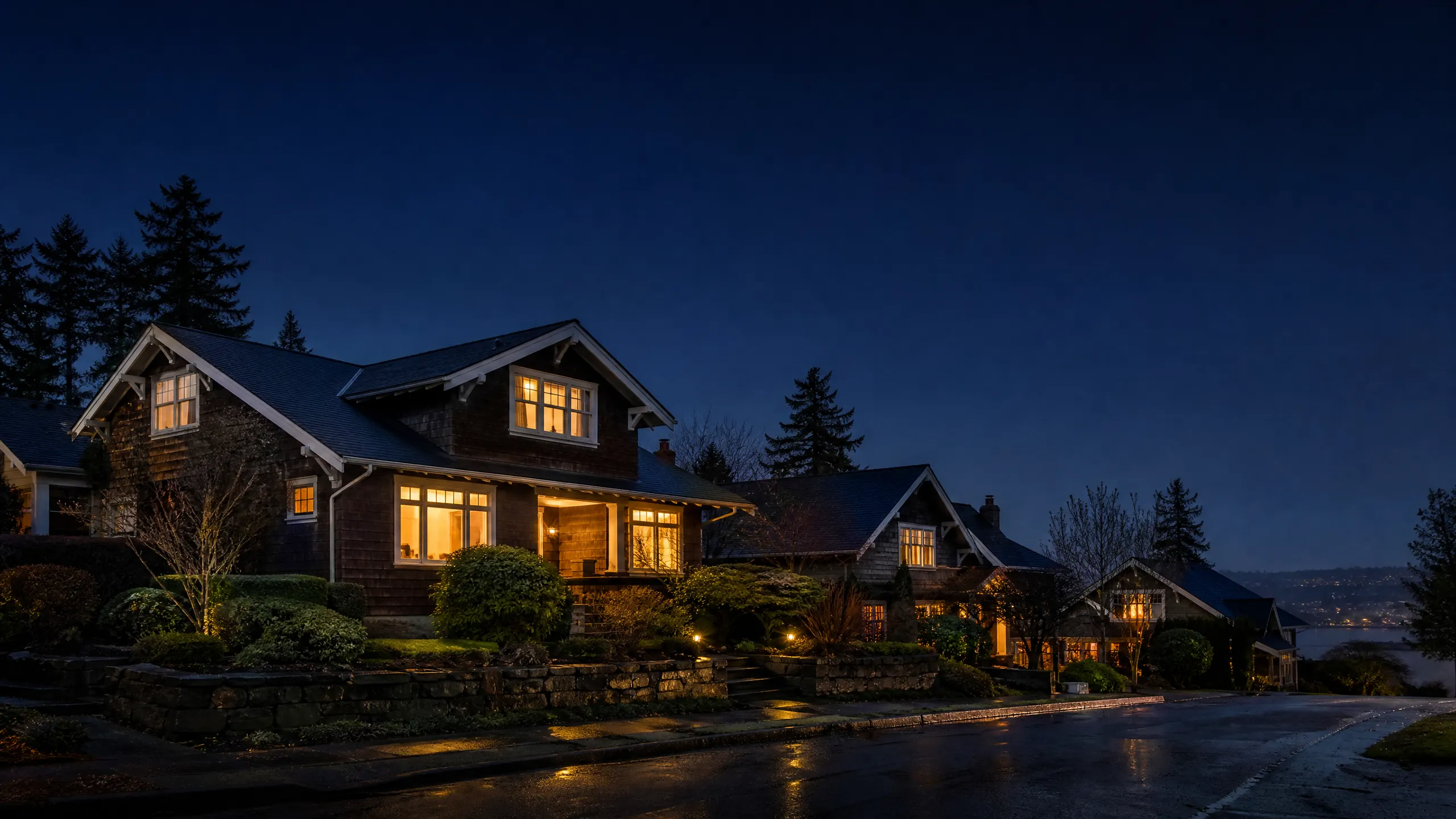






Three illuminated Craftsman-style houses with stone and wood-shingle facades line a wet residential street at night, surrounded by trees and landscaped gardens.

AC Installation in Eureka, CA

Tell us about the job

Takes about a minute. No obligation.

New system or replacementCentral ACHumboldt County, CA
Step 1 of 2

What ZIP code is the job in?

Humboldt County recorded 282 severe weather events between 2015 and 2024. Most of that was wind and winter storms, 145 damaging wind events and 115 winter storms, with 21 hail events and a tornado mixed in. An outdoor AC unit sits outside through all of it, taking wind-blown debris and hail. Across California, 17% of households lost power for 24 hours or more in 2024. A new system here is worth planning around that, not just around a hot afternoon.

79°F
the average summer afternoon it cools against
21 hail events
in ten years, and hail bends the fins on outdoor coils
13.4 SEER2
the federal minimum any new unit must meet
Isometric cutaway illustration of a single-story house showing interior rooms with ductwork and an air handler, connected by refrigerant lines to an outdoor condenser unit on the left.
Your air conditioner works hardest from July through September.

NOAA nClimDiv, 1991–2020 normals

Half the homes in Humboldt County were built in 1973 or earlier.

An install into a house that old has to work with the ductwork and wiring already there, not a blank slate.

Gas heats most homes here, so AC usually means adding cooling to a system that already heats

55.5% of homes heat with gas
Climate zone 4C
Power here costs 38.43 cents per kilowatt-hour

Electricity here runs 38.43 cents per kilowatt-hour on average, well above most of the country. A unit sized wrong or installed sloppy burns through that rate every time it cycles on. The dew point around Eureka averages just 53°F in summer, so the air doesn't carry the heavy moisture that makes AC work harder in other regions. A correctly sized system here is fighting heat, not humidity, so it won't need to run as long to get a house comfortable. Put a well-matched unit against that low moisture load and the power bill reflects it. Put an oversized or poorly installed one in, and the high rate per kilowatt-hour punishes the mistake on every bill that follows.

Plan the installation around the outages, not just the heat

Where the outdoor unit goes matters as much as what unit it is. A spot shielded from wind-blown debris holds up better than one out in the open. And since an outage can take out the furnace's igniter and blower along with the AC, it's worth asking what backup options exist for keeping heat and hot water running when the power drops.

Find a contractor
A man in a cap, worn gray shirt and brown work pants, seen from behind, carries a leather tool bag up steps toward an orange front door beside a potted shrub.
An outdoor residential air conditioning condenser unit mounted on a concrete pad, surrounded by gravel with a blue sky in the background.

Half these houses predate the ductwork question entirely

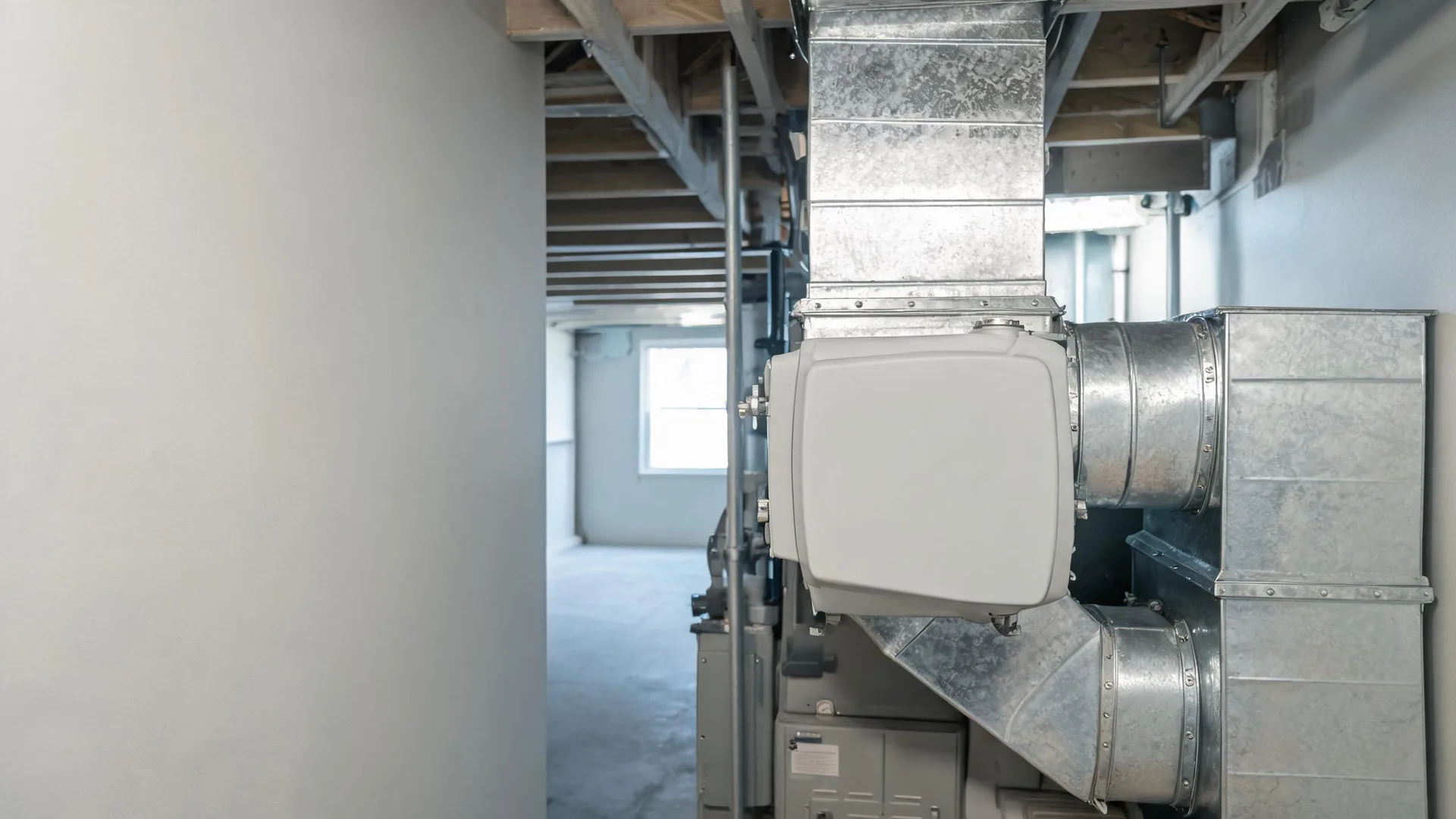
A system going into a house built in 1973 or earlier is going into ductwork that was sized for whatever heated that house first, not for the AC going in now. That mismatch does not show up once. It shows up on every cycle the new system runs, for as long as it runs through those same ducts. Years of use will tell on a system fighting old duct work before it tells on one installed into ducts sized for it. Have the ducts checked for leaks and sized against the new unit before install, not after.

The rating is measured over a season, not a single hot day

That efficiency number on the label comes from cooling output divided by the energy put in, averaged across a typical cooling season. A unit can carry a high rating and still run inefficiently if it short cycles, if the charge is off, or if it's matched to ductwork it was never sized for. The rating describes the equipment tested on its own. It doesn't describe the system once it's installed in a specific house.

The rating only pays off if the install matches it

A high-efficiency condenser paired with the wrong coil, undersized ducts, or a bad refrigerant charge will run like a cheaper unit while costing more upfront. The efficiency gain on the label assumes proper airflow, correct charge, and a coil matched to that condenser. Get the match wrong and the house still cools, but the rating on the sticker stops meaning much.

Aerial view of a square outdoor air conditioning condenser unit on a concrete pad beside a house wall with a sliding glass door.

Going above the federal minimum saves little here, about $10 a year.

  • A higher-efficiency unit$80 a year
  • A new unit at the federal minimum, 14.3 SEER2$90 a year

Estimates for a typical Humboldt County home, from EIA household energy data, California fuel prices and NOAA climate normals. Your home will differ.

Installation starts with a load calculation, not a unit pulled off a shelf. A tech measures the house, checks window area and insulation, and works out how much heat that space actually gains, because a unit sized by guesswork either short cycles or never catches up. The crew sets the outdoor unit on a pad, runs the refrigerant lines to the indoor coil, and ties the system into the existing ductwork or the furnace plenum if there's already a blower handling that. Once the lines are connected, the system gets evacuated with a vacuum pump to pull out moisture and air, because any left behind ruins the refrigerant charge. Then it's charged to the manufacturer's spec, tested at the thermostat, and checked for the right temperature drop across the coil. A thorough crew also walks the ducts for obvious leaks and checks static pressure before calling it done, since that pressure reading says whether the blower can actually push air through what's already in the walls.