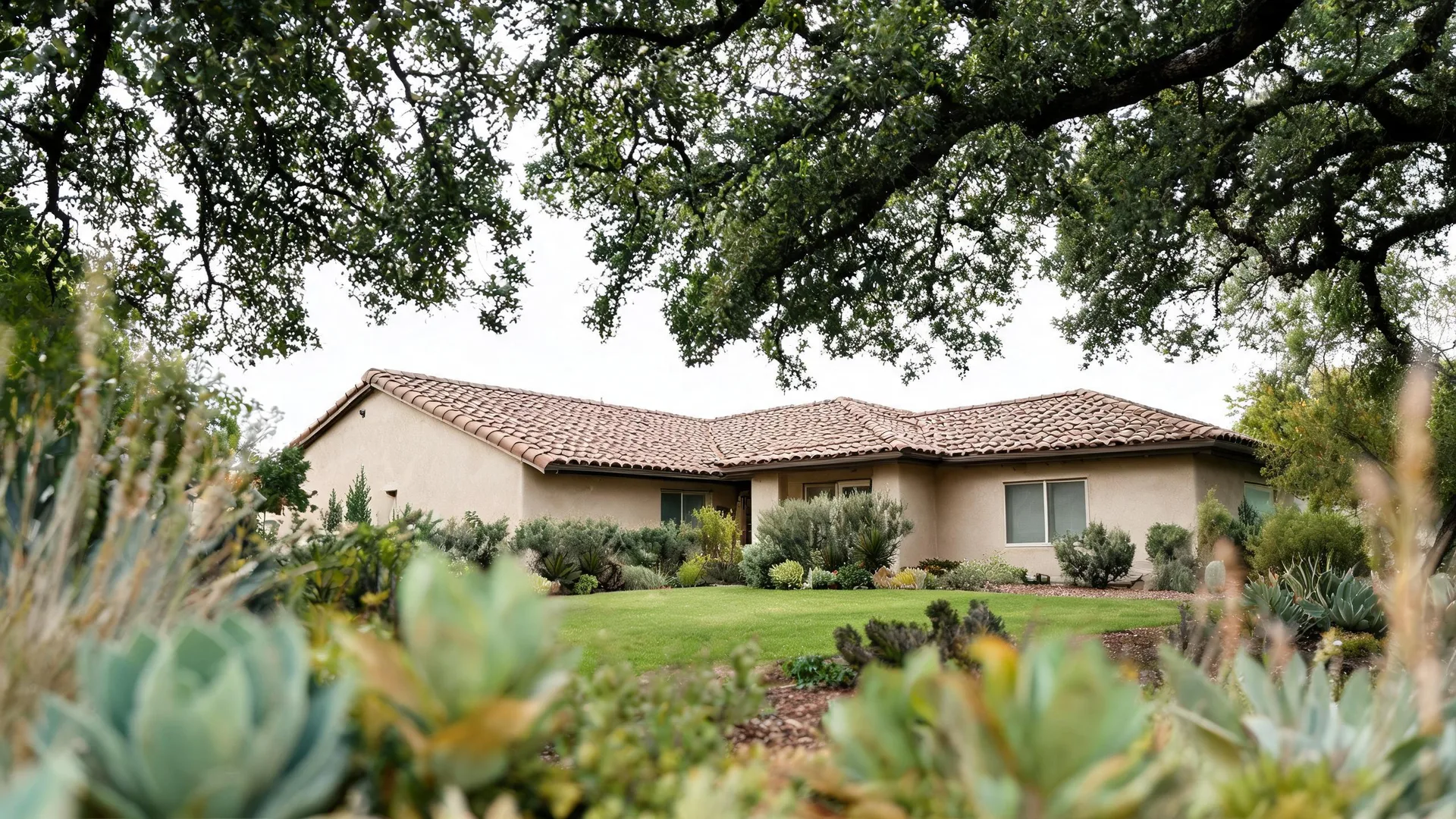
A single-story stucco house with a clay tile roof behind a lawn, framed by oak branches above and agave and shrubs in the blurred foreground.

AC Installation in Madera, CA

Tell us about the job

Takes about a minute. No obligation.

New system or replacementCentral ACMadera County, CA
Step 1 of 2

What ZIP code is the job in?

Every kilowatt costs more here

Madera County homes paid an average of 38.41 cents per kilowatt-hour in 2025, more than most counties in the country. An air conditioner that runs inefficiently burns through that expensive power every time it cycles on.

The hours add up differently

A unit that runs fewer hours than it does in muggier parts of the country still has to earn its keep on each one. If it's pulling more power than it should per hour, the price per kilowatt-hour here makes that waste show up fast on the bill.

4 months
June through September, your air conditioner is on duty
87°F
the average summer afternoon it cools against
6 hail events
in ten years, and hail bends the fins on outdoor coils
13.4 SEER2
the federal minimum any new unit must meet
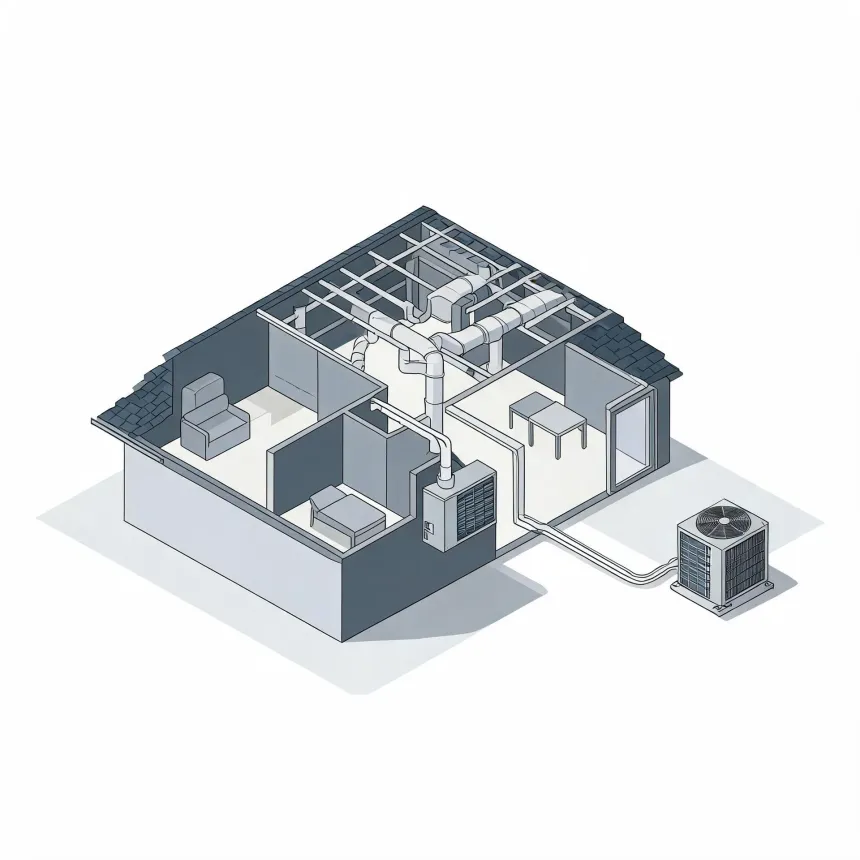
Isometric cutaway illustration of a house showing attic ductwork, an indoor air handler, and an outdoor condenser unit connected by lines.
Your air conditioner works hardest from July through August.

NOAA nClimDiv, 1991–2020 normals

Madera County logged 282 severe weather events between 2015 and 2024, including 88 damaging wind events and 185 winter storms.

An outdoor condenser sits outside through all of it, so where it goes and what shields it matters as much as the unit itself.

June is four months away. May is when you still have a choice.

Cooling runs June through September
Climate zone 3B
Power here costs 38.41 cents per kilowatt-hour
Gas Heat, But Cooling Is Its Own JobGas heats 37.8% of homes in Madera County, more than any other fuel, but it won't tell you what AC to put next to it.

Madera County sits in zone 3B, a warm zone with a long cooling season, under the 2021 energy code. Any split-system air conditioner installed here under 45,000 Btu/h has to meet 14.3 SEER2, the Southwest's regional minimum, higher than the 13.4 federal floor that applies elsewhere. It also has to hit an EER2 of 11.7 or 9.8, depending on whether it's certified below or at 15.2 SEER2. SEER2 covers a full season of cycling on and off. EER2 covers one thing: how the unit holds up on the hottest afternoon, running flat out. Both numbers are part of what a unit has to meet before it can go in here. A federal tax credit is available for equipment that qualifies, on top of what the law already requires.

Pick the system that earns its keep after it's installed

Code sets a floor for the system going in, not a ceiling. Paying more up front for a unit that clears that floor by a good margin means it pulls less power every time it cycles on, and power here is not cheap. That difference shows up on every bill for as long as the system runs.

Find a contractor
A gray cylindrical air conditioning condenser unit mounted on a concrete pad next to a light-colored vinyl-sided house exterior.

The installation decides how hard it has to work later

A big part of what you're paying for is matching the unit to the house. Too large and it cools the air fast without pulling moisture out, so the house feels clammy even at the right temperature, and the compressor short cycles instead of running a steady stretch. Too small and it runs flat out on the hottest afternoons and never quite catches up. Getting that size right takes a load calculation, not a guess based on the old unit or the square footage alone. The rest of the cost is in what moves the air: the ductwork has to be sized to carry what the new system pushes, the refrigerant lines have to be the right diameter for that unit, and the condenser needs clearance to pull air through its coil without restriction. A unit installed around undersized ducts or leftover line set will never run the way its rating says it should, no matter how good the equipment is.

The old unit doesn't come back on

Once the new system is set, the old condenser and coil come out. A split system can't be partly swapped. The refrigerant in the old unit has to be recovered by a licensed technician rather than vented, and the old line set usually comes out with it since it's sized for the old equipment, not the new one.

The pad and disconnect get a second look

The slab the old condenser sat on often stays, but it has to be level and sized right for the new unit before anything goes on it. The electrical disconnect next to the pad gets checked too. If the new system draws differently than the old one, that whip and breaker may need to change along with it.

Overhead view of a gray residential air conditioning condenser unit mounted on a concrete pad beside a house with asphalt shingle roofing.

Going above the federal minimum saves little here, about $20 a year.

  • A higher-efficiency unit$300 a year
  • A new unit at the federal minimum, 14.3 SEER2$320 a year

Estimates for a typical Madera County home, from EIA household energy data, California fuel prices and NOAA climate normals. Your home will differ.

Give the new condenser a spot that keeps it out of the way of falling limbs and wind-blown debris if you have a choice in the matter. A few inches of clearance around the coil for airflow is the minimum, not the goal. Hail is rare here, only 6 events in the past decade, but the fins on a condenser coil bend easily and a bent coil restricts airflow for good unless it's combed back out. Ask the installer about a fin guard or a simple top cover if the unit will sit under a tree or near a fence line. Power loss is the bigger piece to plan for. If the outage runs long, cooling stops until it's back, and there's no way around that for a standard split system. What's worth asking before the job is done is whether the new unit restarts on its own once power returns, so you aren't the one who has to flip anything back on.