





White stucco Spanish Colonial Revival buildings with terracotta roofs glow at dusk on a hillside dotted with oak trees.

AC Installation in Modesto, CA

Tell us about the job

Takes about a minute. No obligation.

New system or replacementCentral ACStanislaus County, CA
Step 1 of 2

What ZIP code is the job in?

Electricity in California ran 31.97 cents per kilowatthour in 2024, well above what most of the country pays. An air conditioner here runs on that rate every time it cycles on. A system sized and installed right turns less of that rate into waste than one that isn't. SEER2 is the rating that tells you how efficiently a unit turns electricity into cooling, and at this price per kilowatthour, that number is worth asking about before you buy. A higher SEER2 unit costs more up front, but at this rate it has more chance to earn that back over the years you run it.

5 months
May through September, your air conditioner is on duty
91°F
the average summer afternoon it cools against
1 hail events
in ten years, and hail bends the fins on outdoor coils
13.4 SEER2
the federal minimum any new unit must meet
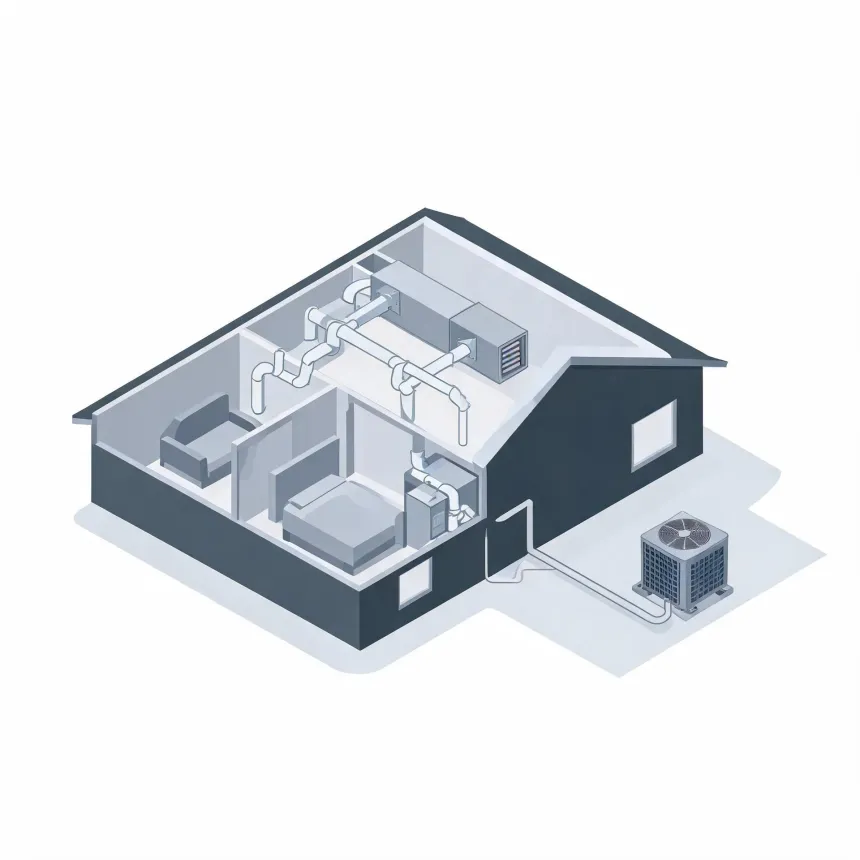
Isometric cutaway illustration of a house showing interior ductwork, an air handler and furnace unit, and an outdoor condenser connected by lines outside the wall.
Your air conditioner works hardest from June through September.

NOAA nClimDiv, 1991–2020 normals

Gas heats 66.1% of homes in Stanislaus County, more than any other fuel.

An AC installation here usually joins a gas furnace already in place, so the job is matching cooling to a system that's already decided.

Five months of 91 degree afternoons, every year

Cooling runs May through September
Summer afternoons average 91°F
Power costs 31.97 cents a kWh statewide

Ask the contractor for the SEER2 rating before you sign anything, not after. Get it in writing alongside the size of the unit, since a system too big for your house will short cycle and waste power no matter how high that rating goes. If a gas furnace already runs your ductwork, make sure whoever quotes the job has checked that the ducts can handle the new unit's airflow, not just the number on the condenser. The quote should name the exact model, not just a tier or a brand line. At this rate per kilowatthour, the difference between two units shows up on your bill long after the install truck is gone.

Have the new system in before May

Cooling here runs May through September. Install before April ends and the new system is already broken in by the time the heat starts, with nobody choosing between a working AC and a quick decision made in a hurry.

Find a contractor
A man in a dark cap and shirt carries a worn leather tool bag up wooden porch steps toward an orange front door, with a potted shrub in a terracotta planter to the right.
An outdoor air conditioning condenser unit mounted on a concrete pad beside a house, with electrical conduit running to a wall-mounted disconnect box.

Five months of hard running, before the first summer even starts

Five months of afternoons near 91 degrees is the load the new unit has to answer to, every single year. Get the sizing wrong and that load finds the weak spot fast, usually inside the first couple of summers. A unit too big for the house cycles on and off instead of running steady, and every start draws the power a steady run would have used more wisely. The contractor should run a load calculation on this house, not size off the unit you're replacing. That's the only way the equipment you buy actually matches the hours it's about to work.

Bigger isn't better, it's wrong

An oversized air conditioner cools the air fast and shuts off before it pulls the moisture out. The house ends up cold and damp instead of just comfortable. It also starts and stops more often than it should, and the start is what wears on the compressor and the contactor, not the running.

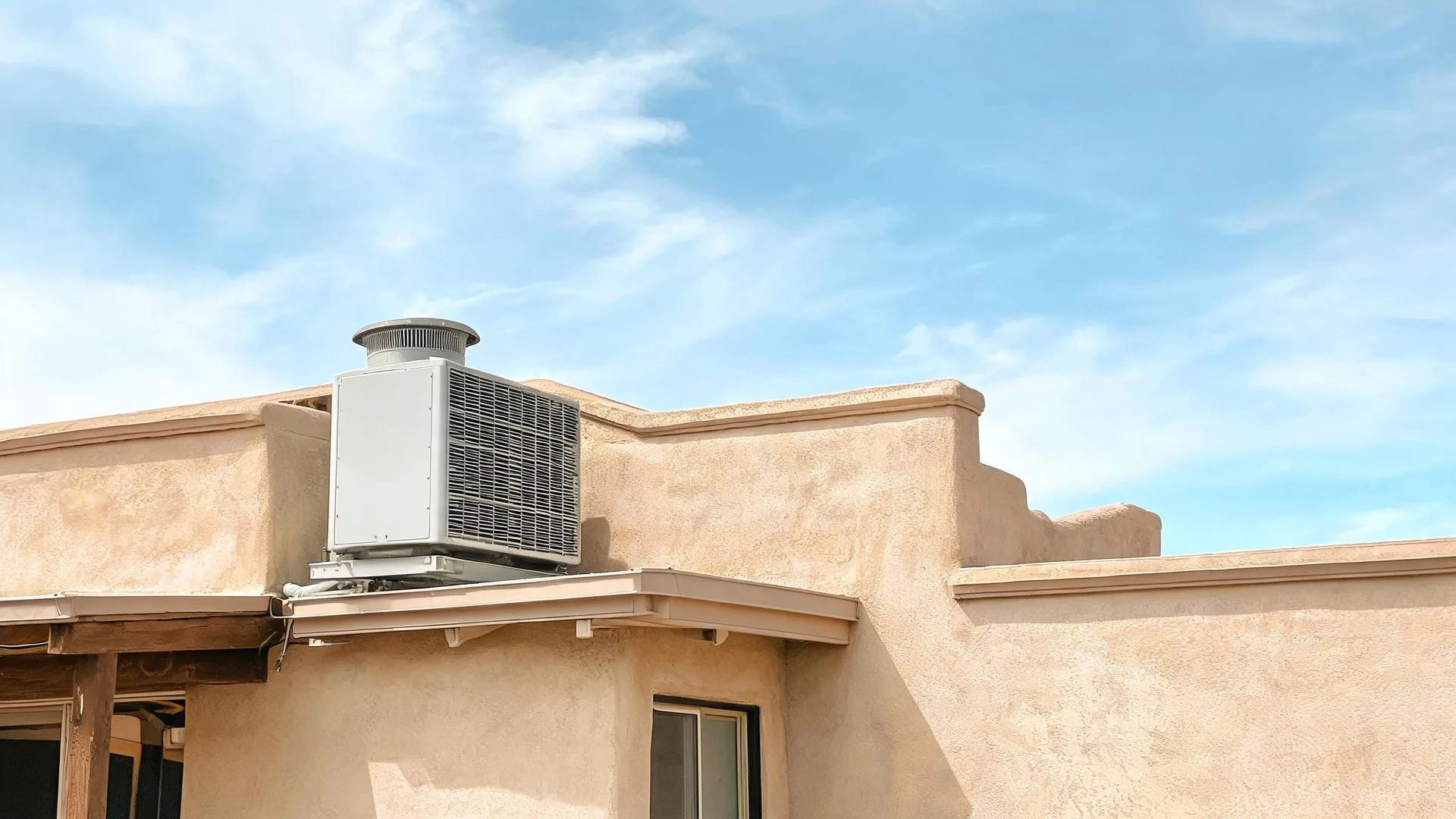
The load calculation looks at the house, not the old unit

A proper sizing works out how much heat actually gets into the house through the walls, the windows, the roof and the attic, room by room. It has nothing to do with what the last system was rated at. A unit swapped in at the same size as the one it replaced can be wrong if that one was never sized right to begin with.

An outdoor air conditioning condenser unit on a concrete pad next to the gray vinyl siding of a residential home.

A higher-efficiency unit would save about $30 a year to run in Stanislaus County compared with a new unit at the federal minimum.

  • A higher-efficiency unit$470 a year
  • A new unit at the federal minimum, 14.3 SEER2$500 a year

Estimates for a typical Stanislaus County home, from EIA household energy data, California fuel prices and NOAA climate normals. Your home will differ.

Install day starts with the old equipment coming out, not the new one going in. The crew disconnects the refrigerant lines, pulls the old condenser and air handler or coil, and checks what they're connecting the new system to before anything gets set. Line sets often get replaced rather than reused, since old copper can carry contamination or the wrong size for the new unit's charge. Once the new condenser is set on its pad and the coil is in place, the lines get connected, pressure tested for leaks, then pulled into a vacuum to clear out air and moisture before any refrigerant goes in. The system gets charged to the exact weight the manufacturer specifies, not by feel. Before the crew leaves, it should run through a full cooling cycle while someone checks airflow at the vents and confirms the thermostat is actually talking to the new equipment.