





A row of single-story stucco houses with red clay tile roofs behind a long cream perimeter wall, shaded by large leafy trees, with trimmed hedges and shrubs along the sidewalk.

AC Installation in Roseville, CA

Tell us about the job

Takes about a minute. No obligation.

New system or replacementCentral ACPlacer County, CA
Step 1 of 2

What ZIP code is the job in?

Taking out the old unit is part of the job, not an afterthread. The outdoor condenser gets disconnected from its refrigerant lines and electrical whip, and that refrigerant has to be recovered properly rather than vented. The indoor coil comes out of the plenum, and if the system used a different refrigerant than what's sold now, the old lines usually can't just be reused. A new coil means new lines in most cases, matched to the new condenser. The old equipment itself gets hauled off and recycled for the metal and components, since the refrigerant has already been removed. None of this should leave the system down for long, since the swap is usually done in one visit.

2 months
July through August, your air conditioner is on duty
84°F
the average summer afternoon it cools against
6 hail events
in ten years, and hail bends the fins on outdoor coils
13.4 SEER2
the federal minimum any new unit must meet
Isometric cutaway illustration of a small home interior with furniture and ducting, showing an indoor air handler connected by lines to an outdoor condenser unit on a pad.
Your air conditioner works hardest from July through August.

NOAA nClimDiv, 1991–2020 normals

Gas heats 61.2% of homes in Placer County, electricity runs a distant second at 24.5%.

If your furnace runs on gas, a matching gas install is usually the straightforward path here.

Two months of real cooling a year, so the system doesn't need to be oversized

Cooling runs July through August
Summer afternoons average 84°F
223 damaging wind events from 2015 to 2024
Electricity here costs moreCalifornia homes paid 31.97 cents per kilowatt-hour in 2024

Cooling here runs July through August, so June is the month to get a new system in. Wait until the first hot week and you're choosing equipment under pressure, taking whatever install date is open rather than one that works for you. Going in June also means the system gets tested under a real load almost right away, while the contractor who installed it is easy to reach if something needs adjusting. There's no reason to run the old unit into July hoping it holds on.

Any system installed here has to meet the Southwest's efficiency minimum

A new system here has to hit 14.3 SEER2 at minimum, with an EER2 of 11.7 or 9.8 depending on the unit, since Placer County falls under the Southwest standard. That rules out some of the older low-efficiency models still sold elsewhere. A qualifying system installed this year may also open up the federal tax credit. Worth sorting out before you pick equipment, not after.

Find a contractor
A gray residential air conditioner condenser unit mounted on a concrete pad in an open grass field.

What the number on the label actually measures

That SEER2 number on the label is a ratio, cooling output over the electricity it takes to produce it, measured across a season of typical operating conditions rather than at one single moment. A higher number means the compressor is getting more cooling out of the same draw of power. It is not a measure of how strong the system is or how fast it cools the house down, that comes down to tonnage and airflow design, a separate rating entirely. Systems built the same size can carry different SEER2 labels and cost different amounts to run month to month. The rating also assumes the system gets installed and charged the way the manufacturer specifies. An undercharged system, or one pulling air through a leaky duct, runs worse than its label promises no matter how high that number was when the unit left the factory.

The size has to match the house, not the old unit

A contractor doing this right runs a load calculation on the house itself, the square footage, the windows, the insulation, the duct layout. Copying whatever tonnage was there before skips that step. A system sized too big cools the air fast and shuts off before it pulls the moisture out, so the house feels clammy. One sized right runs longer, steadier cycles and actually costs more up front to spec correctly.

What's hidden in the walls changes the job

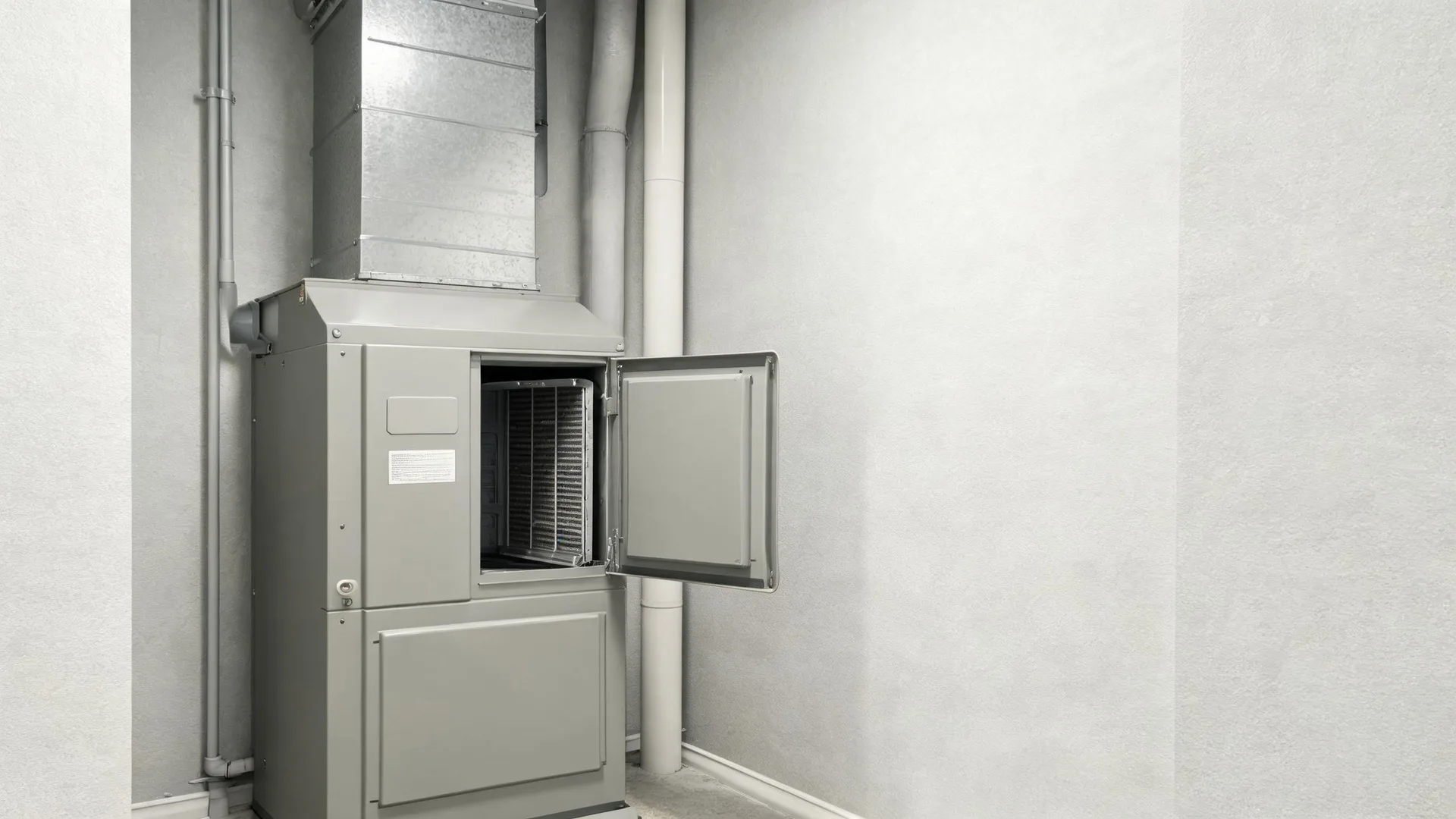
The condenser and coil are only part of what gets installed. If the ductwork is undersized, leaky, or wasn't built for the new system's airflow, that has to be addressed too, and it's not always visible until the installer is inside the attic or crawlspace. The electrical whip and disconnect have to match the new unit's draw as well. None of that shows up until someone opens things up and looks.

An outdoor air conditioning condenser unit mounted on a concrete pad next to a blue-sided residential house at sunset.

Going above the federal minimum saves little here, about $20 a year.

  • A higher-efficiency unit$200 a year
  • A new unit at the federal minimum, 14.3 SEER2$220 a year

Estimates for a typical Placer County home, from EIA household energy data, California fuel prices and NOAA climate normals. Your home will differ.

Install day starts with the house powered down and the old system drained and disconnected before anything new goes in. The outdoor unit gets set on its pad and leveled, since a condenser sitting crooked wears its compressor mounts faster than it should. Indoors, the coil goes into the plenum and gets sealed so air moving through doesn't leak around it instead of through it. Once the lines are run and connected, the system gets evacuated to pull out moisture and air before refrigerant goes in, not just charged and switched on. After that it's started up, checked against the manufacturer's charge and airflow specs, and run long enough to see it cycle properly. A system that looks finished but hasn't been checked against those numbers isn't actually done.