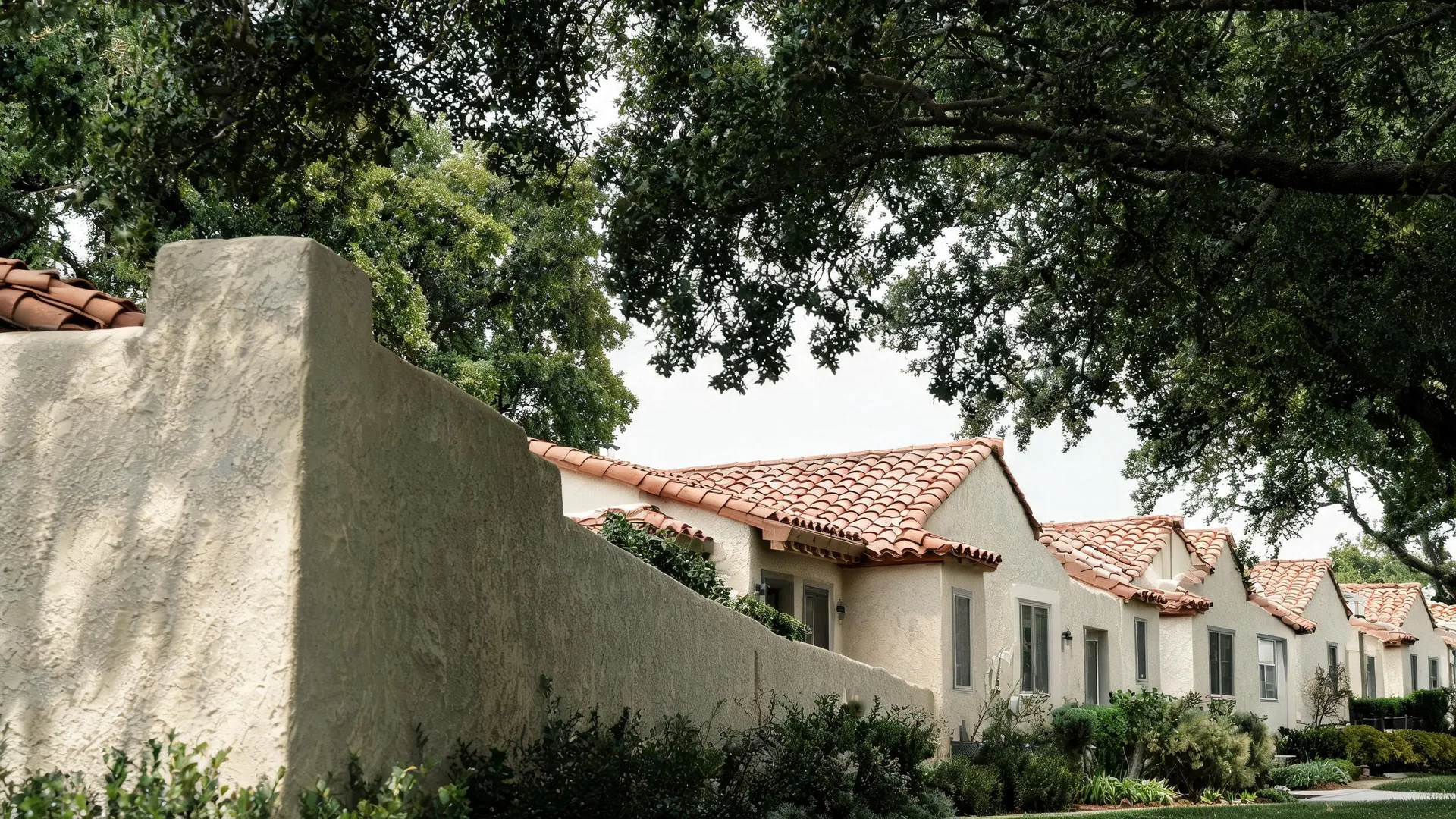





A row of single-story stucco houses with red clay tile roofs behind a tall stucco wall, framed by large oak trees and shrubs.

AC Installation in Sacramento, CA

Tell us about the job

Takes about a minute. No obligation.

New system or replacementCentral ACSacramento County, CA
Step 1 of 2

What ZIP code is the job in?

California homes paid 31.97 cents per kilowatthour for electricity in 2024, among the highest rates in the country. Every kilowatt your new AC pulls gets billed at that rate. A unit that wastes less power on each cycle costs less to run every time it kicks on. Sacramento summers mean this system will run for hours on end, so that difference adds up fast. How well it's installed and sized for your home decides how much power it pulls to do the same job.

5 months
May through September, your air conditioner is on duty
92°F
the average summer afternoon it cools against
2 hail events
in ten years, and hail bends the fins on outdoor coils
13.4 SEER2
the federal minimum any new unit must meet
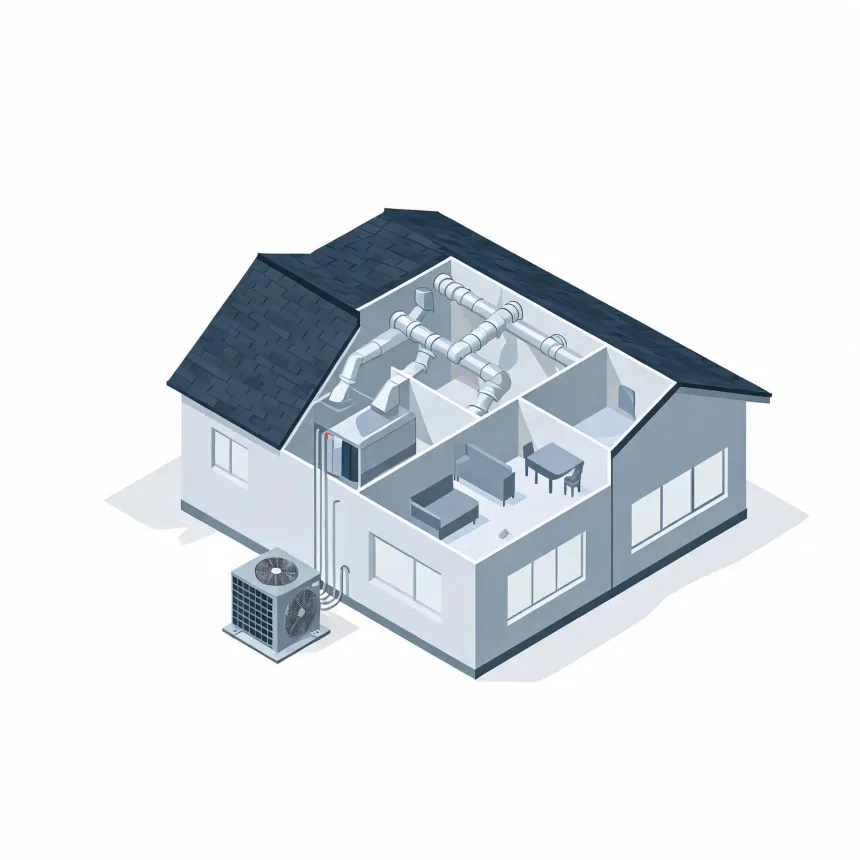
Isometric illustration of a cutaway single-story house showing attic ductwork, an indoor air handler, interior rooms with furniture, and an outdoor condenser unit connected by lines, on a white background.
Your air conditioner works hardest from June through September.

NOAA nClimDiv, 1991–2020 normals

Cooling runs May through September in Sacramento County.

April is the month to put in a new AC, before the first hot stretch asks something of it.

Five months of 92 degree afternoons, every year

Cooling runs May through September
Summer afternoons average 92°F
Power costs 31.97 cents a kWh statewide
Most homes here run on gasUtility gas heats 56.9% of homes in Sacramento County, more than electricity and propane combined.

Sacramento County falls under zone 3B, and any split system going in has to meet the Southwest's regional rule, not just the national minimum. Below 45,000 Btu/h, that means 14.3 SEER2. The unit also has to clear a separate EER2 rating, which looks at how it holds up on the hottest afternoons rather than its average efficiency over the season. A system that only meets the national minimum won't be legal to install here. Check with your contractor that whatever goes in is rated for the Southwest tier.

Get this one sized and installed right the first time

At 31.97 cents a kilowatt-hour, a correctly sized system earns back the difference on every bill. Have your contractor run the load calculation for your home before they quote equipment, not after.

Find a contractor
An outdoor air conditioning condenser unit mounted on a concrete pad beside a house, with electrical conduit running to a wall-mounted disconnect box.

Built for five months of this, not a mild afternoon

This system runs close to five months straight, through afternoons that sit around 92 degrees for weeks at a time. That is what it has to answer to, day after day, before it gets a break. Sizing has to match that load, not the mild stretches in spring or fall. A unit sized off a rule of thumb instead of a load calculation for your house will short cycle or run too long, and either one wears it down faster than this climate already does on its own. Ask your contractor for the load calculation before you pick equipment, and weigh what they quote against how the unit is built to hold up over five months of real heat.

Ask what size they calculated, not what size they're quoting

Any contractor can tell you a tonnage. What matters is whether they ran a load calculation for your house, room by room, or just matched the size of the unit you already have. The old one may have been wrong from the start. A bigger system isn't a safer bet. Oversized equipment cools the air fast and shuts off before it pulls the moisture out, so the house ends up cold and clammy at once.

Ask what happens to the ductwork, not just the condenser

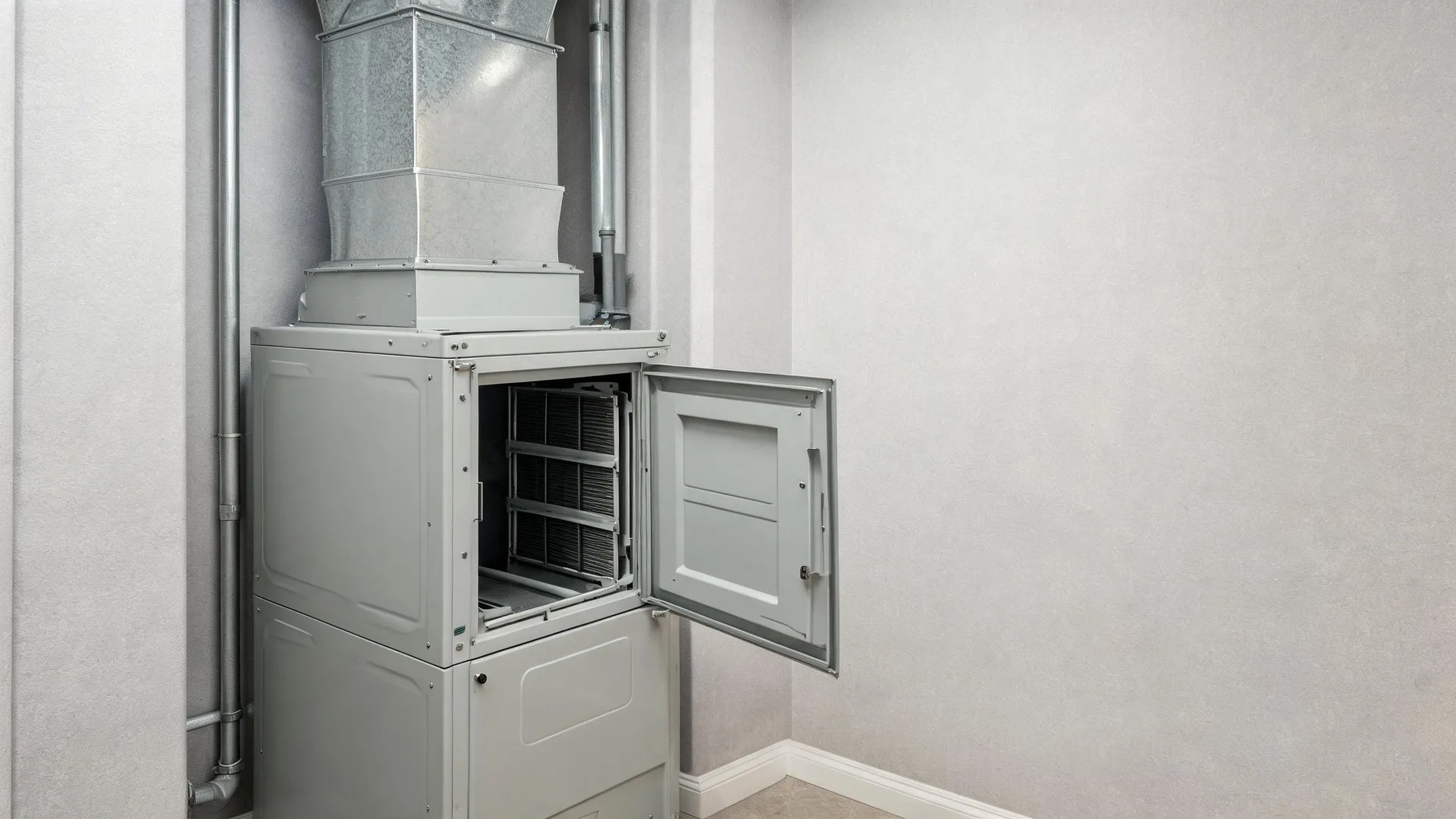
A new outdoor unit moved onto old ducts can choke on them. Ducts sized for a smaller or less efficient system restrict airflow to the new one, and restricted airflow shows up later as iced coils and a compressor working harder than it should. Ask whether they're checking duct size and static pressure as part of the install, not quoting equipment alone and leaving the ducts as they are.

Overhead view of a gray outdoor AC condenser unit on a concrete pad beside a mulched garden bed and a house with vinyl siding.

A higher-efficiency unit would save about $30 a year to run in Sacramento County compared with a new unit at the federal minimum.

  • A higher-efficiency unit$490 a year
  • A new unit at the federal minimum, 14.3 SEER2$520 a year

Estimates for a typical Sacramento County home, from EIA household energy data, California fuel prices and NOAA climate normals. Your home will differ.

Installation day starts before anyone touches the outdoor unit. A contractor should check static pressure in the existing ducts and confirm the line set, electrical disconnect and condensate drain all match what the new equipment needs. The old refrigerant gets recovered, not vented, and the line set usually gets replaced or flushed rather than reused, since the oil in it is matched to the old refrigerant. Setting the new condenser means leveling the pad, checking clearance around it for airflow, and running fresh line set to the indoor coil. Once it's charged, a tech checks refrigerant charge against the manufacturer's numbers for the actual line length and outdoor temperature that day, not a gauge reading alone. The furnace or air handler gets checked too, since the blower has to move the right amount of air across the new coil for it to cool the way it's rated to.