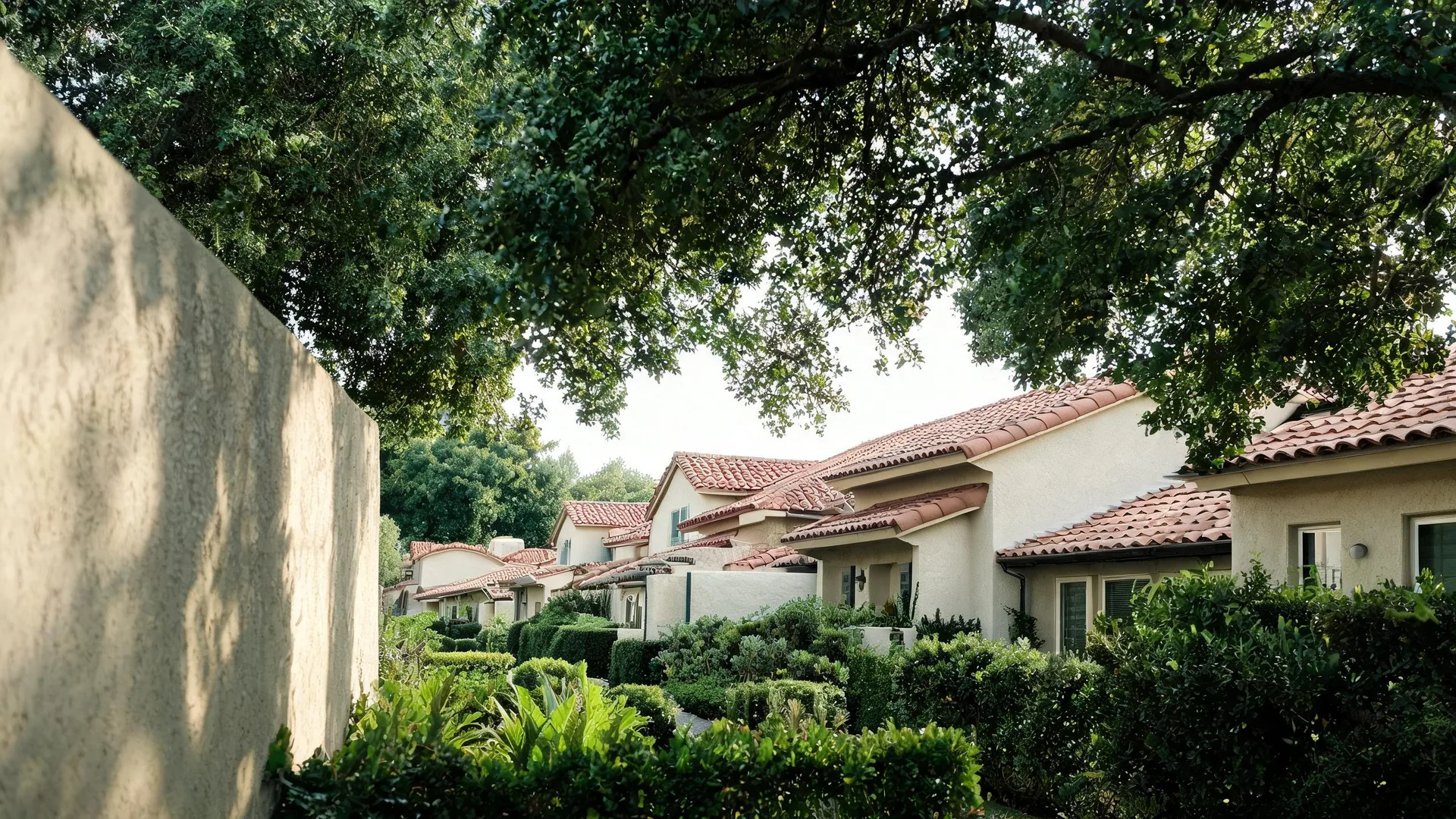
A row of stucco houses with red clay tile roofs seen beyond trimmed hedges and shrubs, framed by a large tree canopy overhead and a plaster wall at left.

AC Installation in San Luis Obispo, CA

Tell us about the job

Takes about a minute. No obligation.

New system or replacementCentral ACSan Luis Obispo County, CA
Step 1 of 2

What ZIP code is the job in?

Electricity here runs 31.97 cents per kilowatthour

California electricity averaged 31.97 cents per kilowatthour in 2024. That rate applies to every kilowatt an air conditioner draws, so the same system costs more to run here than in a state with cheaper power.


Efficiency matters more on an expensive grid

A new AC's efficiency rating has more weight here than it would somewhere with cheap power, because the same gap in efficiency turns into a bigger gap on the bill. That is worth weighing against the price tag when comparing units.

4 months
June through September, your air conditioner is on duty
87°F
the average summer afternoon it cools against
1 hail events
in ten years, and hail bends the fins on outdoor coils
13.4 SEER2
the federal minimum any new unit must meet
Isometric cutaway illustration of a single-story house with a dark shingled roof, showing interior rooms with ductwork and an indoor air handler connected to an outdoor condenser unit beside the building.
Your air conditioner works hardest from July through September.

NOAA nClimDiv, 1991–2020 normals

AC runs here from June through September.

Put the new system in during May, before it has to work.

Most homes here heat with gas, and cool with a separate electric AC

65.5% of homes heat with gas
Climate zone 3C
Power costs 31.97 cents a kWh statewide
A mild load on this systemFour months of cooling a year, afternoons averaging 87°F.

The efficiency rating on the label tells you how much cooling a unit gets out of the power it draws. A unit with a higher rating moves the same heat out of the house using less electricity than one with a lower rating. That number comes from lab testing under fixed conditions. Units with the same rating should perform about the same no matter who installs them. What changes the result in the house is the rest of the install. The refrigerant charge has to be set correctly, and the ductwork has to move enough air across the coil. A high efficiency unit with a poor charge or restricted airflow will not deliver what its label promises. The rating is a starting point for comparison, not a guarantee of what the system will use once it is running.

Compare units on what they cost to run, not just what they cost to buy

At 31.97 cents a kilowatt-hour, the efficiency rating on a new unit matters more here than the price tag does. When you compare systems, put the SEER2 number ahead of the sticker price and ask the contractor to size and charge it to match.

Find a contractor
A man in a cap, long-sleeved shirt and work pants carries a canvas tool bag up concrete steps toward a wooden front door of a gray-sided house, with a shrub in a terracotta pot to the right.
A gray cylindrical air conditioning condenser unit mounted on a concrete pad next to a light-colored vinyl-sided house exterior.

What to ask before you sign

Match the tonnage to the house before anything else. A bigger unit is not a better one. An oversized system cools the air fast and shuts off before it pulls the moisture out, so the house feels clammy even at the right temperature. The compressor short cycles for years instead of running steady. Ask whoever is quoting the job if they ran a load calculation on this house, or if they just matched the size of what's out there now. Ask what the old system's charge and airflow looked like. A duct problem or a bad charge on the last unit will carry over to the new one if nobody checks it first. Ask what the warranty covers if the compressor fails, parts only or parts and the labor to replace it. And ask who sets the refrigerant charge once the lines are run, because that step decides whether the new unit ever reaches the number on its label.

The tonnage decides most of it

A bigger unit costs more to buy and more to install. It needs heavier line sets, sometimes a bigger breaker, and a pad that can carry the weight. None of that is optional once the load calculation says what size the house needs. Going smaller to save money leaves the system unable to keep up on the hottest days, so this isn't a place to shop by price alone.

The ductwork decides the rest

A new outdoor unit still has to push air through the ducts already in the house. If they're too narrow, leaky, or routed poorly, the installer has to decide whether to work around them or open up the walls or attic to fix them. Sealing and resizing ductwork adds labor the outdoor unit itself never shows up in. Skipping that step is cheaper up front and costs the homeowner the efficiency they just paid for.

An outdoor air conditioning condenser unit positioned on a concrete pad next to a blue-sided house, surrounded by green shrubs and flowering hydrangeas at sunset.

Going above the federal minimum saves little here, about $20 a year.

  • A higher-efficiency unit$270 a year
  • A new unit at the federal minimum, 14.3 SEER2$290 a year

Estimates for a typical San Luis Obispo County home, from EIA household energy data, California fuel prices and NOAA climate normals. Your home will differ.

Install day starts with the old equipment coming out, not the new one going in. The outdoor unit gets disconnected, the refrigerant recovered, and the indoor coil pulled if it's being swapped too. Line sets usually get replaced rather than reused, since old ones carry the wrong residue and sizing for a new system. Once the new coil and outdoor unit are set, the installer pulls a vacuum on the line set to clear out moisture and air before any refrigerant goes in. Skipping that step leaves moisture in the system that causes problems months later, not on day one. After the charge is set, a good installer runs the system and checks the temperature split across the coil and the airflow at the vents, rather than just confirming it powers on.