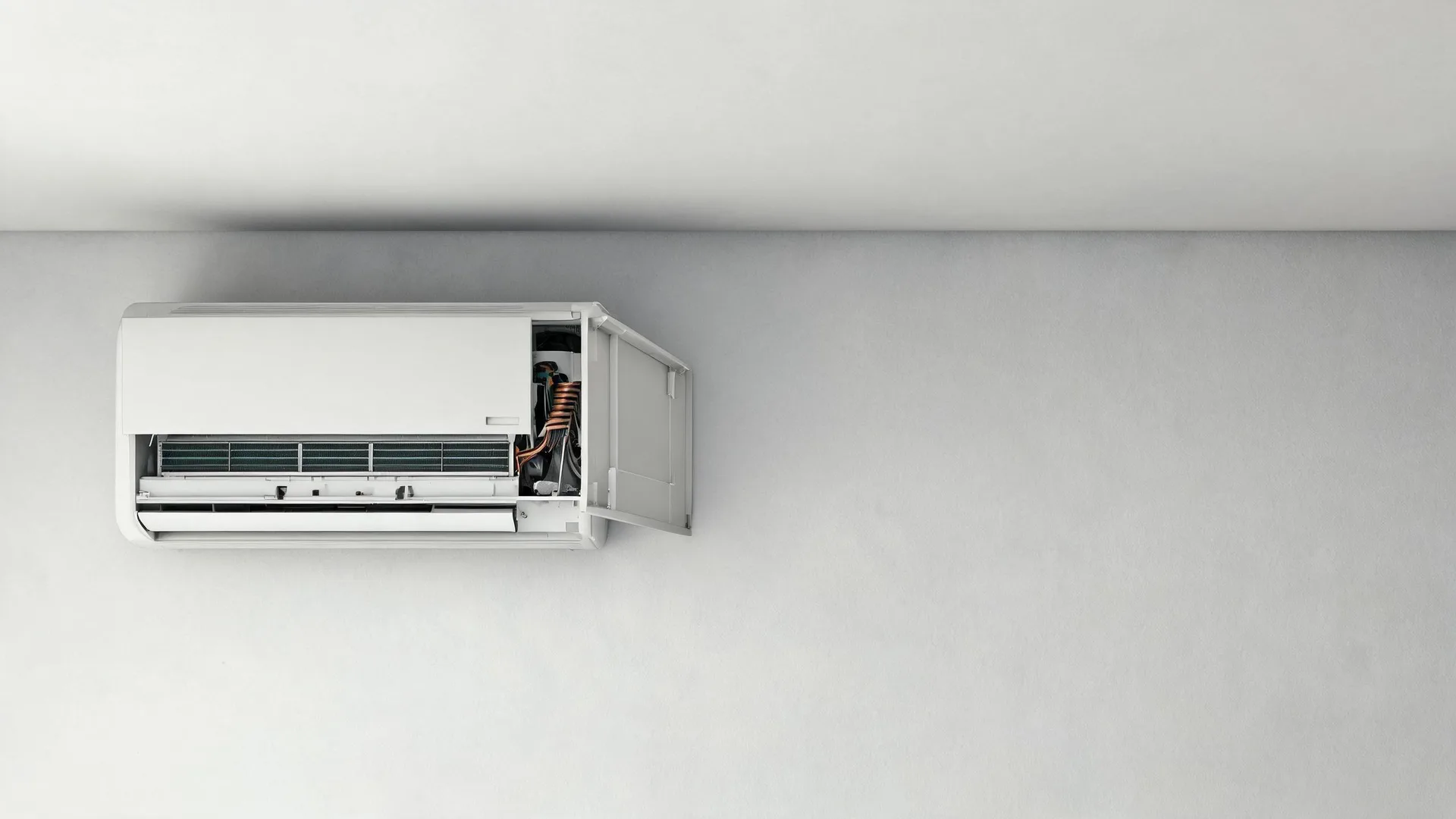
Electricity here costs more per hour
Santa Cruz County homes paid an average of 38.48 cents per kilowatt-hour in 2025, higher than in most US counties. A new air conditioner runs on that rate every time it cycles on.
Takes about a minute. No obligation.
Santa Cruz County homes paid an average of 38.48 cents per kilowatt-hour in 2025, higher than in most US counties. A new air conditioner runs on that rate every time it cycles on.
A new system here does not get to spread a high price over a long season, since the dew point averages only 51°F through summer and the air rarely feels heavy. How efficiently the unit runs decides what each of those hours costs you.

NOAA nClimDiv, 1991–2020 normals
Most homes in Santa Cruz County heat with gas, not electricity.
An AC installer here is usually adding cooling to a house, not replacing an electric furnace, so the install has to work alongside the gas system already there.



Santa Cruz County falls under zone 3C in the 2021 energy code, the marine strip of the Southwest region. Any split-system air conditioner installed here under 45,000 Btu/h has to hit at least 14.3 SEER2, and it has to meet a separate EER2 floor of 11.7 or 9.8 depending on which side of 15.2 SEER2 it's certified at. That second number matters because SEER2 is measured over a full season while EER2 is measured at peak heat, so a unit can't just average its way to compliance. These are federal and regional minimums, not a ceiling, so plenty of equipment on the market clears them by a wide margin.
At this rate, the SEER2 rating on the unit you pick decides what every cycle costs for as long as you own it. Weigh that against the price when you compare systems.
Find a contractor
SEER2 is a seasonal average. It gets measured by running the unit through a range of conditions, mild days and hot ones, and averaging what it burns across all of them. EER2 is the other number, and it tells you what the unit draws at peak heat, the afternoons when it runs flat out and doesn't get a break. A unit with a strong SEER2 and a weak EER2 will still spike on the hottest hours, because that number was never part of the average. Both ratings describe the same compressor and coil, just under different loads, so a system built to hold up at peak draws less whenever it's not maxed out too. None of this comes from a dial you can read later. It is fixed at the factory, built into the compressor and the coil, so the rating on the label the day it's installed is the rating that unit will carry for as long as it runs. A unit that is oversized for the space will cycle on and off constantly instead of running steady, and short cycling wears at the compressor no matter how high the rating on the label reads. The rating only holds if the refrigerant charge is right and the airflow across the coil matches what the system was built for. Get either wrong at install and a high SEER2 unit will run closer to a low one.
A contractor should size the system to the house, not to the system that's already there or the one next door. Two homes the same square footage can need different tonnage depending on windows, ceiling height and insulation. Ask to see the calculation, not just the number it landed on. A unit sized off a guess tends to run short cycles if it's too big, or run constantly without catching up if it's too small.
The condenser and coil only perform to their rating if the ducts can move the air they're built to move. Ask whether the existing ductwork was inspected, and whether it was sized for the system going in or for whatever was there before. A new system pushing air through old, undersized or leaky ducts loses capacity before that air ever reaches a room, no matter what the equipment is rated to do.
Estimates for a typical Santa Cruz County home, from EIA household energy data, California fuel prices and NOAA climate normals. Your home will differ.
Storms here are more likely to knock the power out than to damage the unit itself. An outage still matters for a new AC, since the outdoor unit and the indoor coil both need power to run, and a condenser sitting idle in a heat wave is just another hot afternoon with no relief. Ask where the installer plans to place the outdoor unit, and keep it clear of fences, trees and anything that could come down on it in high wind. If backup power is something you're weighing anyway, this is the time to ask the installer what it would take to put the AC on that circuit, since that's easier to plan for during install than to add later.