




Single-story stucco house with a clay tile roof, framed by overhanging oak branches, with a lawn and drought-tolerant plantings including agaves in the foreground.

AC Installation in Truckee, CA

Tell us about the job

Takes about a minute. No obligation.

New system or replacementCentral ACNevada County, CA
Step 1 of 2

What ZIP code is the job in?

Truckee sits in climate zone 5B, where winters carry the heating load and summers stay dry. Any new split-system air conditioner installed here has to meet the Southwest's federal minimum of 14.3 SEER2, a step above the floor that applies elsewhere in the country. The unit also has to hit a minimum EER2, with the exact number depending on how the system is certified. That rating measures efficiency, not how much cooling the unit can deliver, so it narrows which models qualify without changing what size system your house needs. A system that meets this standard may also qualify for the federal tax credit on high-efficiency equipment.

2 months
July through August, your air conditioner is on duty
82°F
the average summer afternoon it cools against
4 hail events
in ten years, and hail bends the fins on outdoor coils
13.4 SEER2
the federal minimum any new unit must meet
Isometric line illustration of a cutaway house showing interior rooms, ceiling ductwork connected to an indoor air handler, and an outdoor condenser unit linked by refrigerant lines.
Your air conditioner works hardest from July through August.

NOAA nClimDiv, 1991–2020 normals

Gas heats more homes in Nevada County than any other fuel, at 35.0%.

An AC installation in Truckee usually pairs new cooling with a furnace that's already burning gas, not replacing it.

Two months of real cooling a year, that's not a system you need to overbuild

Cooling runs July through August
Summer afternoons average 82°F
190 damaging wind events from 2015 to 2024

Electricity in California ran 31.97 cents per kilowatt-hour in 2024, among the highest rates in the country. That number matters more for an air conditioner than for most appliances, since every degree of cooling draws power for as long as the system runs. An efficient unit costs less to run here than an older or undersized one, and at this rate the difference shows up on the bill every month the AC runs. Truckee only needs cooling for a couple of months a year, so there is little reason to pay for more capacity than the house actually uses. Buying size you don't need just adds to what each kilowatt-hour already costs.

July is when Truckee turns the AC on

Cooling here runs July through August, so June is the month to get a new system in. Installed before the first hot stretch, it's set up and tested on your schedule instead of during the only two months a year it has to work.

Find a contractor
A man in a cap, brown jacket and tan pants, seen from behind, carries a canvas tool bag up concrete steps toward an orange front door.
An outdoor air conditioning condenser unit mounted on a concrete pad beside a house, with electrical conduit running to a wall-mounted disconnect box.

Built for two months, not a heavy load

Two months of cooling a year is a light enough load that a straightforward single-stage system, sized right for your house, will cover those July and August afternoons without strain. Put the money into correct installation and a unit from a brand with parts and service nearby, rather than into extra tonnage or features built for climates that run cooling most of the year.

Ask for the load calculation, not a guess off square footage

Sizing an air conditioner by square footage alone ignores windows, shade, ceiling height and how the attic is insulated. A contractor doing it right runs a room by room load calculation and can show you the numbers. If the only answer you get is a tonnage with no explanation behind it, that's a sign the system might not match the house at all.

Ask what happens to the furnace ductwork

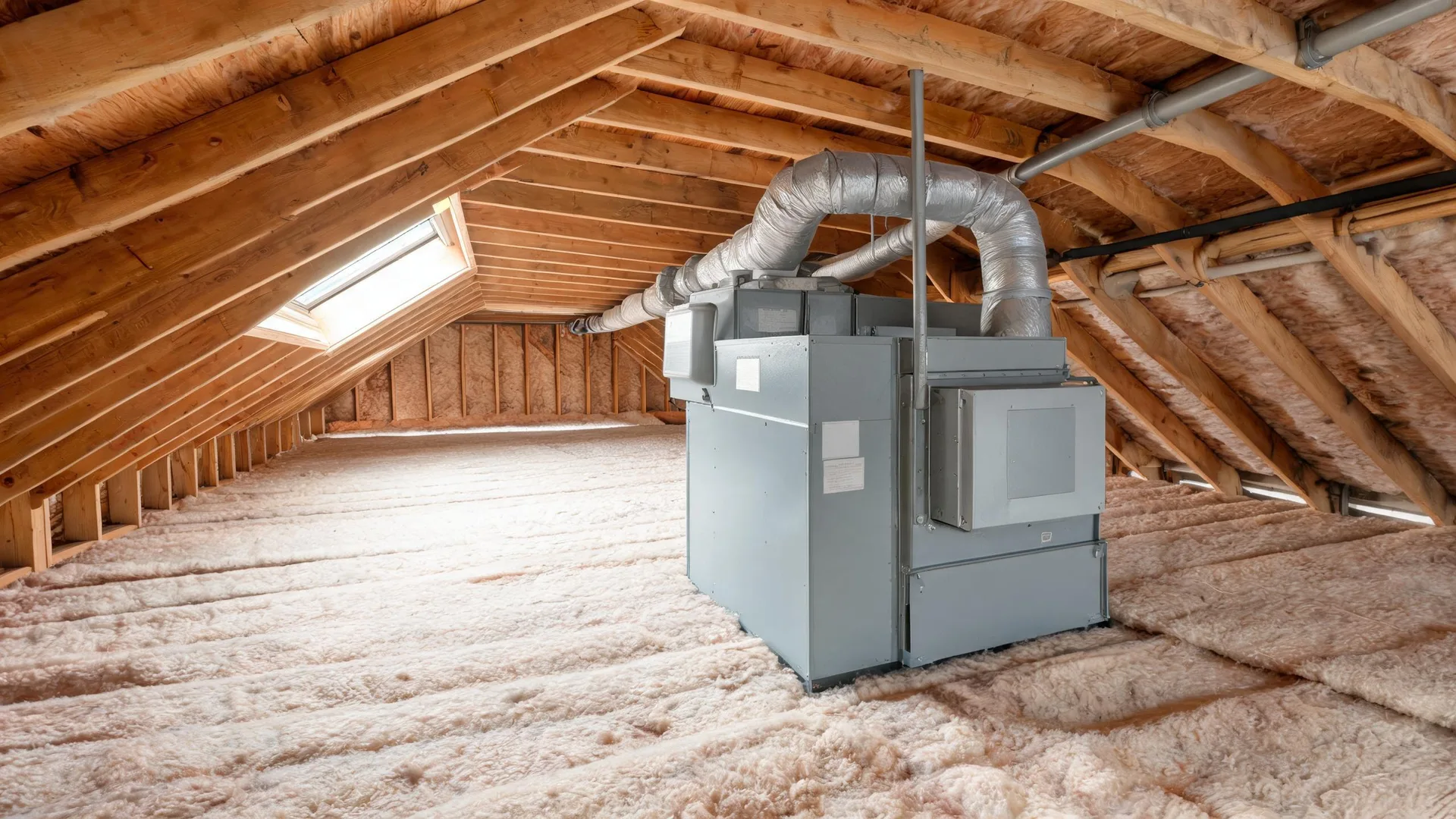
Most AC installs tie into ducts already carrying air for the furnace, and whether that ductwork can handle the added airflow matters as much as the condenser you pick. Ask whether the existing ducts were checked for leaks or restrictions, and whether the coil installed inside matches the outdoor unit. A mismatched coil cuts into the efficiency rating on the sticker, no matter how good the condenser is.

Overhead view of a gray outdoor AC condenser unit on a concrete pad beside a mulched garden bed and a house with vinyl siding.

Going above the federal minimum saves little here, about $10 a year.

  • A higher-efficiency unit$170 a year
  • A new unit at the federal minimum, 14.3 SEER2$180 a year

Estimates for a typical Nevada County home, from EIA household energy data, California fuel prices and NOAA climate normals. Your home will differ.

Installation starts outside, with the condenser set on a pad, leveled, and connected to the electrical disconnect nearby. Inside, if the coil above the furnace doesn't match the new condenser, it gets swapped so the pair is rated to work together. The line set connecting them gets run, pressure tested for leaks, then evacuated to pull all air and moisture out before refrigerant goes in. Once it's charged, a tech checks the charge against the manufacturer's numbers rather than just running it and calling it done. The thermostat gets wired and set up last, and the system runs through a cycle so airflow and temperature split can be checked at the vents.