No single fuel dominates here
Gas heats 28.7% of homes in Mendocino County, electricity heats 22.2%, and propane heats 21.5%. No one setup is the default, so an AC installer has to ask what's already in your house rather than assume.
Takes about a minute. No obligation.
Gas heats 28.7% of homes in Mendocino County, electricity heats 22.2%, and propane heats 21.5%. No one setup is the default, so an AC installer has to ask what's already in your house rather than assume.
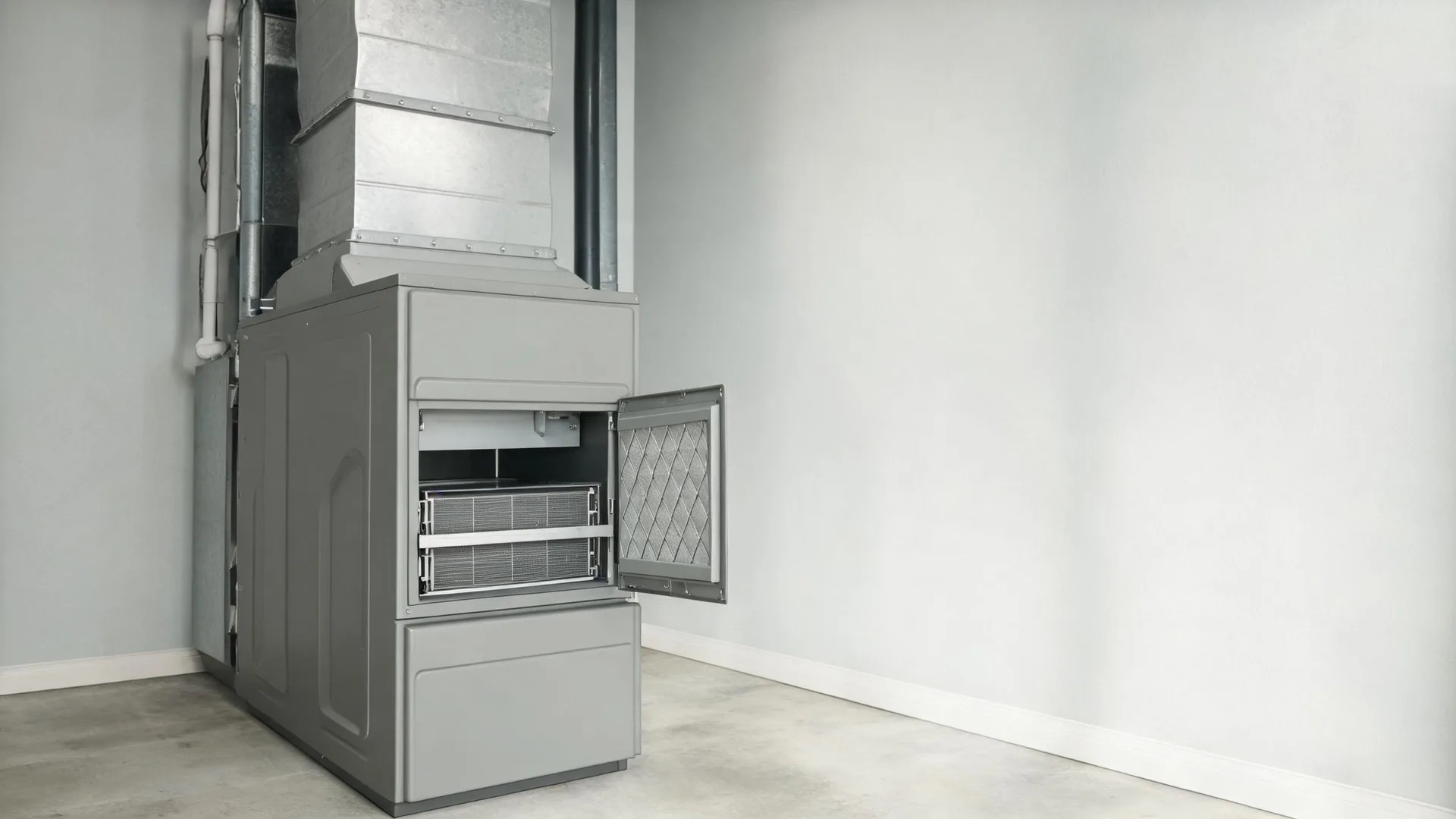
If your furnace runs on gas or propane, central air usually pairs with that furnace's existing ductwork and blower. If your home heats with electricity, a heat pump may already be doing some of that work, which changes what cooling options make sense.

NOAA nClimDiv, 1991–2020 normals
Ukiah gets two months of real cooling, July and August, with afternoon highs around 81.
A system that only has to work two months a year doesn't need to be the strongest one on the lot.




Half the houses in Mendocino County went up in 1977 or earlier. That doesn't change what size unit your home needs. Sizing comes from your square footage, your windows, your insulation, the layout of your ducts, not the year on the permit. A contractor will measure your house and size the system to it, the same way they would for a house built last year. There's no reason to pay for a bigger or higher-end system because of the county you're in. A standard unit sized to your home will cool it fine.
Mendocino County falls under zone 3C, and any split-system AC installed here has to hit at least 13.4 SEER2, the federal minimum for units under 45,000 Btu/h. That rules out the lowest-end units sold elsewhere. If the system qualifies as an Energy Star model, it may also be eligible for a federal tax credit. Worth sorting out before the unit is picked, not after.
Find a contractor
The size of the system is what sets the price before anything else gets chosen. A unit sized to the house costs what it costs. Oversize it and you pay more up front for cooling the house doesn't need, and the system will short cycle, switching on and off without running long enough to pull moisture out of the air. Beyond size, the ductwork matters as much as the equipment. If the existing ducts are sealed and sized right, the new system connects to them and that's most of the job. If they're leaking, crushed, or too small for the new unit's airflow, that work gets added in, because a good condenser pushing air through bad ducts won't cool the house either way. The condenser pad, the electrical disconnect, the line set running between the outdoor unit and the indoor coil all have to be right for the specific equipment going in, not reused by default. None of that shows up until someone's inside the house looking at what's actually there.
A warranty that covers parts but not labor still leaves a bill if the compressor fails. Ask whether it's registered in your name and whether that registration has to happen within a set window after install, because missing that date can void it before you ever need it.
The outdoor condenser and the indoor coil have to be a matched pair for the system to run at its rated efficiency. If only the outdoor unit gets replaced and the old coil stays, the system can still run, but it won't cool as well or last as long as it should.
Estimates for a typical Mendocino County home, from EIA household energy data, California fuel prices and NOAA climate normals. Your home will differ.
The old condenser doesn't get left behind for someone else to deal with. Whoever installs the new system disconnects the refrigerant lines, recovers whatever refrigerant is left in the old unit, and hauls it off, usually as part of the job rather than a separate charge. Refrigerant can't just be vented into the air, so a licensed installer has the equipment to pull it out and handle it properly before the old unit gets scrapped. The pad underneath stays, or gets reused for the new unit if it's still in good shape. The old line set usually comes out too, since new equipment typically wants a line set matched to it rather than whatever was already running between the house and the slab. None of this is something you have to arrange on your own. It's part of pulling the old system out to make room for the new one.