





White Mediterranean-style houses with lit windows photographed at dusk beneath golden hills.

AC Installation in Visalia, CA

Tell us about the job

Takes about a minute. No obligation.

New system or replacementCentral ACTulare County, CA
Step 1 of 2

What ZIP code is the job in?

Tulare County saw 346 severe weather events between 2015 and 2024. Most of that was wind, 191 events, with 149 winter storms and a handful of hail and even a tornado. An outdoor condenser sits outside through all of it, exposed to whatever blows through. Power doesn't always hold up either. Across California, 17% of households went at least a day without electricity in 2024. A new AC system is worth planning around that, not just around the heat.

4 months
June through September, your air conditioner is on duty
84°F
the average summer afternoon it cools against
4 hail events
in ten years, and hail bends the fins on outdoor coils
13.4 SEER2
the federal minimum any new unit must meet
Isometric line illustration of a cutaway house showing interior rooms with ductwork, an indoor air handler, and an outdoor condenser unit connected by lines, on a white background.
Your air conditioner works hardest from July through August.

NOAA nClimDiv, 1991–2020 normals

Cooling starts in June here.

Install in May and the system is already running before it has to carry the first hot month.

At 34.62 cents a kilowatt-hour, every hour this unit runs costs more here than almost anywhere else

Power here costs 34.62 cents per kilowatt-hour
Climate zone 3B
Cooling runs June through September

Tulare County falls under zone 3B, the code's label for a warm, dry climate with a long cooling season. Any split system going in here has to meet 14.3 SEER2 at minimum if it's rated below 45,000 Btu/h, which covers the size of unit most houses need. It also has to hit a separate EER2 mark, 11.7 or 9.8 depending on where the unit falls against 15.2 SEER2. That second number matters in a place like this because EER2 measures how the system holds up when it's hot outside right now, not its efficiency averaged over a mild day and a brutal one. A unit that only clears the SEER2 bar can still fall short on EER2, so both numbers narrow the field. A new system that meets both is built for the kind of heat this county actually sees, not just heat in general. On top of that, a federal tax credit is available for qualifying high-efficiency equipment installed in the home.

Plan the installation around what hits this county, not just the heat

Decide now where the new condenser goes and what shields it, before it's in the ground and wired in. If a long outage is a real concern for heat or hot water, that's also a choice to make at install, not after.

Find a contractor
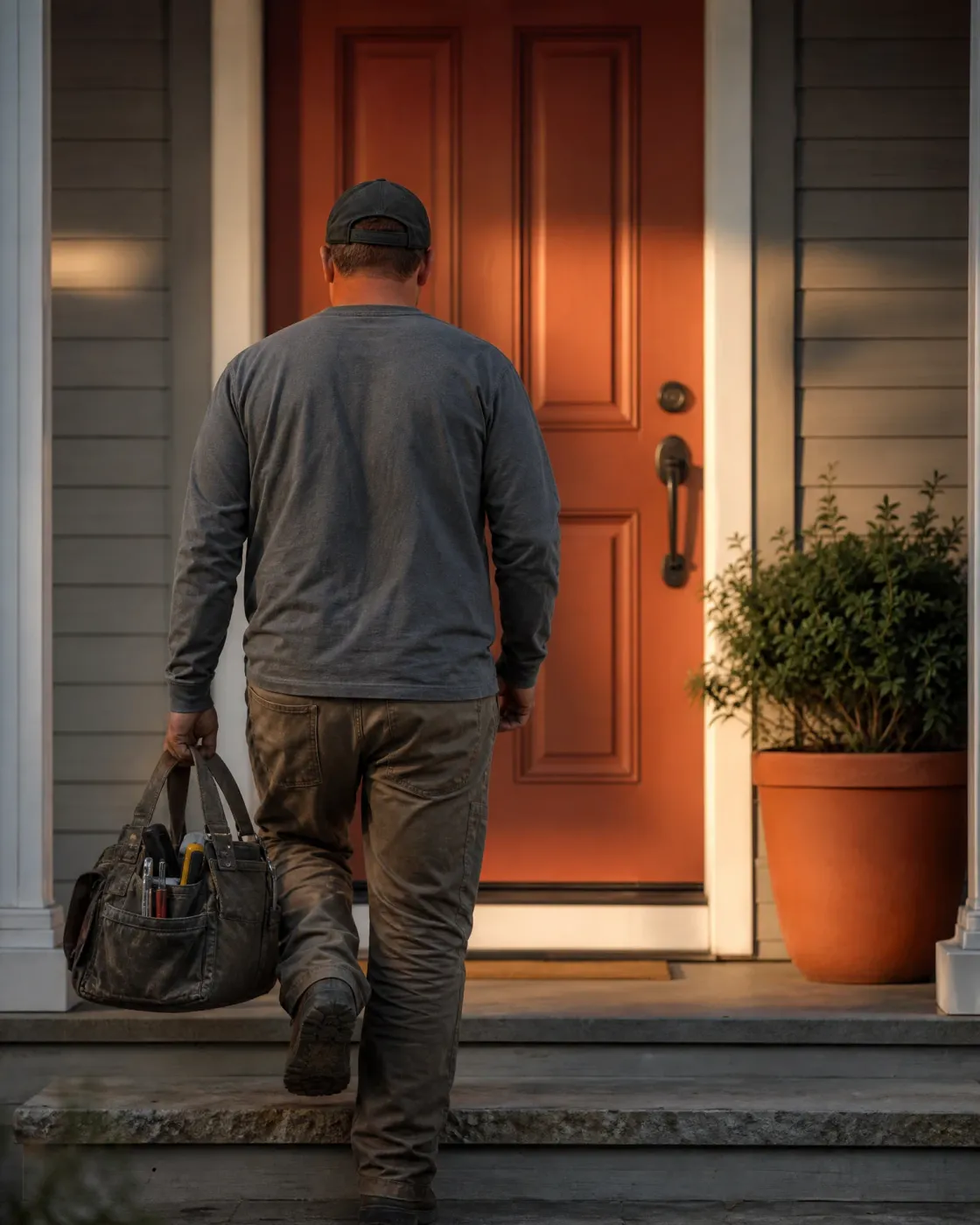
A man in a dark cap, gray long-sleeved shirt and brown work pants, carrying a canvas tool bag with pens and tools in its pockets, steps up onto a porch toward an orange-red paneled front door, with gray horizontal siding and a potted shrub in a terracotta planter to the right.
A gray residential air conditioning condenser unit mounted on a concrete pad outdoors, surrounded by green grass under a partly cloudy blue sky.

What happens to the system coming out

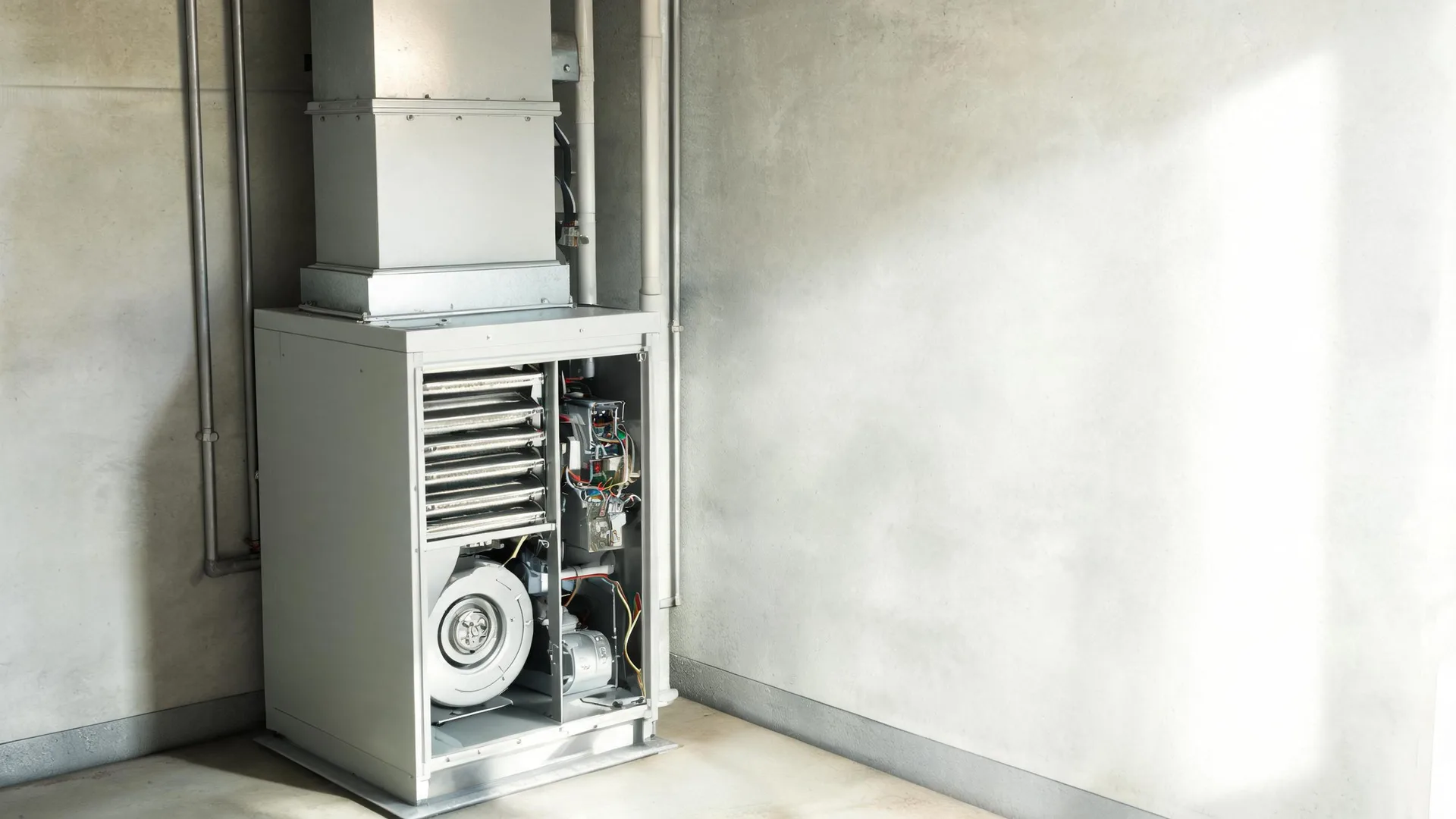
The old condenser doesn't just get unbolted and hauled off. A tech has to recover the refrigerant out of the lines first, by law, before anything gets disconnected. That gas can't be vented into the air, so it gets pulled into a tank and logged. Once the lines are empty, the old unit comes off the pad, the line set either gets reused or replaced depending on its condition, and the old wiring and disconnect box get checked against what the new system needs. Old copper lines sized for a smaller unit sometimes have to come out entirely rather than get reused, since undersized lines choke the new system's airflow. The pad underneath usually stays, as long as it's still level and not cracked. If it's settled or broken up, that gets dealt with before the new unit ever goes on top of it.

Sizing isn't picking a bigger number

A contractor works out the right size with a load calculation, weighing the square footage against the windows, the insulation, the orientation of the house and what's inside it generating heat. Two houses the same size can need different tonnage. Skip that step and guess from the old unit's size or a rule of thumb, and the new system inherits whatever was wrong with the last one.

What the wrong size actually does

An oversized unit cools the air fast and shuts off before it pulls the moisture out, so the house feels cold and clammy at the same time. It also cycles on and off more, and every start and stop wears the compressor harder than running steady. An undersized unit does the opposite: it runs long stretches without ever catching up on the hottest days, straining to hold a temperature it can't quite reach.

Aerial view of a gray outdoor air conditioning condenser unit mounted on a concrete pad next to a house with vinyl siding.

Going above the federal minimum saves little here, about $10 a year.

  • A higher-efficiency unit$250 a year
  • A new unit at the federal minimum, 14.3 SEER2$260 a year

Estimates for a typical Tulare County home, from EIA household energy data, California fuel prices and NOAA climate normals. Your home will differ.

Gas heats 67.5% of the homes in Tulare County. Electricity is a distant second at 21.8%, and bottled or LP gas covers 6.3%. If your house is one of the gas majority, the furnace stays put and only the AC side changes, which keeps this job to the condenser, the coil and the line set rather than the whole system. That's the simpler path, and it's why most installs here are a straight swap rather than a conversion. Worth checking which fuel your own house runs on before assuming, since a fifth of the county heats with electricity instead.