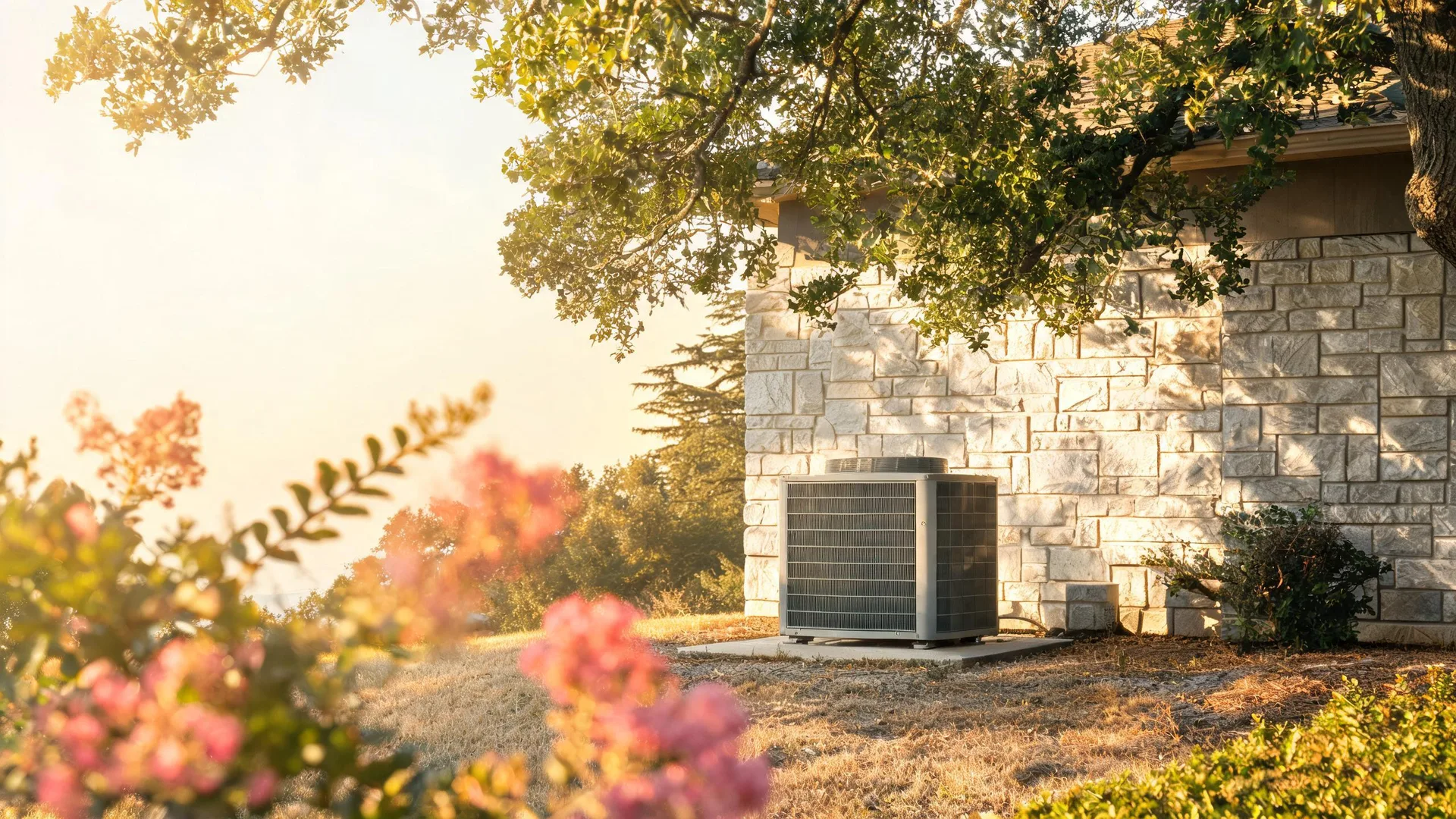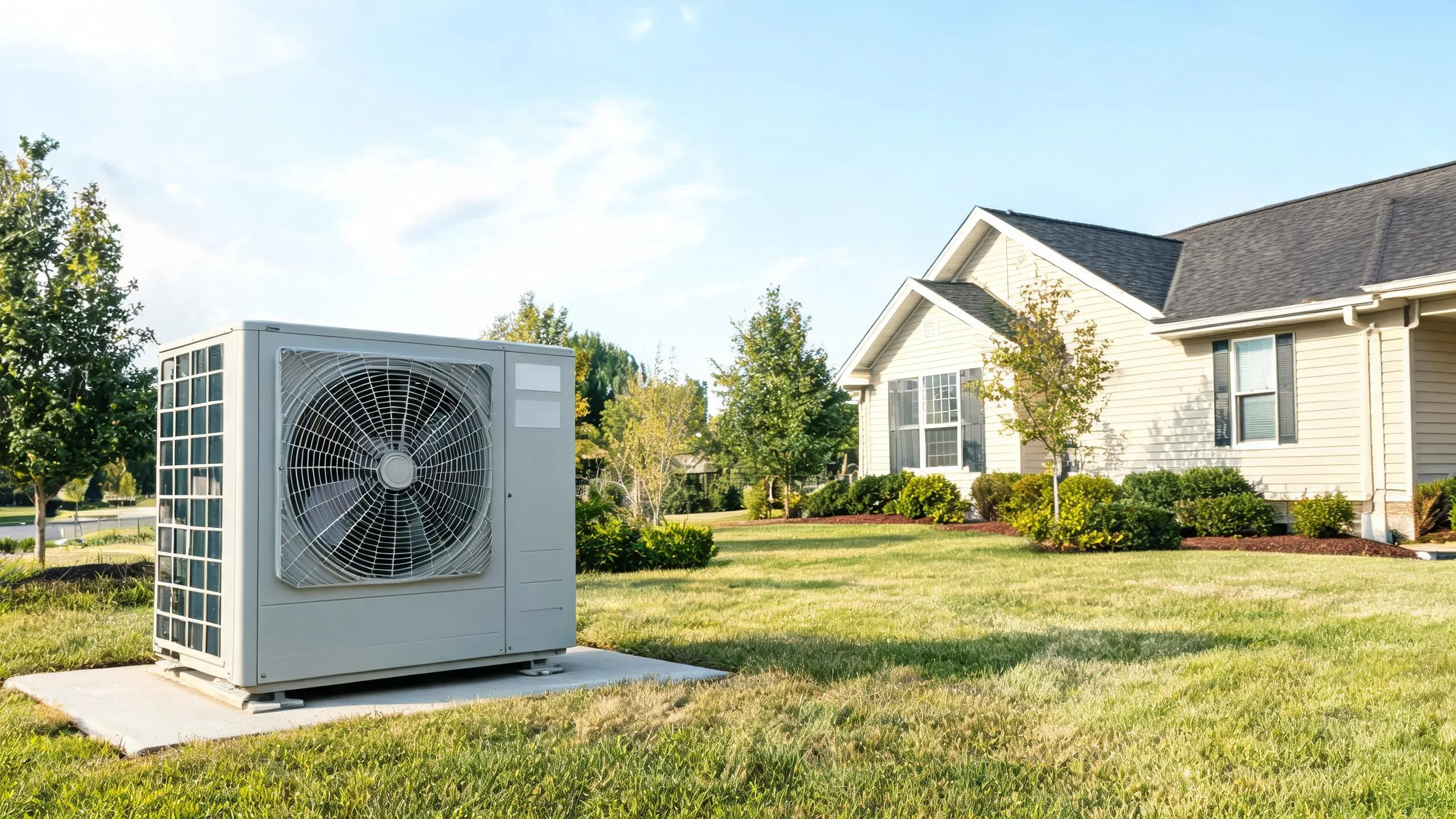
A grey heat pump outdoor unit mounted on a concrete pad in a suburban backyard, with a single-storey house visible behind it.

Heat Pump Repair in San Bernardino, CA

Tell us about the job

Takes about a minute. No obligation.

RepairHeat PumpSan Bernardino County, CA
Step 1 of 2

What ZIP code is the job in?

Wind takes a toll on the outdoor unit

San Bernardino County saw damaging wind 425 times between 2015 and 2024. That kind of wind drives dirt and debris into the outdoor coil and fan, and it can rock the unit on its pad hard enough to loosen electrical connections over time.


That's worth ruling out first

Before anything inside your heat pump gets replaced, a contractor should check the outdoor unit for a bent coil, a loose connection, or a fan that's out of balance. A problem that started outside often shows up as a problem you notice inside.

5 months
November through March, your system heats
6 months
May through October, it cools
39°F
the average winter night it heats against
99°F
the average summer afternoon it cools against
Isometric illustration of a cutaway single-story house showing interior ductwork and vents connected to an outdoor condenser unit beside the building, on a white background.
Your system heats November through March and cools May through October.

NOAA nClimDiv, 1991–2020 normals

Heat here starts up in November, after the heat pump has sat idle since spring.

The first cold snap puts load on whatever was already weak, so October is the month to get it checked.

At 31.97 cents a kilowatt-hour, a heat pump running poorly here is expensive to ignore

Power costs 31.97 cents a kWh statewide
425 damaging wind events from 2015 to 2024
Climate zone 3B

A heat pump that's low on charge or struggling with a dirty coil pulls more power to put out the same heat. You won't see that on the unit, you'll see it on the bill, every month it runs this way. San Bernardino doesn't get a break on the rate to make up for it. If yours has been running longer to hit the same temperature, or cycling more than it used to, that's worth a look now rather than after another month of paying for it.

A newer home usually means a heat pump worth repairing

Half the homes in San Bernardino County were built in 1983 or later. If yours is one of them, your heat pump likely isn't old enough to be the problem on its own. A repair makes sense before anyone talks about replacing it.

Find a contractor
A white mini-split heat pump outdoor unit mounted on a concrete pad beside a gray-sided house, surrounded by gravel and green shrubs.

Rule out the outdoor unit first, then go from there

That wind count already points outside, so start there before guessing at what's wrong inside. A contractor can check the outdoor coil, the fan, and the connections in one visit, same time they look at the rest of the system. If the outdoor unit checks out clean, that rules out the most likely cause and narrows down what's actually failing.

Blowing air that isn't warm or cool enough

A heat pump that runs but can't hold the temperature you set is often low on refrigerant charge or losing capacity in the outdoor coil. It's not a sign to wait out. A system working harder to hit the same setting is already telling you something is wrong.

Short cycling or a system that won't stop running

Turning on and off every few minutes points to a bad sensor, a thermostat that's lost communication with the unit, or a compressor starting to fail. A heat pump that runs nonstop without catching up to the set temperature is usually struggling with airflow or a refrigerant problem, not just working through a hard day.

A reversing valve is one of the few parts unique to a heat pump, and it's a common point of failure. It's what switches the system between heating and cooling, and when it sticks, the unit can blow cold air when you've asked for heat or get stuck running one mode no matter what the thermostat says. Compressors wear from running, like any motor, but they often fail early because something else went wrong first and nobody caught it, low charge or a restricted coil making the compressor work harder than it should. Capacitors weaken over time too, and a weak one makes the fan or compressor struggle to start rather than refuse outright, so it can look like several other problems before it quits for good. Defrost failures are worth knowing about as well. If the sensor or control board that manages the defrost cycle fails, ice builds up on the outdoor coil and the system loses its ability to pull in heat at all.

A diagnostic visit starts outside, at the unit itself, before any panel comes off. A contractor checks the refrigerant charge, looks at the coil for dirt or damage, and watches whether the fan spins true or wobbles. Inside, they'll check the air handler, the filter, and the thermostat's signal to the unit, since a heat pump that won't heat is sometimes a communication problem rather than a mechanical one. Electrical readings on the compressor and capacitor come next, because a part can test weak before it fails outright. Whoever's doing the work should walk you through what they found and what it means before touching anything, not after the fact.