





A single-story stucco house with a tiled hip roof behind a mown lawn, framed by overhanging oak branches and foreground agave and succulent plantings.

Mini Split Installation in Anaheim, CA

Tell us about the job

Takes about a minute. No obligation.

New system or replacementMini-splitOrange County, CA
Step 1 of 2

What ZIP code is the job in?

A mini-split runs on electricity, and electricity here isn't cheap. Orange County homes paid an average of 32.40 cents per kilowatt-hour in 2025, higher than in most US counties. That number follows every hour the system runs. A unit that holds its efficiency keeps more of that cost down where it belongs. One that's sized wrong or installed loose works harder for the same cooling, and you pay for that extra work on every bill.

4 months
December through March, your system heats
5 months
June through October, it cools
47°F
the average winter night it heats against
82°F
the average summer afternoon it cools against
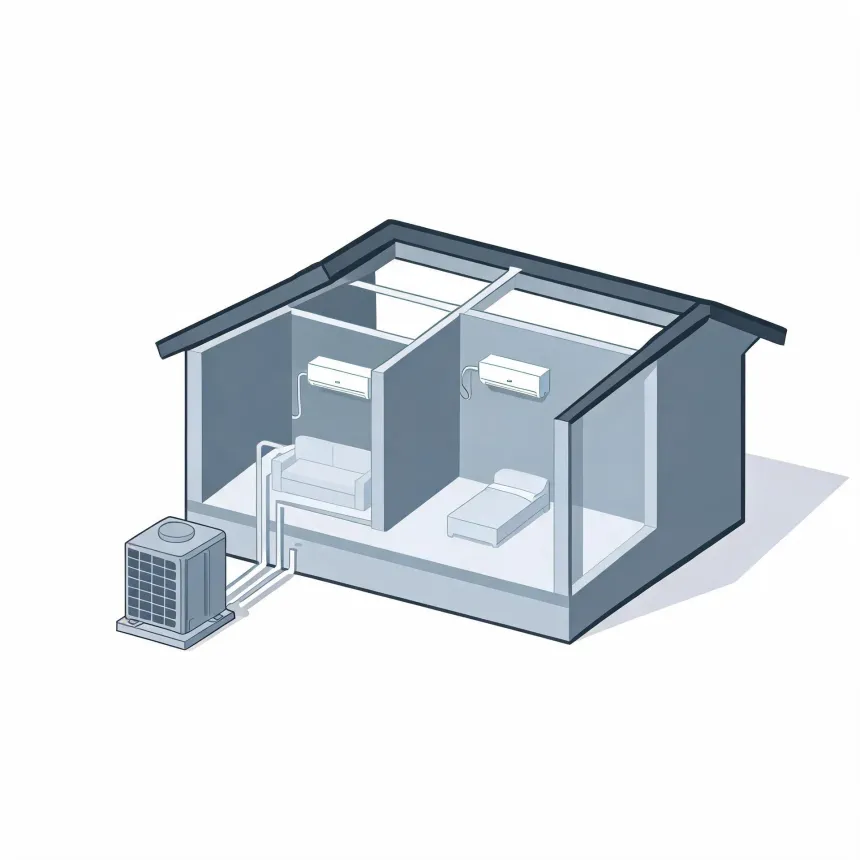
Illustrated cutaway of a two-room house showing two wall-mounted indoor air conditioning units connected by pipes to an outdoor condenser unit on the ground outside.
Your system heats December through March and cools June through October.

NOAA nClimDiv, 1991–2020 normals

Cooling season here runs June through October.

Get the mini-split installed in May and it's ready before the first hot day asks anything of it.

Most homes here run on gas, so a mini-split is usually the only thing in the house that runs on electricity

67.2% of homes heat with gas
Cooling runs June through October
Summer afternoons average 82°F

Anaheim falls under climate zone 3B, warm and dry with a cooling season that runs long. Any mini-split put in here has to meet the federal minimum for that kind of system: at least 14.3 Btu of cooling for every watt-hour it draws, and at least 7.5 Btu of heat per watt-hour when it runs in winter. Those numbers set the floor, not the ceiling. Given what power costs here, a unit sitting right at the minimum will cost more to run than one built past it. The federal tax credit is there for the systems that clear a higher bar, so it pays to ask where the one you're looking at actually lands.

Get the installation right, and the cost of running it stays low

Correct sizing and a tight installation are what keep a mini-split at the efficiency it's rated for. That's what decides what it draws off the meter for as long as it runs.

Find a contractor
A man in a dark shirt and tan work pants, seen from behind, carries a canvas tool bag up concrete steps toward an orange front door flanked by gray siding and a potted shrub.
A white outdoor air conditioner condenser unit mounted on metal wall brackets against gray horizontal siding, with a blue sky and white clouds behind it.

What to Ask Before You Choose

A mini-split only holds the efficiency it was built with if the install matches it. Ask how the contractor is choosing the size, not just a guess based on square footage but an actual load calculation for the space. Too big and it short cycles, turning on and off instead of running steady, which wears the compressor faster than steady use would. Too small and it runs flat out trying to keep up, which uses more power for less comfort. Ask about the line set too, the tubing that carries refrigerant between the outdoor unit and the indoor head. A run that's too long, or that has too many bends, makes the compressor work harder to move refrigerant through it. And ask who's doing the vacuum test on the line set before it's charged. Any air or moisture left in there mixes with the refrigerant and breaks it down over time, along with the parts it's supposed to protect. These are the things that decide whether the unit keeps the efficiency it was rated for, or loses it in the first year.

Sizing comes from a load calculation, not a chart

A contractor works out the right size by looking at the square footage, the windows, the insulation, and how the sun hits the place through the day. Square footage alone doesn't tell you enough. Two rooms the same size can need different sized units depending on what's around them.
Wrong size costs you either way

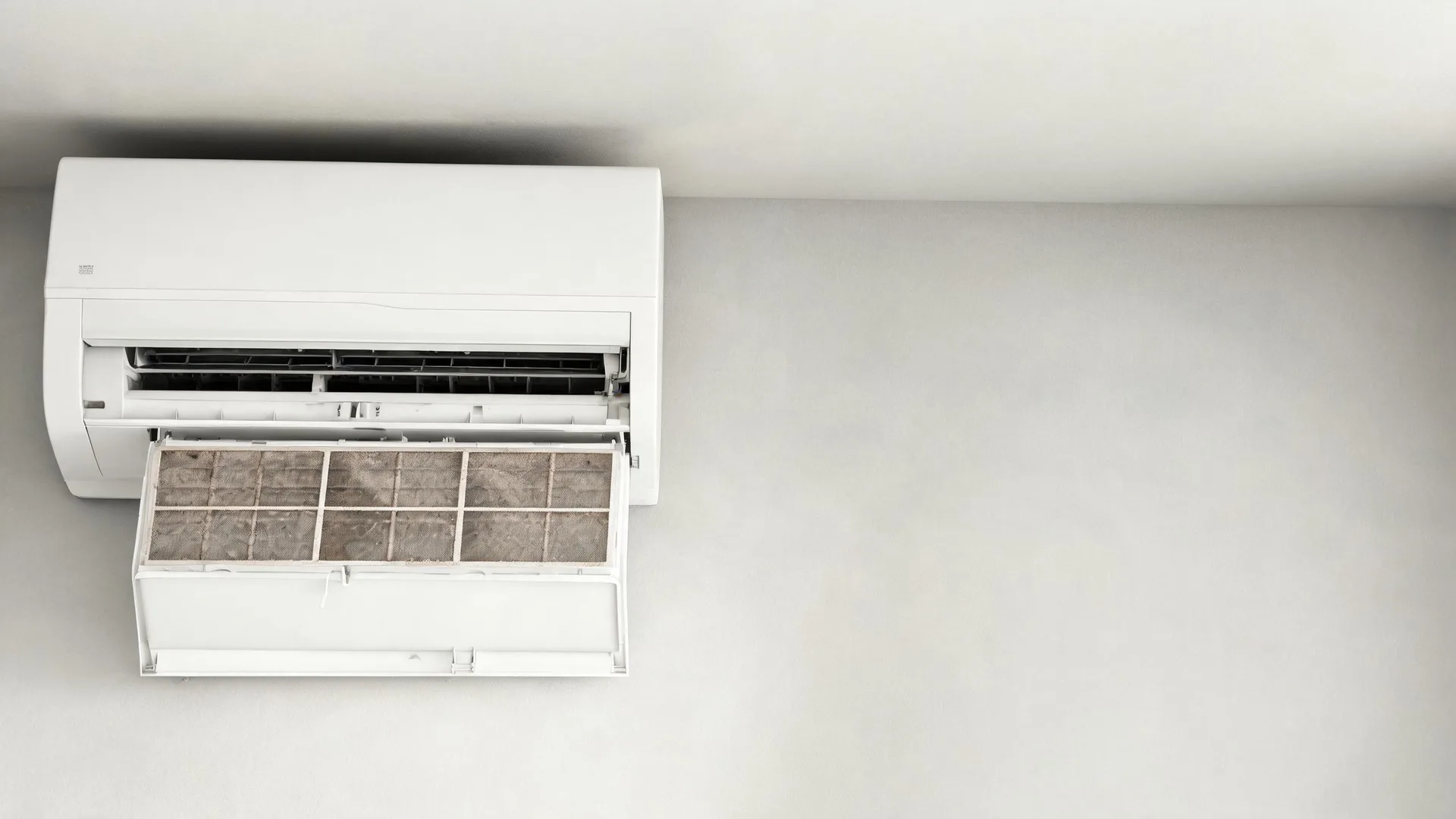
A mini-split that's too big cools the room fast and shuts off before it pulls the moisture out of the air, so the room feels damp even though the thermostat says it's done. One that's too small never shuts off at all. It runs flat out and still can't hold the temperature on the hottest part of the day. Either way you're paying for a unit that isn't matched to the room.

The efficiency rating on a mini-split is a ratio, what it puts out against what it draws to do it. A higher number means the unit moves more heat for the same draw of power, in both directions, cooling and heat. That rating only holds up under the conditions it was tested for. Set the temperature low and ask it to hold that through the hottest part of the day, and it draws more than the label implies, same as any system working harder. The rating also assumes the refrigerant charge is correct and the airflow across the coil is what it was designed for. Dirty filters, a blocked outdoor coil, or a line set charged wrong all pull the real efficiency below what the label promises, even though the unit itself hasn't changed.

Installation starts outside, with the contractor picking a spot for the outdoor unit that has clear air flow on all sides and isn't boxed in by fencing or plants. Inside, the indoor head goes up on a wall bracket, high enough to spread air across the room without blowing straight down on anyone sitting below it. The line set runs between the two through a hole drilled in the wall, and that hole gets sealed once the tubing is through it, because any gap there is a path for outside air. Before the system gets charged with refrigerant, the line set has to be pulled down to a vacuum and held there, which clears out the air and moisture that would otherwise mix with the refrigerant and break it down over time. Once that holds, the refrigerant valves open, the electrical connections get made, and the contractor runs the system through both heating and cooling to check that it responds the way it should. The last step is checking the condensate drain actually carries water away from the house instead of pooling near the foundation.