




A row of beige stucco houses with red clay tile roofs behind a long stucco wall, framed by large leafy trees and shrubs along a paved street.

Mini Split Installation in Bakersfield, CA

Tell us about the job

Takes about a minute. No obligation.

New system or replacementMini-splitKern County, CA
Step 1 of 2

What ZIP code is the job in?

Electricity in California ran homeowners 31.97 cents per kilowatt-hour in 2024, among the highest rates in the country. A mini split's efficiency rating matters more here than it would somewhere with cheaper power, because every bit of waste shows up on your bill at that rate. A single-zone system sized right for the room it serves, or a multi-zone system matched to the layout of the house, will cost less to run than one that is oversized or undersized for the space. The installer should size each zone to the room, not guess at a whole-house number, since that sizing decision is what determines how hard the system works all year.

6 months
November through April, your system heats
5 months
May through September, it cools
37°F
the average winter night it heats against
93°F
the average summer afternoon it cools against
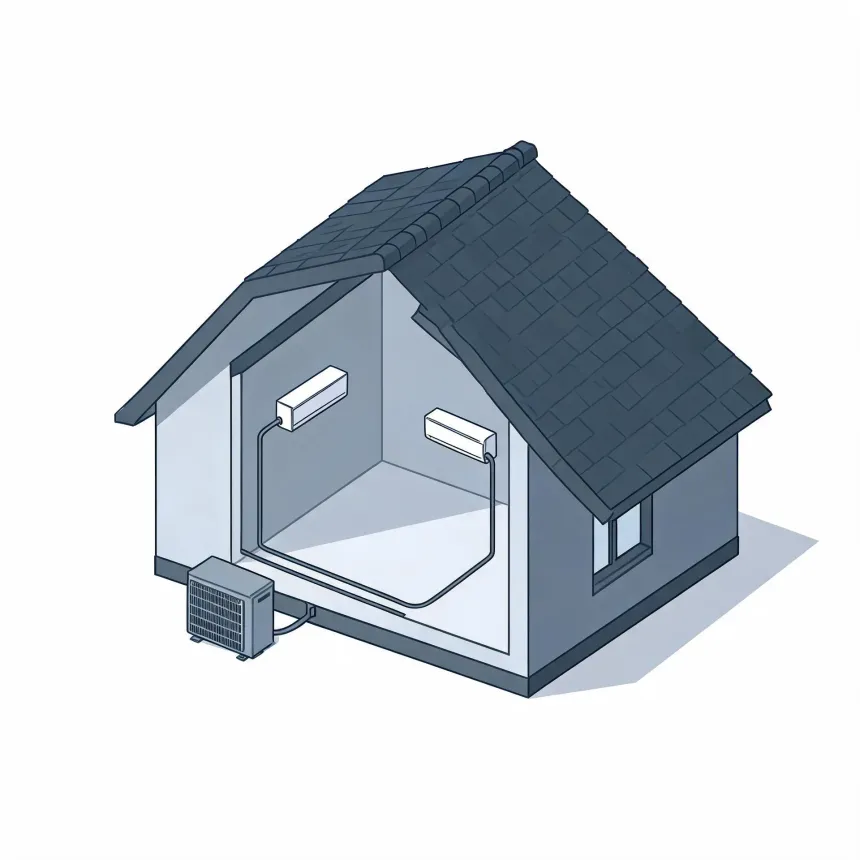
Isometric cutaway illustration of a small house with a shingled gable roof, showing two wall-mounted indoor air conditioning units connected by refrigerant lines to an outdoor condenser unit on the ground outside.
Your system heats November through April and cools May through September.

NOAA nClimDiv, 1991–2020 normals

An oversized mini split cools the room fast, then shuts off before it pulls the moisture out of the air.

Sizing each zone to the room it serves is what keeps a mini split from short cycling like that.

Most homes here run on gas, which puts a mini split in a different role than it has elsewhere

58.9% of homes heat with gas
Climate zone 3B
Power costs 31.97 cents a kWh statewide
Built for Kern County weather777 severe weather events hit this county between 2015 and 2024, and outages follow

Bakersfield is in climate zone 3B, with a long stretch of hot months and a short, mild winter. Any mini split installed new here has to meet the federal minimum for a split-system heat pump, 14.3 SEER2 for cooling and 7.5 HSPF2 for heating, since the standard treats a ductless system the same as any other split system. That rating is a floor, not a target. A system that clears it and is sized right for the room it serves is what keeps that efficiency real once it's running through a hot summer. A federal tax credit is available for qualifying heat pump installations, worth asking about when comparing systems.

Get it installed before May

Cooling runs here from May through September. If the install happens in April, the system is sized and set up before it has to work, not during the first hot week when a mini split installer has a full schedule.

Find a contractor
A beige split-system air conditioner outdoor condenser unit mounted on metal wall brackets atop a stucco wall.

Five months of heat, every year

Cooling runs here from May through September, and the afternoon high averages 93 degrees through June, July and August. That's five months of a mini split holding the line against heat like that, not a few weeks here and there. Wind is part of the load too. Kern County has taken damaging wind hundreds of times over the past decade, and the outdoor unit sits right in that path, along with the line set running to it. A system sized to the room it serves carries that load better than one that was never matched to the space, and here it gets tested most months of the year.

Ask what each zone is sized for

A mini split installer should walk through each room and work out its load before quoting equipment, not just match the total capacity to the house. Window area, ceiling height, and what's on the other side of each wall all change what a room needs. If the quote names a total BTU figure and a number of heads but can't tell you why each zone got the size it did, that's worth pushing on.
Ask where the line set runs and how long it is

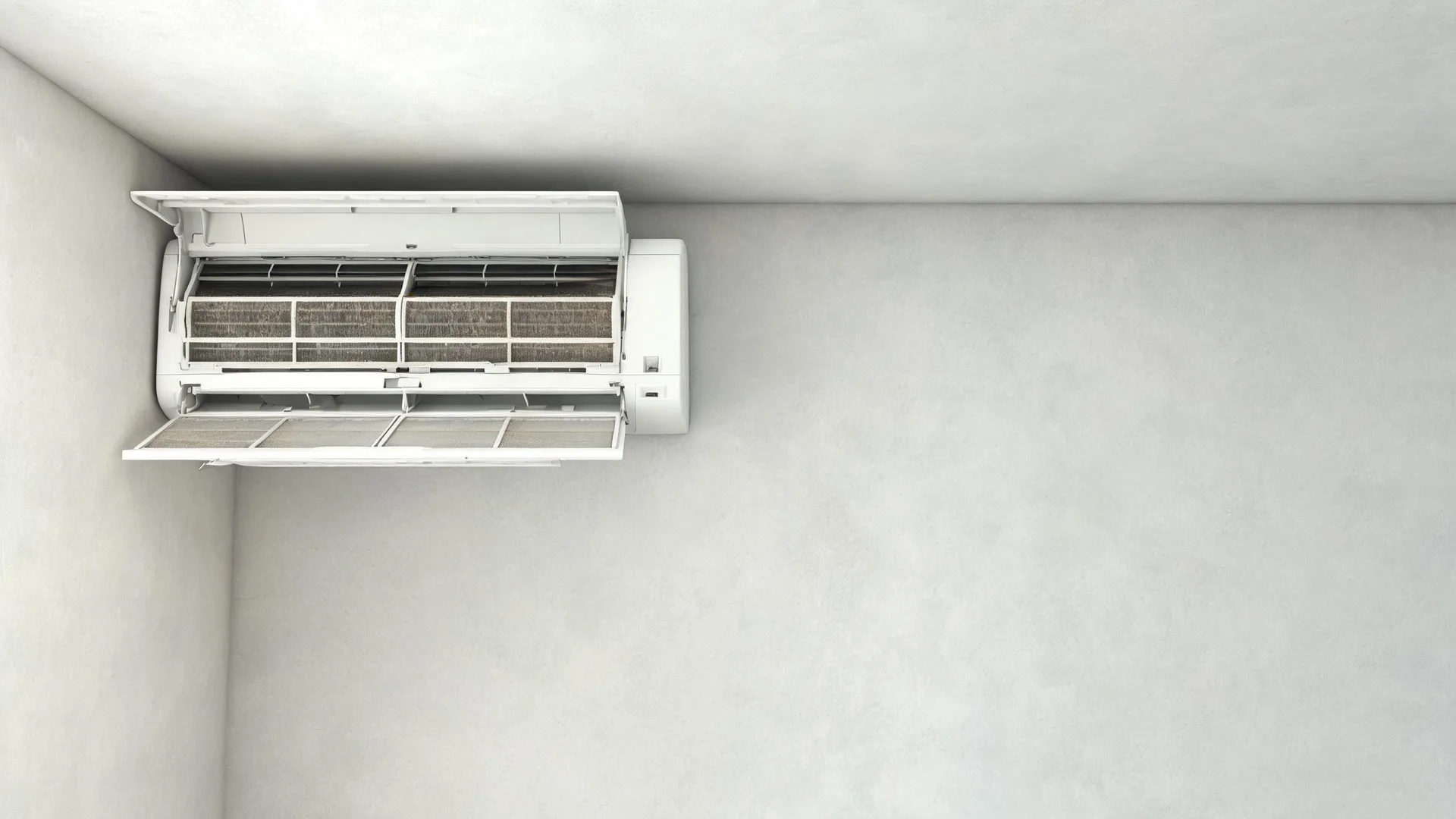
The line set carries refrigerant between the outdoor unit and each indoor head, and every added length or bend changes how hard the compressor works to move it. A shorter, more direct run performs better and gives the compressor less to fight than one snaked through walls and around corners to save on patching drywall. Ask to see where it's planned to run before the work starts, not after.

The cost of a mini split job comes down to how much equipment it takes and how hard that equipment is to put in. A single zone with a short line run is a different job than a multi-zone setup feeding several rooms, and the price follows that difference. Where the outdoor unit sits matters too, since a mounting pad, a bracket on an exterior wall, or a spot that needs extra line set all take different amounts of work. Running a new electrical circuit for the system adds to the job if the existing panel doesn't already have the capacity. Wall thickness and construction decide how much work goes into routing the line set from the outdoor unit to each indoor head, and a run through brick or block takes longer than one through a stud wall. None of that shows up in the size of the equipment, only in what it takes to get it installed right.

Installation starts with a hole. The installer drills a single small opening through the wall where the indoor head will mount, just wide enough to pass the line set, a drain line, and the power wiring through to the outdoor unit. That line set gets connected on both ends, then the system is pressure tested to make sure there are no leaks before anything is charged with refrigerant. Once it holds pressure, a vacuum pump pulls all the moisture and air out of the lines, since any left behind turns to acid or ice once the system runs and ruins the compressor over time. Only after that vacuum holds does the refrigerant get released from the outdoor unit into the lines. The indoor head gets mounted on a bracket, leveled, and connected, the outdoor unit gets set on its pad or bracket, and the whole system gets powered on and tested across both heating and cooling before the installer walks away.