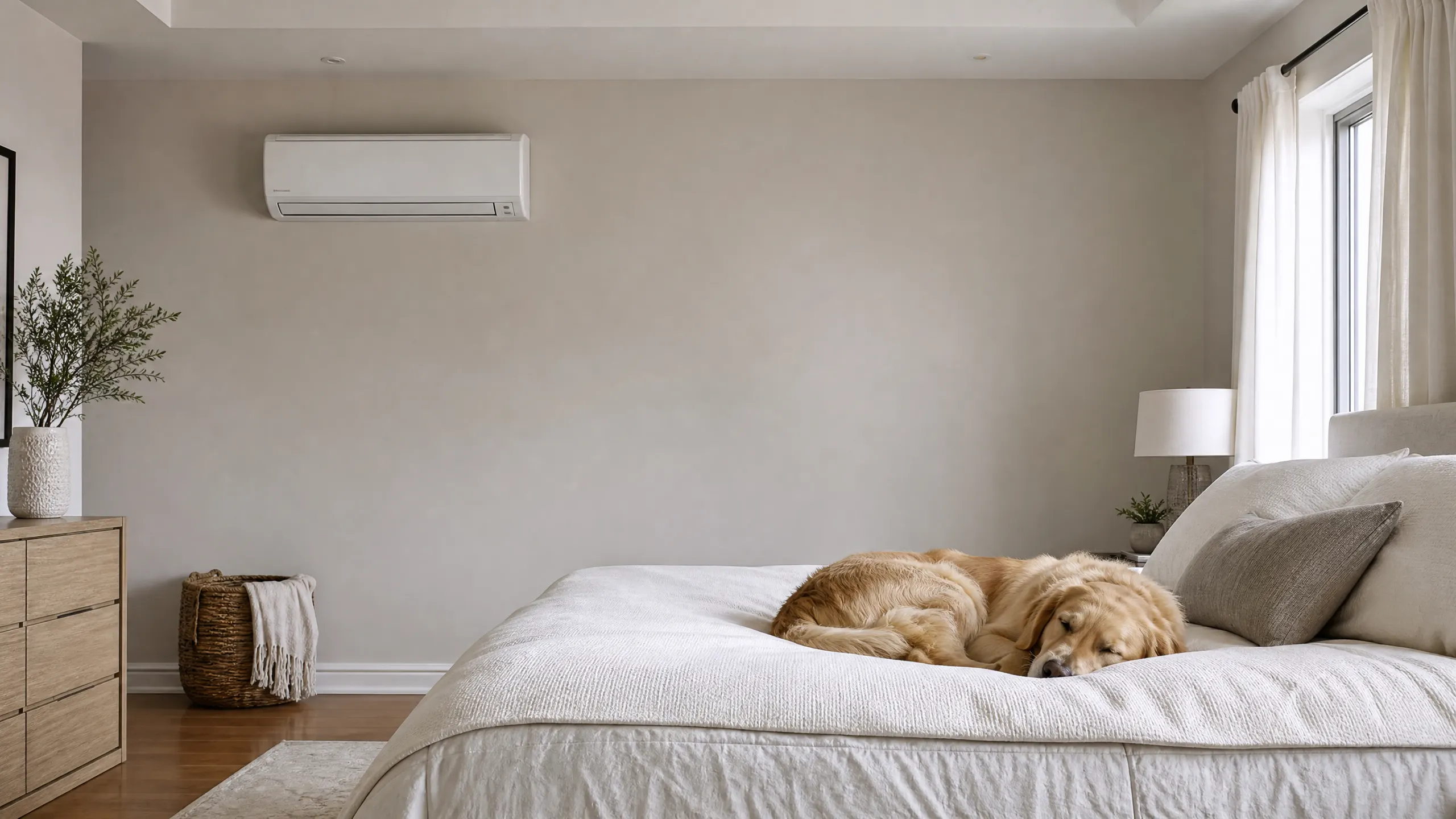




A golden retriever sleeps on a neatly made bed in a minimalist bedroom equipped with a wall-mounted air conditioning unit.

Mini Split Installation in Davis, CA

Tell us about the job

Takes about a minute. No obligation.

New system or replacementMini-splitYolo County, CA
Step 1 of 2

What ZIP code is the job in?

Electricity in California ran 31.97 cents per kilowatt-hour in 2024, among the highest rates in the country. A mini split earns back that extra cost by moving heat instead of generating it, so it uses less power to cover the same room. The efficiency rating on the unit you choose matters more here than it would in a state with cheaper power. Davis summers push an air conditioner hard, and a mini split that holds its rated output will show it on the bill every month it runs.

6 months
November through April, your system heats
5 months
May through September, it cools
39°F
the average winter night it heats against
93°F
the average summer afternoon it cools against
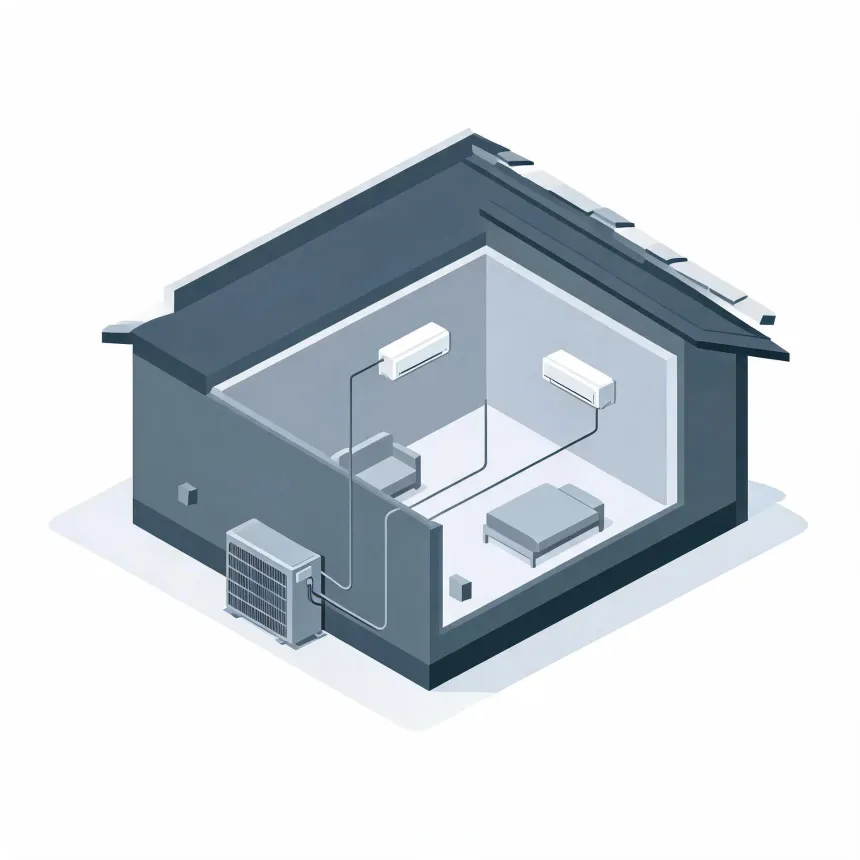
Isometric illustration of a cutaway house interior showing two wall-mounted indoor air conditioning units connected by line sets to an outdoor condenser unit beside the exterior wall.
Your system heats November through April and cools May through September.

NOAA nClimDiv, 1991–2020 normals

Davis summers average 93°F through June, July and August.

A mini split here runs close to full output for five months straight, so the sizing has to be right from the start.

Get it in before May, not during a 93 degree week

Cooling runs May through September
Summer afternoons average 93°F
Power costs 31.97 cents a kWh statewide

Most houses in Yolo County heat with utility gas, 59.6 percent of them. A mini split works alongside that, not against it. It's not there to replace the furnace, it covers the months the furnace sits idle and takes over cooling, which this county's gas furnaces mostly weren't built to do. Electric heat is the next most common at 32.3 percent, and in those homes a mini split can do more of the work year round since there's no gas furnace already carrying the winter. Either way, what's already in the house decides how the mini split gets used, not the other way around.

A mini split here has to meet zone 3B's efficiency floor

Yolo County falls under zone 3B, and any mini split installed here now has to meet 14.3 SEER2 for cooling and 7.5 HSPF2 for heating, the federal minimum for split-system heat pumps. That's the floor, not a suggestion, and it narrows the field to units built to run efficiently in a place that asks a lot of them in summer.

Find a contractor
A beige split-system air conditioner outdoor condenser unit mounted on metal wall brackets atop a stucco wall.

Five months a year, not a few weeks

Five months of cooling here means the unit runs close to full output from May through September, not in short bursts. That kind of steady load is where an undersized system falls behind and an oversized one short cycles, turning off before it pulls the moisture out of the air. Get the sizing wrong and you'll feel it every one of those five months, not just on the hot days.

A working furnace or AC doesn't get hauled off

If the mini split is covering cooling and taking some of the heating load, the existing furnace or electric system usually stays right where it is. A contractor disconnects it from duty where the mini split takes over but leaves the equipment in place as backup or for the rooms the mini split doesn't reach. Nothing about adding a mini split requires tearing out a furnace that still runs fine.
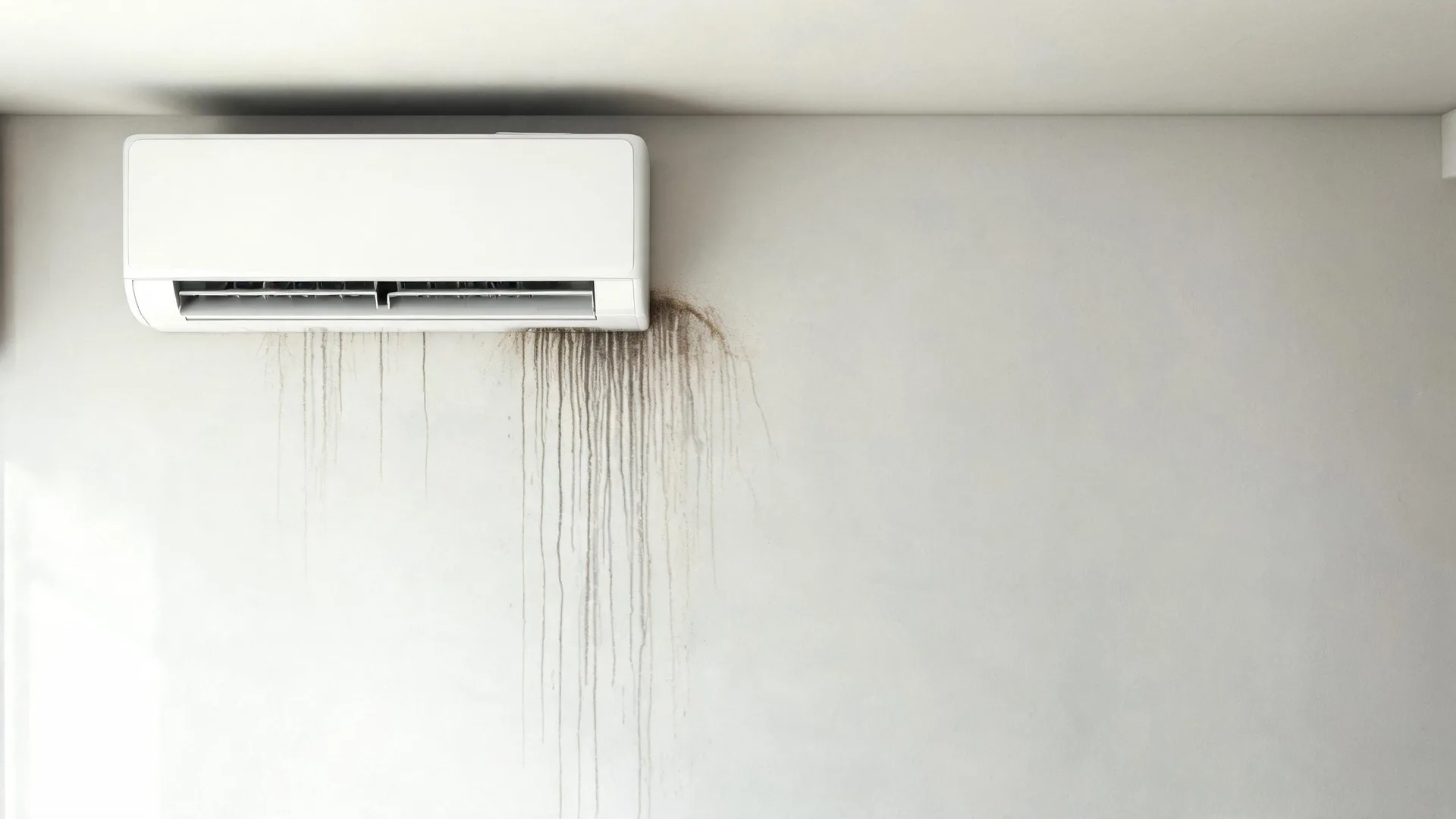
A full replacement is a different job

If the old system is actually failing and the mini split is meant to replace it outright, the old equipment comes out. That means the indoor unit, the outdoor unit, and any ductwork that served only that system. A gas furnace being retired also needs the gas line capped properly, not just disconnected. That's a demolition and disposal step on top of the install itself, and it's worth asking the contractor directly whether it's included or billed separately.

Sizing a mini split means working out how much heat the unit has to move, not how big a room looks. A contractor does this with a load calculation, checking square footage, window area, insulation, ceiling height, and which way the room faces, then weighing all of it against how hard the unit will need to run on the worst day of summer. Skip that step and guess off square footage alone and you'll get the size wrong in one direction or the other. Too big and the unit blasts cold air, hits the set temperature, and shuts off before it's pulled the humidity out of the room, so the air feels cold and damp at the same time. Too small and it runs flat out all day without ever catching up, which wears the compressor down faster and still leaves the room warm. The right size is the one that runs long, steady cycles and finishes the job without strain.

Installation day starts with where the lines run, not where the indoor unit looks best. The refrigerant lines, the drain line and the power wiring all have to get from the outdoor unit to each indoor head, usually through a single hole drilled in the wall where the line set passes through. That hole gets sealed properly when the work is done, inside and out, so water and air don't find their way in later. The outdoor unit goes on a pad or wall bracket, set level and away from anything that blocks airflow around it. Once the lines are connected, the system gets evacuated with a vacuum pump to pull out air and moisture before the refrigerant is ever released into the lines. Skip that step and moisture sits in the system, which shows up later as a compressor problem, not an installation problem anyone can point back to easily.