





Two illuminated adobe-style desert homes at night, surrounded by saguaro cacti and low desert shrubs along a curved driveway.

Mini Split Installation in El Centro, CA

Tell us about the job

Takes about a minute. No obligation.

New system or replacementMini-splitImperial County, CA
Step 1 of 2

What ZIP code is the job in?

Electricity in California runs 31.97 cents per kilowatt-hour, among the highest rates in the country. A mini split earns that cost back through how it works. There's no ductwork losing cooled air along the way, and the compressor adjusts its speed to match the load instead of switching fully on and off. In El Centro, where the system runs hard for months at a time, that difference shows up on every bill, not just a few.

3 months
December through February, your system heats
8 months
March through October, it cools
45°F
the average winter night it heats against
106°F
the average summer afternoon it cools against
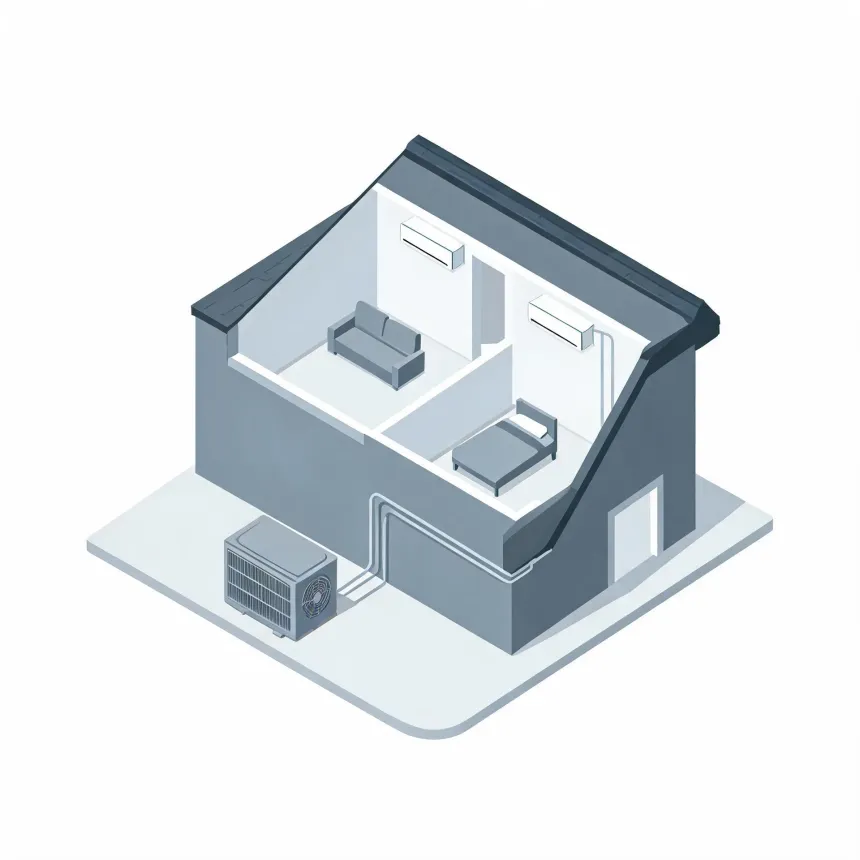
Isometric cutaway illustration of a two-room house showing two wall-mounted indoor air conditioning units connected by line sets to an outdoor condenser unit on the ground outside.
Your system heats December through February and cools March through October.

NOAA nClimDiv, 1991–2020 normals

El Centro runs its cooling eight months, March through October.

A mini split sized wrong has to prove it almost all year, with afternoons averaging 106°F through summer.

Install before March, and it's running right when 106 degree afternoons hit

Cooling runs March through October
Summer afternoons average 106°F
Power costs 31.97 cents a kWh statewide
Most homes here already run on electricity54.5% of homes in Imperial County heat with electricity, more than any other fuel

El Centro falls in climate zone 2B, hot and dry, where cooling carries most of the load. A mini split installed here has to meet the federal minimum for a split-system heat pump, 14.3 SEER2 for cooling and 7.5 HSPF2 for heating. That rule applies whether the system is ducted or ductless. There's no separate, lower bar for mini splits. A federal tax credit is available on equipment that qualifies, on top of meeting that minimum.

Get it installed right, and every bill after shows it

At 31.97 cents a kilowatt-hour, the difference between a system that runs efficiently and one that doesn't shows up on every bill, not once in a while. Get the sizing and the installation right from the start, and that's the version you're paying for.

Find a contractor
A man in a cap, dark T-shirt and tan work pants walks up porch steps toward an orange front door, carrying a canvas tool bag filled with hand tools, with a potted shrub in a terracotta planter at left.
A beige split-system air conditioner outdoor condenser unit mounted on metal wall brackets atop a stucco wall.

Eight months a year leaves no room for a bad guess on sizing

Ask for a load calculation before you sign anything. The number of zones, the size of each head, where the condenser sits, that should come from the square footage and layout of this house. A contractor who skips that step is guessing, and a guess that runs eight months a year doesn't get a chance to even out. Ask to see the calculation itself, not just the equipment list.

How many zones and why that number

Every indoor head should have a reason to be there. A room with different sun exposure, a space kept on its own schedule, a part of the house someone always complains about. Ask the contractor to walk through each zone and explain what it solves. A system with more zones than the house needs costs more to run, and it gives the compressor more places to lose efficiency.
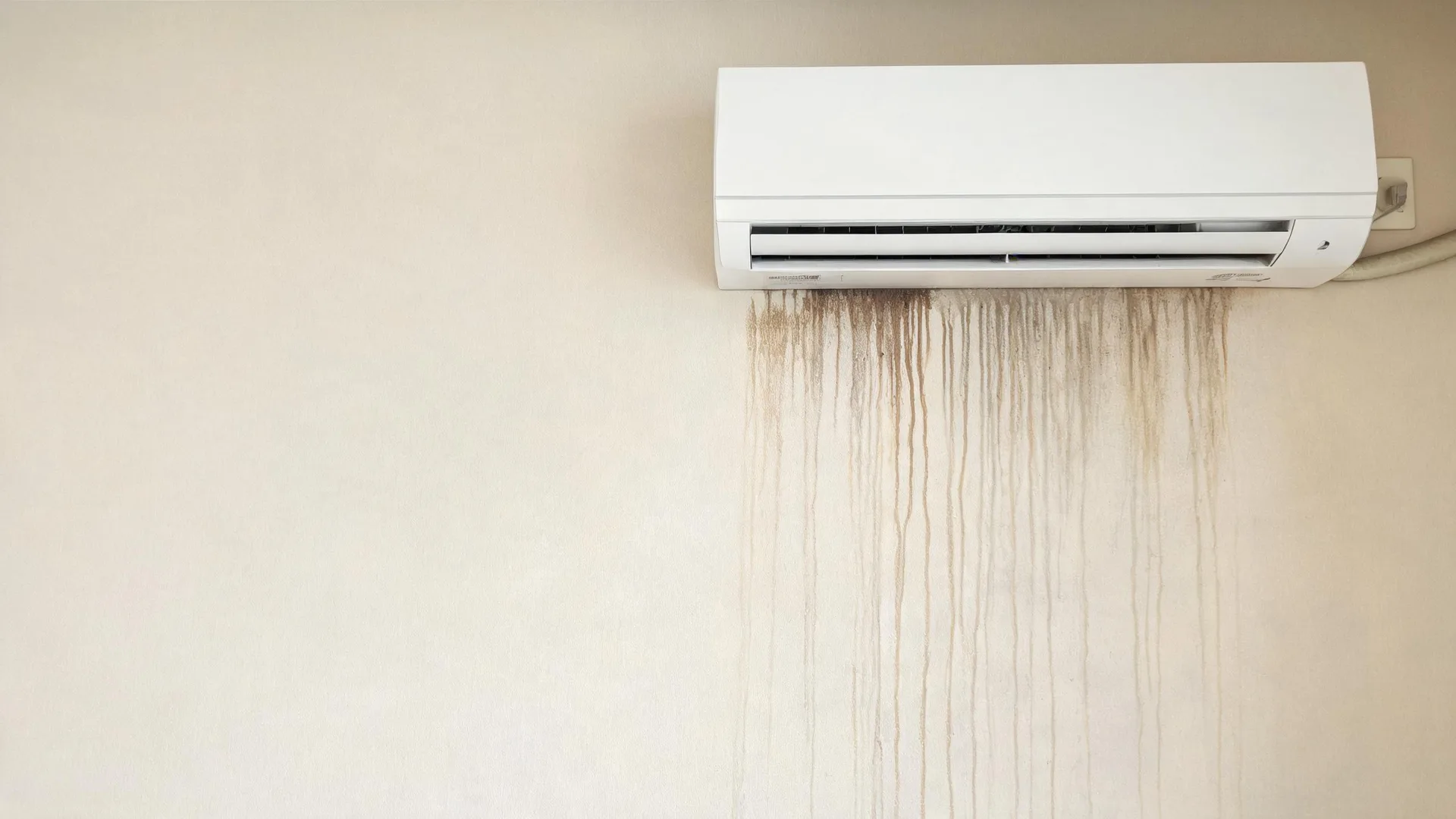
What happens if a head fails

A multi-zone system ties several indoor heads to one outdoor compressor. Ask what happens to the rest of the house if one head needs a repair or a part is backordered. On some systems the other zones keep running fine. On others the whole line set has to be depressurized for work on a single head, and that takes down heating or cooling everywhere until it's fixed.

What drives the cost of a mini split install is mostly what happens before the equipment shows up. The line set has to run from each indoor head to the outdoor condenser, through a wall or up through a chase, and the distance and the path matter more than the brand of equipment. A straight run through one wall costs less to install than one that has to be hidden through a closet and up into an attic. The electrical side matters too. A condenser needs its own circuit, and if the panel doesn't have room for one, that's a separate job before the mini split goes in at all. Where the contractor hangs the condenser counts as well. It needs clearance for airflow and a solid, level pad or mounting bracket, and a spot that's hard to get to costs more labor than one that isn't.

Installation starts outside, not with the equipment. The contractor runs the line set first, the refrigerant lines and the electrical whip that connect each indoor head to the outdoor condenser, following whatever path was planned for it through a wall or up a chase. Each indoor head gets mounted to a bracket on the wall or ceiling, and the line set connects to it before anything gets sealed up. Once every head and the condenser are connected, the lines get pressure tested to check for leaks, then vacuumed down to pull out air and moisture before refrigerant ever enters the system. Only after that does the system get charged and powered on. The last step is commissioning, running each zone separately to confirm it heats and cools, and checking that the condenser cycles the way it should under load.