Weather here does damage
Madera County logged 282 severe weather events between 2015 and 2024, including 88 damaging wind events, 185 winter storms, 6 hail events and 3 tornadoes. An outdoor condenser sits outside through all of it.
Takes about a minute. No obligation.
Madera County logged 282 severe weather events between 2015 and 2024, including 88 damaging wind events, 185 winter storms, 6 hail events and 3 tornadoes. An outdoor condenser sits outside through all of it.
17% of California households went at least 24 hours without power in 2024. A mini-split that heats and cools your home stops doing either until power comes back, so a long outage isn't a minor inconvenience here.
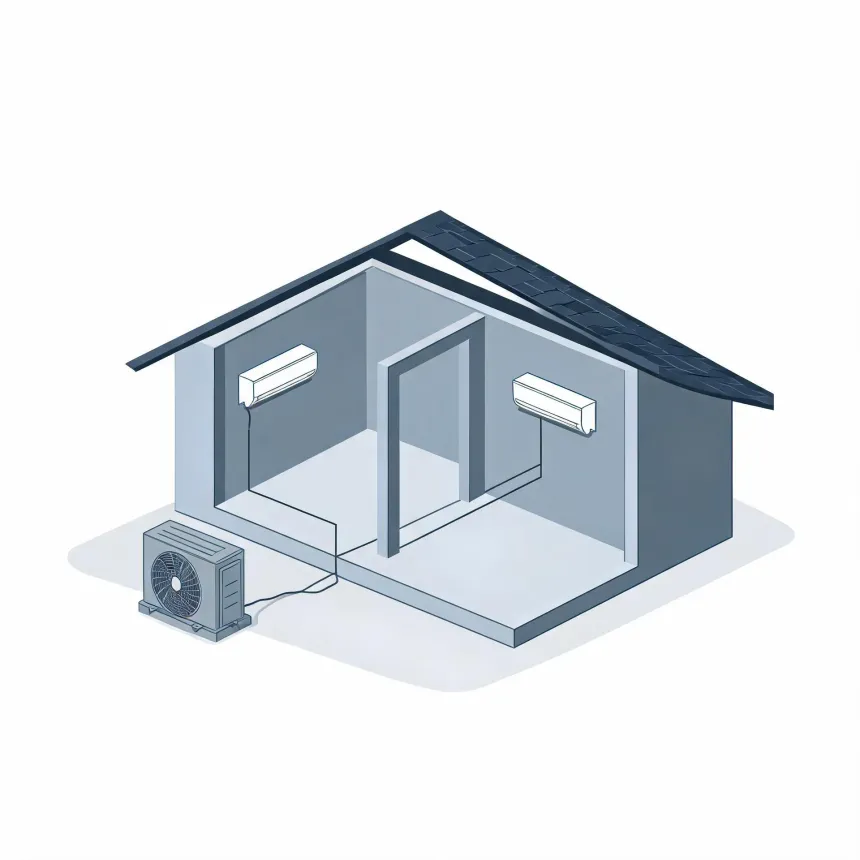
NOAA nClimDiv, 1991–2020 normals
June starts cooling season here, and May is the month before it.
Get the mini-split installed in May and it's running before the first hot day, not after.



Madera County sits in climate zone 3B, warm with a long cooling season and a dry, mild winter. Any mini-split put in here has to meet the federal split-system heat pump minimums: units built from January 1, 2023 onward must deliver at least 14.3 Btu of cooling for every watt-hour they draw over the summer, and at least 7.5 Btu of heat for every watt-hour over the winter. That standard applies whether the system is ducted or ductless, so there's no separate, looser bar for a mini-split to clear. A system meeting the minimum is legal to install, but it's the floor, not a target. Some mini-splits rated well above it exist, and in a zone that cools most of the year, the difference shows up on the power bill. A federal tax credit is available for qualifying high-efficiency equipment, worth checking before deciding which unit to put in.
Talk to the installer about where the outdoor unit will sit and what will shield it from wind and hail. Ask what happens to heat and hot water if the power goes down for a day, and what backup options exist for this system. Settling that now, as part of the install, is easier than figuring it out mid-outage.
Find a contractor
A mini-split has no off season once it's in. The compressor cycles on hot afternoons and cold mornings alike, since the same unit is doing both jobs now. More running hours means the parts that wear, the compressor, the fan motors, the reversing valve, all see more cycles over the system's life than a unit that only ran half the year. None of that argues against installing one. It argues for installing it right. A line set brazed clean, a charge weighed in to the manufacturer's spec, a condenser mounted where it can actually shed heat instead of fighting its own exhaust. Skip any of that at install and the system makes up for it every single day it runs, not just once.
A mini-split price should cover the line set, the mounting bracket, the disconnect box and the pad or wall mount for the outdoor unit, not just the two boxes with the manufacturer's name on them. Some quotes leave out the electrical work needed to run a dedicated circuit, and that gets added later as a surprise. Ask what's in the number before comparing two numbers.
Two installers can look at the same room and come back with different sized systems. The right way is a load calculation that accounts for the square footage, the windows, the insulation and the ceiling height, not a guess based on tonnage per square foot. A unit sized too big cycles on and off instead of running steady, and short cycling wears the compressor faster than steady running does. A unit sized too small never catches up on the hottest or coldest days.
Put the efficiency question to the installer before you sign, not after. Ask for the SEER2 and HSPF2 numbers on each unit they quote, side by side with the price. At 38.41 cents per kilowatt-hour, the gap between a unit that clears the minimum and one rated well above it shows up on every bill this system touches, summer and winter both. Check which models on the quote qualify for the federal tax credit too, since that can offset the higher sticker price of the better unit. Decide on the rating with the same care as the brand or the size.
Ask the installer for the efficiency rating of each unit on the quote, not just the price. A higher SEER2 and HSPF2 number costs more up front and draws less power for the same cooling or heating, and power here isn't cheap. Check that number against the federal tax credit mentioned above, since qualifying equipment can close some of that gap. The unit runs on both sides of the year here, cooling through summer and backing up the furnace in winter, so a higher rating keeps paying off on every cycle, not just the hot ones.