





A white wall-mounted split air conditioner on a blue-grey wall, with a moonlit night sky visible through a nearby window.

Mini Split Installation in Merced, CA

Tell us about the job

Takes about a minute. No obligation.

New system or replacementMini-splitMerced County, CA
Step 1 of 2

What ZIP code is the job in?

Electricity in California ran 31.97 cents per kilowatthour in 2024, among the highest rates in the country. A mini split that's pulling less wattage to move the same heat matters more here than it would somewhere with cheap power. Merced sees enough hot stretches that the system will run plenty, so every point of efficiency shows up on the bill month after month. A unit sized and installed right for the space earns back the difference in a way that's hard to see upfront but easy to see over a year.

6 months
November through April, your system heats
5 months
May through September, it cools
40°F
the average winter night it heats against
92°F
the average summer afternoon it cools against
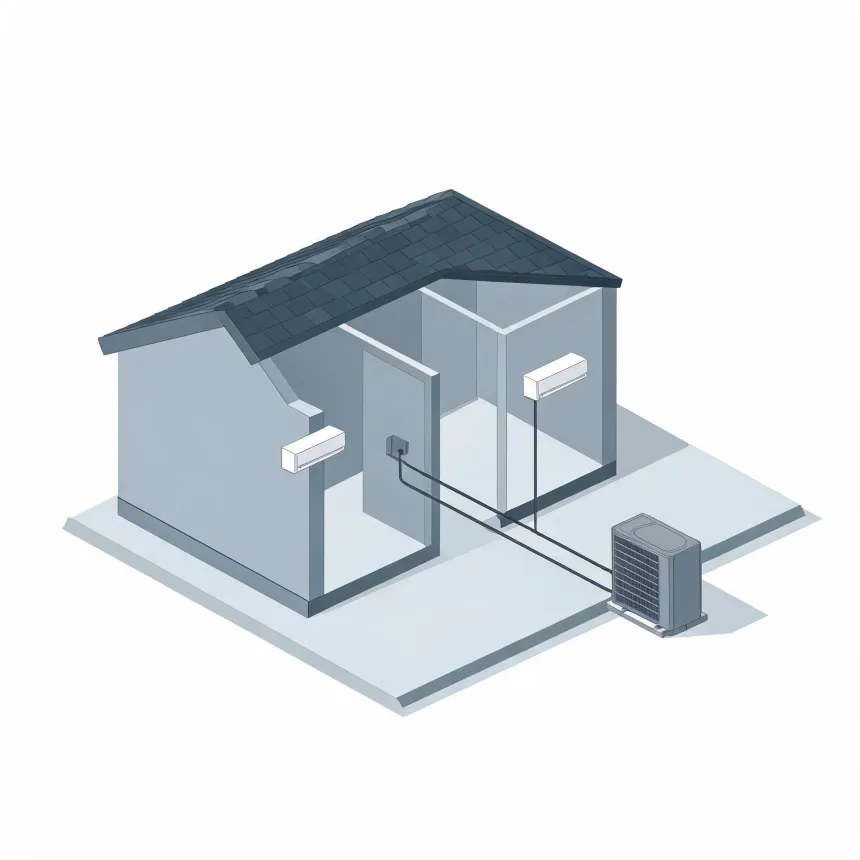
Isometric illustration of a cutaway gray house with a dark shingled roof, showing two wall-mounted indoor air handlers connected by line sets to an outdoor condenser unit on a pad outside.
Your system heats November through April and cools May through September.

NOAA nClimDiv, 1991–2020 normals

The size of the job depends on how many rooms need their own head and how far the line sets have to run.

More zones and longer runs mean more line set, more mounting work, and a bigger outdoor unit to drive them all.

Most homes here run on gas, so a mini split is doing a different job

61.5% of homes heat with gas
Cooling runs May through September
Summer afternoons average 92°F
Get it in before MayCooling starts in May and runs about five months, through September.

Ask what SEER2 and HSPF2 numbers the quoted system carries, and ask them against each other on the same terms, since a higher efficiency head costs more up front but pulls less power every time it cycles on. Ask how many heads the outdoor unit is rated to run at once, because some condensers lose capacity when every zone calls for heat or cooling at the same time. Ask where the outdoor unit will sit and how long the line set run is, since a longer run between indoor and outdoor units can affect how well the system performs. Ask what happens below freezing, because not every mini split holds its heating capacity once outdoor temperatures drop, and a unit that struggles there will lean on backup heat more than you expect. Ask who sizes the system and how, since a head that's too big for its room will short cycle, and one that's too small will run constantly without keeping up.

A mini split sized right pays you back on every bill in Merced

At 31.97 cents a kilowatt-hour, every watt this system draws costs more here than almost anywhere else in the country. When you're comparing quotes, put the SEER2 and HSPF2 numbers side by side and weigh the higher price against what it pulls on the months it runs. Get the sizing and the install right and that efficiency is working for you on every bill, not just the first one.

Find a contractor
A man in a dark jacket and brown work pants, seen from behind, climbs wooden porch steps toward an orange door while carrying a canvas tool bag, with a potted shrub in a terracotta urn to the right.
A white outdoor air conditioner condenser unit mounted on metal wall brackets against gray horizontal siding, with a blue sky and white clouds behind it.

Five months of afternoons near 92°F

Five months of real heat is what this system is up against. June through August here averages 92°F in the afternoon, and the unit has to hit that every day it runs. A mini split sized right for the room handles that load without strain. One sized wrong is either short cycling or running flat out trying to catch up, and both wear on the compressor faster than a season of normal use should.

Sizing comes from a load calculation, not the size of the old system

A contractor works out heat gain and loss room by room, looking at window area, insulation, ceiling height and what direction the room faces. Matching a new head to whatever was there before skips that math, and any mistake the first install made just carries over to the new one.
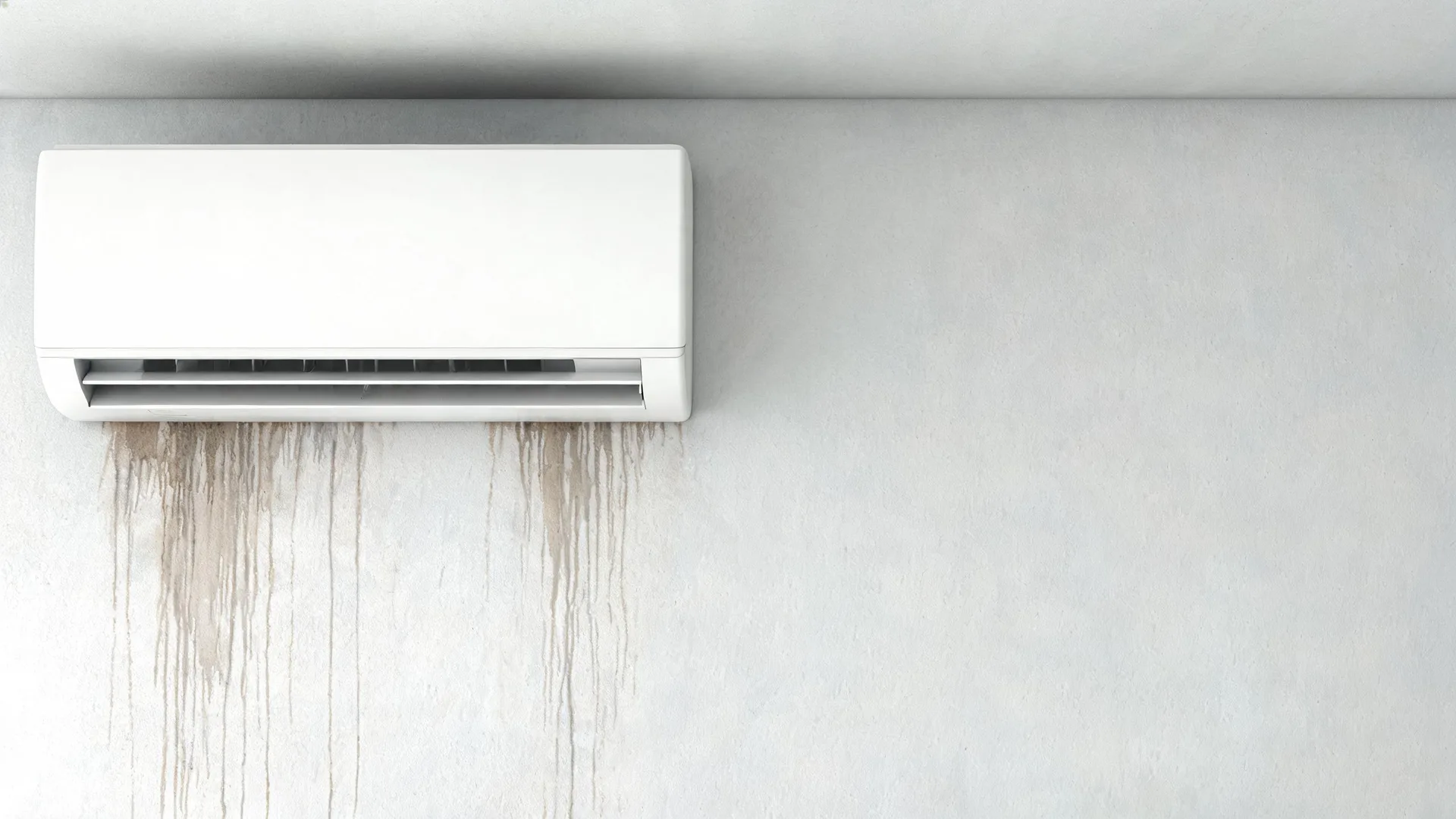
Wrong in either direction, the head fights the room

Too big and it cools the room fast, shuts off, then kicks back on again and again, never running long enough to settle the humidity or hold a steady temperature. Too small and it runs flat out on the hottest afternoons without ever catching up. Both patterns put more cycles on the compressor than a correctly sized unit sees in the same stretch of weather.

If the old system is central air, the install crew disconnects the indoor coil and the outdoor condenser and hauls both away, along with the line set running between them. That refrigerant gets recovered first, not vented, since releasing it is against the law and the gas itself is bad for the atmosphere. Ductwork is a separate question. A mini split doesn't need it, so any existing ducts either stay in place doing nothing or get sealed off at the registers if the whole house is moving to mini splits. If the old system was window units or electric baseboard, there's less to remove, mostly just disconnecting wiring and patching whatever hole or bracket is left behind. Ask the contractor what happens to the refrigerant and where the old equipment ends up, since scrap haulers and proper disposal aren't the same thing.

Install day starts with the outdoor unit placement, and that gets settled before anything else moves forward. The crew mounts a bracket for each indoor head, usually high on a wall, and runs a line set through a small hole drilled to the outside. That line set carries refrigerant lines, a condensate drain and electrical wiring together, wrapped and sealed where it passes through the wall. Once the heads are mounted and the outdoor unit is set on its pad or brackets, the lines get connected and the system is evacuated to pull out moisture and air before refrigerant ever moves through it. Skipping that step is the kind of shortcut that doesn't show up as a problem the first week, only months in, when oil breaks down or a line develops a leak at the fitting. After charging, the crew checks each head for airflow and temperature, confirms the condensate drains properly, and walks the system through its settings before handing it over.