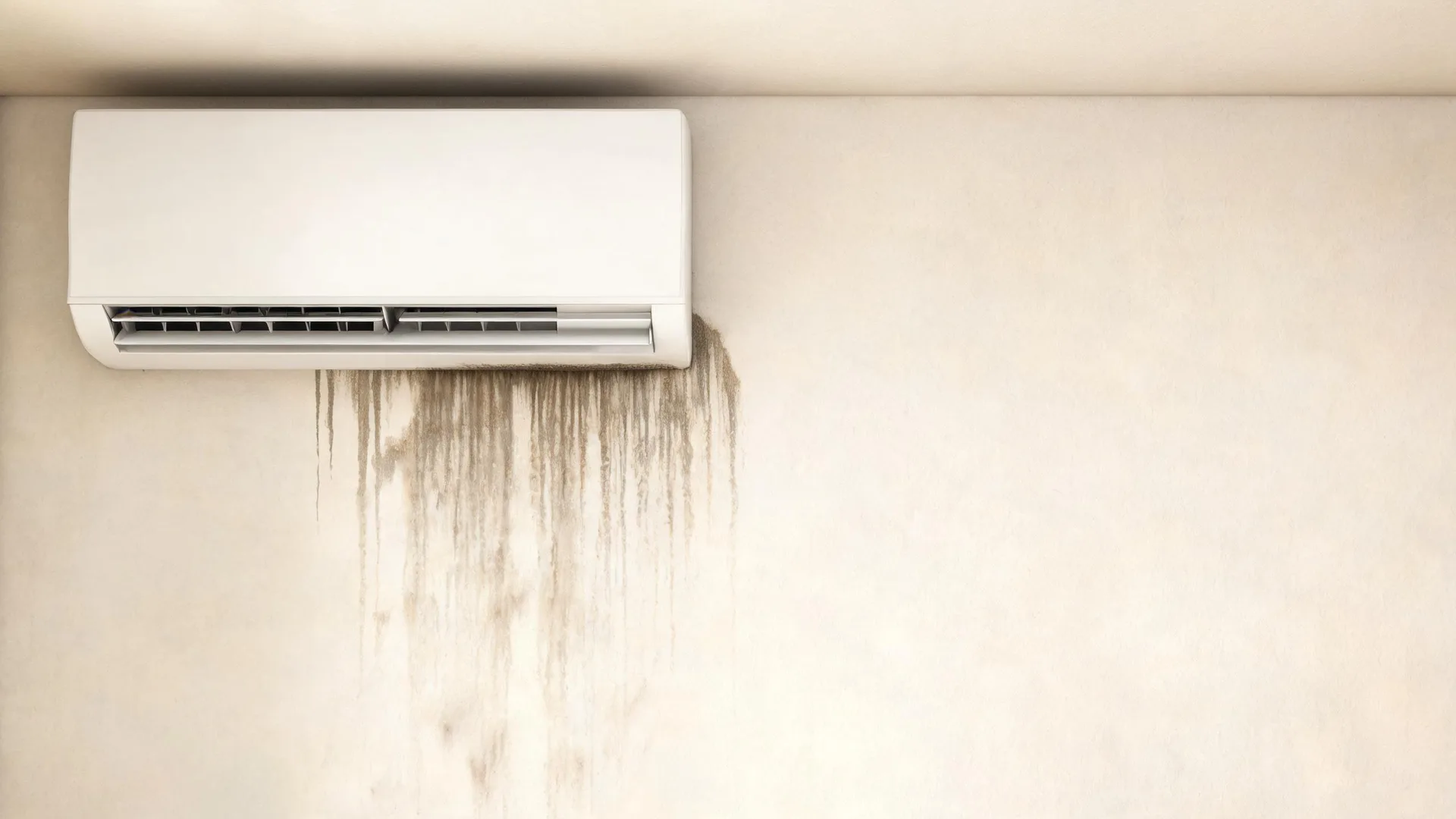
Electricity here runs 38.55 cents a kilowatt-hour
That is higher than in most US counties. A mini-split pulls power every time it cycles on, and at that rate every hour it runs costs more here than it would almost anywhere else.

Takes about a minute. No obligation.
That is higher than in most US counties. A mini-split pulls power every time it cycles on, and at that rate every hour it runs costs more here than it would almost anywhere else.
A mini-split in Napa doesn't rack up long runtimes the way it would in a muggier place. But a unit that runs poorly still costs more here for every hour it does run, since the power behind it is priced higher than most of the country pays.
NOAA nClimDiv, 1991–2020 normals
Gas heats close to two out of three homes in Napa County.
A mini-split here is almost always going in alongside a gas furnace, not replacing the only source of heat in the house.



Napa County falls under zone 3C in the 2021 energy code, a warm zone with a long cooling season. Any mini-split installed here has to meet the federal split-system heat pump minimums: at least 14.3 Btu of cooling for every watt-hour it uses, and at least 7.5 Btu of heat for every watt-hour in the winter. That's not a target to aim for. It's the floor a unit has to clear just to be sold new. Given what power costs here, a system sitting right at that minimum will show it on the bill in a way it might not somewhere with cheaper electricity.
Napa's power rate makes the cooling rating on a mini-split worth checking line by line before anything gets installed. A unit rated well above the federal floor costs less to run every hour it's on, and here, where power is priced higher than most of the country, that difference sits on every bill that follows.
Find a contractor
A mini-split that's too big for the room cycles on, satisfies the thermostat fast, and shuts off again before it's pulled the moisture out of the air. That's why an oversized unit can leave a room feeling clammy even though the temperature reads fine. One that's too small never gets there at all. It runs flat out, the compressor doesn't get a break, and the wear that comes with constant full-speed operation shows up years earlier than it should. Getting the size right starts with a load calculation, a room-by-room count of how much heat moves through the walls, the windows, the roof, and the floor. Square footage alone doesn't answer it. Two rooms the same size can carry completely different loads depending on how many windows face the sun, how high the ceiling runs, and what's on the other side of the walls. A contractor doing this right measures the room, not the house, since a multi-zone system only works if each indoor head is matched to what that specific space needs.
A mini-split carries a cooling rating and a separate heating rating, and they measure the same thing: how much heat it moves for the power it draws. A higher number on either side means the compressor is moving more heat per watt, not working harder to do it. That rating is tested at a fixed condition, so it describes the unit, not the room it ends up in.
Two units can carry the same rating and still run differently once they're on the wall, because the number on the label is measured new, in a lab, with the refrigerant charge exactly right and the line set at a set length. A unit installed with a long line run, a weak charge, or a return duct that's too tight can draw more power than its rating promises, no matter what that label says.
Comparing mini-splits means comparing more than the rating on the box. Ask how many zones the system supports and whether the outdoor unit can actually run them all at once, since some multi-zone condensers lose capacity once more than one or two heads call for heat or cooling at the same time. Ask what refrigerant it uses, since older refrigerants are being phased out and parts availability follows that. Ask about the sound rating on the indoor head, measured in decibels if you want a real comparison, since a unit in a bedroom or a quiet room matters more than one in a hallway. Ask how the warranty is structured, because most manufacturers require a licensed contractor to register the install within a set window or the coverage drops to a shorter default term. Ask what the turndown ratio is, meaning how low the compressor can run at partial load, since a unit that can only run at full blast or off cycles harder and wears faster than one that can ease down and hold steady.
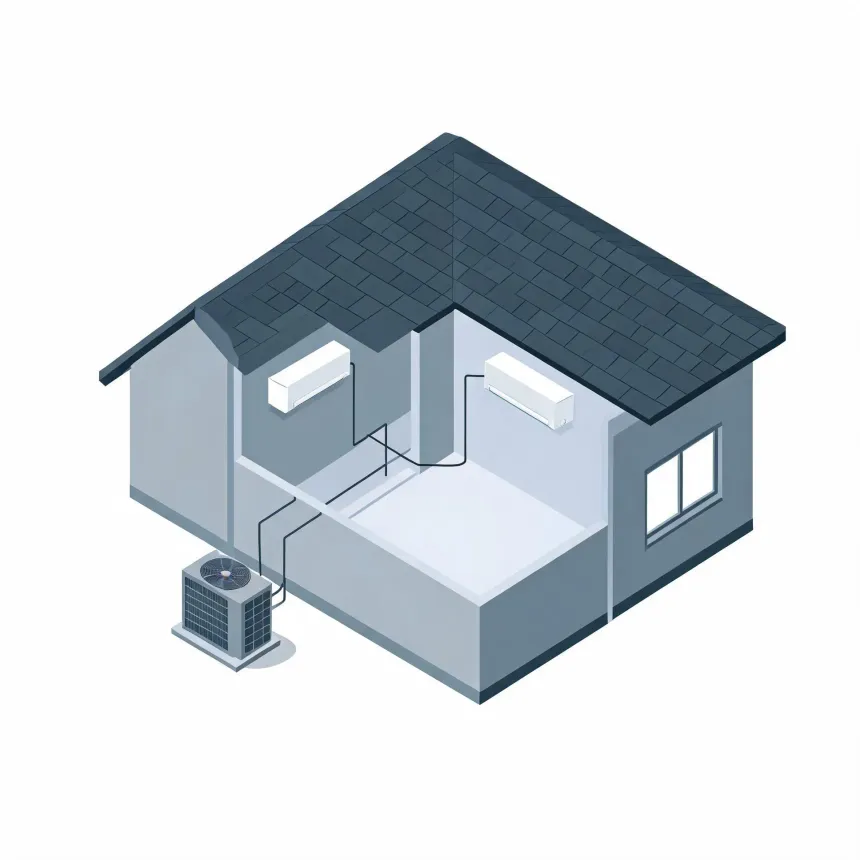
Installation starts with a walkthrough, not a drill. The contractor confirms where each indoor head is going, where the outdoor unit will sit, and the path the line set and drain line will take between them, since that path usually means a hole through an exterior wall. The outdoor unit goes on a pad or wall brackets, leveled and set with clearance on all sides so it can pull air through the coil. Once both units are mounted, the line set gets connected, the system is pulled down to a vacuum to clear out air and moisture, and only then does the refrigerant charge go in. A contractor doing this right checks the charge against what the line length calls for rather than just filling it to a gauge reading. After that comes power, a test cycle in both cooling and heat if the unit does both, and a check that each head is responding to its own controller. The whole job is mechanical and electrical work, not carpentry, so most of the day goes to the connections nobody sees once the covers go back on.