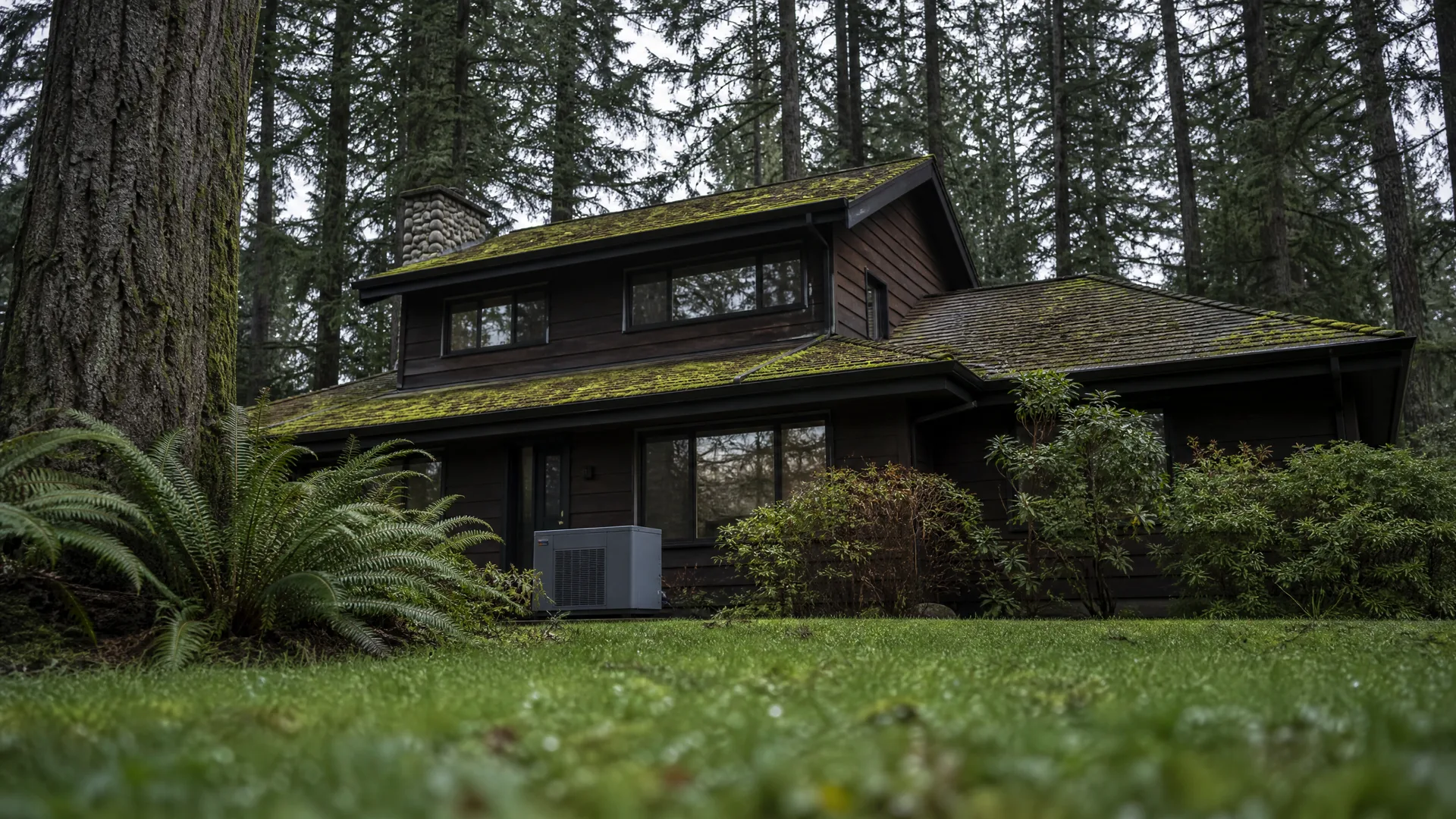





A two-story dark wood-sided house with a moss-covered roof and brick chimney stands among tall conifers, with ferns, shrubs, a grass lawn in the foreground, and an outdoor heat pump unit beside the house.

Mini Split Installation in Redding, CA

Tell us about the job

Takes about a minute. No obligation.

New system or replacementMini-splitShasta County, CA
Step 1 of 2

What ZIP code is the job in?

Electricity in Shasta County averaged 27.67 cents per kilowatt-hour in 2025, among the highest rates in the country. A mini-split that wastes power shows that waste on every bill it touches. Here the cost isn't spread across a long season of steady running, since this unit won't run as many hours as it would somewhere milder. It shows up hour by hour, every time the compressor cycles on. That makes how well the unit runs, not just how often, the number worth paying attention to.

8 months
October through May, your system heats
4 months
June through September, it cools
32°F
the average winter night it heats against
88°F
the average summer afternoon it cools against
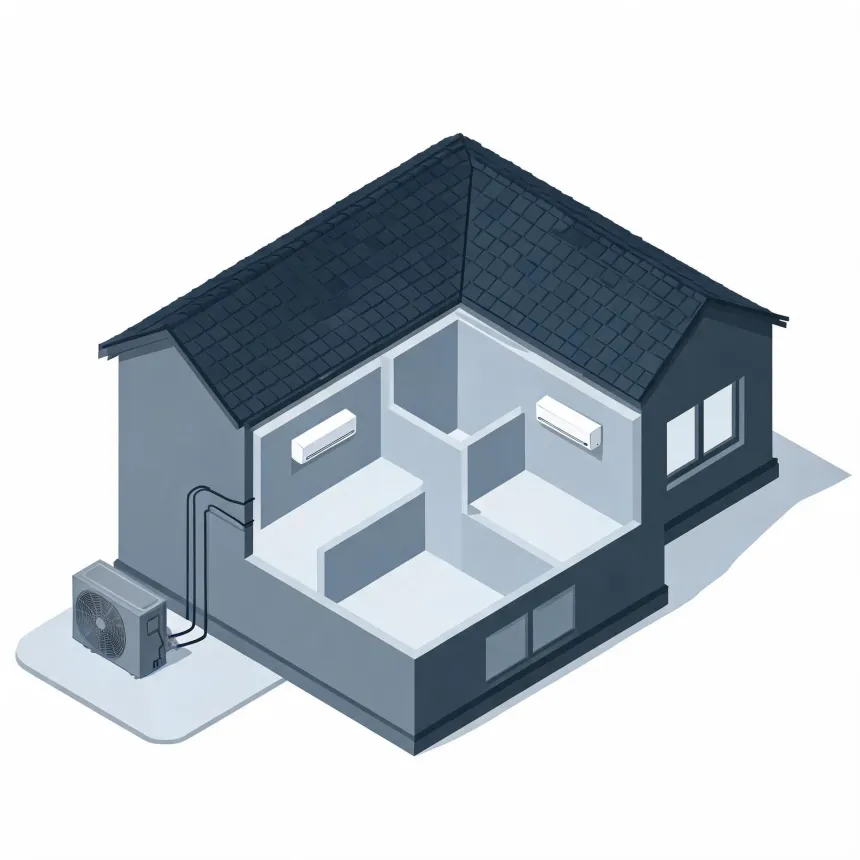
Isometric illustration of a cutaway single-story house with a dark shingled roof, showing two wall-mounted indoor air conditioning units connected by lines to an outdoor condenser unit on a pad beside the building.
Your system heats October through May and cools June through September.

NOAA nClimDiv, 1991–2020 normals

Most homes in Shasta County heat with gas.

A mini-split here usually adds cooling and backup heat to a gas system, not a full swap.

May is the month to have this done

Cooling runs June through September
Summer afternoons average 88°F
51 damaging wind events from 2015 to 2024

Redding falls under zone 3B in the 2021 energy code, a warm zone with a long cooling season and not much of a winter to speak of. Any mini-split sold new here has to meet the federal minimum for that kind of equipment. Since January 2023, a split-system heat pump has to remove at least 14.3 Btu of heat per watt-hour it uses in summer, and deliver at least 7.5 Btu per watt-hour in winter. Those numbers are the floor, not a target, so the units on the market already clear them. A system sized and installed to actually hit those ratings in this climate is the one that keeps the high summer bill from going higher.

Check the efficiency rating before you buy

Ask about the efficiency rating before you pick a system, not after. Two units can carry the same price tag and cost different amounts to run every month they're on. With power priced the way it is here, that difference is the one worth checking.

Find a contractor
A man in a cap, dark shirt and tan work pants, seen from behind, carries a worn canvas tool bag up porch steps toward an orange front door, with a potted shrub beside the entry.
A white mini-split air conditioner outdoor condenser unit mounted on metal brackets against a beige stucco exterior wall, with a blue sky and scattered clouds in the background.

Four months of work a year

Cooling runs June through September here, about four months. That is a short stretch next to places where the compressor runs most of the year. The afternoon average in those months is 88°F, warm enough, but the dew point sits at 42°F, lower than most of the country sees. A mini-split spends more effort wringing moisture out of heavy air than it does cooling dry air down, so this one has an easier time of it both ways, fewer months and lighter air. A system that only works hard for part of the year holds up well if it was installed right. When one does fail, the usual reason is age or a filter nobody changed, not years of strain.

Sizing is a calculation, not a guess from square footage

A contractor works out the right size with a room by room load calculation, factoring in window area, insulation, ceiling height and which way the walls face. Two houses of the same size can need different size units. Skip the calculation and you're just guessing.
The wrong size runs up a bill either way

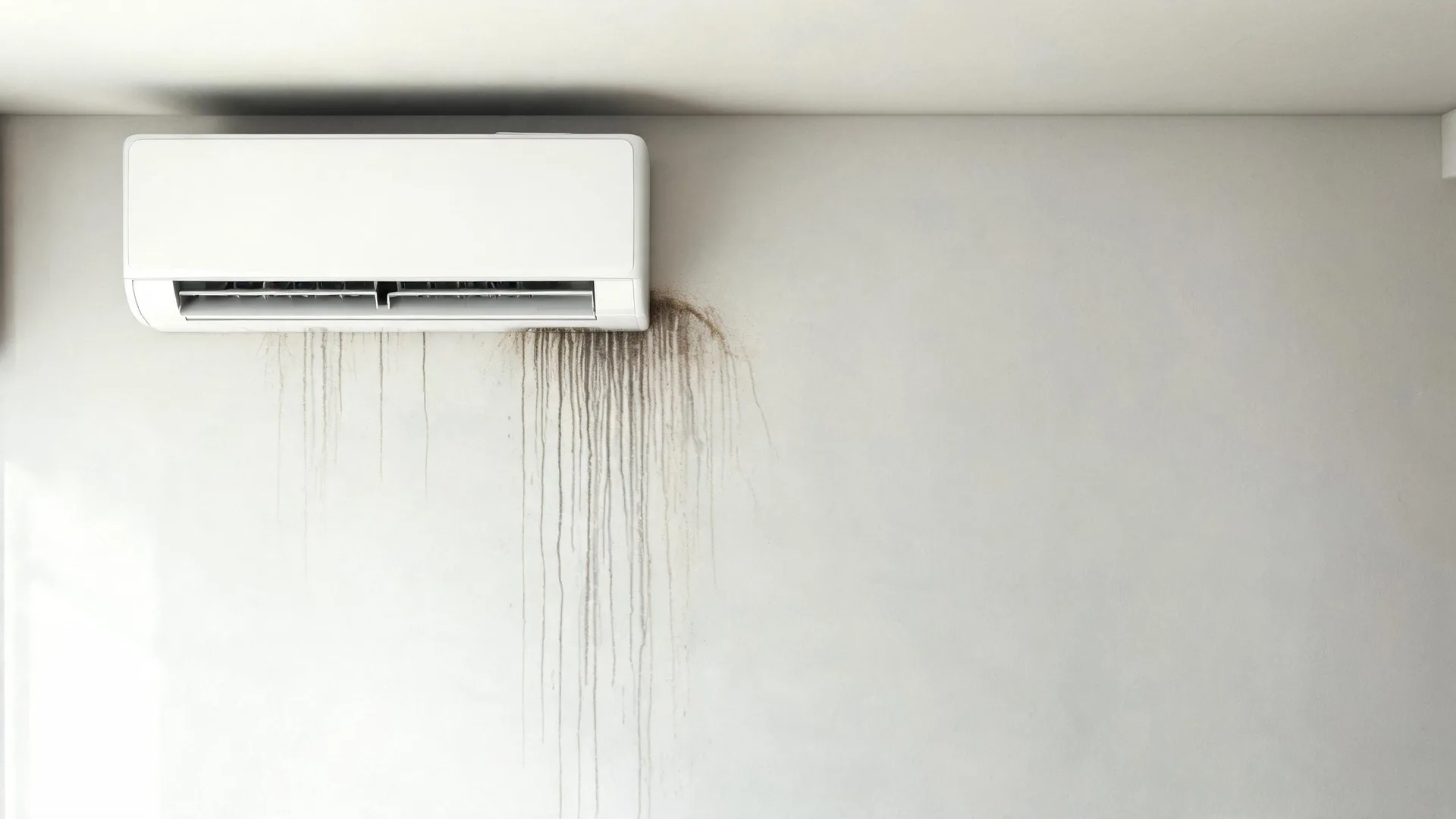
A unit too big cools the room fast, shuts off, then starts again a few minutes later, never running long enough to pull the moisture out of the air. One too small runs flat out trying to reach the temperature on the thermostat and never quite gets there. Both waste power. The right size runs in long, steady stretches, which is how these units hit their rated efficiency.

A few questions tell you more than any brochure. Ask what the unit's rated output is at low outdoor temperatures, not just at a mild setpoint, since that's what tells you how it performs on a cold morning rather than in a lab. Ask whether the compressor is a variable speed type or a single stage unit. A variable speed compressor adjusts its output to match the room, which is quieter and steadier than a unit that only knows on and off. Ask how many zones the outdoor unit can run and whether adding one later is possible, since not every condenser has room for it. Ask what the warranty covers on the compressor specifically, not just the whole system, because that part is the expensive one to replace. And ask who's doing the load calculation. If a contractor quotes a size without measuring the rooms, get a second quote.

Shasta County sees a lot of severe weather, 209 events between 2015 and 2024. Most of that was winter storms, 147 of them, with damaging wind another 51 times and hail recorded 9 times. An outdoor mini-split unit sits outside through all of it, so where it goes matters. A spot clear of falling branches and whatever slides off the roofline is worth more than a spot that's just convenient to reach. Statewide, 17% of households went at least a day without power in 2024, and a mini-split won't run through that any more than a gas furnace's blower will. If keeping some heat or hot water going during an outage matters to you, raise it with the contractor before the install, not after the power's already out.