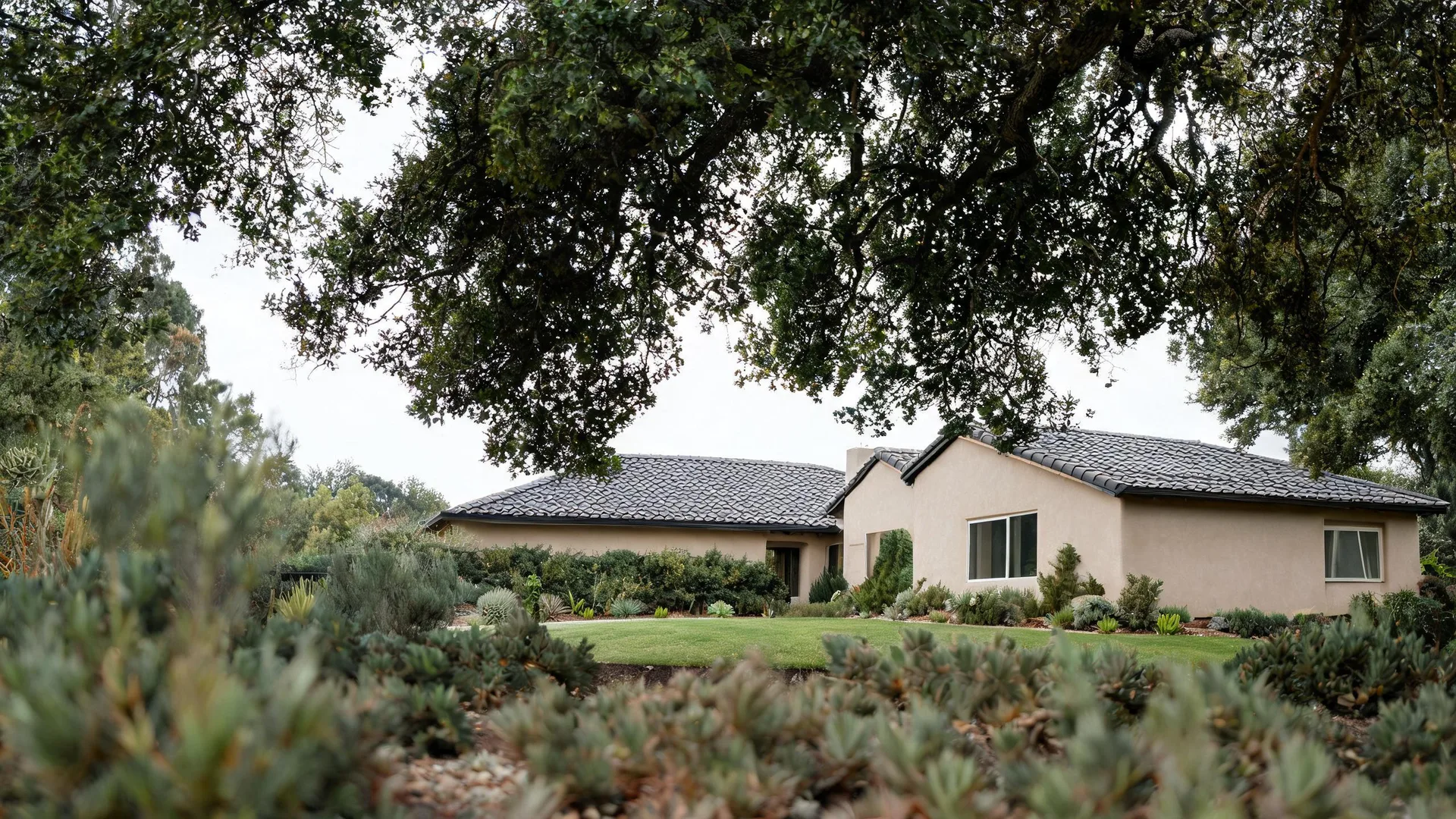





A single-story stucco house with a gray tile roof behind a lawn, framed by large oak branches overhead and succulent and shrub plantings in the foreground.

Mini Split Installation in Roseville, CA

Tell us about the job

Takes about a minute. No obligation.

New system or replacementMini-splitPlacer County, CA
Step 1 of 2

What ZIP code is the job in?

A mini split sized wrong fails you either way. Too big and it cools the room fast, shuts off, then kicks back on a few minutes later. That short cycling means the system never runs long enough to pull moisture out of the air, so the room feels cool but clammy. Too small and it runs constantly, straining to keep up on the hottest or coldest days, and the compressor wears faster for it. Getting it right means a contractor works out the heat load for the specific room or zone, looking at window area, insulation, ceiling height, and what's on the other side of the walls, not just square footage. A room with a lot of west-facing glass needs more capacity than an interior room the same size. That's why a reliable quote involves someone measuring your space, not just asking its dimensions over the phone.

8 months
October through May, your system heats
2 months
July through August, it cools
32°F
the average winter night it heats against
84°F
the average summer afternoon it cools against
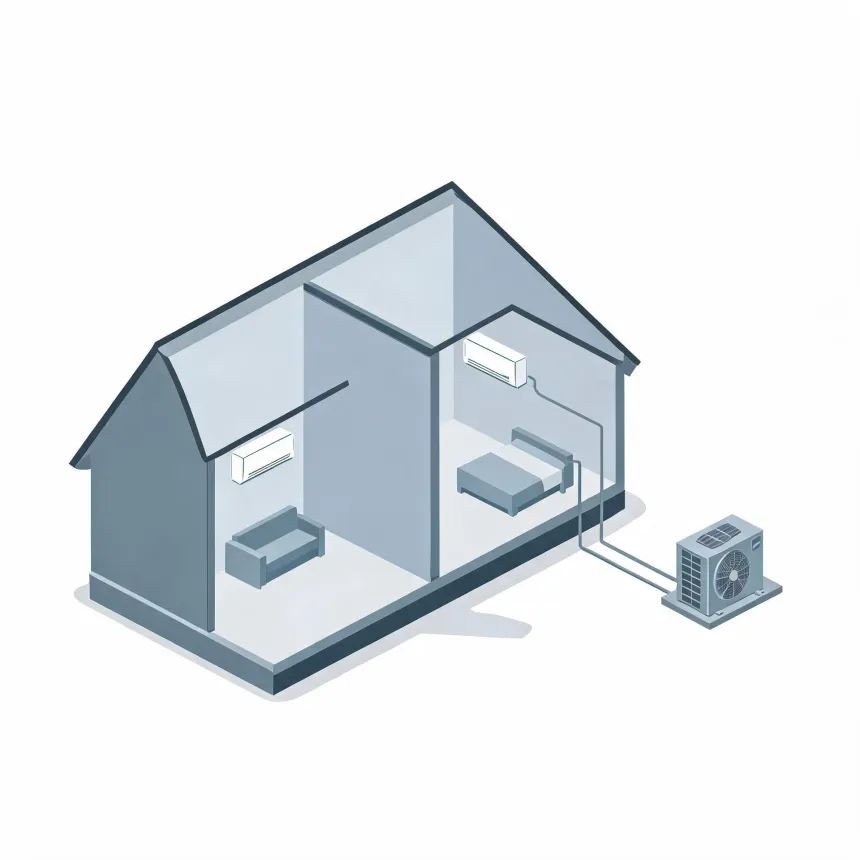
Isometric grey illustration of a cutaway house showing two rooms with wall-mounted indoor air conditioning units connected by lines to an outdoor condenser unit beside the building.
Your system heats October through May and cools July through August.

NOAA nClimDiv, 1991–2020 normals

Gas heats 61.2% of homes in Placer County, more than electric and propane combined.

A mini split adds cooling or backs up a gas furnace. It doesn't have to replace it.

Two months of real work a year

Cooling runs July through August
Summer afternoons average 84°F
223 damaging wind events from 2015 to 2024
Power here isn't cheapCalifornia electricity ran 31.97 cents per kilowatt-hour in 2024

Placer County sits in zone 3B, a warm zone with a long stretch of cooling and a short mild winter. Any mini split installed here has to meet the federal minimum for split-system heat pumps built from 2023 on. That's 14.3 SEER2 for cooling and 7.5 HSPF2 for heating. The standard makes no exception for ductless systems, so a mini split clears the same bar as any other split-system heat pump. A system meeting that minimum also qualifies for the federal tax credit available on qualifying heat pumps.

Have it ready before July

Cooling here runs two months a year, July through August. Get the mini split installed in June and it's running the day you need it, not the day a contractor can fit you in.

Find a contractor
A white mini-split air conditioner outdoor condenser unit mounted on metal brackets against a beige stucco exterior wall, with a blue sky and scattered clouds in the background.

A light enough load to spend on the right things

Two months of real work a year, afternoons in the mid-80s. That's not a hard life for a mini split. You don't need to pay for the highest efficiency tier to get through a summer like that, a unit that meets the federal minimum will hold up fine under this kind of load. Where it's worth spending more is the outdoor unit's mounting. Placer County gets damaging wind on a regular basis, and that unit sits outside through all of it, hot stretch or not. Ask the contractor about the bracket and where it's placed, not just the SEER2 number.

How many zones you're conditioning

Each indoor head needs its own line set run and its own spot on the wall or ceiling, and its own place for the outdoor unit to tie into. A single zone is a straightforward run. Add a second or third head off the same outdoor unit and the labor stacks up fast, because each one gets its own refrigerant line and its own electrical and condensate drain work, not a shared one.
What the installer has to work around

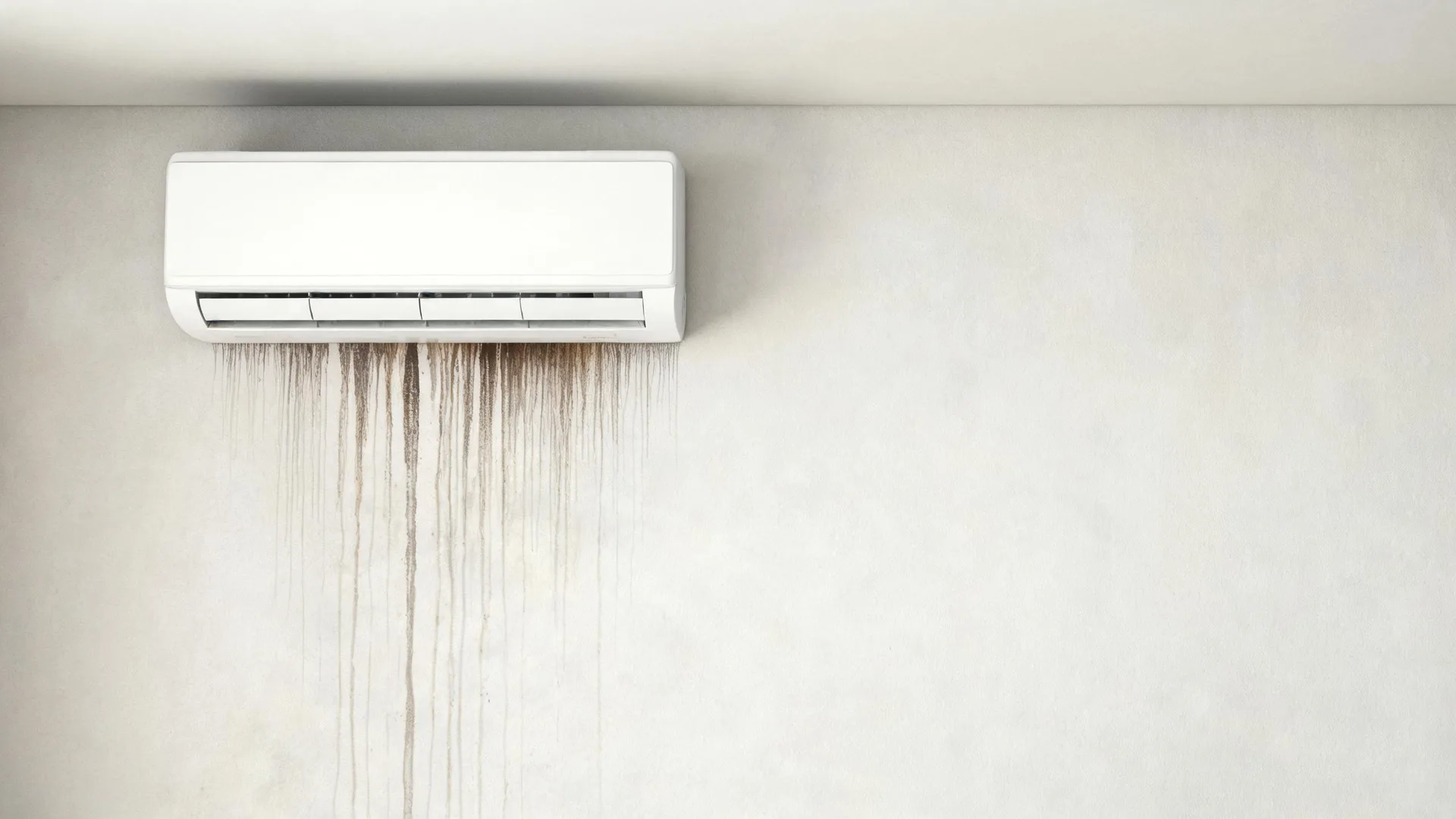
Running a line set through a wall means finding a path that avoids framing, wiring and anything else inside that wall, and sometimes that path is short and sometimes it isn't. Where the outdoor unit can go matters too. A long distance between indoor head and outdoor unit means more line set, more refrigerant, and more time running it cleanly instead of just drilling the shortest hole and going straight through.

If the mini split is adding cooling to a gas furnace setup, the old system isn't going anywhere. The furnace keeps handling heat, the mini split just takes over the cooling load, and both run off their own thermostats. If it's replacing an old central air system, removing the outdoor condenser and the indoor coil is part of the job, along with capping or reusing the refrigerant lines depending on their condition. Old line sets are usually not reused since they're sized for a different system and may have the wrong insulation for a mini split's refrigerant. An old window unit or wall unit just comes out, and the opening gets sealed up properly so it's not leaking air around the edges all summer.

Installation starts with the walk-through, confirming where the contractor already planned the head and the outdoor unit before anyone touches a wall. Then the line set path gets drilled, a hole just big enough for the refrigerant lines, the power cable and the condensate drain to pass through together. The indoor head mounts to a plate on the wall first, then the lines route to the outdoor unit and get connected there. Once everything is joined, the system gets evacuated with a vacuum pump to pull out air and moisture before any refrigerant moves, because trapped moisture in the lines causes problems later that are a lot harder to fix than they are to prevent. Only after that does the contractor open the valves and let refrigerant into the system, then check pressures and temperatures to confirm it's charged right. Expect the crew to test the system running in both directions before they call it done, not just confirm the indoor head turns on.