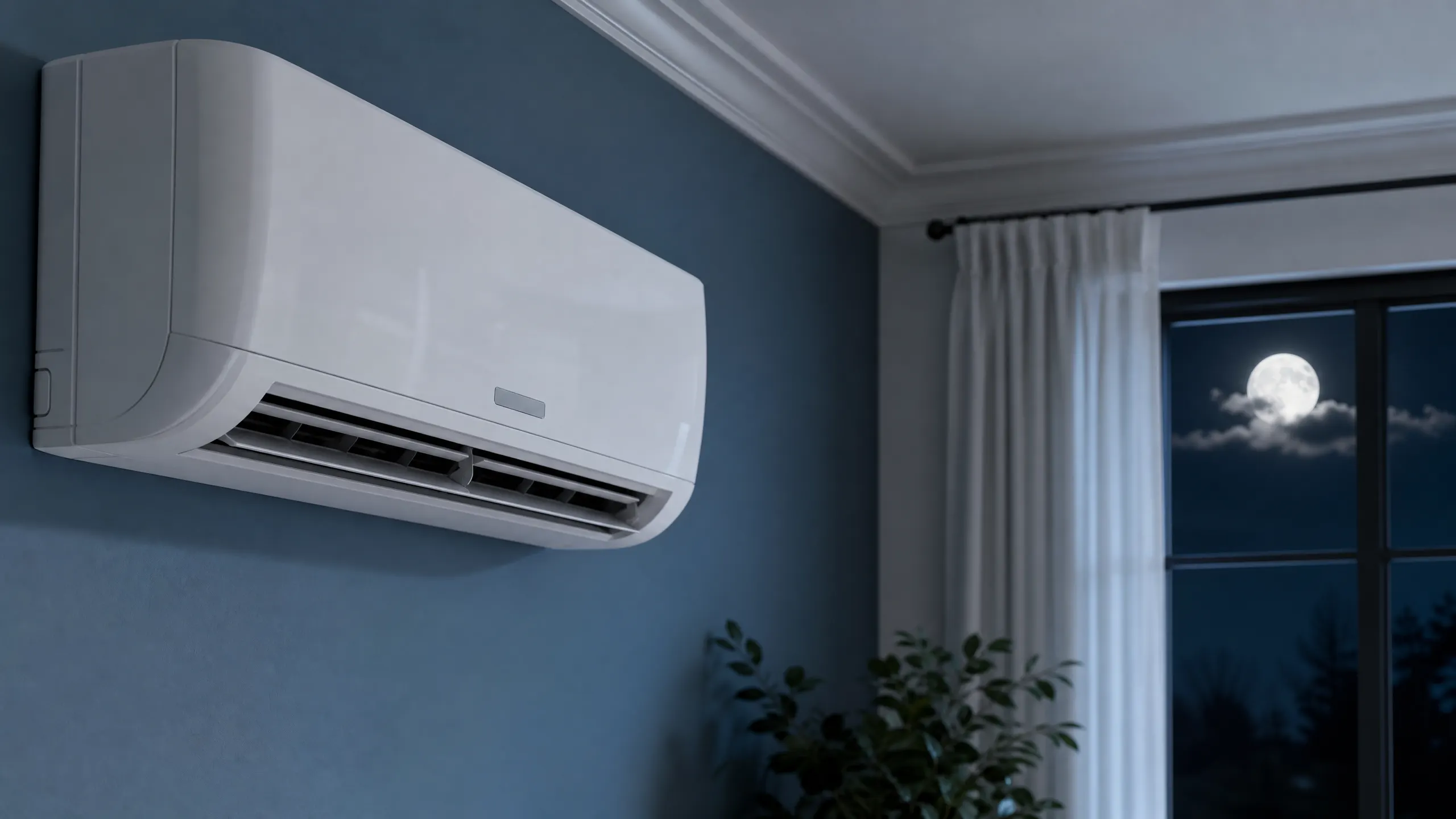





A white wall-mounted split-system air conditioner on a blue-grey wall, with a full moon visible through a curtained window at night.

Mini Split Installation in Sacramento, CA

Tell us about the job

Takes about a minute. No obligation.

New system or replacementMini-splitSacramento County, CA
Step 1 of 2

What ZIP code is the job in?

Electricity in California runs 31.97 cents per kilowatt-hour, among the highest rates in the country. A mini split earns its keep against that number. It moves heat instead of burning fuel or resisting current to make it, so it gets more warmth or cooling out of every kilowatt than a space heater or a window unit. That difference shows up on every bill, not just the first one. Sizing it right for the room it serves matters more here than in a state where power is cheap, because an oversized or undersized unit wastes money every month it runs.

6 months
November through April, your system heats
5 months
May through September, it cools
40°F
the average winter night it heats against
92°F
the average summer afternoon it cools against
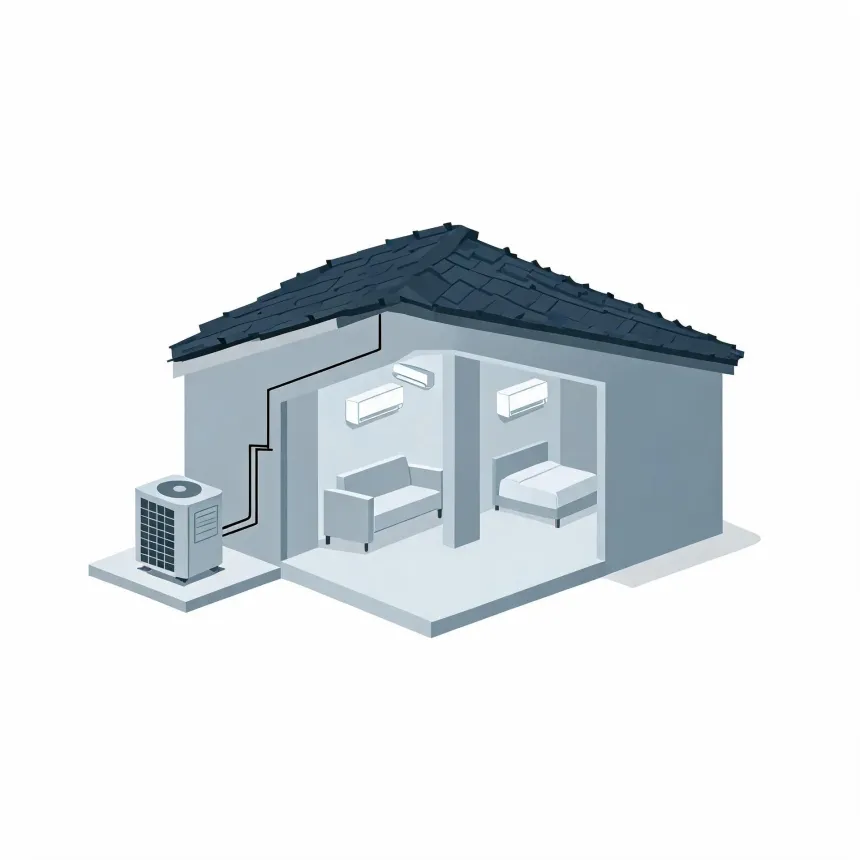
Isometric illustration of a cutaway single-story house with a dark shingled roof, showing three wall-mounted indoor air conditioning units in two rooms connected by lines to an outdoor condenser unit on a pad outside.
Your system heats November through April and cools May through September.

NOAA nClimDiv, 1991–2020 normals

Utility gas heats 56.9% of homes in Sacramento County.

A mini split works alongside that gas furnace, or replaces it in the one room gas doesn't reach well.

May is when the cooling starts, so install before it

Cooling runs May through September
Summer afternoons average 92°F
Power costs 31.97 cents a kWh statewide

Ask the contractor to size the unit to the room before anything gets installed. That means a load calculation, not a guess based on square footage alone. A mini split sized right for the space will hold its temperature without cycling on and off all day. One sized wrong will run longer than it should, or shut off before the room actually feels right, and either way you pay for it on a 31.97 cent rate. This is the one step in the job worth asking about directly.

A mini split here runs hard from May through September

Five months of cooling a year, with afternoons averaging 92 in June, July and August. That is the load a mini split here answers to, season after season. A unit sized right for the room will hold up under that.

Find a contractor
A man in a dark shirt and tan work pants carries a waxed canvas bag up wooden porch steps toward an orange front door, with a potted shrub to the right.
A white mini-split air conditioner outdoor condenser unit mounted on metal brackets against a beige stucco exterior wall, with a blue sky and scattered clouds in the background.

Five months of this a year, starting now

A mini split installed this spring will hit that kind of afternoon within its first few weeks on the job. There's no easing into the season here. Ask what size unit the room calls for, and don't let anyone round up or down from a square footage chart. A unit matched to the room handles a 92 degree afternoon without strain. One that's oversized or undersized is working against that heat from day one.

The old system doesn't have to go anywhere

If a furnace or central air handles other rooms in the house, a mini split can go in alongside it. Nothing about adding one requires pulling the old equipment out. It keeps doing what it already does, and the mini split takes over the room it's assigned to.

Taking one out is a different job than putting one in

A full swap, old ducted system for new mini split, means disconnecting refrigerant lines, capping or removing old ductwork, and dealing with whatever's left on the wall or in the closet where the old equipment sat. Ask the contractor directly what happens to the old unit and what the walls look like when they're done.

The number of indoor heads is the first thing that moves the price, since each one needs its own line set and its own spot on the wall. A single room costs less than a whole house split into zones, simply because there's less line to run and less labor to get it there. Where the outdoor unit sits versus where the indoor heads go matters too. A short, straight run between them is easier than snaking line set through a finished wall or up multiple floors. Electrical work can add to the job if the panel doesn't already have the capacity the new unit needs. And the unit itself varies in price by how much heating and cooling capacity the room's load calculation says it needs, not by brand or features alone.

Installation starts with the outdoor unit and the indoor head going up, then the line set connecting them through a small hole drilled in the wall. That line bundles the refrigerant lines, a drain line, and electrical wiring together, so the hole only needs to be a few inches wide. Once both units are mounted and connected, the system gets evacuated with a vacuum pump to pull out air and moisture before refrigerant ever flows through it. Skipping that step is how a brand new system ends up with a leak or a failed compressor later on. After that, the contractor charges the line, checks for leaks, and runs the system through both heating and cooling to confirm it holds temperature. Before they leave, they should walk through the remote or thermostat controls so you know how to run it on your own.