






A row of stucco houses with red clay tile roofs seen behind a tall stucco wall and trimmed hedges, framed by overhanging tree branches.

Mini Split Installation in San Bernardino, CA

Tell us about the job

Takes about a minute. No obligation.

New system or replacementMini-splitSan Bernardino County, CA
Step 1 of 2

What ZIP code is the job in?

A mini split runs on electricity, and in California that electricity costs more than it does almost anywhere else in the country. Homes here paid 31.97 cents per kilowatt-hour in 2024. At that rate, how efficiently the unit runs shows up directly in what you pay each month, not just on a spec sheet. A system sized right for the room does the job with less electricity than one that's too big or too small for the space. In a state where power costs this much, that difference is worth asking about before you install anything.

5 months
November through March, your system heats
6 months
May through October, it cools
39°F
the average winter night it heats against
99°F
the average summer afternoon it cools against
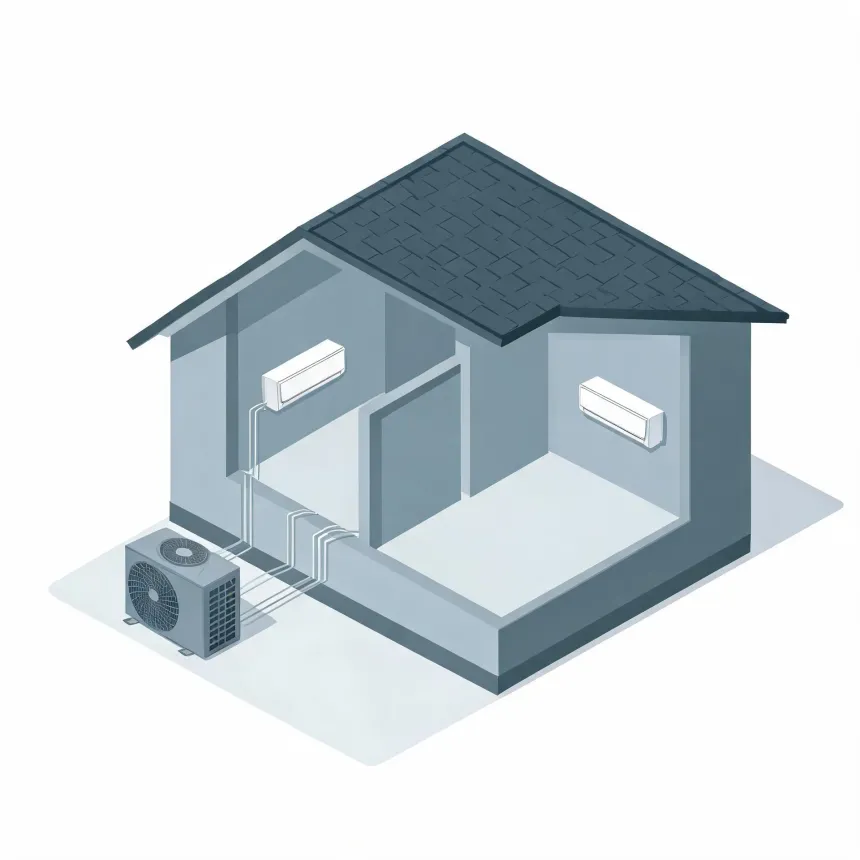
Isometric cutaway illustration of a small house showing two wall-mounted indoor air conditioning units connected by refrigerant lines to an outdoor condenser unit on the ground outside.
Your system heats November through March and cools May through October.

NOAA nClimDiv, 1991–2020 normals

San Bernardino County logged 425 damaging wind events between 2015 and 2024.

A mini split's outdoor unit sits exposed to wind and debris, so where it gets mounted is worth deciding before install.

Six months of 99 degree afternoons is what your mini split is up against

Cooling runs May through October
Summer afternoons average 99°F
425 damaging wind events from 2015 to 2024
Install Before MayCooling runs May through October here. April is when this gets done ahead of it.

San Bernardino County falls under zone 3B. Any mini split installed here has to meet the federal minimum for that class. That minimum is 14.3 SEER2 for cooling and 7.5 HSPF2 for heating. A ductless mini split counts as a split-system heat pump under the standard, so it gets measured the same way as any other split system. That number is a floor, not a ceiling. Summers here run long and hot, and the cooling side is what you'll lean on most, so a unit rated above that minimum is worth asking a contractor about.

Most homes here heat with gas. A mini split is usually solving a different problem.

Gas heats 70.8% of homes in San Bernardino County, and most of those furnaces pair with a central air system rather than a mini split. If you're looking at a mini split instead, it's likely for a room that system doesn't reach, an addition, a garage, a space where running new ductwork isn't worth it. That's a different job than a straight swap, and it's worth having a contractor look at the space before anything gets ordered.

Find a contractor
A man in a cap, dark jacket and work pants carries a canvas tool bag as he walks up steps toward an orange front door of a house with gray siding and a potted shrub.
A white mini-split air conditioner outdoor condenser unit mounted on metal brackets against a beige stucco exterior wall, with a blue sky and scattered clouds in the background.

Six months is the job, not the exception

Cooling runs May through October here, six months of the unit carrying the load every afternoon. That's the stretch to size for, not an average day. A contractor sizing the unit for this room should be working from those June, July and August highs, not a rule of thumb. Ask what load calculation they're using and why the unit they're proposing matches it. The cheapest unit that fits the wall isn't the same as the right one for six months of 99 degree afternoons.

What comes out of the wall

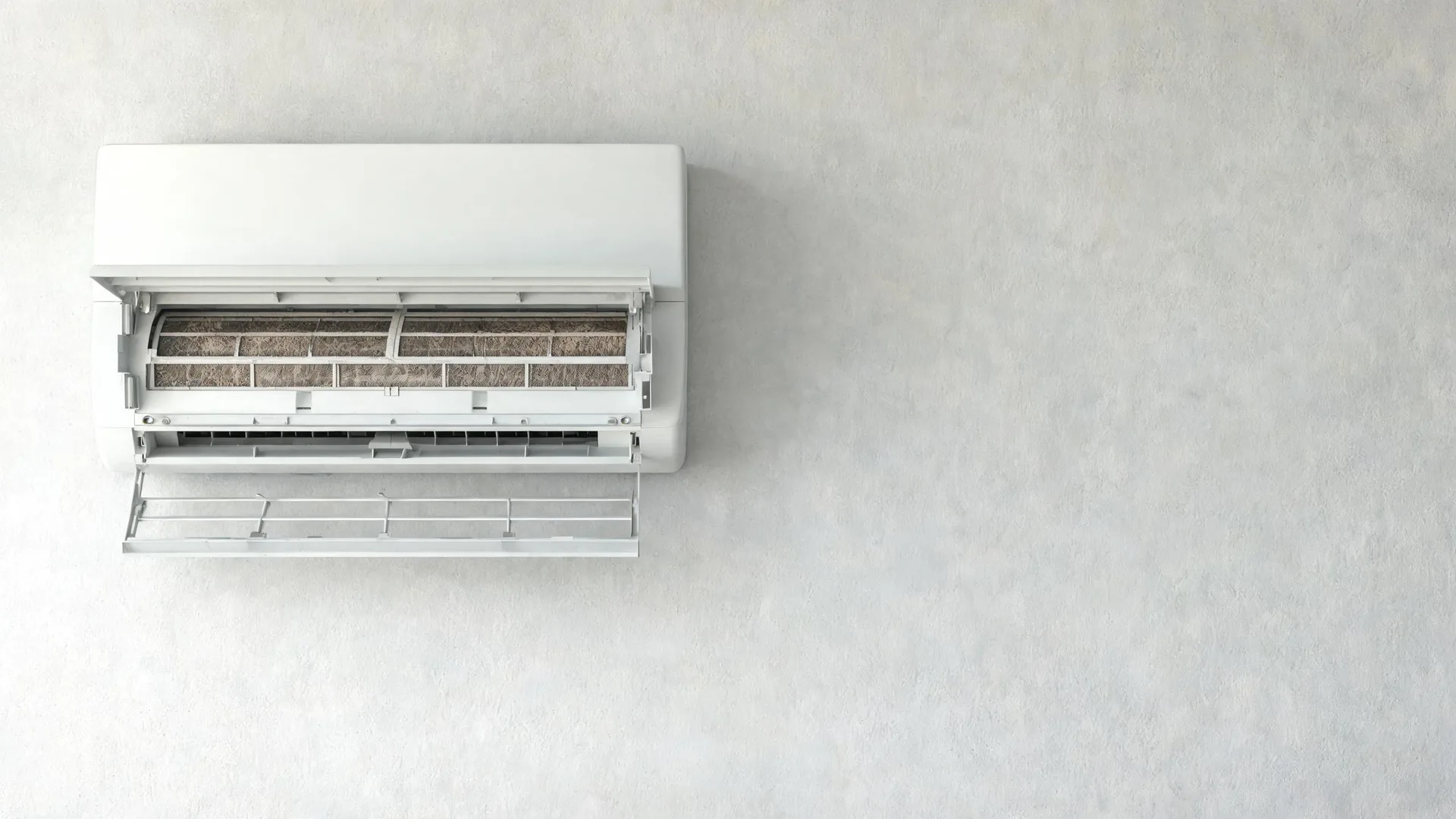
If this mini split is going into a room that never had one, there's nothing old to deal with in that spot. But if it's replacing a window unit or an older mini split, that indoor head and the outdoor unit both come down, along with the line set running between them. The old mounting holes and the line set penetration through the wall need to be dealt with too, not just covered over.
The refrigerant has to be handled right

A mini split being removed still has refrigerant in its lines. That refrigerant has to be recovered into a tank, not vented, before the lines get cut or the units get hauled off. This is why the removal gets done by whoever's doing the install, not as a separate demo job.

A few things drive what an installation takes to do right. How many rooms you're running off one outdoor unit matters. A single indoor head is a simpler job than a system feeding several rooms, with more line set to run and more planning for where each head goes. The line set itself matters too. The farther the indoor head sits from the outdoor unit, and the more walls or floors that line has to pass through, the more work it is to route it cleanly. Where the outdoor unit can go matters as much as where it can't. A contractor also has to size the unit to the room itself, not just the floor space. A room with a lot of west-facing glass or a high ceiling asks more of the unit than a similar room without those things, and that changes what equipment fits the job.

The SEER2 number on the label tells you how much cooling the unit produces for the electricity it uses, measured over a full season rather than at one moment. A higher number means it's pulling less power to do the same job, which matters most in the months it's running the longest. HSPF2 does the same thing for the heating side of a heat pump. Neither number tells you if the unit is sized right for the room it's going into. A correctly sized unit with a mid-range rating will often cost less to run than an oversized one with a higher rating, because an oversized unit cycles on and off instead of running steadily. The rating is worth comparing between units, but only after the room's load has been worked out.