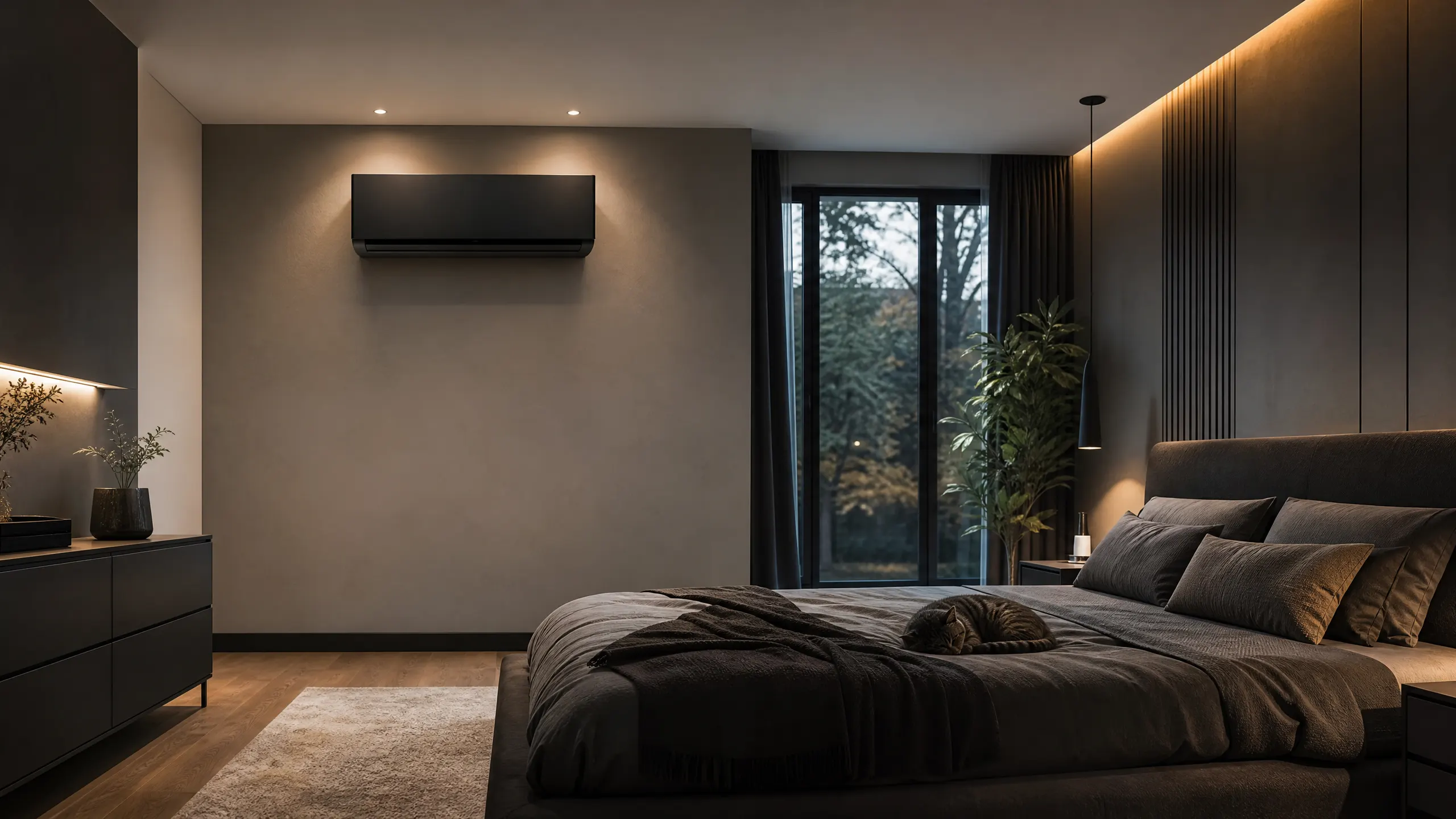




A dark, minimalist bedroom with a king-size bed, wall-mounted air conditioning unit, and large windows, with a cat sleeping on the duvet.

Mini Split Installation in San Francisco, CA

Tell us about the job

Takes about a minute. No obligation.

New system or replacementMini-splitSan Francisco County, CA
Step 1 of 2

What ZIP code is the job in?

Gas heats a little over half the homes in San Francisco County, and electricity heats most of the rest. A mini split doesn't care which one was there before. It runs on electricity, full stop, so if you're adding one to a gas-heated house you're not extending the gas line or touching the furnace. That's part of why people add them here instead of replacing what's already working. Homes on electric heat already have the panel capacity and wiring habits a mini split expects, which can make the hookup simpler.

7 months
November through May, your system heats
45°F
the average winter night it heats against
70°F
the average summer afternoon it cools against
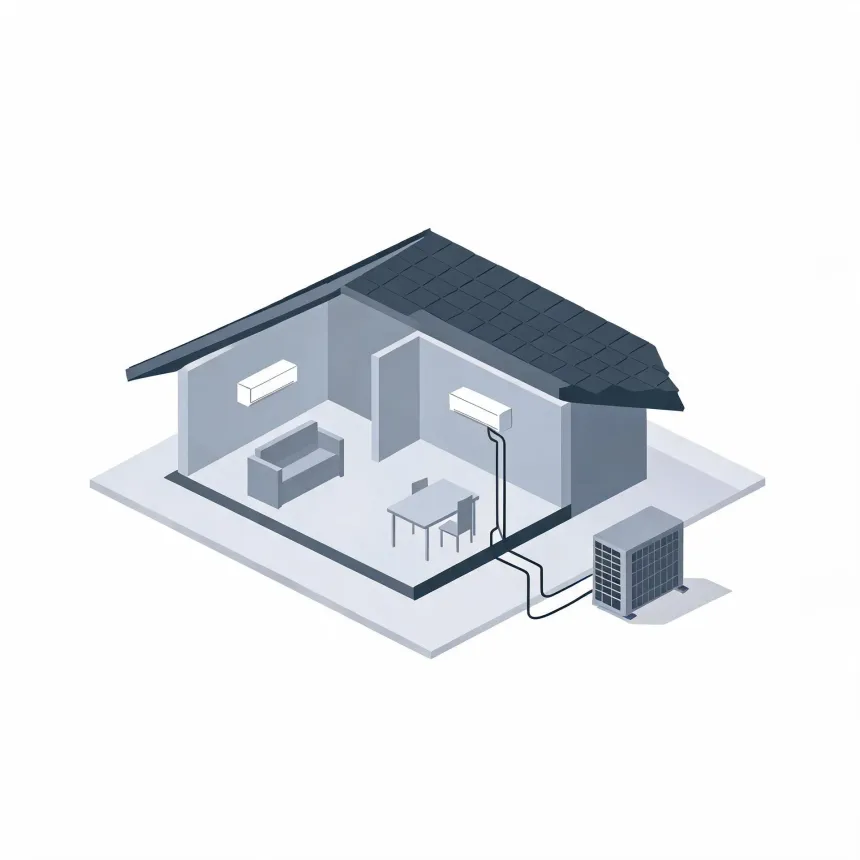
Isometric illustration of a cutaway house interior with sofa, table and chair, two wall-mounted indoor air conditioning units connected by lines to an outdoor condenser unit beside the building.

Summer afternoons in San Francisco run about 70 degrees, and no month of the year calls for cooling at all.

A mini split here spends its life on easy duty, so a well-built standard model holds up fine without reaching for the top efficiency tier.

Half the homes here were built in 1946 or earlier. A mini split has to work with that house, not a new one.

Half the homes here were built by 1946
Summer afternoons average 70°F
50 damaging wind events from 2015 to 2024

Half the homes in San Francisco County were built in 1946 or earlier, and a house that age wasn't built with a mini split in mind. The install has to work around what's already there instead. Where the line set runs, through a wall or along it, depends on how the house was framed, and plaster walls take a different approach than drywall when it's time to mount a bracket or run wiring. None of that rules a job out. It means whoever installs it has to look at your walls and your framing before deciding where the indoor and outdoor units go, rather than placing them where they'd go in a house built last year.

A standard mini split fits this job

Electricity in California ran 31.97 cents per kilowatt-hour in 2024. That's the rate a mini split here runs on no matter the size or tier you pick, so a standard efficiency model sized right for your space is the sound way to go. Nothing about this job calls for oversizing or paying for a top-tier unit you won't need.

Find a contractor
A white outdoor air conditioner condenser unit mounted on metal wall brackets against gray horizontal siding, with a blue sky and white clouds behind it.

Running light, year after year

A mini split here might run most days of the year, but it's never working hard to do it. Afternoons stay around 70 in June, July and August, and there's no month that calls for real cooling. Day into night, the load stays light. That kind of duty doesn't wear on a unit the way a hot climate does, so a standard model built well and sized to the room will hold up fine. No need to pay for the top efficiency tier when there's no heavy load here for it to pay off against.

What the number on the label measures

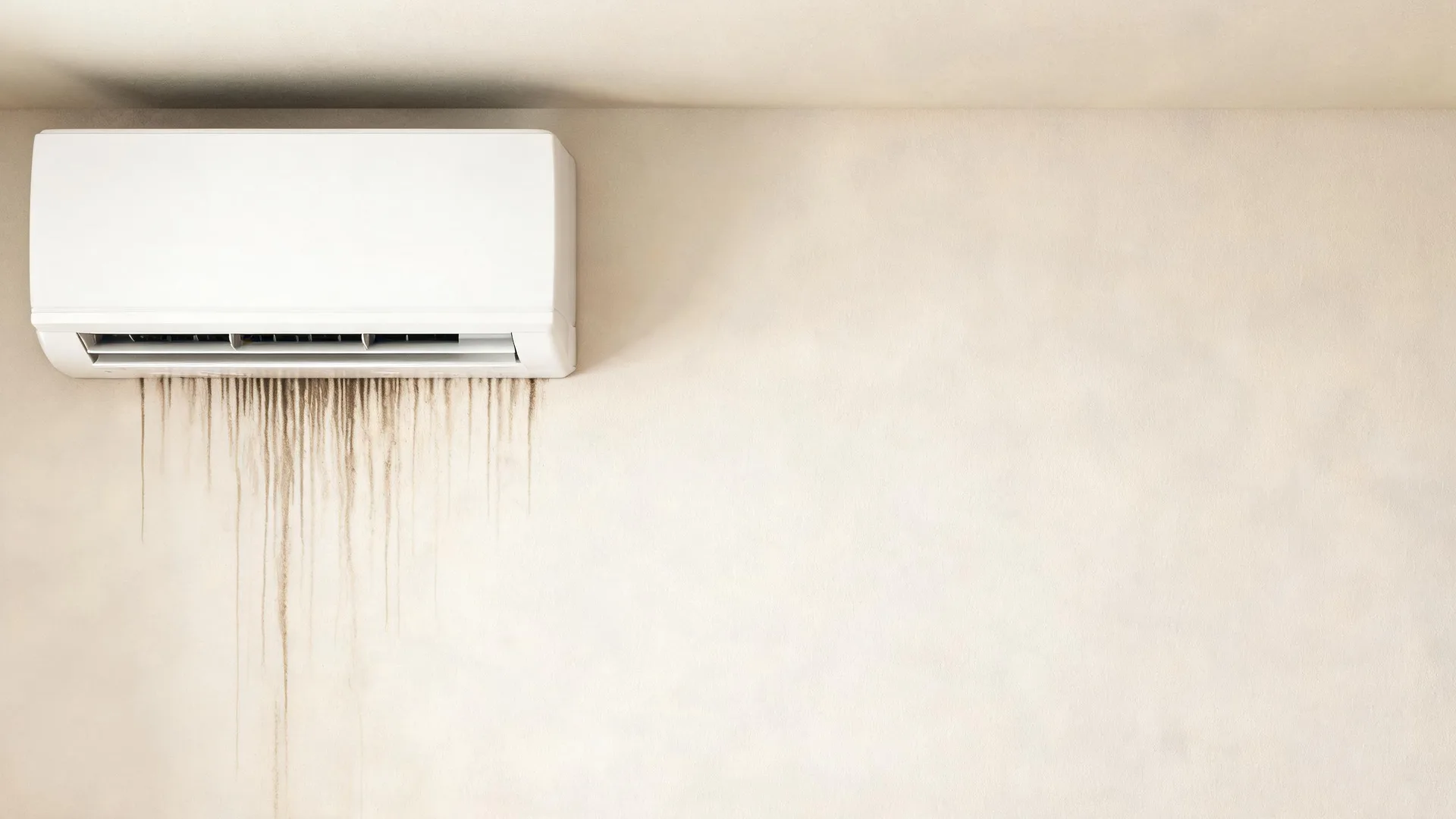
The efficiency rating tells you how much heating or cooling a mini split delivers for the electricity it uses over a full season of typical use. A higher rating means it gets more out of the same power. It says nothing about how big a space the unit can handle or how well it's built. Units with the same rating can still differ in sound level, parts quality and how long they last before something needs service.
What it means for your bill

A higher rating only pays off if the unit runs enough to use the savings it offers. A mini split working hard most days in a tough climate earns back the cost of a higher tier over time. One that runs light duty, with mild loads and short runtimes, never puts in the hours needed to make that gap matter. In that case a well-built standard unit sized right for the room costs less up front and runs the electric bill about the same.

Sizing a mini split is not like picking a space heater, where bigger always feels safer. Too big and it cools the room fast, shuts off, then kicks back on a few minutes later, over and over. That short cycling is hard on the compressor and it leaves the room clammy, because the unit never runs long enough to pull moisture out of the air. Too small and it runs flat out on the warmest days and still can't keep up. Getting it right means a room by room look at square footage, window area, ceiling height and how much sun each wall takes, then matching that load to a unit built for it. A tech works this out with a load calculation, not a guess based on the size of the room alone.

Install day starts with the outdoor unit going in on a pad or brackets, and the indoor head getting mounted on the wall it was sized for. A line set connects them, a copper pipe pair that carries refrigerant back and forth, and that line set has to pass through the wall, usually a single hole sized just for it, alongside the power cable and a drain line. Once both units are connected and the wall is patched back up, the line gets evacuated with a vacuum pump to pull out air and moisture before any refrigerant moves through it. Skip that step and moisture sits in the line, which leads to compressor trouble down the road. After that the system gets charged, run through both cooling and heating to check it responds, and listened to for any rattling or vibration before anyone calls it finished. A clean install leaves almost nothing showing on the wall besides the indoor head and a slim cover over the line set.