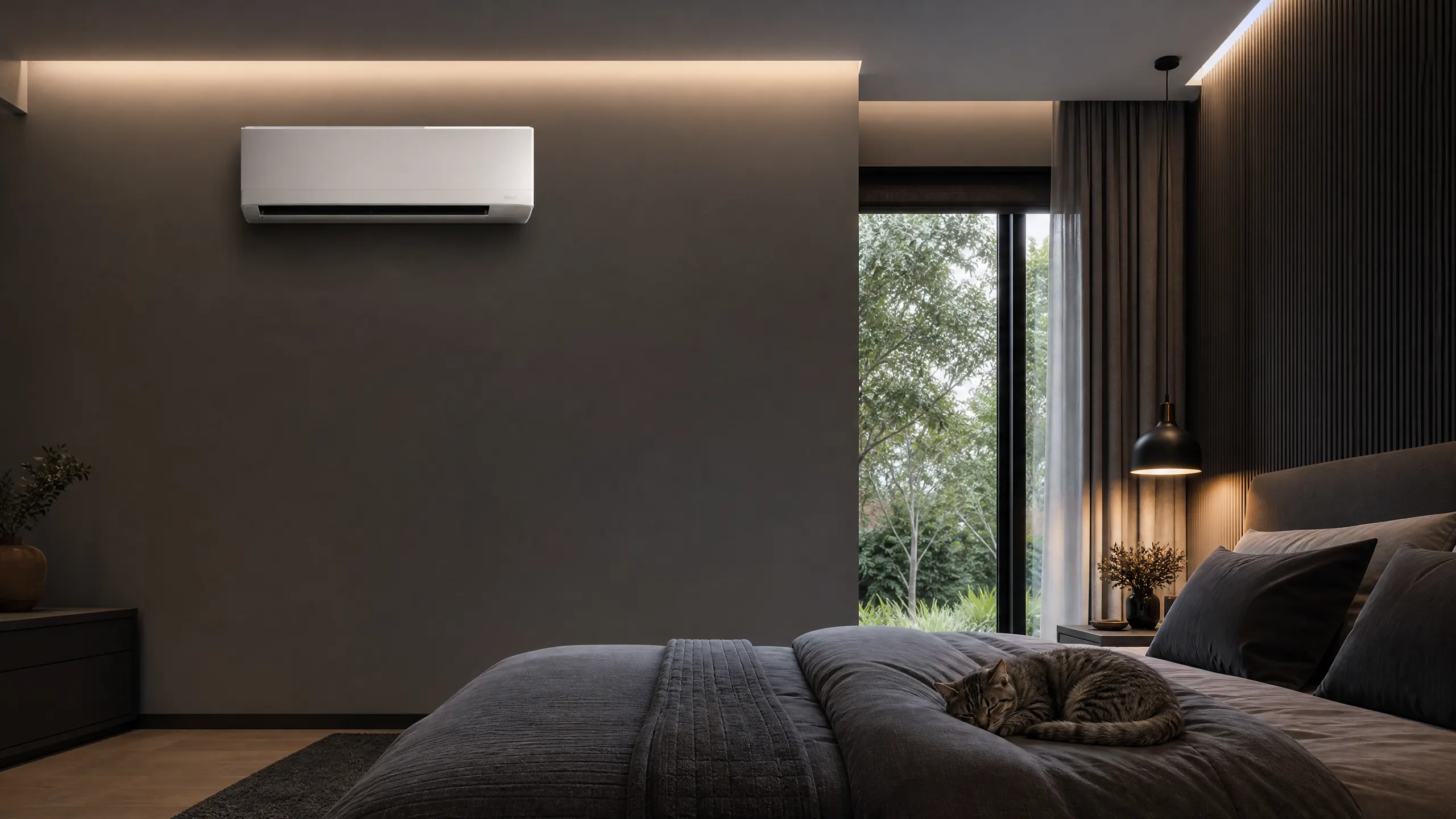





A tabby cat sleeps curled up on a dark grey bed in a modern bedroom equipped with a wall-mounted air conditioning unit.

Mini Split Installation in San Luis Obispo, CA

Tell us about the job

Takes about a minute. No obligation.

New system or replacementMini-splitSan Luis Obispo County, CA
Step 1 of 2

What ZIP code is the job in?

Electricity in California ran 31.97 cents per kilowatthour in 2024, well above what most of the country pays. A mini split's efficiency matters more here than it would somewhere with cheaper power. These systems move heat instead of burning fuel or running a resistance coil, so they use less electricity to produce the same warmth or cooling. On a per-degree basis that difference shows up every month, not just in the first bill after install. Given what power costs in this state, the efficiency rating on the unit you choose is worth checking closely.

6 months
November through April, your system heats
4 months
June through September, it cools
38°F
the average winter night it heats against
87°F
the average summer afternoon it cools against
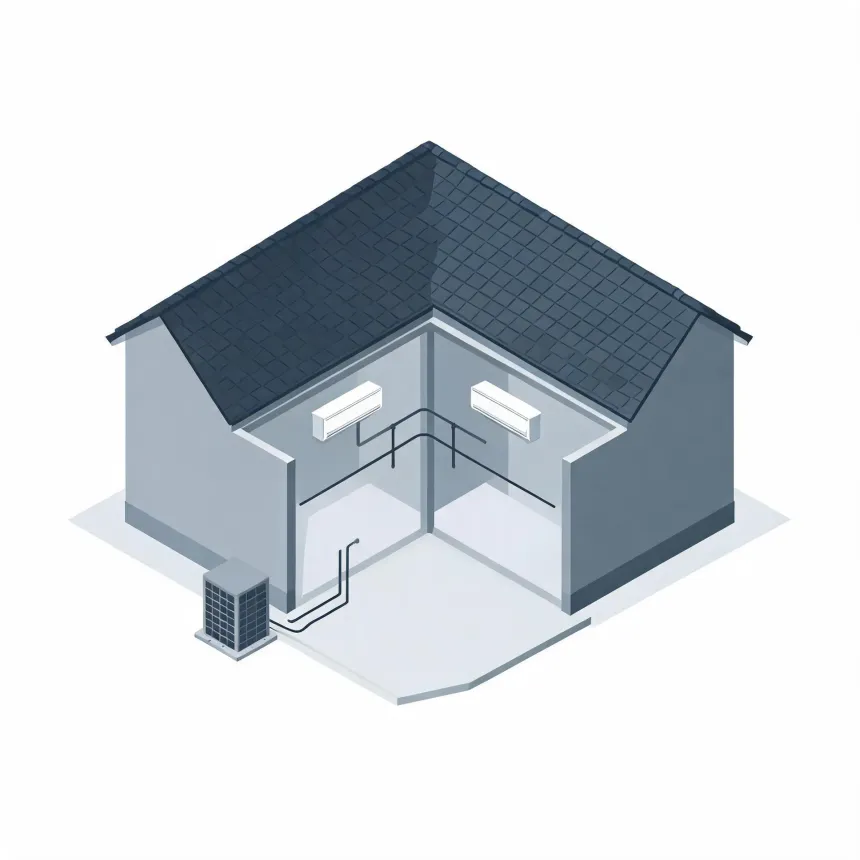
Isometric illustration of a cutaway gray house with a dark shingled roof, showing two wall-mounted indoor air conditioning units connected by piping to an outdoor condenser unit on the ground outside.
Your system heats November through April and cools June through September.

NOAA nClimDiv, 1991–2020 normals

Cooling runs June through September here.

Get the mini split in before May and it's already working instead of getting installed during the first hot week.

Most homes here heat with gas, which makes a mini split the second system, not a replacement

65.5% of homes heat with gas
Cooling runs June through September
Summer afternoons average 87°F

San Luis Obispo County falls under zone 3C in the energy code, the marine zone, mild in winter but with a long stretch of cooling from late spring through summer. A ductless mini-split counts as a split-system heat pump under federal rules, not its own category, so any unit installed new has to clear 14.3 SEER2 for cooling and 7.5 HSPF2 for heating. That's the floor, not a target. Manufacturers build plenty of units above it, and two systems can both clear the minimum while using noticeably different amounts of power to do the same job in your house. Ask what rating the unit you're considering actually carries.

Four months of cooling a year means reliable matters more than top-of-the-line

Cooling runs four months a year here, June through September, with afternoons averaging 87°F in the peak of summer. That's real heat for a stretch, but it's not year-round strain on the system. A mini split sized right and built to last is worth more here than one that just carries the highest efficiency number on the shelf.

Find a contractor
A man in a dark shirt and tan pants, seen from behind, carries a canvas duffel bag up porch steps toward an orange front door beside a potted shrub.
A white outdoor air conditioner condenser unit mounted on metal wall brackets against gray horizontal siding, with a blue sky and white clouds behind it.

Ask how the compressor behaves over the years it'll run, not just on the first day

A compressor that starts and stops a lot wears faster than one that ramps up and holds steady. Inverter-driven mini splits are built to do the second thing. Instead of switching on at full power and cutting off once the room hits temperature, the compressor adjusts its speed to match what the room needs at that moment, then holds there. That's a different kind of life than an old single-speed system lives, cycling on and off all day. Ask how the unit modulates and over what range. A compressor that can turn down low keeps running instead of stopping and restarting, and a motor that isn't constantly restarting is one that isn't constantly wearing the parts that make it restart.

The load calculation drives everything else

Before anyone picks a unit, the room itself has to be measured. Square footage, ceiling height, window area, which way it faces, what's on the other side of the walls. That math gives a number for how much heat the room gains in summer and loses in winter. The mini split has to match that number. Skip this step and every decision after it is a guess.
Oversized and undersized both cause problems, just different ones

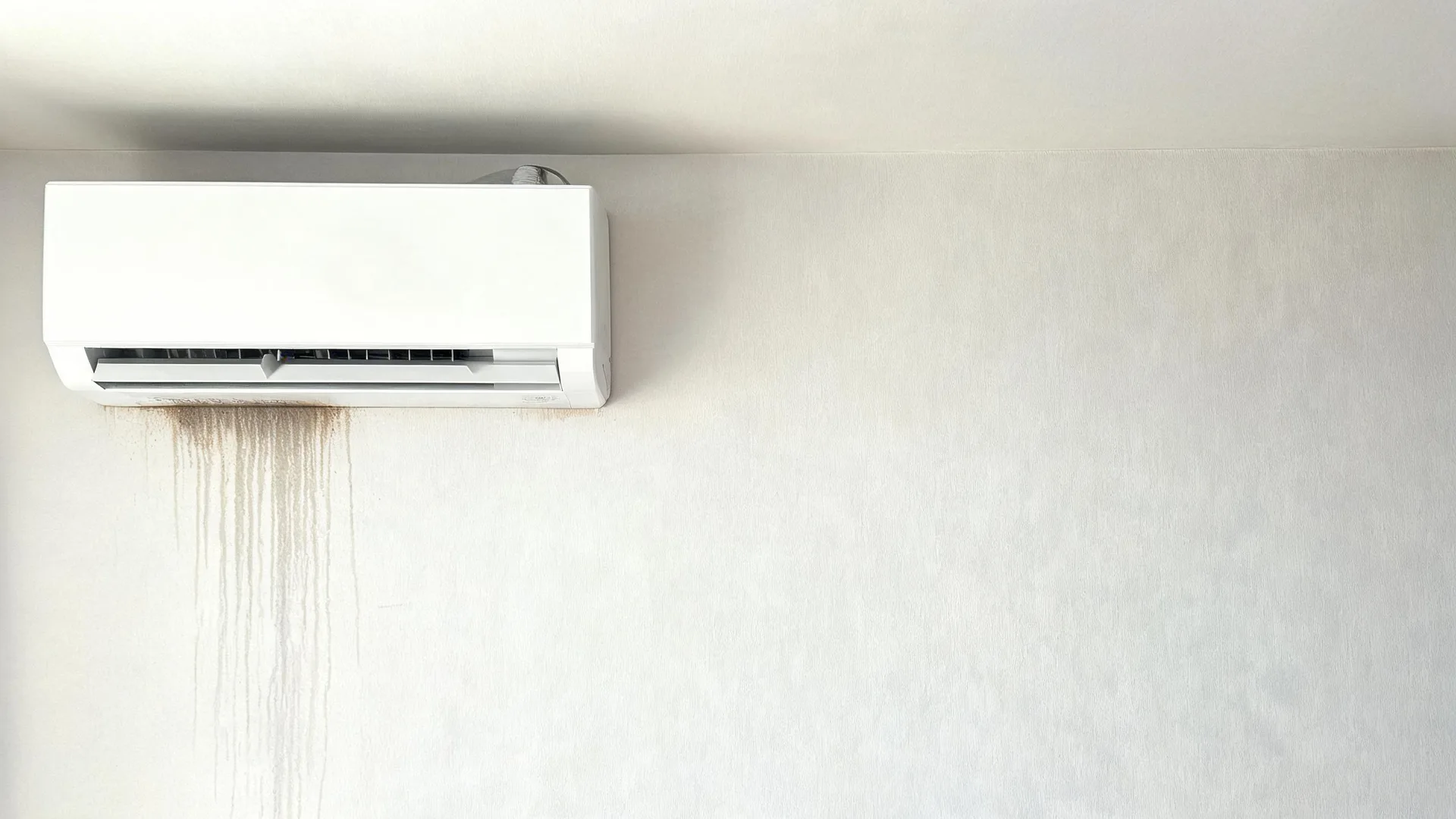
A mini split that's too big cools the room fast, shuts off, then starts again a few minutes later. That cycling means it never runs long enough to pull moisture out of the air, so the room feels cold and damp instead of just comfortable. One that's too small runs constantly during the hottest stretch and still can't hold the temperature you set. The right size runs long, steady cycles and holds the room where you want it.

Price comes down to what the job actually requires, not just the equipment on the wall. The indoor and outdoor units are only part of it. Running the line set between them, the refrigerant lines, power wiring and the condensate drain, takes labor, and that labor changes with distance and with what's in the way. A straight shot through an exterior wall to an outdoor unit placed close by costs less than a run that has to cross an attic, drop through a chase, or reach a condenser set somewhere less convenient. A multi-zone system adds more of everything, another indoor head, another line set, another spot on the outdoor unit's circuit board to manage, so a multi-room install costs more than a single zone even with the same brand of equipment. Electrical work matters too. Some units run on the home's existing panel without changes. Others need a new circuit or a disconnect box added outside, and that's work an electrician has to do, not the installer alone. None of this shows up on the price tag of the unit itself, only in the quote for the job.

Installation starts outside, deciding where the outdoor unit sits and where the line set will run to reach it. That path gets drilled through the wall first, a single small hole for the refrigerant lines, power wire and condensate drain to pass through together. The indoor head mounts on a bracket, then the lines connect and the whole system gets pulled down to a vacuum before any refrigerant moves. That vacuum step matters more than people expect. Any moisture or air left in the lines turns into a problem months later, not on day one, so a tech doesn't skip it or rush it. Once the system holds vacuum, the lines get charged, the unit gets powered up, and the tech runs it through a cycle in both modes before calling the job done.