White stucco Spanish Colonial Revival houses with illuminated windows sit among trees on a hillside at dusk, beneath a deep blue twilight sky.

Mini Split Installation in San Mateo, CA

Tell us about the job

Takes about a minute. No obligation.

New system or replacementMini-splitSan Mateo County, CA
Step 1 of 2

What ZIP code is the job in?

Storms here are not rare

San Mateo County logged 282 severe weather events between 2015 and 2024, with damaging wind behind most of them at 266. Hail showed up 9 times, and winter storms hit 3 times. An outdoor condenser sits outside through all of it.

The power doesn't always hold

17% of California households went at least a full day without power in 2024. For a mini split, that means no heat and no cooling until the grid comes back, and if it's doing water heating too, that goes with it.

7 months
November through May, your system heats
43°F
the average winter night it heats against
73°F
the average summer afternoon it cools against
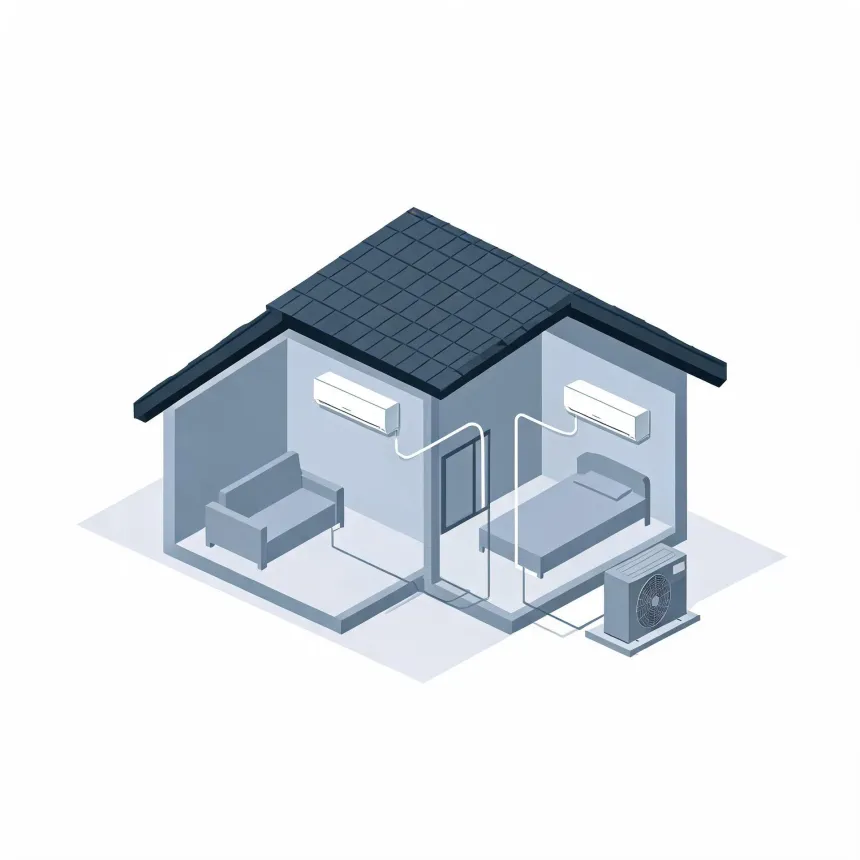
Isometric illustration of a cutaway house with two rooms, showing two wall-mounted indoor air conditioning units connected by lines to a single outdoor condenser unit outside the building.

Half the homes in San Mateo County were built in 1966 or earlier.

An install in a house that age has to work with the wiring and layout already there, not a blank slate.

Mild air means this system won't be working hard to begin with

Summer afternoons average 73°F
266 damaging wind events from 2015 to 2024
9 hail events from 2015 to 2024
Most homes here already run on gas62.8% of homes in San Mateo County heat with utility gas, and a mini split would be something new.

Electricity in San Mateo County runs 38.23 cents a kilowatt-hour, among the highest rates in the country. That makes efficiency worth more here than it would somewhere with cheaper power. A mini split that's sized right for the space and installed clean uses less power to do the same job, and at this rate, that difference shows up on the bill. One that's oversized or poorly charged costs more to run here than it would elsewhere, simply because every kilowatt-hour costs more to begin with. Getting the sizing and the install right once is what makes the mild weather here actually pay off.

Plan this install for the outages too

Have the installer plan the outdoor unit's spot with wind and hail in mind, and ask what happens to heat, cooling and hot water if the power drops. That's a decision worth making before the install, not after a storm.

Find a contractor
A man in a dark cap, gray long-sleeved shirt and brown work pants, carrying a canvas tool bag with pens and tools in its pockets, steps up onto a porch toward an orange-red paneled front door, with gray horizontal siding and a potted shrub in a terracotta planter to the right.
A white outdoor air conditioner condenser unit mounted on metal wall brackets against gray horizontal siding, with a blue sky and white clouds behind it.

Built for the house it's going into

Day in, day out, this system runs through the wiring and layout already in the walls, not around it. If your place is on the older side for the county, ask the installer to check the electrical panel and where the line set will need to run before anything gets mounted. A unit that's planned around the house it's going into keeps running clean for years without someone having to open the wall back up.

The old equipment has to come out first

If a furnace or window units are being replaced, the installer disconnects and removes them, including any refrigerant lines or gas connections tied to the old setup. A line set left behind gets reused only if it's clean and rated for the new refrigerant. Otherwise it comes out with the rest.

What's left behind gets sealed or capped

An old gas line feeding a furnace that's going away needs to be capped off, not just shut at the valve. Any duct or vent opening tied to the old system should get closed up too, so air isn't leaking into a wall cavity or attic space once the mini split is running.

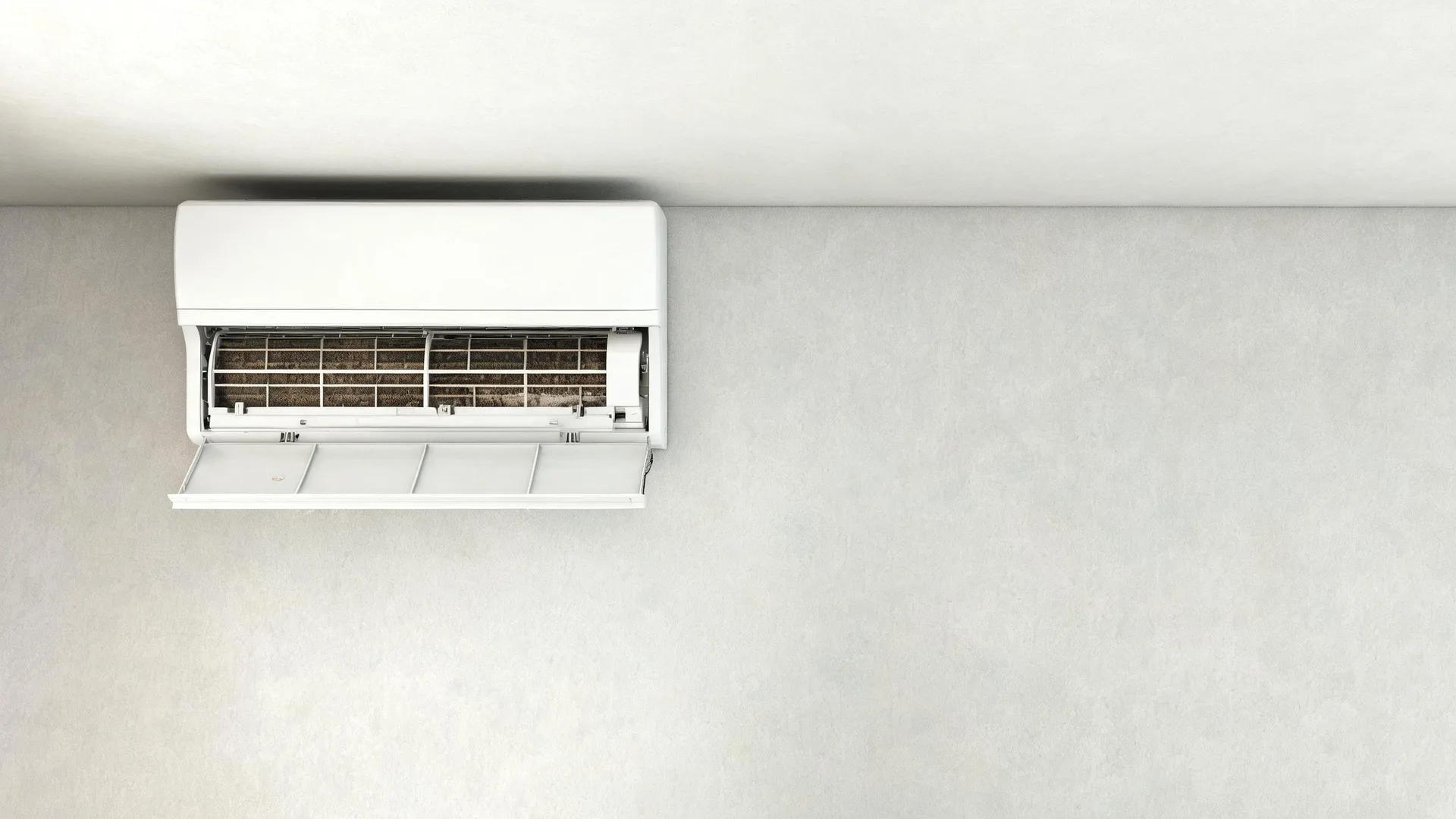
The number on the label is the SEER2 rating, and it tells you how much cooling you get out of the power you put in over a full season of cycling on and off, not just at full blast. A higher number means the compressor is doing more with less electricity, but that rating is measured under set conditions in a lab, so your actual result depends on the install too. A mini split sized too big for the room will short cycle, switching on and off before it settles into steady, efficient running, and that wastes power no matter what the label says. The rating also only means something if the line set is charged right and the ductless head is matched to the outdoor unit it was tested with. Pair the wrong indoor head with an outdoor condenser and you lose the efficiency the label promised. The number is a starting point for comparing units, not a guarantee of what your bill will look like.

San Mateo County falls under zone 3C in the 2021 energy code, a warm zone with mild winters and a long cooling stretch. Any mini split put in now has to clear the federal minimum for that kind of system: at least 14.3 Btu of cooling for every watt-hour over the summer, and at least 7.5 Btu of heat for every watt-hour over the winter, if it's a unit built from 2023 on. That's not a target to aim for, it's the floor. It narrows the field to equipment that can actually hit those numbers, not just whatever's cheapest or on the shelf. A federal tax credit is available on top of that for systems that qualify, which is worth asking the installer about before anything gets ordered.