






White stucco buildings with terracotta roofs glow with warm lighting on a tree-covered hillside at dusk.

Mini Split Installation in Vallejo, CA

Tell us about the job

Takes about a minute. No obligation.

New system or replacementMini-splitSolano County, CA
Step 1 of 2

What ZIP code is the job in?

Electricity in California runs 31.97 cents per kilowatthour, well above what most of the country pays. A mini split earns its keep against that rate. It moves heat instead of burning power to make it, so it uses a fraction of what a baseboard heater or an old window unit draws for the same room. That gap in efficiency matters more here than almost anywhere else, because every kilowatthour it saves is worth more on a California bill. The system you choose decides how much of that high rate you actually pay, month after month.

6 months
November through April, your system heats
4 months
June through September, it cools
40°F
the average winter night it heats against
88°F
the average summer afternoon it cools against
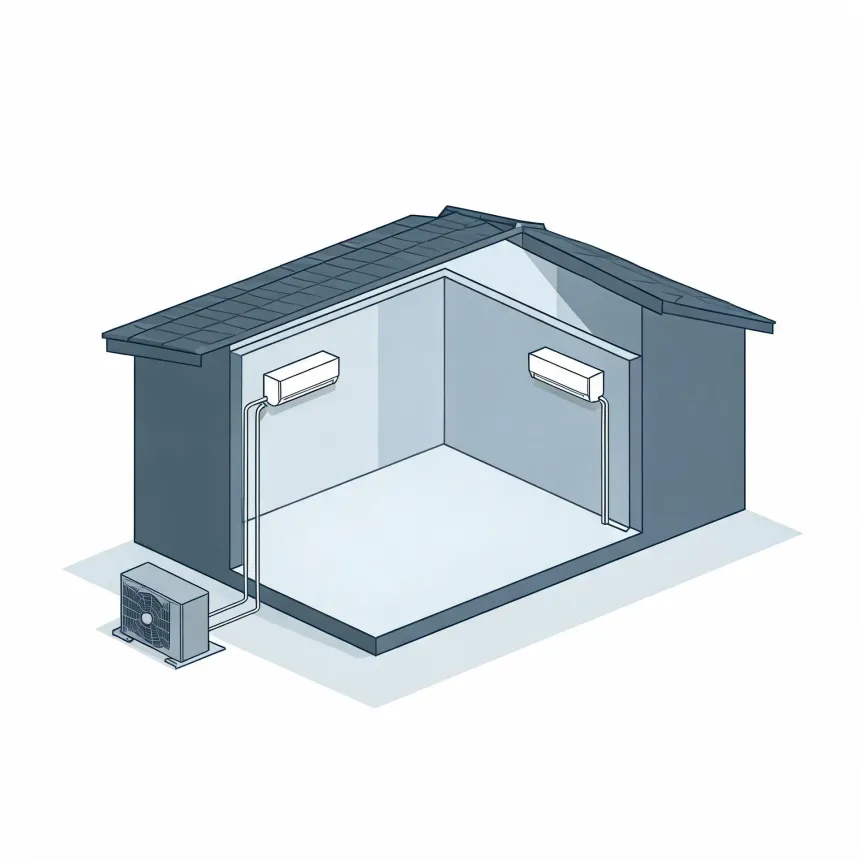
Cutaway isometric illustration of a small building interior showing two wall-mounted indoor air conditioning units connected by line sets running down to a single outdoor condenser unit on the ground outside.
Your system heats November through April and cools June through September.

NOAA nClimDiv, 1991–2020 normals

The condenser location decides how much line set the crew has to run.

Longer runs between the outdoor unit and the indoor heads mean more refrigerant line, more labor, and more to go wrong later.

Get it installed before June and it's ready for the four months it has to carry

Cooling runs June through September
Summer afternoons average 88°F
Power costs 31.97 cents a kWh statewide
Most homes here heat with gasGas heats 60.5% of homes here, electricity 31.8%, so a mini split usually adds to a gas system rather than replacing it

Vallejo falls in climate zone 3B, a warm zone with dry summers and the state's energy code sets the minimum efficiency a new system has to clear. A ductless mini-split counts as a split-system heat pump under the federal standard, so any unit built from 2023 onward has to hit at least 14.3 SEER2 for cooling and 7.5 HSPF2 for heating. That floor applies whether it's ductless or not. The rules don't name a separate category for mini-splits, so the same minimums that cover a central heat pump cover the one going on your wall. A system rated below that can't legally go in new, which narrows the field before you even start comparing brands. A federal tax credit is available on top of that for equipment that meets the efficiency requirements, which is worth weighing against the sticker price.

Here, the efficiency number on the spec sheet is the one that pays you back

At 31.97 cents a kilowatthour, the efficiency rating on the unit you pick is not a detail to skim past. A higher SEER2 and HSPF2 number costs more up front and less on every bill after that, for as long as you own the system. Worth asking any installer what rating the equipment they're quoting actually carries before you decide.

Find a contractor
A man in a cap, dark shirt and worn brown work pants walks up concrete steps toward an orange front door, carrying a canvas tool bag in his right hand, with a potted shrub beside the entry.
A beige split-system air conditioner outdoor condenser unit mounted on metal wall brackets atop a stucco wall.

The load calculation, not the room size, decides what unit goes in

A mini split that's too big cools the room fast, shuts off, and starts again a few minutes later. That short cycle never runs long enough to pull moisture out of the air, so the room feels cool but damp. One sized too small just runs. It never catches up on the hottest or coldest days, and it puts more hours on the compressor trying to get there. Getting the size right starts with a room by room load calculation, not a guess based on square footage. A contractor measures window area and orientation, checks insulation, counts how many walls face outside, and factors in the ceiling height before landing on a number. A room with a wall of west facing glass can need more capacity than one the same size without it. That same calculation decides how many indoor heads an outdoor unit can carry and still perform, since every head added splits the capacity the compressor has to divide between them.

The old system doesn't have to come out

If the mini split is going in alongside a gas furnace, that furnace stays right where it is. Ductless heads handle specific rooms while the existing system keeps covering the rest of the house, so there's no demolition tied to this install, just a new line set and a spot picked for the outdoor unit.
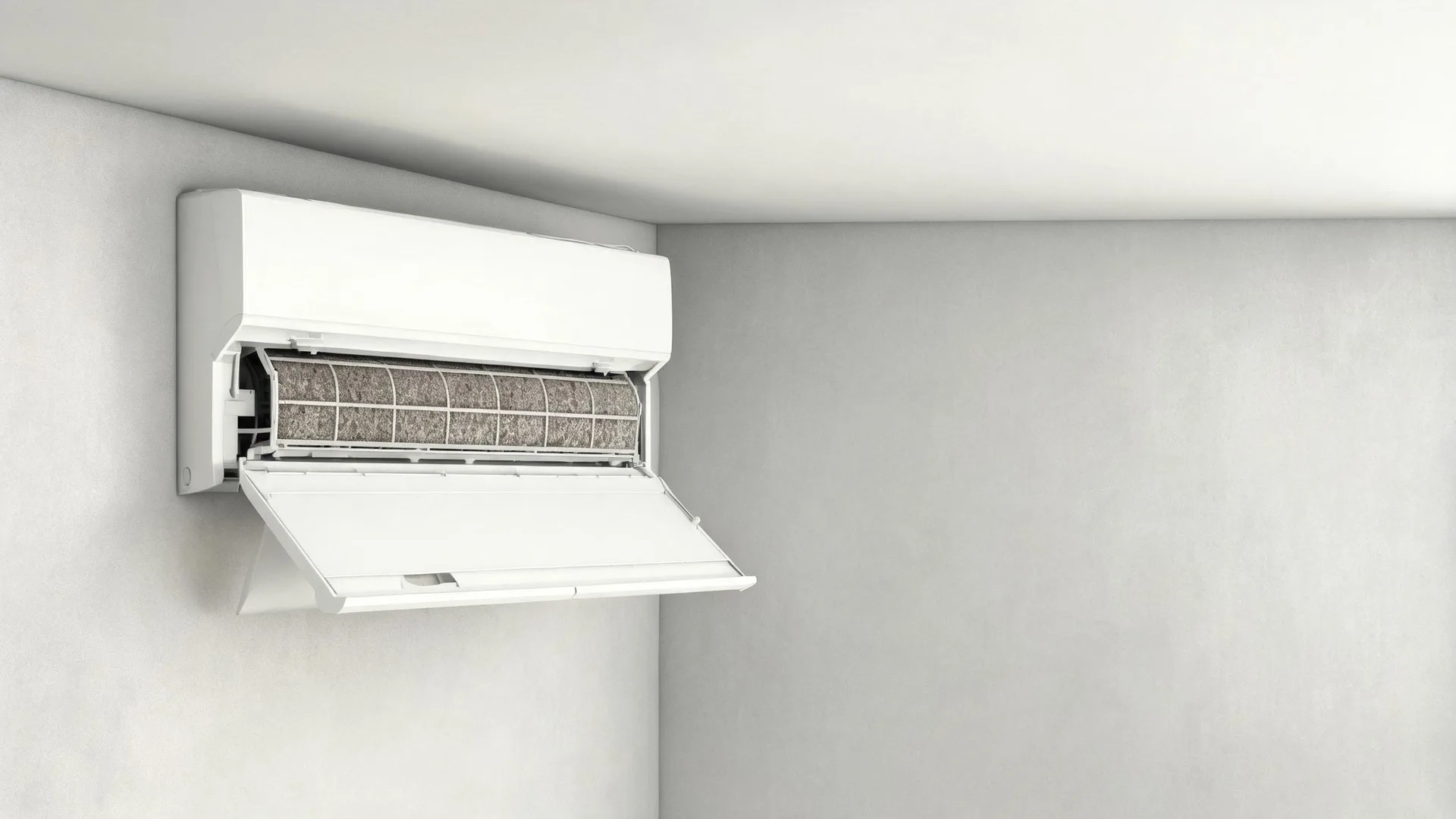
Replacing a window unit or baseboard heater is different

A window unit comes out of the sill and the opening gets sealed up properly, not just stuffed with foam. Electric baseboard heaters get disconnected from their circuit by whoever's doing the electrical work, since that circuit may end up reused or capped off depending on what the panel can support once the mini split is added.

SEER2 and HSPF2 are ratios, not a count of anything physical. SEER2 measures cooling output against the power it takes to produce it over a whole season, and HSPF2 does the same for heating. A higher number means the compressor is wringing more heat moved out of every unit of power it spends, nothing more than that. It doesn't describe the room, the ductwork, or how fast the space will feel comfortable. Units with the same rating can still feel different to live with depending on how well the sizing and the installation were done. The rating tells you what the equipment can do under test conditions, not what it delivers in your walls, which is why the number on the label and the comfort in the room are related but not the same thing.

Installation starts with the mounting plate going up on the wall, level, in the spot picked during the load calculation. The crew drills through the wall for the line set, bundling the refrigerant lines, the drain, and the electrical into one path from the indoor head to the outdoor unit. That line set gets connected, then the system is evacuated with a vacuum pump to pull out air and moisture before any refrigerant moves through it. Skip that step and moisture sits in the lines, and it causes problems with the compressor later. Once the vacuum holds, the lines get charged, the outdoor unit gets set on its pad or bracket, and the crew checks the charge against what the manufacturer specifies for that line length. Last comes the test. The head needs to respond to the thermostat or remote in both cooling and heating, and the condensate needs to drain the way it should instead of pooling.