




A row of stucco houses with terracotta tile roofs seen past a tall light-colored wall in the foreground, framed by overhanging tree branches under a pale sky.

Mini Split Installation in Yuba City, CA

Tell us about the job

Takes about a minute. No obligation.

New system or replacementMini-splitSutter County, CA
Step 1 of 2

What ZIP code is the job in?

Electricity in California ran 31.97 cents per kilowatthour in 2024, among the highest rates in the country. A mini split's efficiency matters more here than it would in a state with cheap power. The inverter-driven compressor in a mini split adjusts its output to match the load instead of switching fully on and off, so it draws less power to hold a temperature than a single-speed system does. Over a summer of cooling and a winter of heat pump use, that difference shows up on the bill every month, not just once.

6 months
November through April, your system heats
5 months
May through September, it cools
40°F
the average winter night it heats against
94°F
the average summer afternoon it cools against
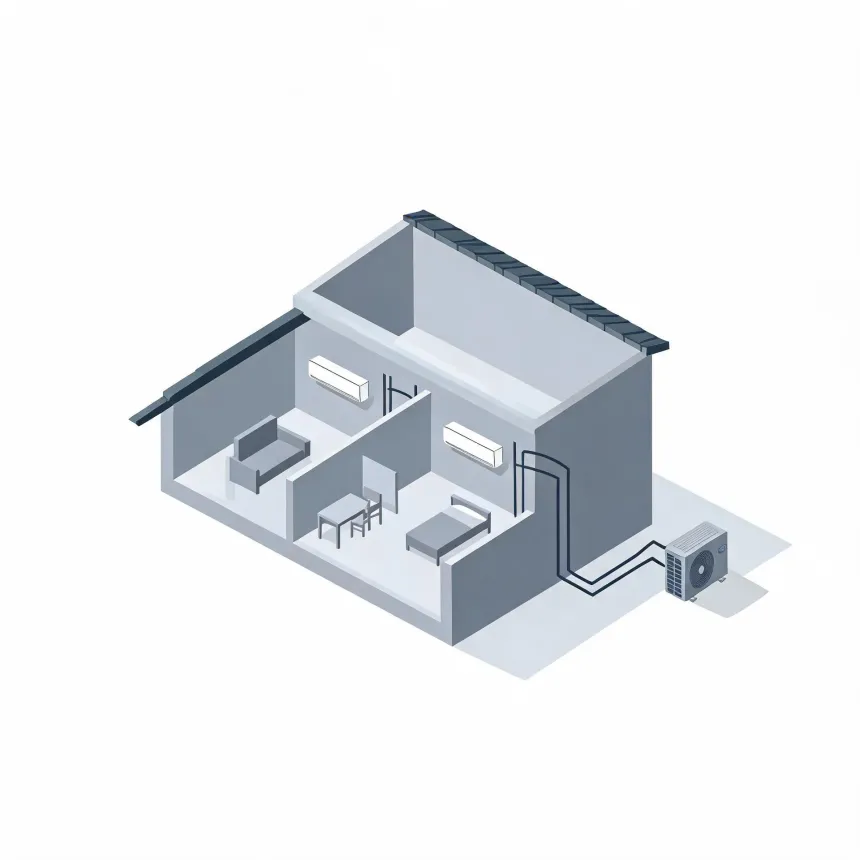
Isometric cutaway illustration of a gray house showing two wall-mounted indoor air conditioning units in separate rooms with furniture, connected by line sets to an outdoor condenser unit on a pad outside.
Your system heats November through April and cools May through September.

NOAA nClimDiv, 1991–2020 normals

Yuca City homes run cooling May through September, five months straight.

A mini split here needs to hold steady through afternoon highs averaging 94°F, all summer long.

April is the month to get this done, before May's heat makes it urgent

Cooling runs May through September
Summer afternoons average 94°F
Power costs 31.97 cents a kWh statewide

Gas heats 60.2% of homes in Sutter County, more than double the share on electricity. That means most houses here were built around a furnace and ducts already in place, with no heat pump doing the work of heating. A mini split added to a home like that is new territory for winter, not a swap. It still handles cooling on its own the way any mini split does, but how it splits the load with the furnace on a cold night is worth asking about before installation, not after.

Efficiency pays here

Power costs more here, so an efficient system pays you back on every bill.

Find a contractor
A white mini-split air conditioner outdoor condenser unit mounted on metal brackets against a beige stucco exterior wall, with a blue sky and scattered clouds in the background.

Five months of heat, every year

Five months of cooling, afternoon highs near 94 the whole stretch. That's the load a mini split sits under here, every summer, not just on the hot days. A unit sized too small will run flat out trying to catch up and still lose ground in the afternoon. One sized too big will cool the room fast and shut off before it pulls the moisture out of the air, so the room feels damp even at the temperature you set. Either way you paid for the mistake once at install and you keep paying for it every summer after. Getting the size right for the rooms it serves matters more here than in a place where the system only works hard a few weeks a year.

Ask what the load calculation found, not just the size

A contractor should run a room by room load calculation before quoting a size, not guess from square footage. Homes the same size can need different capacity depending on windows, ceiling height and how many walls face outside. If nobody mentions doing this math, ask for it before you agree to a number.
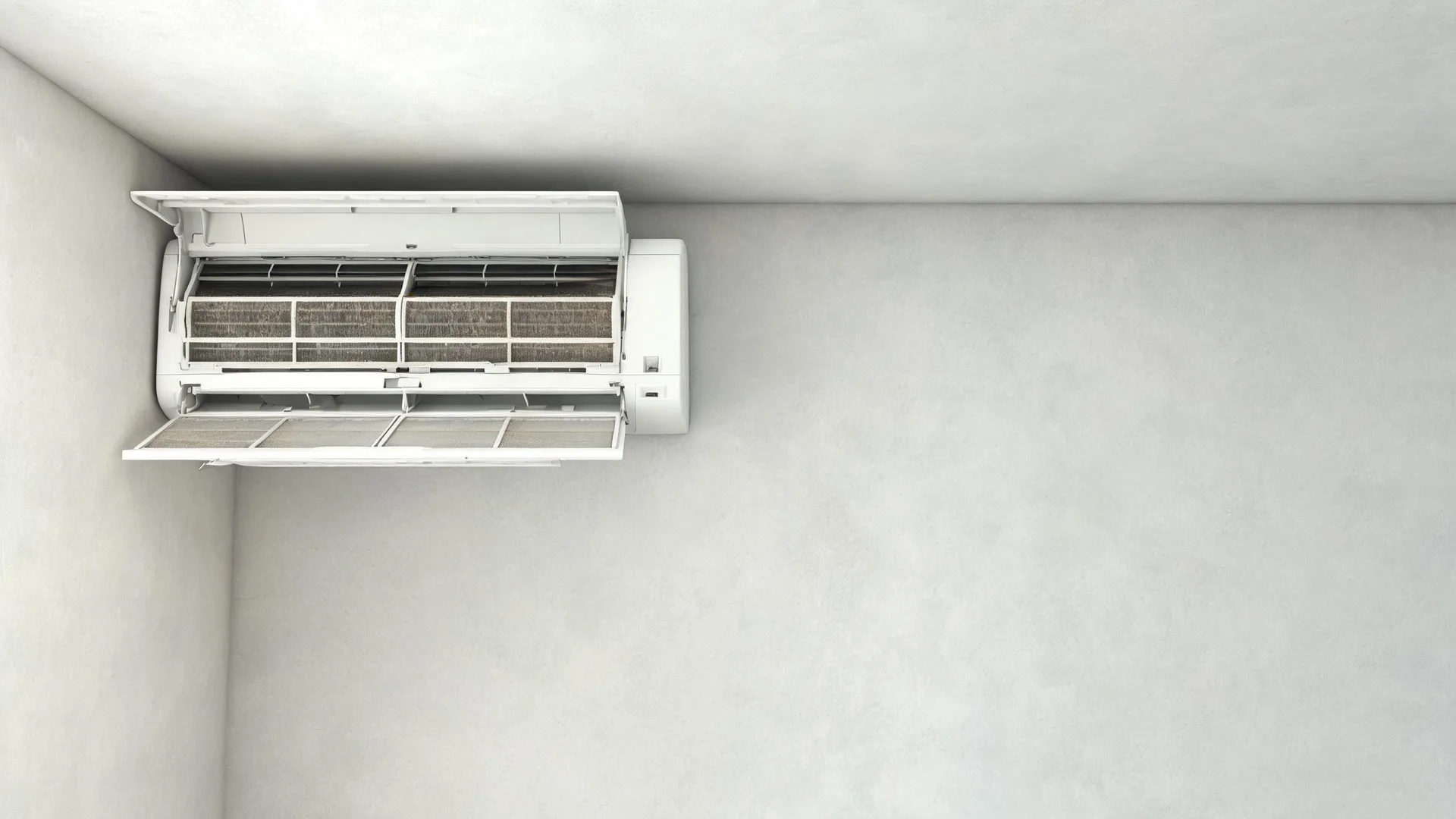
Ask how the system performs when every zone calls at once

An outdoor condenser can serve several indoor heads, but splitting its capacity across more zones means each one has less to draw on when they all run together. Ask how the system behaves with every head calling for cooling at the same time, not just what one head does running alone.

What you pay for an install comes down to how much equipment is going in and how hard it is to get it where it needs to go. A single zone with a straightforward wall placement, a short line set run, and an easy path for the line set to reach outside is the simplest job there is. Add zones and the cost adds up zone by zone, since each indoor head needs its own line set and its own power run back to the outdoor unit. Distance and obstacles matter as much as the count. A line set that has to cross an attic, drop through a finished wall, or run further than a short straight shot takes more time and more material than one that goes through an exterior wall a few feet from the condenser. The electrical work behind the wall counts too. A mini split needs a dedicated circuit, and if the panel has room and capacity for it, that part of the job is simple. If the panel is already full or too far from where the condenser sits, that work adds to the job before the mini split itself ever gets mounted.

Install day starts with the outdoor condenser and the line set path, since everything else follows from where those go. The installer mounts the indoor head first, usually high on an interior wall, then drills through to run the line set, the drain line and the electrical whip out to where the condenser will sit. Those lines get connected, and the whole system gets evacuated with a vacuum pump before any refrigerant moves. Any air or moisture left behind will ruin the compressor over time. Once the vacuum holds, the system gets charged, and the installer checks that charge against what the line length calls for rather than just filling it and walking away. Last comes the test. The system runs through cooling while the installer checks that the head is actually pulling the temperature down at the thermostat, not just blowing air. A straightforward single zone job can wrap in a day. Add zones, or a line set that has to cross an attic or drop through finished walls, and it runs longer.