






A row of single-story stucco houses with clay tile roofs behind a long concrete wall, framed by large leafy trees and trimmed hedges.

AC Maintenance in Davis, CA

Tell us about the job

Takes about a minute. No obligation.

Tune-up, service, or cleaningCentral ACYolo County, CA
Step 1 of 2

What ZIP code is the job in?

A dirty coil or a low charge makes the compressor work harder to move the same amount of heat out of the house. It still cools the room, just not for the same money. California electricity ran 31.97 cents per kilowatthour in 2024, well above what most states pay, so a system working harder here shows up on the bill faster than it would somewhere cheaper to run. Davis summers push an AC to run long hours, and a neglected one carries that extra cost through every one of them. A tune-up gets the system back to pulling its own weight instead of fighting itself to do the same job.

5 months
May through September, your air conditioner is on duty
93°F
the average summer afternoon it cools against
2 hail events
in ten years, and hail bends the fins on outdoor coils
46 wind events
in ten years, and wind drives debris into outdoor units
Isometric line illustration of a cutaway house showing interior rooms with ductwork, an air handler and furnace, connected by lines to an outdoor condenser unit on the ground outside.
Your air conditioner works hardest from June through September.

NOAA nClimDiv, 1991–2020 normals

Half the homes in Yolo County were built in 1983 or later.

A system that age still has a lot of working life left, and a yearly check keeps it running the way it did when it was new.

May is the first full month of cooling here. Get the check done in April.

Cooling runs May through September
Summer afternoons average 93°F
Power costs 31.97 cents a kWh statewide
Five months of heat, every yearJune through August runs 93°F most afternoons.

A tune-up is a coil cleaning, a check of the refrigerant charge, and a look at the electrical connections before the system runs hard for the summer. None of that is guesswork once a technician is in front of the unit. If the coil is dirty, it gets cleaned. If the charge is low, it gets corrected. A system checked before the heat sets in goes into the season pulling the load it was built for, instead of costing more every month it runs short.

Have it checked before the heat sets in

Five months of afternoons near 93 degrees is enough to turn a small problem into a bigger one before summer's over. Get the system looked at before June, while there's still time to fix what a technician finds.

Find a contractor
A gray metal air conditioning condenser unit mounted on a concrete pad in a flat grassy field under a partly cloudy sky.

Catch it early, keep it that way

A system installed new runs quiet and tight for years before anything starts to drift. A yearly check is what keeps it there. The technician catches the low charge or the dirty coil while it's still a small thing, not after it's had a chance to wear on the compressor. Skip a few years of checks and the same system is working harder than it should long before it's actually old.

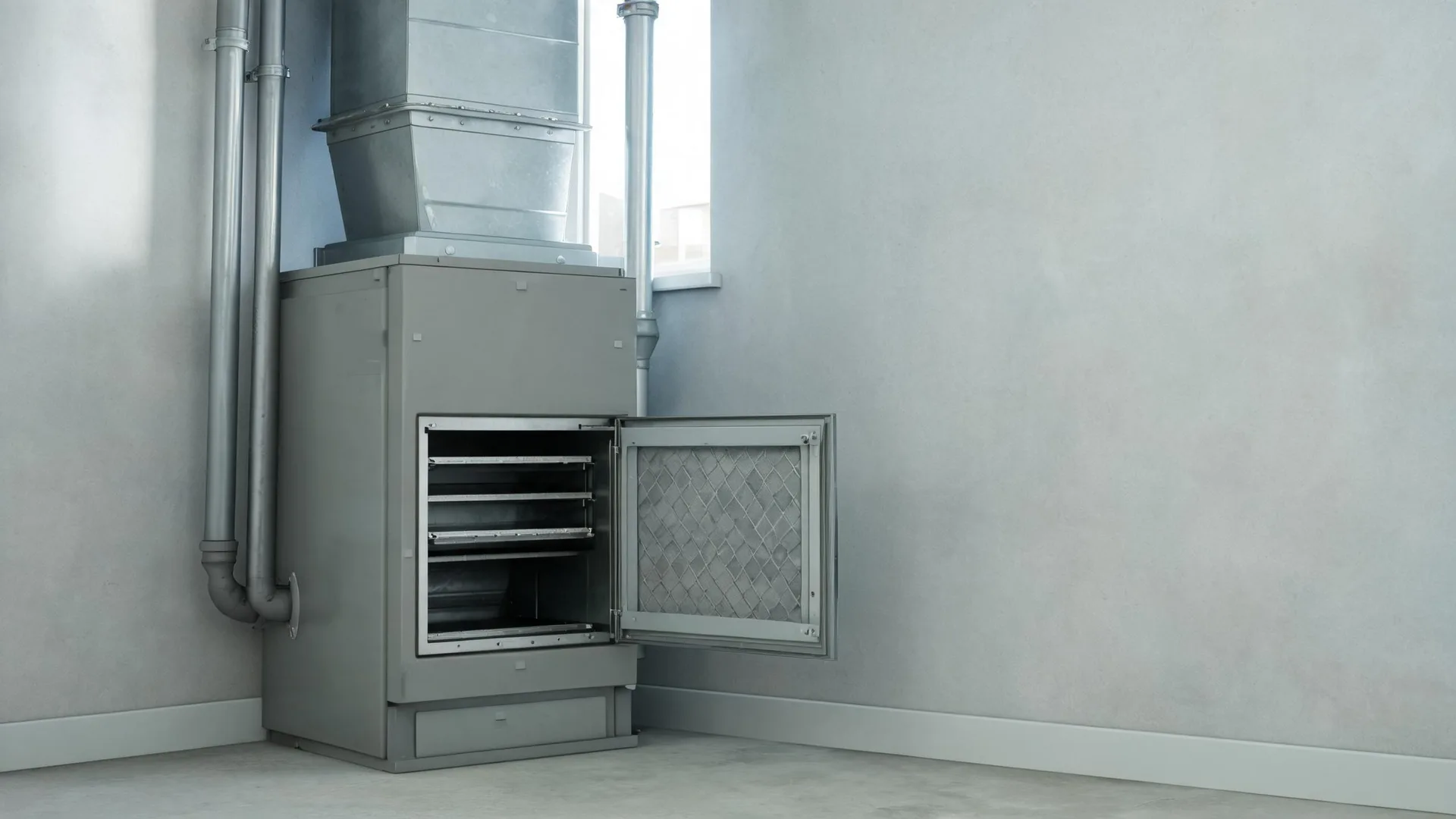
The filter is the one part that needs attention often

A clogged filter starves the system of airflow, and the evaporator coil behind it gets cold enough to ice over. Once that coil is wrapped in ice, it cannot pull heat out of the air at all, and the system runs without actually cooling anything. Everything else in a tune-up gets checked once a year. The filter needs a look far more often than that.

The drain line decides where the water goes

An air conditioner pulls moisture out of the air all day, and that water is supposed to leave through the condensate drain. When that line clogs with algae or dirt, the water backs up into the drain pan and from there into the ceiling or the wall below the unit. A technician clearing that line during a tune-up heads off damage that has nothing to do with how well the system cools.

An outdoor air conditioning condenser unit positioned beside a blue-sided house at sunset.

Book your AC tune-up in April, before homes here start needing cooling in May.

  1. Jan
  2. Feb
  3. Mar
  4. Apr
  5. May
  6. Jun
  7. Jul
  8. Aug
  9. Sep
  10. Oct
  11. Nov
  12. Dec

A tune-up checks the refrigerant charge, cleans the coils, tests the capacitor and tightens the electrical connections.

A tune-up also means running the system through a full cycle and watching how it responds. The technician checks the contactor and capacitor, since a weak capacitor makes the compressor strain to start instead of kicking on clean. Fan motors get checked for noise and end play, because a bearing starting to wear will announce itself long before it seizes. The condensate pan and the blower wheel get a look too, since a blower caked with dust moves less air even when the filter is clean. None of this takes the place of the filter checks in between, but it catches the parts of the system a homeowner never sees and can't check themselves.